The corridors of Parliament House in Canberra are currently abuzz with intense speculation and strategic positioning as the federal political landscape undergoes a period of significant volatility. Recent developments—ranging from debates over economic policy and the potential return of political heavyweights to concerns regarding national security and digital safety—have set the stage for a dramatic lead-up to the next federal election. At the heart of this activity is Opposition Leader Angus Taylor, who finds himself navigating a complex environment characterized by pressure from rival parties and the looming shadow of former colleagues.
The GST Debate and the Frydenberg Question
The most prominent narrative dominating the news cycle is the persistent speculation regarding a potential political comeback by former Liberal treasurer Josh Frydenberg. This chatter reached a fever pitch following a high-profile media blitz by Frydenberg ahead of the release of his new memoir. During an appearance on 60 Minutes, the former treasurer did not rule out another tilt at federal politics, suggesting that the Liberal Party is facing an "existential threat" and requires a fundamental shift in direction.

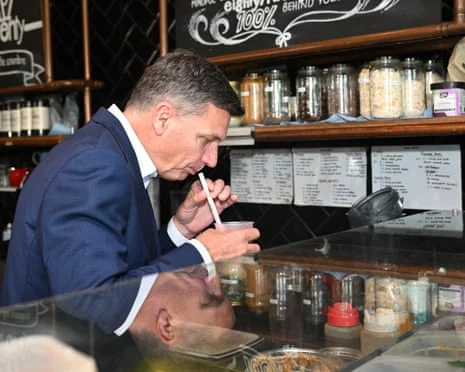
Angus Taylor, the current leader of the Liberal Party, addressed these developments while speaking to reporters at a Canberra café on Monday morning. While Taylor firmly rejected the suggestion—initially floated by Frydenberg—that the Goods and Services Tax (GST) should be raised, he maintained a diplomatic stance regarding his predecessor’s potential return.
"I welcome every Liberal who cares about the future of our nation, and I know Josh does, to put shoulder to the wheel in the coming months to get rid of a rotten Labor government and make the change that Australia needs happen," Taylor stated.
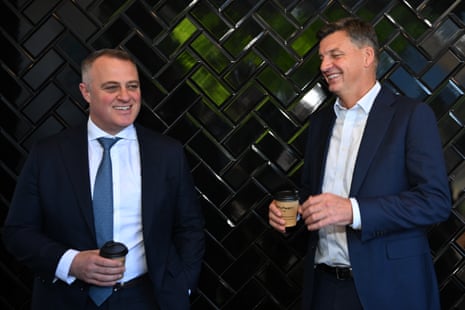
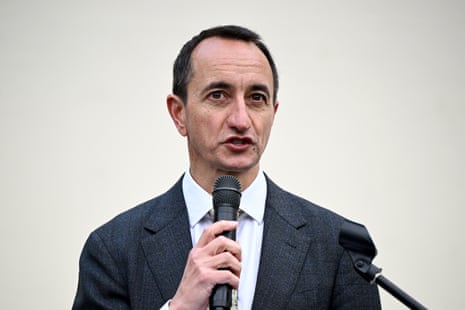
This response reflects a broader effort by the Liberal leadership to project unity while managing the disruptive influence of high-profile outsiders. The sentiment was echoed by other party figures, including Senator Dave Sharma, who described Frydenberg as a "talented and competent politician" while reaffirming his backing for Taylor as the current leader.
Chronology of Recent Political Events
The current tension in Canberra is the result of a rapid succession of events over the past 48 hours:

- Saturday/Sunday: Josh Frydenberg’s interview on 60 Minutes airs, sparking widespread debate about his potential return to his former seat of Kooyong and his critique of the current Liberal leadership.
- Sunday: The Conservative Political Action Conference (CPAC) concludes, featuring prominent speakers including Pauline Hanson, Angus Taylor, and Matt Canavan, highlighting the ongoing ideological struggle within the Australian right.
- Monday Morning: Angus Taylor holds a press conference at a local café to discuss small business concerns and address the media regarding the "Frydenberg factor."
- Monday Morning: Independent MP Monique Ryan, who unseated Frydenberg in 2022, dismisses the comeback chatter, labeling it a distraction from local issues.
- Monday Afternoon: Senator Jacqui Lambie introduces a bill aimed at curbing "financial coercion" by the government in freedom of information (FoI) legal battles, specifically citing the case of former senator Rex Patrick.
Economic Policy and Small Business Concerns
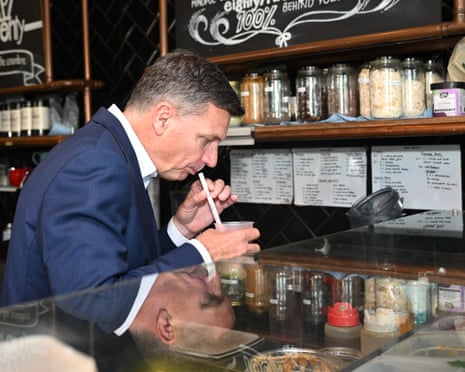
Beyond the personality-driven drama, the Opposition has been aggressively campaigning on the cost-of-living crisis and the regulatory environment for small businesses. Angus Taylor and Shadow Treasurer Tim Wilson have been focusing on the unintended consequences of the Reserve Bank’s recent ban on card surcharges. While intended to save consumers money, the policy has faced criticism for reportedly causing some small businesses to increase their base prices to offset lost revenue.
Labor minister Kristy McBain has responded to these concerns by suggesting that the Reserve Bank should go further. She argued that the government should look into banning charging at the point of sale for small businesses entirely, citing the massive profits of major banks as a justification for why small enterprises should not bear the brunt of digital payment fees.

"These banks are making billions of dollars in profits every year and small businesses are already paying account-keeping fees and a range of other fees directly to their banks," McBain told Seven’s Sunrise.
The "Existential Threat" and the Right-Wing Landscape
The ideological divide within the conservative movement was on full display at the recent CPAC event. With One Nation’s Pauline Hanson making waves and the Liberal Party attempting to consolidate its base, the question of who effectively represents the "right" in Australia remains contested.
Josh Butler’s analysis of the event suggested that, for many attendees, Pauline Hanson was viewed as a more compelling opposition leader than the current parliamentary alternative. This sentiment is underscored by the announcement from One Nation’s Colleen Harkin that the party will preference the Liberals above Labor at the upcoming Victorian state election—a strategic move intended to maximize the potential for a change of government, albeit with a "list of negotiating tools" attached.
This "list" includes contentious items such as removing Indigenous advisers from the curriculum development process, signaling that if the Liberals find themselves in a minority government scenario, the price of support from the crossbench could be significant.
National Security and Digital Safety
The discourse in Canberra has also been heavily influenced by international security concerns. Reports that the FlyDubai pilot involved in a recent thwarted hijacking incident was radicalized while studying in Australia have sent shockwaves through the political establishment.
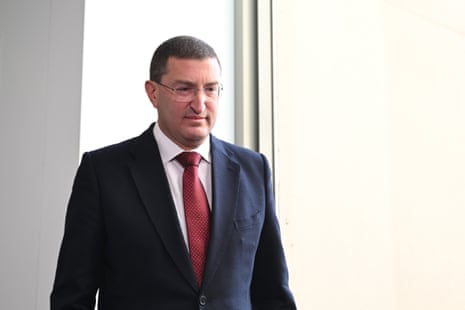
Shadow Home Affairs Minister Jonno Duniam described the reports as "deeply disturbing," using the incident to call for tighter visa laws and the deportation of non-citizens who promote violent extremism. Conversely, Home Affairs Minister Tony Burke emphasized that the individual was radicalized through online channels, highlighting the government’s focus on better screening processes at both the physical border and in digital spaces.
Parallel to this, the Greens have sparked a new debate regarding digital safety and content moderation. Senator Sarah Hanson-Young has called on the eSafety Commissioner to block the live streaming of a scheduled firing squad execution in the United States, arguing that such content is "barbaric" and has no place on Australian screens. This request has placed the government in a difficult position, forcing a choice between promoting digital safety and navigating the complexities of international internet censorship.
Implications for the Next Election
As the countdown to the next federal election continues, the political implications of these events are becoming clearer:

- Leadership Stability: Angus Taylor is currently attempting to define his leadership by focusing on economic "competence" and "business experience," deliberately distancing himself from the "career politician" label. However, the shadow of figures like Frydenberg will likely continue to test his authority.
- The Crossbench Power: The potential for a minority government, as hinted at by One Nation’s negotiations in Victoria, suggests that the balance of power will be a defining feature of the next election cycle. Small parties are becoming increasingly adept at utilizing their preference power to force the major parties into uncomfortable policy concessions.
- The Digital Battlefield: From the regulation of point-of-sale payments to the censorship of violent international content, digital policy is emerging as a critical battleground. The government’s ability to manage these issues without appearing overly interventionist will be a key metric for voters.
- The Integrity of Information: The ongoing conflict over Freedom of Information laws, epitomized by the Jacqui Lambie and Rex Patrick debate, suggests that transparency will be a major campaign issue. The perception that the government is using "financial coercion" to shield information from the public could prove damaging in an environment where trust in political institutions is already fragile.
In summary, Canberra is currently defined by a confluence of personality politics and structural policy challenges. Whether Angus Taylor can successfully unify the Liberal base, and whether Labor can effectively manage the competing demands of economic regulation and national security, will dictate the outcome of the months ahead. The "shoulder to the wheel" rhetoric employed by Taylor suggests a party preparing for a long and difficult fight—one where every vote, and every voice, will count.