Introduction: A Pattern of Tragedy
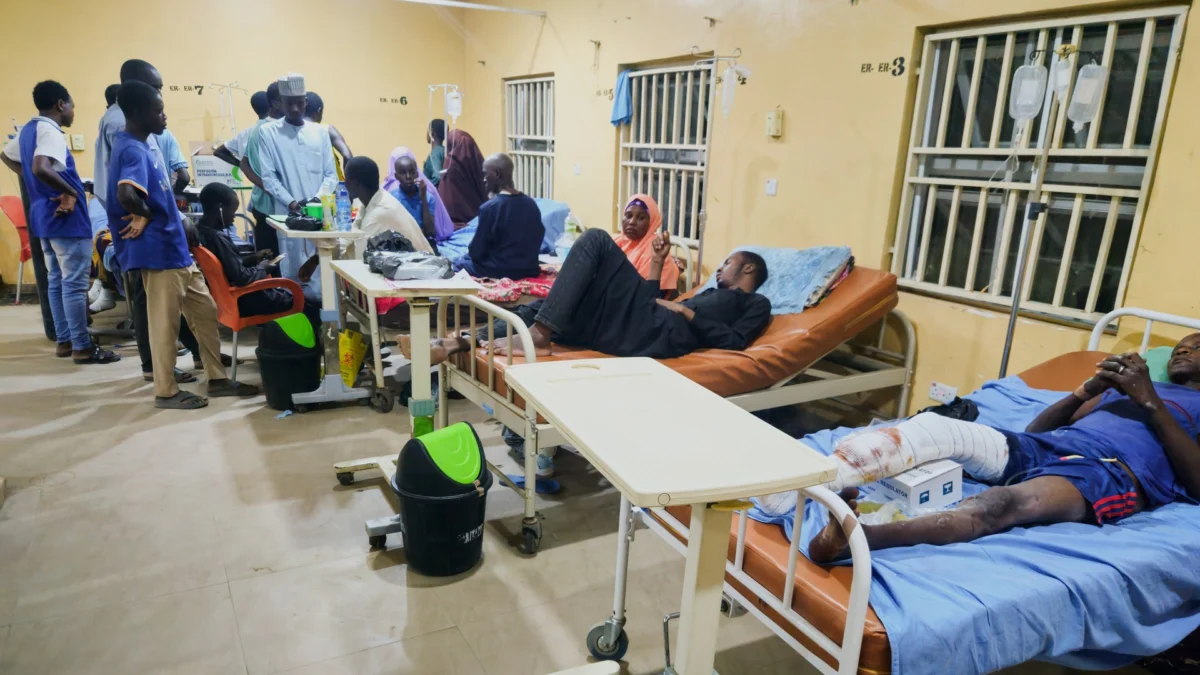
In the span of just a few weeks, Nigeria’s northwestern and northeastern frontiers have been transformed into theaters of profound human tragedy. On Sunday, a devastating airstrike targeted a bustling market in Zamfara State, leaving more than 100 people dead and dozens more critically injured, according to reports from Amnesty International. This latest catastrophe follows closely on the heels of an April bombing in the northeastern village of Jilli, which claimed the lives of an estimated 200 civilians.
These incidents are not isolated anomalies; they represent a disturbing, decade-long pattern in the Nigerian military’s counterinsurgency operations. Despite international outcry and the unveiling of a civilian harm mitigation plan by the Nigerian Air Force (NAF) in 2025, the gap between official policy and the grim reality on the ground continues to widen. As the military leans heavily on airpower to combat decentralized insurgent groups, the human cost is being paid primarily by the very citizens the state is sworn to protect.
The Zamfara Incident: A Market Turned Battlefield
The Sunday strike in Zamfara targeted a crowded market—a focal point of local commerce and community life. Eyewitness accounts and human rights monitors describe a scene of absolute carnage, where the roar of military aircraft was followed by explosions that reduced stalls and gathering points to rubble.
The Nigerian military has acknowledged that its assets were responsible for the operation, framing the strike as a necessary tactical maneuver within its ongoing counterinsurgency campaign. However, the military’s assertion that the victims were primarily "bandits"—a term the Nigerian government uses to describe the various armed criminal gangs and insurgent factions operating in the northwest—has been met with skepticism. Amnesty International and local community leaders emphasize that the market was filled with shoppers, traders, and civilians, many of whom have no connection to the armed groups currently destabilizing the region.
Chronology of a Failing Strategy
The Zamfara tragedy is merely the most recent chapter in a long history of controversial airstrikes. To understand the gravity of the current situation, one must look at the historical trajectory of Nigeria’s reliance on aerial warfare.
2014–2020: The Early Years of Collateral Damage
During the early phases of the fight against Boko Haram and ISWAP (Islamic State West Africa Province), the military’s air capabilities were limited. As the government invested heavily in advanced fighter jets and drones, the frequency of airstrikes increased. Early reports of "accidental" strikes in areas like Rann and various border villages were often dismissed as technical errors or intelligence failures.
2024–2025: Escalation and Policy Response
As insurgencies evolved, the military shifted its tactics toward a "bomb-first" approach. Following a series of high-profile civilian massacres, the Nigerian Air Force faced intense pressure to reform. In 2025, the military unveiled a high-profile "Civilian Harm Mitigation Plan." This document promised improved intelligence, better coordination between ground and air forces, and stricter rules of engagement.
2026: The Jilli and Zamfara Strikes
The promise of the 2025 mitigation plan appears to have evaporated. The April Jilli bombing, which saw nearly 200 civilians killed, was initially presented as a surgical strike against an insurgent stronghold. Subsequent investigations by independent analysts revealed that the intelligence relied upon was outdated or fundamentally flawed. The Sunday strike in Zamfara marks the second major incident in under two months, suggesting that the "mitigation" protocols are either being ignored or are entirely ineffective.
Supporting Data: The Limitations of Airpower
The core of the issue, according to regional security experts like Lesley Anne Warner, lies in a fundamental misunderstanding of counterinsurgency (COIN) doctrine.
The Intelligence Gap
Effective airstrikes require what military planners call "target identification and air-ground integration." In the Nigerian context, the intelligence gathering—often reliant on human informants or low-altitude surveillance—is frequently compromised by local politics or the rapid movement of insurgent groups. When intelligence is poor, the "precision" of modern weaponry is rendered moot.
The "Disperse and Adapt" Problem
Empirical evidence gathered over the last decade demonstrates that airstrikes are, at best, a temporary disruption to insurgent activity. Insurgents do not hold static positions; they are fluid, decentralized, and highly adaptive. When a market or village is bombed, the insurgent leaders often escape, leaving behind a radicalized and grieving local population.
Data on Civilian Harm
While the Nigerian government rarely releases detailed casualty figures, independent organizations have documented a steady rise in non-combatant deaths:
- 2023: Estimated 150+ civilian deaths from airstrikes.
- 2024: Estimated 250+ civilian deaths.
- 2025 (Year of Mitigation): Estimated 300+ civilian deaths.
- 2026 (Year-to-Date): Already exceeding 300 deaths in just the first five months.
The data suggests that rather than suppressing violence, the increased reliance on airpower is fueling a cycle of resentment, which in turn feeds the recruitment drives of groups like Boko Haram and bandit militias.
Official Responses: The Rhetoric of Denial
The Nigerian government’s response to these incidents typically follows a standard script:
- Initial Denial: Often, the military initially denies the strike or claims it was a "precision" hit on a "high-value target."
- The "Bandit" Defense: When forced to admit civilian deaths, officials pivot to labeling the victims as collaborators or "human shields."
- Internal Investigations: The government promises an inquiry. However, these inquiries rarely yield public reports, disciplinary actions, or compensation for the victims’ families.
Following the Zamfara strike, a military spokesperson issued a brief statement reiterating the force’s commitment to "eliminating criminal elements." There was no mention of a formal apology or a suspension of operations pending an independent investigation. This culture of impunity is a major sticking point for human rights organizations, who argue that without accountability, the cycle of violence is structurally guaranteed to continue.
Implications: The Strategic Backlash
The implications of this strategy are dire for Nigeria’s long-term stability.
Alienating the Populace
Counterinsurgency is essentially a battle for the "hearts and minds" of the civilian population. When the state kills the very people it claims to protect, it loses its moral authority. Survivors of these strikes are frequently left with no choice but to seek protection or vengeance, often turning toward the very insurgents the military is trying to eliminate.
The Breakdown of Trust
The failure to implement the 2025 civilian harm mitigation plan has destroyed the credibility of the Nigerian Air Force. NGOs and local community leaders are now less likely to share intelligence with the military, fearing that information provided to help secure an area will be used to justify indiscriminate bombing.
International Repercussions
Nigeria relies on foreign partners—including the United States, the United Kingdom, and various EU nations—for intelligence, training, and military hardware. Continued reports of mass civilian casualties put these partnerships at risk. If Nigeria fails to address the systematic failure of its air operations, it may face restrictions on the transfer of weapons and surveillance technology, which would further cripple its ability to conduct legitimate security operations.
Conclusion: A Path Forward
The path forward for Nigeria requires a radical shift in philosophy. Airpower, while a vital component of a modern military, is a blunt instrument that cannot solve the complex, localized issues of banditry and religious extremism.
True security will only be achieved through:
- Prioritizing Ground Operations: Re-emphasizing the role of well-trained infantry capable of distinguishing between combatants and civilians.
- Real Accountability: Establishing an independent, transparent oversight board that includes civil society representatives to investigate every incident of civilian harm.
- Intelligence Reform: Moving away from reliance on questionable human intelligence and toward sophisticated, verified target identification.
- Community Engagement: Investing in local governance and social services to ensure that rural areas in states like Zamfara are not left in a vacuum that insurgents can easily fill.
Until the Nigerian military accepts that civilian safety is not a "collateral" concern but the central objective of its mission, the skies over northern Nigeria will remain a source of terror rather than a shield of protection. The blood shed in the markets of Jilli and Zamfara is a stark warning: the current strategy is not just failing—it is actively working against the state’s own security interests.