The recent incursion of military drones into Latvian territory on May 7, which resulted in an explosion at an empty oil storage facility, has once again exposed the glaring vulnerabilities within NATO’s eastern flank. While the incident resulted in no casualties, it serves as a stark reminder that the ongoing Russia-Ukraine war is no longer contained within the borders of the two combatants. The incident has sent shockwaves through the Latvian government, triggering a high-level resignation and reigniting a fierce debate regarding the sluggish pace of European air defense integration.
For NATO, these "stray" munitions are becoming a routine, if dangerous, headache. As drones become cheaper, more autonomous, and more prevalent, the alliance’s current defensive posture—built largely to counter traditional manned aircraft and ballistic missiles—is struggling to adapt to the persistent, low-altitude, and often ambiguous threat posed by unmanned aerial vehicles (UAVs).
A Chronology of Incursions: From Zagreb to the Baltics
The pattern of drone incursions into NATO territory is not a recent phenomenon, but rather a worsening trend that has evolved alongside the sophistication of the war in Ukraine. Since the full-scale invasion in February 2022, the alliance’s airspace has been repeatedly breached, testing the resolve and readiness of member states.
The Early Warnings (2022–2023)
The scale of the challenge was first made clear in March 2022, just weeks after the initial invasion. A military drone, widely believed to be a Soviet-era Tu-141 reconnaissance UAV operated by Ukraine, flew undetected for hundreds of kilometers across Romania, Hungary, and Croatia. The drone eventually crashed in the heart of Zagreb, the Croatian capital. The fact that it traversed three NATO countries without being intercepted caused immense diplomatic embarrassment and highlighted a severe lack of cohesive, integrated air monitoring across Central Europe.
As the conflict ground on, the nature of these incursions shifted. Throughout 2023, Russian drones began to crash in Romania with alarming frequency. These incidents were often linked to Russian strikes on Ukrainian grain infrastructure along the Danube River, where proximity to the Romanian border made accidental incursions almost inevitable.
Escalation and Expansion (2024–2025)
By 2025, the problem had moved from the Balkans and the Black Sea to the Baltic and Northern regions. Poland and Lithuania reported multiple drone crashes throughout the year, suggesting that the "accidental" nature of these flights was being tested by both sides of the conflict. In March 2026, a Ukrainian drone struck the chimney of a power station in Estonia, raising questions about whether Russian electronic warfare was actively redirecting these devices to stir trouble between Kyiv and its Western allies. By April 2026, a wayward drone had reached as far north as Finland, underscoring the reach of the current conflict.
The September 9, 2025 Mass Incursion
The most significant and alarming event occurred on September 9, 2025, when at least 19 drones breached Polish airspace from Belarus. These were identified as "Gerberas"—an unarmed, stealth-capable variant of the Iranian-designed Shahed-136 "kamikaze" drone. The sheer number of drones forced a massive scramble of Polish F-16s, bolstered by Dutch F-35s operating in the region. While the alliance managed to intercept and shoot down three of the devices, the incident proved that mass drone swarms are no longer a theoretical threat but a tactical reality that NATO is currently ill-equipped to handle at scale.
The Technical Challenge: Why NATO Struggles to Respond
The difficulty in responding to these incursions is rooted in the fundamental nature of the drones themselves. Most are small, fly at low altitudes, and possess a minimal radar cross-section.
The "Stealth" of the Small
Traditional NATO air defense systems, such as the Patriot missile battery, are designed to intercept high-altitude, fast-moving targets like fighter jets or ballistic missiles. They are cost-inefficient and often physically unable to track or target small, propeller-driven drones that fly close to the ground. Using a multi-million dollar interceptor missile to down a drone that costs a few thousand dollars is a strategic trap—one that depletes air defense stocks and leaves a country vulnerable to more sophisticated threats.
Electronic Warfare and Ghost Signals
Adding to the complexity is the pervasive use of electronic warfare (EW). Both Russia and Ukraine utilize powerful jammers to disrupt GPS signals and command links. When a drone loses its connection, it often enters a "failsafe" mode or follows a pre-programmed path that may take it far off-course. Furthermore, the deliberate "spoofing" of signals by Russian forces near the Baltic states has created a "fog of war" that makes it nearly impossible for NATO operators to distinguish between a technical failure, an errant munition, and a deliberate probe of defensive gaps.
Official Responses and Political Fallout
The political consequences of these breaches are beginning to mount. The resignation of top-level officials in Latvia following the May 7 incident is just one indicator of the public pressure governments are facing. Citizens in NATO’s eastern member states are increasingly questioning the efficacy of the "Article 5" security guarantee if the alliance cannot even secure its own peacetime skies.
NATO officials have largely responded with a combination of caution and increased patrols. Following the September 2025 incident, the alliance significantly bolstered its air policing missions in Poland and the Baltic states. However, behind closed doors, there is a growing recognition that "air policing"—the act of scrambling manned jets to intercept drones—is a stopgap measure. Manned jets are too slow to react to the rapid onset of a swarm, and the legal hurdles regarding the "rules of engagement" for shooting down drones over populated civilian areas remain a subject of intense debate.
Implications: The New Normal of Aerial Insecurity
The persistent nature of these incursions carries three major implications for the future of European security:
- The Erosion of Deterrence: Every time a drone enters NATO airspace and lands safely, the perceived "red line" of the alliance is weakened. While these incidents have not yet triggered a kinetic conflict between NATO and Russia, they provide Russia with a low-cost, high-reward method of creating chaos, testing reaction times, and driving wedges between member states.
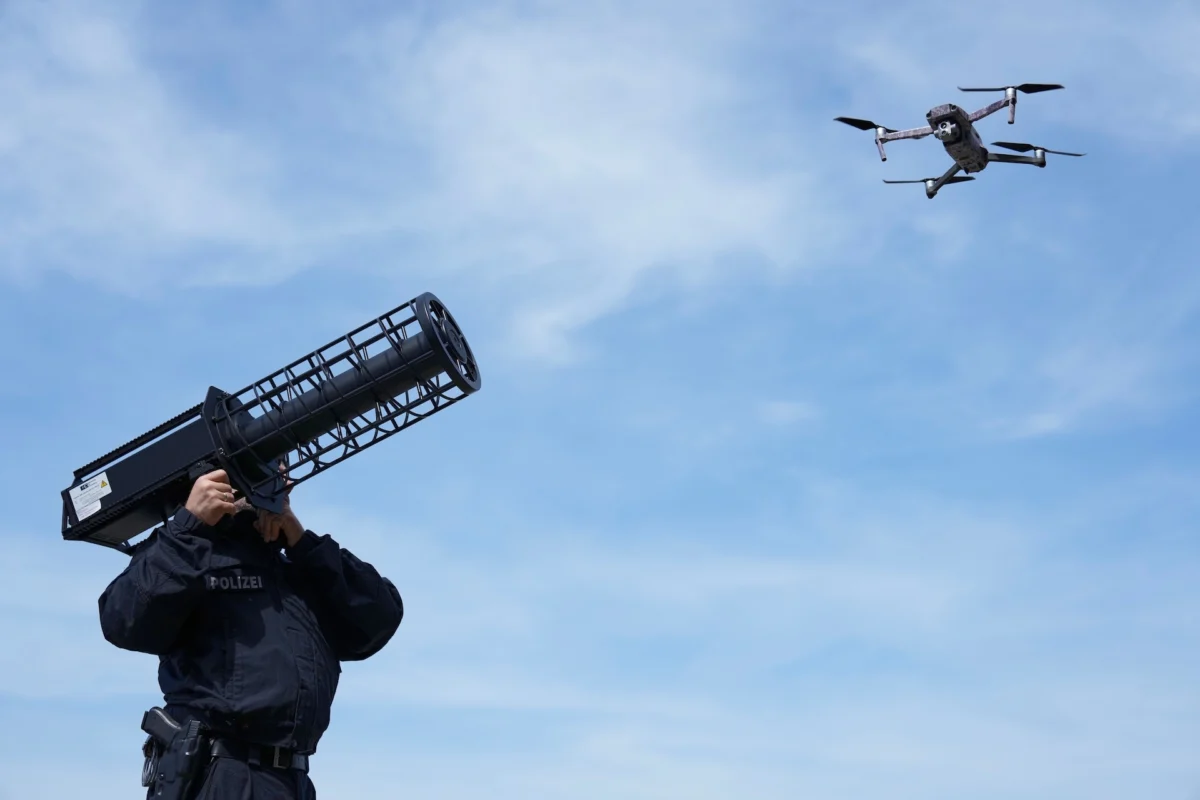
- The Need for "Counter-Drone" Infrastructure: NATO must pivot from traditional air defense to a layered, multi-domain counter-UAS (Unmanned Aircraft Systems) architecture. This requires investing in short-range, cost-effective technologies like directed-energy weapons (lasers), electronic jamming arrays, and a unified sensor grid that can share data across borders in milliseconds.
- The Integration Gap: The fragmented response to the Zagreb incident in 2022 remains a lingering issue. While intelligence sharing has improved, the physical integration of command-and-control systems remains uneven across the alliance. If NATO is to survive the age of the drone, it must act as a single, seamless air-defense entity rather than a collection of individual national systems.
Conclusion: A Wake-Up Call
The incident in Latvia is not an anomaly; it is a symptom of a systemic shift in the character of modern warfare. As the war in Ukraine continues to spill over its borders, the distinction between a combat zone and a protected sovereign state is becoming increasingly blurred.
For NATO, the challenge is clear. The alliance can no longer rely on the luxury of "peaceful skies." The proliferation of drones, whether they are Russian, Ukrainian, or redirected by electronic interference, has turned the airspace over Europe into a contested domain. Unless European military planners can accelerate the deployment of advanced, scalable, and integrated countermeasures, these "routine" incursions may eventually lead to a tragedy that the alliance is not prepared to manage. The era of the drone has arrived, and it is leaving a trail of debris across the borders of the world’s most powerful military alliance.