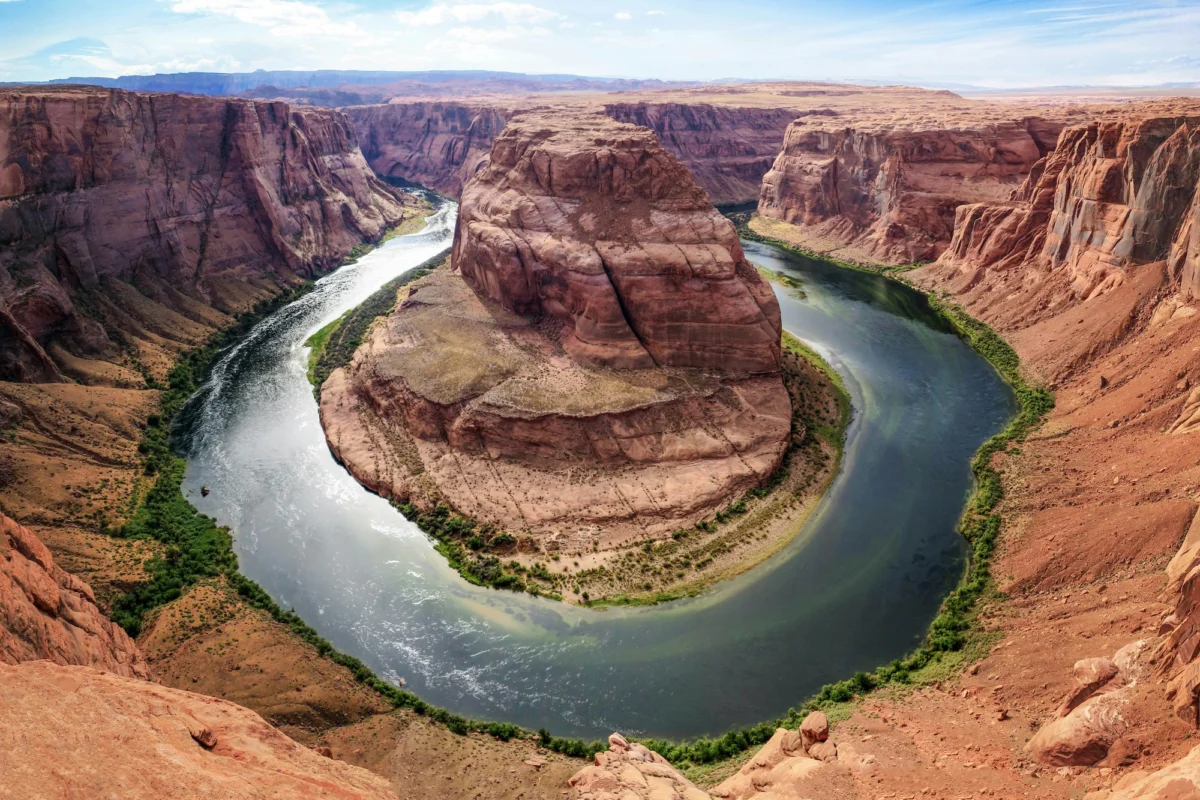
As the Colorado River winds its way through the rugged, sandstone landscapes of the American Southwest, it serves as the literal lifeblood for 40 million people and the foundation for over 5.5 million acres of vital agricultural land. Yet, this historic waterway is under unprecedented strain. Decades of a relentless "megadrought," compounded by accelerating climate change and systemic over-allocation, have brought the basin to a precarious tipping point.
While major urban centers like Phoenix, Denver, and Las Vegas have successfully implemented rigorous demand-management policies—such as lawn-watering restrictions and high-efficiency appliance mandates—new research suggests that these measures, while commendable, are rapidly becoming insufficient. As temperatures climb and the Colorado River’s flow continues to diminish, the region is finding that conservation alone cannot bridge the widening gap between supply and demand.
The Anatomy of the Crisis: A Chronology of Decline
The challenges facing the Colorado River are not new, but their intensity has shifted significantly over the last century. To understand the current predicament, one must look at the evolution of the region’s water governance:
- 1922: The Colorado River Compact: Signed during a period of uncharacteristically high precipitation, this foundational agreement established the "Law of the River," a framework that allocated water rights based on flawed long-term flow projections.
- The Late 20th Century: The rapid expansion of cities like Las Vegas and Phoenix, combined with industrial-scale agriculture, placed increasing pressure on the river’s reservoirs, particularly Lake Mead and Lake Powell.
- 2000–Present: The Megadrought Era: The Southwest entered a sustained period of aridification. Record-breaking heatwaves and reduced snowpack in the Rocky Mountains—the primary source of the river’s water—began to cause a structural decline in the basin’s storage capacity.
- 2026 Negotiations: With current agreements set to expire, the seven basin states are currently engaged in high-stakes negotiations to redefine how the river’s dwindling water is managed for the next generation.
The Efficacy of Demand Management
In the face of crisis, cities have historically pivoted to "demand management"—strategies designed to curb human consumption. The success of these programs is well-documented.
Las Vegas, often unfairly maligned as a symbol of desert excess, offers a masterclass in urban efficiency. Since 2002, the Southern Nevada Water Authority has orchestrated a 60% reduction in per-capita water consumption, even as the region’s population swelled by over 50%. Through aggressive landscape ordinances, mandatory wastewater recycling, and the removal of non-functional grass, Las Vegas has effectively decoupled population growth from water usage.
Similarly, Phoenix has achieved a 20% reduction in per-capita water use over the last two decades. By incentivizing the conversion of water-intensive turf to xeriscaping and deploying smart-meter technology, the city has successfully managed its municipal supply despite a 40% growth in residents.

These achievements prove that behavioral changes and policy interventions work. However, the critical question remains: are they scalable enough to counter the physical reality of a drying climate?
The Hard Limits of Conservation: Research Findings
New research conducted by experts at the intersection of climate science and infrastructure management, including Dr. Renee Obringer and Dr. Dave White, indicates that the current "toolbox" of conservation is hitting a ceiling.
By integrating extensive survey data—which maps how residents perceive water conservation—with advanced computer modeling of water availability, the researchers reached a sobering conclusion: Climate change is outpacing conservation.

The models demonstrate that even under moderate emissions scenarios, the availability of surface water in cities like Phoenix and Denver could plummet below historical averages by 2060. Most alarmingly, the simulations show that even if urban residents were to reduce their water consumption by an additional 25%, the net water availability would remain stagnant or continue to drop.
The reason is simple: Urban conservation efforts are being offset by the macro-scale drying of the Colorado River. Upstream flow reductions, driven by evaporation and changing precipitation patterns, are simply larger in magnitude than the savings generated at the household level.
Official Responses and Policy Implications
As the 2026 renegotiations of the Colorado River Compact approach, federal and state officials are under intense pressure to move beyond incrementalism. The "Law of the River" is being tested as never before, and the traditional approach of simply cutting allocations is triggering deep-seated legal and economic tensions.

"We are entering an era where we can no longer assume that the river will provide a reliable baseline," notes the research team. "The focus must shift from ‘how can we use less?’ to ‘how can we augment our supplies or restructure our entire economic reliance on this water?’"
The Dilemma of "Bigger Solutions"
To secure a sustainable future, experts point to three primary avenues, each carrying significant socio-economic costs:
- Water Reuse and Recycling: While technically mature, expanding potable reuse systems requires massive infrastructure investment. It is, however, one of the most reliable ways to create a "drought-proof" supply.
- Desalination: Often cited as a miracle cure, desalination is fraught with challenges. Beyond the astronomical capital costs—as seen in the Carlsbad plant, which exceeded initial estimates by 400%—the process is energy-intensive and raises significant environmental concerns regarding brine disposal.
- Sectoral Reallocation: This is perhaps the most politically volatile solution. Agriculture accounts for the vast majority of water use in the Colorado River Basin. Reducing agricultural consumption to preserve municipal supplies could lead to higher food costs, the loss of farmland, and a fundamental shift in the rural economy of the West.
The Energy-Water Nexus
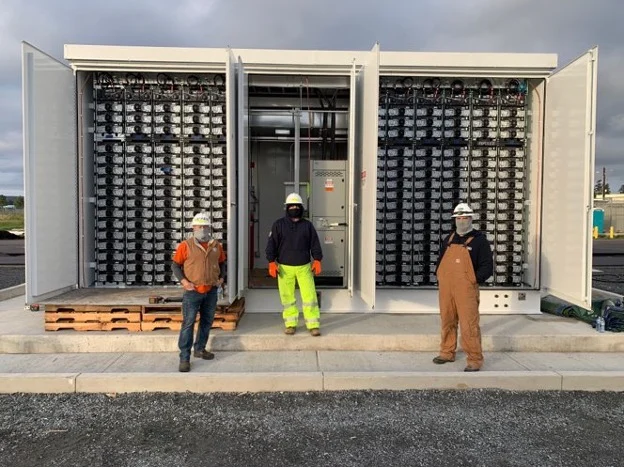
The sustainability conversation is incomplete without considering the energy-water nexus. Traditional fossil fuel and nuclear power plants require vast quantities of water for cooling. As the region transitions to renewable energy sources like wind and solar—which require minimal water for operation—the water demand for electricity generation will drop. However, this transition requires massive investment in grid modernization and energy storage, a process that is currently in its infancy.

Conclusion: A Call for Systemic Change
The evidence is clear: while individual and municipal conservation efforts are necessary, they are not a substitute for systemic transformation. The Colorado River Basin is currently navigating a future where water scarcity is no longer an emergency to be managed through temporary restrictions, but a permanent condition of the landscape.
To survive, the region must adopt a multi-pronged approach that balances the high costs of infrastructure innovation with the political courage required to reallocate water between urban, agricultural, and industrial sectors. The era of low-hanging fruit—fixing leaks and pulling out lawns—is coming to an end. The next phase of the water wars will require a profound, uncomfortable, and necessary re-evaluation of how we value the most precious resource in the American West.
As we look toward 2026 and beyond, the message from the scientific community is unequivocal: we must prepare for a future that looks nothing like the past. The time for reactive policy is over; the time for structural transformation is now.