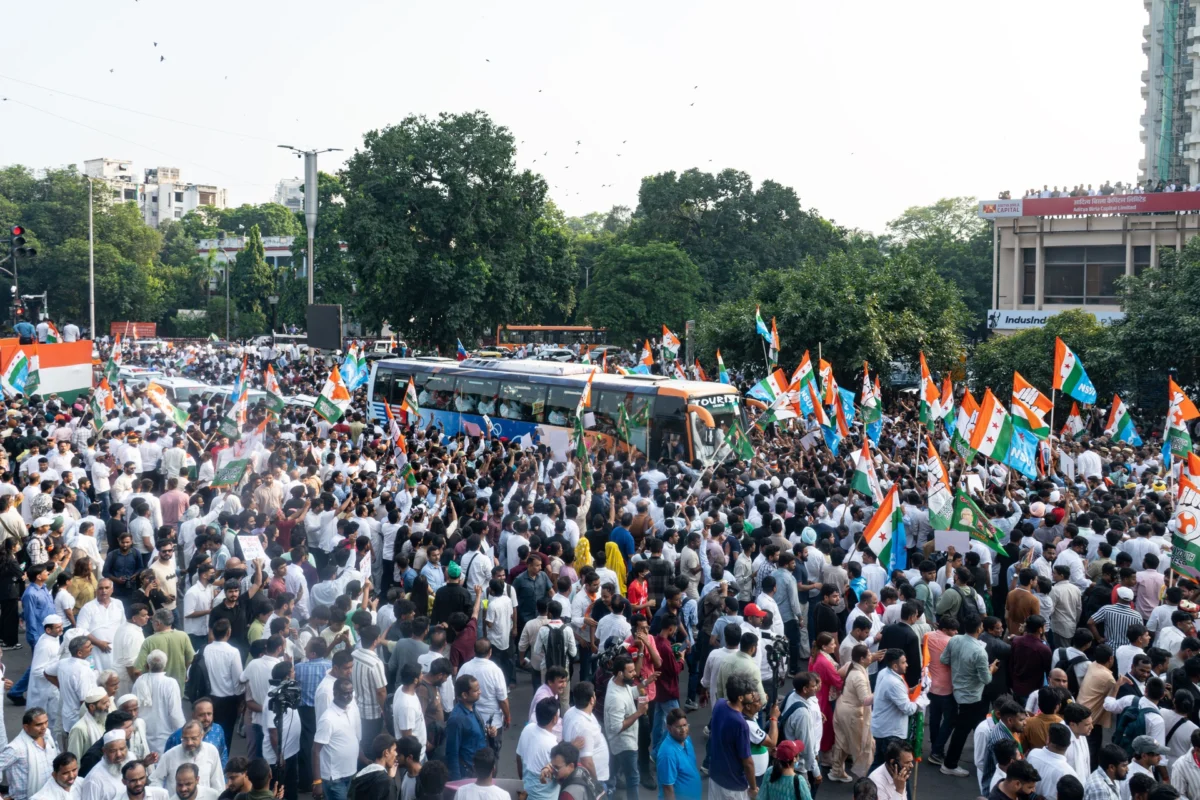
NEW DELHI — The streets of India’s capital have transformed into a landscape of steel barricades and heavy surveillance. Over the past seven days, thousands of paramilitary personnel and metropolitan police officers have descended upon central New Delhi, effectively turning the city’s historic heart into a fortress. The mobilization follows a wave of widespread demonstrations ignited by what critics describe as a systematic and controversial purge of the national voter roll.
On Saturday, the tension reached a boiling point as security forces preemptively rounded up thousands of activists and rally-goers. The dragnet was so extensive that many demonstrators were apprehended well before they could reach their designated protest sites. Among those detained were prominent leaders of the "cockroach" youth movement—a burgeoning, tech-savvy activist collective that has become the vanguard of anti-government dissent.
This crackdown is not an isolated incident; rather, it is a defensive maneuver by the administration of Prime Minister Narendra Modi, which is still reeling from a summer of volatile unrest. That period of instability was sparked by a catastrophic scandal involving leaked undergraduate exams, a failure so profound that it forced the resignation of the Union Education Minister—a rare and significant concession from a government that prides itself on projecting an image of unshakeable strength.
However, the current crisis poses a far more existential threat to the Modi administration. By linking the grievances of India’s increasingly influential Gen Z population with the political machinery of the country’s fractured opposition, the accusations of electoral manipulation strike at the very foundation of the world’s largest democracy.
A Chronology of Escalation: From Exam Leaks to Electoral Outrage
The current state of emergency in New Delhi is the culmination of months of simmering public dissatisfaction. To understand the gravity of the situation, one must look at the timeline of events that brought the Indian public to this inflection point.
- June 2024: The national education system was rocked by a series of high-profile leaks involving undergraduate medical and civil service entrance examinations. Millions of students, who had spent years preparing for these life-altering tests, found their futures jeopardized by institutional negligence.
- July 2024: The fallout from the exam scandal triggered nationwide student protests. The "cockroach" movement emerged during this time, utilizing decentralized social media organizing to bypass traditional media narratives.
- August 2024: The Union Education Minister resigned, citing the "moral weight" of the exam failures. While the government hoped this would quell the unrest, it instead emboldened activists who realized that pressure could force change.
- September 2024: Investigative reports began surfacing, suggesting that voter registration databases were being audited with a focus on districts known for opposition strongholds.
- October 2024 (Present): Accusations of a "voter purge" surfaced, alleging that millions of voters in key urban centers were being de-registered due to "clerical errors" and "administrative updates." The mass mobilization in Delhi is a direct response to these findings.
Supporting Data: The Erosion of Electoral Integrity
The allegations of voter roll manipulation are not merely rhetorical; they are supported by preliminary data analysis conducted by independent observers and political analysts. Critics point to a statistical anomaly in the voter rolls of several key metropolitan areas.
In North Delhi and certain suburbs of Mumbai, voter participation numbers have shown a sudden, unexplained dip in districts that historically lean toward opposition parties. According to data leaked from local electoral offices, the number of "deleted" or "inactive" voters in these specific districts has increased by 14% compared to the 2019 election cycle.
The Election Commission of India (ECI) maintains that these deletions are part of a routine "de-duplication" process designed to remove deceased voters and those who have migrated. However, human rights organizations argue that the timing and the demographic targeting suggest a more sinister objective. By stripping away voters in youth-heavy districts, the government may be attempting to neutralize the influence of the Gen Z demographic, which has proven to be the most vocal critic of the current administration’s economic and educational policies.
Official Responses and the Government Narrative
The official stance from the Bharatiya Janata Party (BJP) remains one of defiance and strict adherence to the rule of law. Government spokespersons have consistently characterized the protesters not as concerned citizens, but as "anti-national elements" funded by foreign interests to destabilize the country’s growth trajectory.
"The integrity of our electoral process is beyond reproach," said a spokesperson for the Ministry of Home Affairs during a press briefing on Sunday. "The police action taken over the weekend was necessary to maintain public order and prevent the disruption of essential services in the capital. We will not allow a small group of agitators to hold the nation to ransom."
Regarding the voter roll controversy, the ECI has issued a formal statement denying any political interference. The commission insists that the process is entirely digital, transparent, and supervised by independent auditors. Yet, this assertion has failed to satisfy the opposition parties, who are demanding an immediate, transparent audit of the voter database by a Supreme Court-appointed committee.
The opposition bloc, led by the Indian National Congress and various regional parties, has framed the issue as a "battle for the soul of India." They argue that if the government can unilaterally decide who is eligible to vote, the concept of a free and fair election becomes a performative exercise rather than a democratic reality.
Implications for India’s Democratic Future
The collision between the Gen Z "cockroach" movement and the state apparatus represents a fundamental shift in Indian politics. For years, the Modi government has successfully utilized a narrative of economic development and cultural nationalism to maintain its hegemony. However, this narrative is fraying under the weight of systemic failures.
1. The Rise of Gen Z as a Political Force
The "cockroach" movement—so named for their resilience and ability to survive in harsh conditions—has demonstrated that youth activism in India is no longer confined to campuses. They have mastered the art of digital resistance, using encrypted messaging apps and decentralized protest networks that make it difficult for traditional intelligence agencies to map their leadership structures.
2. The Opposition’s Newfound Cohesion
For the first time in a decade, the fractured opposition has found a singular, unifying cause. By centering the debate on the legitimacy of the electoral process, they have moved beyond ideological squabbles and tapped into a universal anxiety among the electorate: the fear that their voice, represented by their vote, is being stolen.
3. Global Scrutiny
India’s democratic health is closely watched by the international community, particularly by the United States and the European Union, who view India as a vital strategic partner in the Indo-Pacific. Reports of mass arrests and potential electoral manipulation present a difficult diplomatic dilemma for Western leaders who have invested heavily in the "India as a democratic counterweight to China" narrative.
Conclusion: A Turning Point?
As the sun sets over the barricaded streets of New Delhi, the situation remains fluid. The government’s decision to employ mass arrests is a high-stakes gamble. If the crackdown succeeds in demoralizing the movement, the BJP may maintain its current trajectory. However, if the images of detained students and silenced activists go viral, the government risks creating a new generation of martyrs.
India is currently navigating a period of profound uncertainty. The outcome of this struggle will not just determine the success or failure of the next election; it will define the parameters of democratic dissent in India for the foreseeable future. The "cockroach" movement may be under pressure, but history suggests that when a state turns its full force against its youth, it often accelerates the very change it seeks to suppress.
The world is watching to see whether India will double down on authoritarian measures or return to the democratic processes that have defined its post-independence history. For now, the streets of Delhi remain quiet, but it is the silence of a nation holding its breath.