
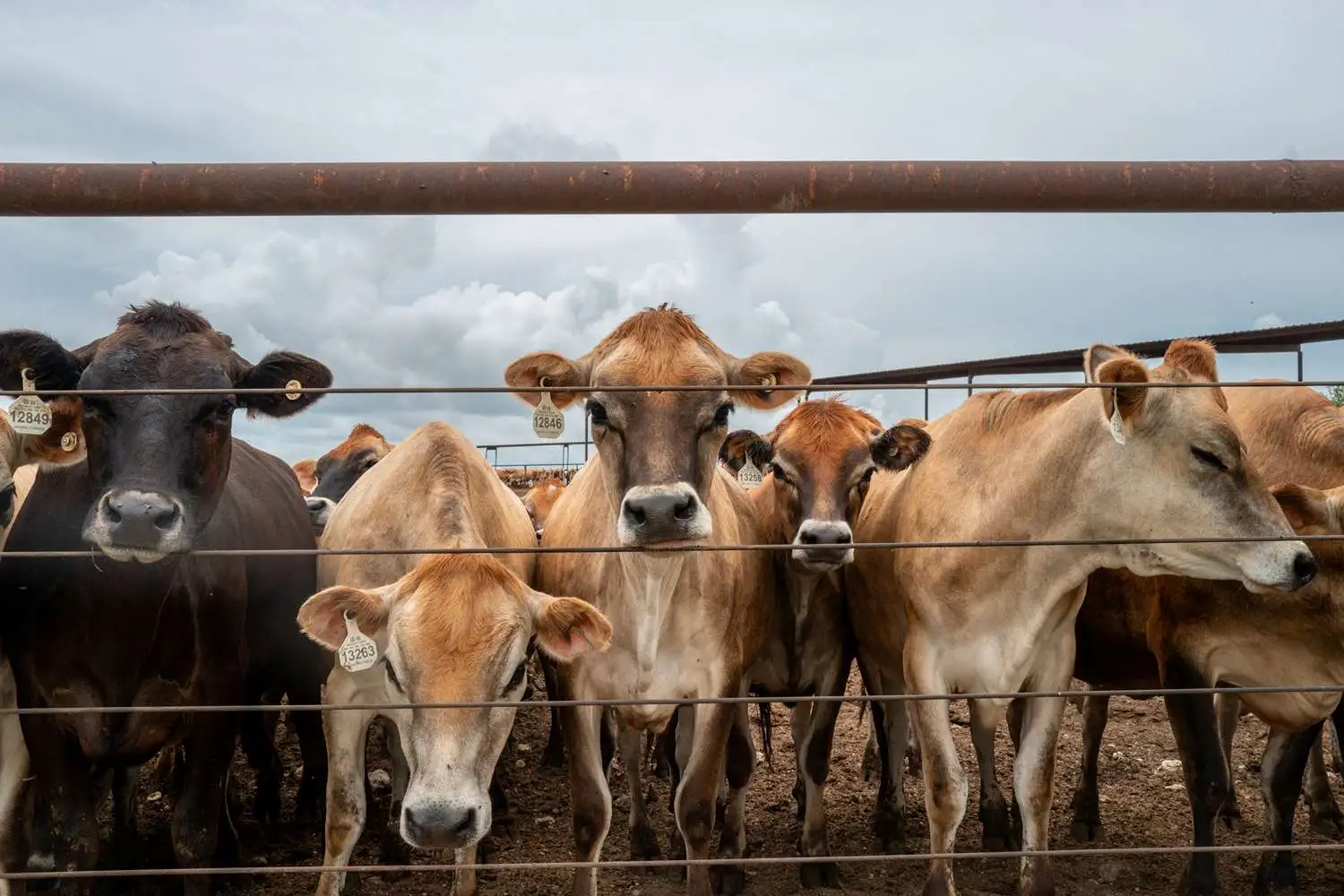
With less than sixty days remaining until the high-stakes midterm elections, President Donald Trump finds himself navigating a treacherous political landscape. While his administration has centered its economic messaging on tackling the persistent “affordability crisis” that has defined the current electoral cycle, a specific policy intervention aimed at curbing grocery store prices has triggered a fierce—and increasingly rare—revolt from one of his most loyal constituencies: the American agricultural sector.
The administration’s decision to boost imports of ground beef at a reduced tariff rate was intended as a tactical maneuver to provide immediate relief to consumers facing record-high meat prices. However, the policy has instead ignited a firestorm of criticism, uniting industry lobbyists, independent ranchers, and even prominent Republican lawmakers in a display of public opposition that threatens to undermine the GOP’s hold on rural America.
The Anatomy of the Crisis: A Sector Under Siege
The agricultural sector’s current state of "uproar" is not merely a reaction to a single executive decision; it is the culmination of years of mounting pressure. For the American rancher, the recent import plan serves as the proverbial straw that broke the camel’s back.
The industry is currently reeling from a volatile cocktail of economic stressors. Surging energy costs, the inflated price of fertilizer, and ongoing trade uncertainty have left producers in a precarious position. These market headwinds have been exacerbated by sweeping, controversial cuts to the U.S. Department of Agriculture (USDA), which many farmers argue have stripped them of essential safety nets just as they face the most difficult market conditions in decades.
The core of the issue lies in the structural decline of the U.S. cattle herd. Currently, the size of the domestic herd has plummeted to a 75-year low. This contraction is not the result of a sudden event but a slow-motion decline driven by producers who, faced with rising input costs and climate-related challenges, have found it more profitable to liquidate their herds than to invest in future breeding.
Chronology: From Inflationary Pressure to Political Friction
The path to this political standoff began with the relentless climb of consumer prices. As ground beef prices surged again in August—driven by a combination of tight domestic supply and stubbornly high demand—the White House sought a visible, immediate solution to demonstrate it was fighting for the American consumer.
- Mid-August 2026: Reports surface that American households have reached a "spending limit" on meat as prices reach record highs. The administration begins drafting plans to lower the barrier for foreign beef.
- Late August 2026: The White House announces a 90-day plan to import 300,000 metric tons of lean beef trimmings at reduced tariff rates.
- Early September 2026: The American Farm Bureau Federation formally denounces the plan as a "gut punch to ranchers." Simultaneously, prominent Republican senators, including retiring Sen. Thom Tillis and Sen. Tim Sheehy, publicly distance themselves from the move.
- September 4, 2026: In a desperate attempt to contain the damage, the administration pivots, with Agriculture Secretary Brooke Rollins announcing the "Ranchers First Initiative" and the President signing executive orders aimed at mandating country-of-origin labeling and increasing competition in the meat-processing sector.
The Structural Reality: Why Imports Don’t Solve the Problem
Economists and agricultural experts have been quick to point out the disconnect between the administration’s policy and the underlying market mechanics. According to Elliott Dennis, an agricultural economist at the University of Missouri, the 300,000 metric tons of beef slated for import represent only about 2 to 3 percent of total U.S. annual consumption.
"It may help in the near term," noted Joe Glauber, a former chief economist at the USDA, "but whether or not it would really bring beef prices down in a sustained manner is doubtful. The longer-term issue is the structural one—the size of the beef herd."
Cattle production operates on a biological cycle that spans nearly a decade. Because cows produce only one calf at a time, the process of rebuilding a national herd cannot be accelerated by government decree or short-term import quotas. When producers see the market flooded with foreign beef, it sends a confusing signal: should they invest in rebuilding their herds, or should they further liquidate to cut losses? The U.S. Cattlemen’s Association has explicitly warned that the move "further erodes the economic confidence needed to invest in herd expansion," essentially trapping the industry in a cycle of decline.
The "Mystery Meat" and Reputational Risks
Beyond the economic fallout, the administration faces a burgeoning crisis of confidence regarding food safety. The United States prides itself on maintaining a "gold standard" for beef production. The sudden influx of foreign beef, particularly during a period marked by food safety concerns like the recent cyclospora outbreak, has fueled public fears of "mystery meat."
"The big nightmare of producers is that you wind up getting contaminated product that comes from outside the system," explained Christopher Barrett of Cornell University. "It doesn’t just hurt the immediate market; it destroys consumer confidence in the product generated within the system."
Official Responses and the "Ranchers First" Pivot
The White House’s attempt to mitigate the backlash has been robust, if perhaps late. Agriculture Secretary Brooke Rollins’ "Ranchers First Initiative" seeks to reframe the administration’s position as one of support, not abandonment. The initiative promises "real dollars" to rebuild the herd and attempts to address the long-standing grievance regarding the consolidation of the meat-processing industry, which is currently dominated by four major corporations.
However, the efficacy of these measures remains a point of contention. The executive order regarding country-of-origin labeling—a high-priority demand for many ranchers—requires congressional approval to become permanent. Without a clear path through a gridlocked legislature, many in the industry view this as a symbolic gesture rather than a substantive solution.
"We’ve got 71 days until the election," Sen. Tillis remarked at the height of the controversy, "and right now we don’t have a positive message to tell farm country."
Implications for the Midterm Elections
The political implications of this rift are significant. In many states, the agricultural community is a core pillar of the Republican base. When a segment of voters that has historically "tolerated a fair amount of indignity and injury" begins to openly revolt, it suggests that the administration has reached the limits of its "MAGA" appeal.
Sen. Tim Sheehy’s public acknowledgment that he had advised against this course of action for a year, coupled with his warning that the move would harm "MAGA Republicans," highlights the potential for this policy to depress rural turnout. If the White House cannot reconcile its desire to lower grocery prices for suburban swing voters with the economic survival of its rural base, it may face a reckoning at the ballot box.
Conclusion: A Delicate Balance
The administration’s "big beef" gambit serves as a case study in the risks of populist economic policy. In attempting to solve a high-visibility, short-term political problem—the price of ground beef—the administration has arguably damaged the long-term structural viability of an entire sector.
As the election clock ticks down, the question for the President is whether the "Ranchers First" pivot is enough to soothe a disgruntled agricultural sector or if the damage to the "Great American Beef Herd" and the confidence of its caretakers will prove to be a defining failure of the 2026 midterm cycle. For now, the rift between the White House and the American rancher remains wide, and the political consequences remain as unpredictable as the market forces the President attempted to tame.