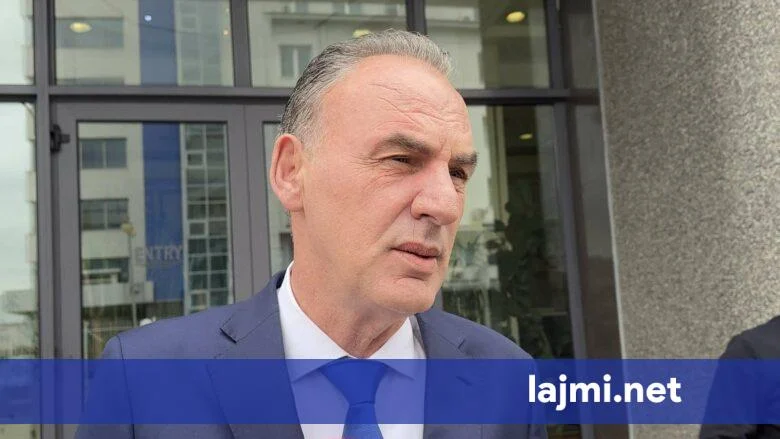
THE HAGUE/PRISTINA – On the cusp of one of the most anticipated verdicts in Kosovo’s post-war history, former Kosovo Liberation Army (KLA) commander Fatmir Limaj has voiced a profound hope, suggesting that his own acquittal, alongside that of former Prime Minister Ramush Haradinaj, should pave the way for the liberation of four prominent KLA leaders currently facing trial at the Kosovo Specialist Chambers in The Hague. Limaj’s remarks, made just a day before the Special Court was expected to deliver its judgment on charges against Hashim Thaçi, Kadri Veseli, Rexhep Selimi, and Jakup Krasniqi, underscore the immense emotional and political weight carried by the proceedings.
"It is an extraordinarily difficult night, everything comes to mind. The effects will then be effects that we, as Kosovo and its citizens, will have to live with," Limaj stated, articulating a sentiment shared by many across the young Balkan nation. He expressed a fervent desire for closure: "This chapter should finally close tomorrow." His ultimate hope, echoing the aspirations of a significant portion of the Kosovar populace, is for the defendants – revered as "founders of the KLA and the state" – to "return as they left, proud and dignified."
Limaj’s public statement is more than just a personal reflection; it represents a strategic assertion of legal precedent and a deeply held national narrative. His argument posits a direct link between past acquittals for high-ranking KLA figures and the expected outcome for the current defendants, all of whom are emblematic figures of Kosovo’s struggle for independence. The Special Court’s verdict is not merely a legal decision; it is a moment that will inevitably reshape Kosovo’s political landscape, its relationship with the international community, and its internal understanding of its own foundational myth.
The Core Assertion: Precedent and Hope
Fatmir Limaj’s central argument rests on the premise that his and Ramush Haradinaj’s previous acquittals by international tribunals should serve as a powerful precedent for the current trial. Limaj believes that the legal and factual underpinnings that led to their exoneration should logically extend to Thaçi, Veseli, Selimi, and Krasniqi. This perspective, widely embraced within Kosovo, views the KLA’s actions during the 1998-1999 war as a legitimate struggle for self-determination against Serbian aggression, making any prosecution of its commanders a contentious and often perceived as unjust endeavor.
Limaj’s specific wording, "I expect that tomorrow the founders of the KLA and the state will return as they left, proud and dignified," reflects a deep conviction in the moral righteousness of their cause and a demand for their legal vindication. For many Kosovars, these figures are not just individuals on trial but symbols of their national identity and hard-won independence. A conviction would be seen by many as an affront to the KLA’s legacy and, by extension, to the very foundation of the Kosovar state.
Limaj’s Own Legal Journey: Setting the Stage
Fatmir Limaj, known by his wartime nom de guerre "Çeliku" (Steel), was a prominent figure within the KLA’s operational command during the Kosovo War. His post-war political career saw him rise to ministerial positions and become a significant voice in Kosovar politics. However, his journey has been punctuated by multiple encounters with international justice.
Limaj was first indicted by the International Criminal Tribunal for the former Yugoslavia (ICTY) in 2003, becoming the first KLA commander to face charges from the UN tribunal. The charges related to his alleged role in the "Lapuša Camp" in central Kosovo, where he was accused of individual criminal responsibility for crimes against humanity and war crimes, including murder, cruel treatment, and inhumane acts against both Serb and Albanian civilians, as well as prisoners of war.
After a protracted trial, Limaj was acquitted by the ICTY Appeals Chamber in 2005. The appeals judges found that the prosecution had failed to prove beyond a reasonable doubt that Limaj had commanded the Lapuša detention camp or that he had exercised authority over the guards. This acquittal was a landmark moment for Kosovo, viewed by many as a vindication of the KLA’s struggle and a setback for those seeking to prosecute its members.
Following his ICTY acquittal, Limaj faced further legal challenges within Kosovo, under the supervision of the European Union Rule of Law Mission (EULEX). In 2013, he was indicted on charges of war crimes committed against civilians and prisoners of war in the Kleçka detention camp in 1999. After several retrials and appeals, Limaj was ultimately acquitted of all charges in 2017 by a Kosovo court. These repeated acquittals have solidified his image in Kosovo as a figure who has endured and overcome legal scrutiny, making his current appeal for his comrades particularly resonant.
The Haradinaj Precedent: A High-Profile Acquittal
Ramush Haradinaj, another iconic KLA commander and later Prime Minister of Kosovo, also underwent a similarly arduous legal process at the ICTY, with outcomes that significantly shaped the discourse around KLA accountability. Haradinaj, known as "Smoki" during the war, commanded the KLA’s operational zone in Dukagjini (western Kosovo).
He was first indicted by the ICTY in 2005, charged with war crimes and crimes against humanity, including murder, cruel treatment, and rape, alleged to have been committed against Serbs, Roma, and Albanians perceived as collaborators. Haradinaj voluntarily surrendered to the ICTY and, after his initial trial, was acquitted on all counts in 2008. The ICTY Trial Chamber found insufficient evidence to prove his involvement in a joint criminal enterprise or his command responsibility for the alleged crimes.
However, the prosecution appealed, and in 2010, the Appeals Chamber ordered a partial re-trial, citing significant witness intimidation issues that had hampered the original proceedings. Haradinaj was again acquitted in 2012 following the re-trial, with the judges stating that the prosecution had again failed to prove its case beyond a reasonable doubt.
Haradinaj’s acquittals were met with widespread celebrations in Kosovo, reinforcing the perception that the KLA’s actions were legitimate and that its commanders were being unfairly targeted. His cases became highly politicized, with many in Kosovo viewing the trials as an attempt to equate the actions of the KLA with those of the Serbian forces responsible for widespread atrocities. The acquittals of both Limaj and Haradinaj established a strong narrative within Kosovo that KLA leaders, when subjected to rigorous legal scrutiny, have been found innocent. This history forms the bedrock of Limaj’s current argument for the "founders of the state."
The Special Court: Mandate, Controversies, and the Current Trial
The Kosovo Specialist Chambers and Specialist Prosecutor’s Office (SCSPO), commonly referred to as the "Special Court," stands as a unique and often contentious institution in the landscape of international justice. Its establishment and ongoing operations are deeply intertwined with Kosovo’s post-conflict narrative and its complex relationship with the international community.
Genesis of the Specialist Chambers
The origins of the SCSPO can be traced back to a 2010 report by Council of Europe rapporteur Dick Marty. Marty’s report made serious allegations of war crimes and crimes against humanity, including organ trafficking, committed by elements of the KLA, particularly after the end of the 1999 war. These allegations, which implicated high-ranking KLA figures, created significant international pressure for accountability.
Following intense diplomatic efforts, the Kosovo Assembly, under significant international pressure, voted in 2015 to establish the SCSPO. Crucially, while it operates under Kosovo law, the Chambers are located in The Hague, Netherlands, and are staffed by international judges and prosecutors. This unique hybrid structure was designed to address concerns about witness intimidation and political interference within Kosovo, issues that had plagued previous war crimes trials conducted by EULEX and local courts. For many Kosovars, the establishment of the SCSPO was a painful concession, seen as an imposition by the international community and a challenge to the KLA’s heroic legacy.
The SCSPO’s mandate is specifically focused on investigating and prosecuting individuals for crimes against humanity, war crimes, and other crimes under Kosovo law, allegedly committed between January 1998 and December 2000. This specific timeframe ensures that the court primarily addresses allegations against the KLA, a point of significant contention in Kosovo, where many argue that Serbian crimes during the same period have not been adequately addressed.
The Defendants: From Battlefield to The Hague
The current trial involves four of Kosovo’s most prominent political figures, all of whom played central roles in the KLA and subsequently in the formation and governance of the independent state:
- Hashim Thaçi: The most prominent figure, known as "Gjarpëri" (The Snake) during the war. He was the political leader of the KLA and later served as Kosovo’s Prime Minister and President. His indictment and subsequent resignation from the presidency in 2020 sent shockwaves through the country.
- Kadri Veseli: Known as "Luli," Veseli was a key figure in the KLA’s intelligence apparatus and later served as Speaker of the Kosovo Assembly and leader of the Democratic Party of Kosovo (PDK).
- Rexhep Selimi: A senior KLA commander and political commissar, Selimi later became a prominent member of the Vetëvendosje Movement and a member of the Kosovo Assembly.
- Jakup Krasniqi: A KLA spokesperson during the war, Krasniqi later served as Speaker of the Kosovo Assembly and held other high-ranking political positions.
These individuals are not merely former soldiers; they are the architects of modern Kosovo. Their trial is therefore seen by many as a trial of the nation itself. The charges against them include joint criminal enterprise, war crimes (illegal detention, cruel treatment, torture, murder), and crimes against humanity (imprisonment, arbitrary detention, other inhumane acts, torture, murder, enforced disappearance of persons, persecution). The indictment alleges that they were part of a widespread and systematic attack against persons perceived as opponents, including Serbs, Roma, and Kosovar Albanians who were seen as collaborators or political rivals.
The Trial in Progress: A Marathon for Justice
The trial of Thaçi, Veseli, Selimi, and Krasniqi commenced in April 2023, following their arrests in November 2020 and subsequent transfer to The Hague. It has been a lengthy and complex process, marked by extensive witness testimony, presentation of vast amounts of evidence, and intricate legal arguments. The prosecution seeks to prove their involvement in a joint criminal enterprise, holding them responsible not just for direct actions but also for the alleged crimes committed by their subordinates under their command responsibility.
The defense teams have vigorously challenged the prosecution’s evidence, often arguing that the KLA operated in a chaotic wartime environment and that any individual crimes were not part of a systematic policy directed by the leadership. They have also emphasized the KLA’s role as a legitimate liberation movement. The trial has been closely followed in Kosovo, often with live broadcasts and intense public debate, highlighting the deep divisions within society regarding the court’s legitimacy and the legacy of the KLA. The pre-trial detention of the defendants for several years has also been a point of significant grievance for their supporters in Kosovo.
Legal Perspectives: Precedent vs. Specificity
Fatmir Limaj’s assertion that his and Haradinaj’s acquittals should influence the current trial raises critical questions about legal precedent and the distinct nature of different international and hybrid justice mechanisms. While the sentiment is understandable, the legal reality is more nuanced.
The Weight of Prior Acquittals
From a strictly legal standpoint, the acquittals of Limaj and Haradinaj by the ICTY do not automatically create binding legal precedent for the SCSPO. The ICTY and the SCSPO, while both dealing with crimes in the former Yugoslavia, are distinct legal bodies with different mandates, jurisdictions, and potentially different evidentiary standards and legal frameworks.
- Jurisdiction and Mandate: The ICTY was a UN ad hoc tribunal with a broad mandate across the former Yugoslavia. The SCSPO, while international in composition, operates under Kosovo law and has a very specific mandate focused on the period 1998-2000 and the allegations of the Marty report.
- Charges and Evidence: The specific charges against Thaçi et al. at the SCSPO may differ in detail and scope from those faced by Limaj and Haradinaj at the ICTY. The prosecution at the SCSPO may present new evidence, different witnesses, or a different interpretation of existing evidence. The legal theory of "joint criminal enterprise" (JCE), while not new, may be applied with specific factual patterns that distinguish it from previous cases.
- Standard of Proof: While both courts require proof "beyond a reasonable doubt," the specific evidence presented, the credibility of witnesses, and the legal arguments made will be unique to each case. An acquittal in one case does not mean that similar allegations against different individuals, even from the same organization, will necessarily lead to the same outcome. The SCSPO is not bound by the ICTY’s factual findings in unrelated cases.
- Res Judicata: The principle of res judicata (a matter already judged) applies to prevent re-litigation of the same facts between the same parties. It does not apply here because the defendants are different, and while the KLA is a common element, the specific allegations, timeframes, and evidence presented are new to this court.
Therefore, while the acquittals of Limaj and Haradinaj are politically significant and offer a beacon of hope for their supporters, their direct legal impact on the SCSPO’s verdict is limited. The SCSPO judges will base their decision solely on the evidence presented in the current trial, applying the relevant legal provisions of Kosovo law as interpreted by the Chambers.
Command Responsibility and Joint Criminal Enterprise
The charges against Thaçi et al. heavily rely on the legal concepts of "command responsibility" and "joint criminal enterprise" (JCE). These are crucial for understanding the prosecution’s strategy:
- Command Responsibility: This doctrine holds superiors accountable for the crimes committed by their subordinates if they knew or had reason to know that such crimes were being committed or were about to be committed, and failed to take necessary and reasonable measures to prevent them or punish the perpetrators. Given the hierarchical structure of the KLA, albeit informal in some respects, this doctrine is central to holding the leadership accountable for alleged actions on the ground.
- Joint Criminal Enterprise (JCE): This concept holds individuals criminally responsible for crimes committed by a group of persons acting with a common plan or purpose. The prosecution alleges that the defendants shared a common plan to commit crimes against perceived opponents of the KLA. Proving JCE requires demonstrating that the accused participated in the common plan and that the crimes were a foreseeable consequence of that plan.
The SCSPO’s approach to these doctrines, particularly in the context of a non-state armed group fighting an independence war, will be closely scrutinized. The defense will undoubtedly argue that the chaotic nature of wartime operations, the lack of a fully centralized command structure, and the absence of a deliberate policy to commit crimes negate the application of these doctrines to their clients. The verdicts will therefore not only determine the fate of the individuals but also contribute to the evolving jurisprudence on these complex aspects of international criminal law.
Broader Implications: A Nation’s Future at Stake
The verdict from the Kosovo Specialist Chambers extends far beyond the individual fates of the four defendants. It carries profound implications for Kosovo’s political stability, its international standing, regional reconciliation efforts, and the very narrative of its statehood.
Political Ramifications within Kosovo
The immediate aftermath of the verdict is expected to trigger significant political reactions within Kosovo. If the defendants are acquitted, it would be hailed as a national triumph, a vindication of the KLA’s struggle, and a powerful reaffirmation of Kosovo’s independence narrative. This could strengthen the positions of political parties historically associated with the KLA, potentially leading to shifts in the political landscape.
Conversely, if convictions are handed down, the reaction could be volatile. Many Kosovars view these men as national heroes, and their conviction could be seen as an unjust rewriting of history and an attack on the foundations of the state. This could lead to widespread protests, social unrest, and a deepening sense of victimhood and disillusionment with international justice. It might also polarize the political scene, with some calling for a re-evaluation of Kosovo’s relationship with the international community, while others might emphasize the importance of individual accountability. The internal cohesion of Kosovo, a young democracy still grappling with state-building challenges, would be severely tested.
The verdict will also inevitably influence public perception of the KLA itself. For a generation, the KLA has been venerated as the sole force that secured independence. Any legal finding of widespread criminal conduct by its leadership could force a difficult national introspection, potentially leading to a more nuanced, albeit painful, understanding of the war.
International Standing and Regional Relations
The SCSPO verdict will also have significant repercussions for Kosovo’s international standing. For its Western allies, particularly the EU and the US, who championed the establishment of the court, the outcome will be seen as a test of Kosovo’s commitment to the rule of law and its ability to confront difficult truths about its past. Convictions might be viewed by some as a necessary step towards full democratic maturity and a prerequisite for deeper Euro-Atlantic integration. Acquittals, while celebrated in Pristina, might be met with quiet diplomatic concern in some quarters, particularly if they are perceived as a failure to deliver justice for alleged victims.
In the Western Balkans, the verdict will heavily impact the already fraught relations between Belgrade and Pristina. Serbia, which views the KLA as a terrorist organization, has been a strong proponent of the SCSPO and will closely scrutinize the outcome. Convictions would likely be celebrated in Serbia as a form of justice for Serb victims and a validation of Belgrade’s narrative of the conflict. Acquittals, however, would be met with outrage and accusations of bias, potentially derailing any progress in the EU-facilitated dialogue aimed at normalizing relations between the two countries. The prospect of reconciliation in the region, already fragile, could either be marginally advanced or severely set back by the court’s decision.
The Pursuit of Justice and Reconciliation
At its heart, the SCSPO is meant to deliver justice for victims, both Albanian and Serb, who suffered during and immediately after the conflict. The challenge for the court is to uphold the principles of fair trial and due process while simultaneously addressing the profound need for accountability for alleged atrocities.
From the perspective of Serb victims and their families, the SCSPO represents a last hope for justice, especially after what they perceive as a failure by the ICTY and local courts to adequately address crimes committed against Serbs by the KLA. For them, convictions would offer a measure of closure and recognition of their suffering.
For many Kosovar Albanians, however, the court itself is perceived as an injustice, a mechanism designed to tarnish the KLA’s struggle and create a false moral equivalency between the aggressor (Serbia) and the victim (Kosovo). This stark divergence in perspectives highlights the immense difficulty in achieving true reconciliation in the region. The verdict, regardless of its outcome, will be interpreted through these deeply entrenched historical and political lenses, making it difficult to satisfy all parties and truly advance the cause of reconciliation. It will inevitably intensify the debate over who the real victims and perpetrators were, rather than definitively resolving it.
Limaj’s Emotional Appeal: "Proud and Dignified"
Fatmir Limaj’s concluding remarks – "proud and dignified" – encapsulate the deep yearning within Kosovo for its leaders, its historical narrative, and its very foundation to be validated. It is an appeal not just for legal exoneration but for moral and national vindication. For Limaj and many Kosovars, the return of Thaçi, Veseli, Selimi, and Krasniqi as free men would symbolize the ultimate victory of their struggle for independence, confirming that the KLA’s war was unequivocally just and that its leaders acted with integrity.
This sentiment reflects a collective identity forged in conflict and cemented by the shared experience of liberation. To see these figures, who are intrinsically linked to the birth of the nation, acquitted would reinforce the foundational myth of Kosovo as a state born out of a righteous war against oppression. It would allow Kosovo to continue its journey with its heroes unblemished, their legacy intact. The emotional weight of this expectation cannot be overstated, defining the mood across Kosovo as it awaits a verdict that will resonate for generations.
Conclusion: The Unfolding Chapter
As the Kosovo Specialist Chambers prepared to deliver its verdict, the tension in Pristina and The Hague was palpable. Fatmir Limaj’s powerful statement, drawing on the memory of his own and Ramush Haradinaj’s acquittals, articulated a profound national hope for the vindication of the KLA’s struggle. His words underscored that this trial is far more than a legal proceeding; it is a critical juncture for Kosovo’s historical narrative, its political future, and its quest for identity and recognition on the international stage.
The outcome, whether acquittals or convictions, will undeniably mark a pivotal moment in Kosovo’s post-war trajectory. It will test the resilience of its institutions, challenge its collective memory, and inevitably influence the delicate balance of power in the Western Balkans. Whatever the judgment, this chapter will not simply close; it will unfold into new debates, new challenges, and a renewed shaping of Kosovo’s destiny in the ongoing pursuit of justice, truth, and lasting peace.