
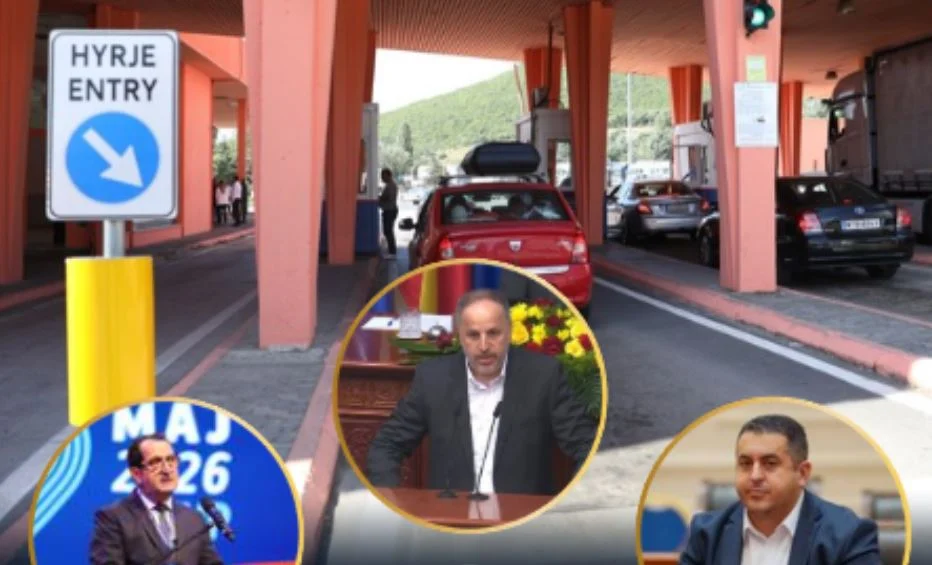
TIRANA, ALBANIA – [Insert Date, e.g., October 26, 2023] – A significant diplomatic and political incident unfolded today at the Qafë Thanë border crossing, as three prominent North Macedonian officials, including two Members of Parliament and a high-ranking government official, were allegedly denied entry into Albania. The officials, all members of the VLEN political coalition, claim they were held for approximately an hour without clear explanation before being informed of a blanket entry ban. Sources suggest the unprecedented move by Albanian authorities is linked to their alleged involvement in the "Flamingo Revolution" protests in Tirana, a broad civil movement opposing government policies and environmental projects.
The incident has swiftly escalated into a diplomatic imbroglio, raising questions about freedom of movement for political figures within the Western Balkans, the nature of bilateral relations between Albania and North Macedonia, and the growing sensitivity of the Albanian government to internal dissent and perceived external interference.
Main Facts
On [Insert Date, e.g., October 26, 2023], Bekim Qoku, a Member of Parliament and coordinator of the VLEN parliamentary group, along with fellow MP Adnan Azizi, and Hasim Murtezani, the Deputy General Secretary of the Government of North Macedonia, attempted to cross into Albania at the Qafë Thanë border point. The three officials, travelling with diplomatic passports, were reportedly subjected to an hour-long wait without official explanation from Albanian border authorities.
According to their accounts, an initial communication indicated that three members of their delegation would be permitted entry, while a fourth, unnamed individual travelling with them, would be barred. In a show of solidarity and protest against the unexplained partial denial, the entire delegation decided to abandon their planned visit and return to North Macedonia. It was only after this decision that they were reportedly informed of a comprehensive entry ban specifically targeting them.
The North Macedonian news outlet TV21, citing undisclosed sources, has reported that the denial of entry is suspected to be directly connected to the officials’ alleged involvement in the organization of the "Flamingo Revolution" protests in Tirana. This civil movement, which gained significant traction in late May 2023, began as a series of environmental protests against controversial construction projects in the protected Narta Lagoon and Zvërnec areas, as well as development plans on Sazan Island. It subsequently broadened into a more extensive anti-government movement, articulating wider grievances against the administration of Prime Minister Edi Rama.
The denial of entry to high-ranking officials holding diplomatic passports is an unusual occurrence in regional relations, particularly between two countries that share close ties and aspirations for European Union integration. It signals a potential hardening of stance by Albanian authorities towards perceived external support for domestic opposition movements.
Chronology of Events
The unfolding of the incident at Qafë Thanë was marked by a sequence of events that left the North Macedonian officials questioning the motives and legality of the Albanian authorities’ actions.
The Incident Unfolds at Qafë Thanë
The three North Macedonian officials – Bekim Qoku, Adnan Azizi, and Hasim Murtezani – arrived at the Qafë Thanë border crossing, a crucial land link between North Macedonia and Albania, at approximately [Time, e.g., 10:30 AM] on [Insert Date]. They presented their diplomatic passports to the Albanian border police, expecting a routine passage given their official status and the generally cordial relations between the two neighbouring states.
However, their entry process was far from routine. Instead of swift clearance, the delegation was asked to wait. This waiting period stretched to approximately one hour, during which time the officials claim they received no official explanation or specific reason for the delay from the Albanian border authorities. The absence of immediate clarification contributed to a growing sense of unease and suspicion among the North Macedonian representatives.
Initial Partial Refusal and Delegation’s Protest
After the prolonged wait, the officials were reportedly approached by border personnel who delivered an ambiguous message. They were informed that three members of their group would be allowed to proceed into Albania, but a fourth individual, whose identity was not specified in the initial reports but was part of their travelling party, would be denied entry. This selective refusal immediately raised concerns within the delegation.
The North Macedonian officials viewed this partial denial as arbitrary and politically motivated. In a clear demonstration of solidarity and protest against what they perceived as an unjust and ungrounded decision, the entire delegation decided not to proceed with their journey. They collectively chose to abandon their planned visit to Albania and turn back towards North Macedonia. This decision underscored their unified stance against the lack of transparency and the perceived targeting of one of their members.
Subsequent Notification of a Blanket Ban
It was only after the delegation had formally expressed their intention to return that a more definitive communication was reportedly issued by the Albanian border authorities. According to the officials, they were then informed that there was, in fact, a general entry ban specifically imposed on them, collectively, preventing their entry into Albania. This subsequent notification contradicted the earlier partial refusal, suggesting either a rapid change in official directive or an initial attempt to obfuscate the true nature of the ban.
The officials expressed significant frustration and indignation at this belated and broad prohibition, particularly given their diplomatic status and the lack of a clear, official reason. The late notification of a comprehensive ban, following an hour of unexplained waiting and an initial partial refusal, only deepened their conviction that the decision was politically motivated and lacked proper legal justification.
Departure and Immediate Reactions
Following the explicit confirmation of the entry ban, the North Macedonian delegation proceeded to return to North Macedonia. Upon their return, the officials, particularly Bekim Qoku, were quick to issue statements condemning the incident. They characterized the actions of the Albanian authorities as unacceptable, a violation of diplomatic protocol, and a politically charged move designed to intimidate or penalize them for their perceived views or activities. Their immediate reactions set the stage for a broader diplomatic and political fallout.
Supporting Data & Context
The incident at Qafë Thanë cannot be fully understood without examining the backgrounds of the officials involved, the political landscape they represent, the significance of diplomatic protocols, and the controversial "Flamingo Revolution" that allegedly triggered the ban.
Who are the Officials?
The three North Macedonian officials are key figures within their country’s political establishment, particularly within the Albanian political spectrum in North Macedonia.
- Bekim Qoku: As a Member of Parliament and, crucially, the coordinator of the VLEN parliamentary group, Qoku holds a significant leadership position. The VLEN coalition (Worth Coalition) represents a significant bloc of ethnic Albanian parties in North Macedonia, often articulating strong positions on issues related to Albanian national interests and democratic governance. His role places him at the forefront of political discourse and inter-ethnic relations in North Macedonia.
- Adnan Azizi: Also a Member of Parliament, Azizi is another prominent voice within the VLEN coalition. His presence alongside Qoku emphasizes the collective nature of their planned visit and the unified political stance they represent.
- Hasim Murtezani: As the Deputy General Secretary of the Government of North Macedonia, Murtezani holds a high-level executive position. His involvement elevates the incident from a purely parliamentary matter to one involving the executive branch of the North Macedonian government, lending it greater official weight and diplomatic sensitivity.
The fact that two MPs and a government official, all holding diplomatic passports, were denied entry is highly unusual and suggests a deliberate and coordinated decision by Albanian authorities.
The VLEN Coalition: A Bridge or a Provocation?
The VLEN coalition is a significant political force among ethnic Albanians in North Macedonia. Formed by several Albanian opposition parties, VLEN aims to consolidate political influence and advocate for the rights and interests of the Albanian community. Their platform often includes calls for greater transparency, rule of law, and democratic reforms, issues that resonate not only within North Macedonia but also across the wider Albanian-speaking region.
The coalition’s active engagement in regional Albanian political discourse might be perceived differently by various governments. While they may see themselves as promoting pan-Albanian democratic values, the Albanian government under Prime Minister Edi Rama might view such engagement, particularly if it involves support for domestic opposition movements, as an unwelcome interference in internal affairs. This perception could be a critical factor in understanding the denial of entry.
Qafë Thanë Border Crossing: A Symbol of Connectivity
The Qafë Thanë border crossing is one of the busiest and most strategically important checkpoints between Albania and North Macedonia. It serves as a vital economic and cultural artery, facilitating trade, tourism, and the movement of people. For many, it symbolizes the close ties and aspirations for regional integration that both countries share. An incident of this nature at such a significant crossing inevitably draws attention and can amplify the perception of strained relations.
Diplomatic Immunity and Protocol
Holders of diplomatic passports, such as Qoku, Azizi, and Murtezani, are generally afforded certain privileges and immunities under international law, primarily the Vienna Convention on Diplomatic Relations. While diplomatic immunity does not grant absolute freedom from a host country’s laws, denial of entry for a high-ranking official with a diplomatic passport is a serious step. It typically requires a clear, justifiable reason, such as a direct threat to national security, and is usually communicated through formal diplomatic channels to avoid unnecessary friction. The alleged lack of immediate, clear explanation and the subsequent, somewhat contradictory, communication from Albanian border authorities suggest a potential deviation from established diplomatic protocol, further exacerbating the incident’s gravity.
The "Flamingo Revolution": A Catalyst for Conflict?
The core allegation linking the North Macedonian officials to the "Flamingo Revolution" protests in Tirana provides the crucial context for the entry ban. The "Flamingo Revolution" is a significant civil movement with a complex trajectory.
- Origins in Environmentalism: The movement ignited in late May 2023, sparked by widespread public outcry against a series of controversial government-backed development projects. Key concerns included interventions in the Narta Lagoon and Zvërnec areas, both ecologically sensitive zones vital for biodiversity, particularly for migratory birds like flamingos (hence the movement’s evocative name). Activists and environmentalists raised alarms about the potential destruction of habitats, loss of biodiversity, and the long-term ecological impact of these projects. Similarly, proposed development plans on Sazan Island, a former military base with unique natural beauty, also fueled public anger, with critics alleging lack of transparency and potential private interests overriding public good.
- Evolution into Broader Anti-Government Movement: What began as specific environmental protests quickly evolved into a broader, more encompassing anti-government movement. The environmental grievances became a focal point for wider discontent, including allegations of corruption, lack of transparency in government decision-making, state capture, and a perceived erosion of democratic norms under Prime Minister Edi Rama’s administration. The movement attracted a diverse coalition of civil society organizations, opposition activists, intellectuals, and concerned citizens, staging numerous demonstrations in Tirana and other cities, often characterized by creative and symbolic acts of protest.
- Alleged North Macedonian Involvement: The specific claim by TV21 sources is that the North Macedonian officials were involved in "organizing" these protests. This goes beyond mere solidarity or passive support. "Organizing" implies active participation in planning, logistics, or leadership of the demonstrations. Such an accusation, if substantiated, would be viewed by the Albanian government as a serious breach of sovereignty and an unacceptable interference in its internal affairs. The nature and extent of this alleged involvement remain unconfirmed by official sources, but the mere accusation is potent enough to provoke a strong reaction from the Albanian state. The government might perceive such cross-border political engagement as an attempt to destabilize the domestic political landscape or embolden its political opponents.
Official Responses
The immediate aftermath of the incident saw a flurry of reactions, though formal official statements remained largely guarded.
Albanian Authorities
- Ministry of Interior/Border Police: As of [Insert Date], Albanian border authorities and the Ministry of Interior have maintained a conspicuous silence regarding the incident. There has been no official statement clarifying the reasons for the denial of entry, nor any legal basis cited for the ban. This lack of transparency has drawn criticism and fueled speculation about the political motivations behind the decision. Any potential future statement is expected to be couched in terms of national security, adherence to national laws, or maintaining public order, without directly addressing the specific allegations of political targeting.
- Ministry of Foreign Affairs: The Albanian Ministry of Foreign Affairs has also remained silent, opting not to comment on the incident. This diplomatic quietude might be an attempt to de-escalate the situation or to avoid validating the claims of political motivation. However, the absence of an official explanation through diplomatic channels is itself a notable aspect, signaling a potential breakdown in standard bilateral communication protocols.
- Government Spokesperson/Prime Minister’s Office: There has been no direct comment from the office of Prime Minister Edi Rama or any government spokesperson. This silence, particularly from the highest echelons of government, suggests a deliberate strategy to avoid dignifying the incident with an official response, thereby attempting to control the narrative or to prevent further diplomatic complications.
North Macedonian Authorities
- Officials Involved (Qoku, Azizi, Murtezani): Upon their return to North Macedonia, Bekim Qoku, Adnan Azizi, and Hasim Murtezani were vocal in their condemnation of the incident. They characterized the denial of entry as a "scandalous" act, "politically motivated," and an "unacceptable violation" of their rights as elected officials and government representatives. Qoku, in particular, stated that the incident was a direct attempt by the Albanian government to stifle dissent and punish those who express solidarity with civil society movements, even across borders. They called for immediate clarification and an official apology from the Albanian state.
- VLEN Coalition: The VLEN political coalition issued a strong statement denouncing the actions of the Albanian authorities. The coalition described the incident as an affront to democratic principles, freedom of movement, and good neighbourly relations. They reiterated their unwavering support for the officials and demanded a full explanation, suggesting that such actions undermine regional cooperation and EU integration efforts. The coalition is likely to leverage this incident for domestic political gain, portraying themselves as champions of democratic values against perceived authoritarian tendencies.
- North Macedonian Ministry of Foreign Affairs: The Ministry of Foreign Affairs of North Macedonia has confirmed that it is actively monitoring the situation. While an official diplomatic note or formal complaint has not been publicly announced, it is highly probable that internal consultations are underway, and diplomatic channels are being utilized to seek clarification from their Albanian counterparts. The Ministry is expected to express concern over the treatment of its high-ranking officials and to reiterate the importance of respecting international diplomatic norms.
- Government of North Macedonia: Given that one of the individuals, Hasim Murtezani, is a Deputy General Secretary of the Government, the incident touches upon the executive branch. The Government of North Macedonia is likely to express its concern through appropriate channels, emphasizing the need for robust bilateral relations and adherence to international protocols. However, the broader government’s response may also be tempered by the need to maintain overall good relations with Albania.
Implications
The denial of entry to high-ranking North Macedonian officials carries significant implications across diplomatic, political, and regional spheres.
Bilateral Relations Between Albania and North Macedonia
Historically, Albania and North Macedonia have maintained generally good and cooperative relations, particularly in their shared pursuit of Euro-Atlantic integration. This incident, however, represents a notable strain on these ties. While unlikely to lead to a complete breakdown, it introduces an element of mistrust and diplomatic tension. North Macedonia may demand a formal explanation and apology, and the failure to provide a satisfactory response could sour relations for some time, affecting joint initiatives and political dialogue. The incident could also be interpreted as a message from Tirana to other regional actors about the limits of cross-border political engagement.
Political Implications in North Macedonia
For the VLEN coalition, this incident offers a potent platform for domestic political discourse. They are likely to frame it as an example of their commitment to democratic values and solidarity with civil society, even in the face of perceived government overreach. This could bolster their image among their ethnic Albanian constituency and potentially among broader segments of the North Macedonian public concerned about regional democratic backsliding. Conversely, the ruling parties in North Macedonia might face pressure to react strongly to protect the dignity of their officials, balancing this with the need to maintain stable interstate relations.
Political Implications in Albania
In Albania, the incident could further solidify the government’s image among its base as a strong authority capable of defending national interests and sovereignty. However, it also risks alienating segments of the population and civil society who advocate for freedom of expression and regional solidarity. Critics of Prime Minister Rama’s government are likely to seize upon this event as further evidence of authoritarian tendencies, lack of transparency, and a willingness to suppress dissent, even from external sources. It could also fuel accusations of paranoia or overreaction by the government regarding the "Flamingo Revolution" and other protest movements.
Freedom of Movement and Expression
The denial of entry, especially to elected officials and a government representative using diplomatic passports, raises serious questions about the fundamental principle of freedom of movement within the Western Balkans. It also touches upon the broader issue of freedom of expression and political engagement across borders. In a region striving for greater integration and cooperation, such restrictions could set a worrying precedent, potentially hindering cross-border civil society initiatives, academic exchanges, and political solidarity movements. It risks creating a chilling effect where political figures might hesitate to express views or engage with civil society in neighbouring countries for fear of official repercussions.
EU Aspirations and Regional Stability
Both Albania and North Macedonia are candidate countries for membership in the European Union. Incidents that highlight issues of rule of law, transparency, democratic principles, and regional stability are closely monitored by Brussels. The denial of entry, particularly if it is perceived as politically motivated and lacking due process, could raise concerns within the EU about the commitment of both countries to fundamental European values. It could also complicate the narrative of a stable and integrating Western Balkans, a key objective for the EU.
Precedent and Future Actions
This incident could establish a problematic precedent for how regional governments handle cross-border political interactions, especially those perceived as critical of the ruling establishment. It might embolden other governments to impose similar restrictions, leading to a more fragmented and less open political space in the Balkans.
Moving forward, the incident will likely trigger formal diplomatic notes, official inquiries, and potentially a period of heightened political rhetoric between Tirana and Skopje. The North Macedonian government is expected to pursue official explanations, while the Albanian government will likely face continued pressure, both domestically and internationally, to justify its actions or risk further damage to its reputation and bilateral relations. The ultimate resolution will depend on the willingness of both sides to engage in transparent dialogue and adhere to established diplomatic norms.