By Prasad Ananthakrishnan and Vera Songwe
October 7, 2026
In a global financial landscape defined by volatility and widening policy gaps, a profound economic divergence has emerged. As the United States grapples with persistent inflationary pressures that have pushed dollar borrowing costs to multi-year highs, China is steering a different course. With the People’s Bank of China pursuing aggressive monetary easing to stimulate its domestic economy, local interest rates are plummeting toward record lows.
For African governments, this bifurcation in global capital costs represents more than just a macroeconomic curiosity; it is a structural opportunity. As the geopolitical friction between Washington and Beijing shows signs of a fragile, yet functional, thaw, African nations are uniquely positioned to act as the bridge between these two economic titans. By strategically pairing US expertise in natural gas infrastructure with China’s dominance in solar and battery storage technology—and financing these ventures through the advantageous liquidity of Asian capital markets—Africa could secure a sustainable and affordable path to industrialization.
The Geopolitical Context: A Fragile Truce
The recent state visit by Chinese President Xi Jinping to Washington, D.C., served as the backdrop for a recalibration of the world’s most significant bilateral relationship. While the outcome was modest—a two-month extension of the existing trade truce—the underlying rhetoric marked a shift from the confrontational posture that characterized the early 2020s.
Both President Xi and his American counterpart have signaled a desire for stability, particularly ahead of the high-stakes Asia-Pacific Economic Cooperation (APEC) summit in Shenzhen this November and the G20 summit in Miami this December. For developing nations, this cooling of tensions is a welcome development. The era of "de-risking" and forced decoupling, which threatened to bifurcate global supply chains and force emerging markets into impossible binary choices, is being replaced by a more pragmatic, if cautious, engagement.
Chronology of Recent Diplomatic and Economic Shifts
- January 2026: US Federal Reserve maintains high interest rates to combat sticky service-sector inflation, keeping dollar-denominated debt costs at historic peaks.
- March 2026: China announces a significant stimulus package, leading to a steady decline in 10-year government bond yields as the PBOC pushes for domestic liquidity.
- July 2026: Preliminary discussions begin between US and Chinese delegations regarding a "stability framework" for bilateral trade.
- October 2026: President Xi’s state visit to Washington results in the extension of the trade truce and a commitment to maintain open communication channels.
- November 2026 (Forthcoming): APEC Summit in Shenzhen, where trade protocols and regional investment guidelines will be further negotiated.
- December 2026 (Forthcoming): G20 Summit in Miami, where the focus is expected to shift toward international debt sustainability and global financial architecture reform.
The Financial Divergence: A Tale of Two Interest Rates
The core of the opportunity for Africa lies in the cost of capital. In the United States, the "higher for longer" interest rate environment has made dollar-denominated sovereign debt significantly more expensive for African nations to service. The strengthening of the dollar against local African currencies has further exacerbated debt-to-GDP ratios, limiting the fiscal space available for development.
Conversely, China’s current monetary policy environment is characterized by an abundance of liquidity. With Chinese interest rates at record lows, there is a massive incentive for Chinese institutional capital to seek yield abroad. By tapping into these Asian capital markets, African governments can potentially secure financing at rates far below those offered by Western commercial banks or multilateral institutions currently tethered to dollar-denominated benchmarks.
Supporting Data: The Cost of Capital Gap
| Metric | United States (USD) | China (CNY) |
|---|---|---|
| 10-Year Treasury/Bond Yield | ~4.8% | ~1.9% |
| Policy Stance | Restrictive/Tightening | Accommodative/Easing |
| Primary Capital Flow | Inward/Defensive | Outward/Search for Yield |
This spread—nearly 300 basis points—is the engine of the opportunity. When a sovereign borrower shifts a portion of their infrastructure financing from a dollar-denominated instrument to a yuan-denominated one, the long-term impact on debt sustainability is profound.
A Strategic Hybrid Model for Development
The most efficient path forward for Africa is not to choose between the US and China, but to integrate the strengths of both.
The US Role: Natural Gas and Energy Security
Natural gas serves as a crucial "transition fuel" for many African nations. The United States, as the world’s largest producer of liquefied natural gas (LNG), possesses the technological expertise and infrastructure management capabilities required to help African nations monetize their gas reserves. By partnering with US firms, African countries can ensure stable, reliable baseload power that is essential for industrial growth, while simultaneously adhering to environmental standards that align with international ESG (Environmental, Social, and Governance) requirements.
The China Role: Solar and Battery Storage
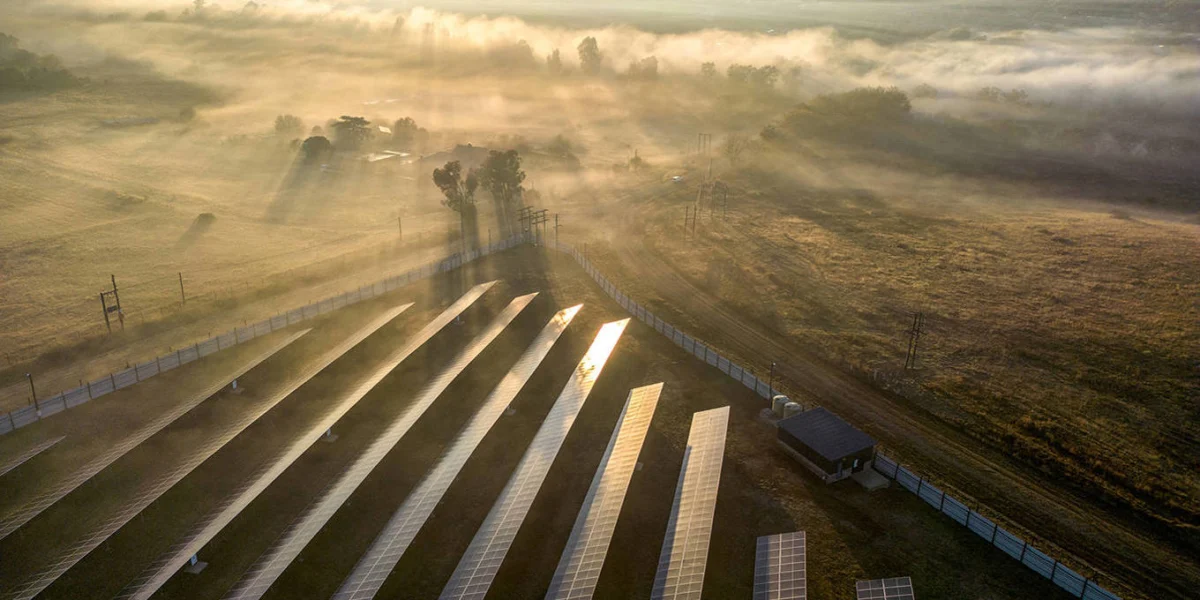
While the US excels in traditional energy and technology, China has achieved an insurmountable lead in the manufacturing of solar photovoltaics and utility-scale battery storage. By partnering with Chinese firms to install massive solar arrays and storage grids, African nations can leapfrog the traditional "centralized coal" phase of development. These projects, financed by low-cost yuan credit lines, can provide clean, renewable energy to off-grid rural communities and industrial hubs alike.
Official Responses and Stakeholder Perspectives
The international community has reacted with cautious optimism to the prospect of this tripartite synergy.
- The World Bank: A spokesperson noted that "any mechanism that lowers the cost of borrowing for infrastructure development in sub-Saharan Africa is a welcome development," while warning that countries must remain diligent about transparency and debt sustainability.
- African Union (AU) Commission: AU officials have emphasized that Africa’s "non-aligned" stance is a strategic asset. "We are open to partnerships that bring technology, lower the cost of capital, and respect our sovereignty," the Commission stated following the latest trade truce announcement.
- US State Department: Washington officials have signaled that they are less concerned with African nations working with China on "green energy" than they are with strategic military or dual-use technological infrastructure. This creates a "safe zone" for cooperation on climate-related projects.
Implications: The Road to 2027 and Beyond
The implications of this strategy are far-reaching. If African governments can successfully navigate this delicate diplomatic landscape, they will achieve three critical goals:
- Debt Sustainability: By diversifying the currency composition of their debt and moving toward lower-interest yuan-denominated instruments, African nations can reduce the fiscal burden of debt servicing.
- Infrastructure Realization: A hybrid energy strategy—gas for baseload reliability and solar/storage for sustainable growth—will provide the energy security required for meaningful industrialization.
- Geopolitical Autonomy: By acting as a nexus for US and Chinese investment, African nations elevate their position on the global stage, proving that they are not mere spectators in the geopolitical theater, but active agents of their own economic destiny.
Challenges to Success
However, this path is not without risks. The primary challenge remains the "currency mismatch." African nations that generate revenue in local currencies but borrow in yuan must develop sophisticated hedging mechanisms to protect against fluctuations in the CNY/local currency exchange rate. Furthermore, the political pressure from Washington to avoid Chinese investment remains a persistent, if waning, factor.
Additionally, the reliance on foreign capital—regardless of whether it is American or Chinese—requires a high degree of transparency and governance. African nations must ensure that these infrastructure projects are not just "deals," but long-term assets that generate local employment and value-added manufacturing, rather than merely extracting raw materials for export.
Conclusion
The US-China thaw is not merely a diplomatic reprieve; it is a signal for a new era of global economic integration. For African leaders, the choice is no longer between an American or a Chinese model. The future belongs to those who can synthesize the two. By leveraging the low-cost liquidity of the Chinese market to finance solar and storage, while utilizing American expertise to stabilize the power grid with natural gas, Africa can unlock a decade of unprecedented growth.
The next few months—leading through the Shenzhen APEC summit and into the Miami G20—will be a testing ground for this strategy. If implemented with discipline and a clear focus on national interest, the "Great Divergence" in global interest rates will be remembered as the catalyst that allowed the African continent to finally bridge the energy gap and step confidently into the global economy.