By Financial Analysis Desk
January 9, 2026
The U.S. labor market concluded 2025 on a cooling note, according to the latest data released by the Bureau of Labor Statistics (BLS) this morning. The December employment report reveals a complex landscape of cooling job growth, persistent underemployment, and a subtle shift in the unemployment rate that belies broader underlying weaknesses. As economists parse the data, the consensus is clear: the robust labor market that defined much of the post-pandemic recovery is now navigating a period of significant deceleration.
Main Facts: The Headline Numbers
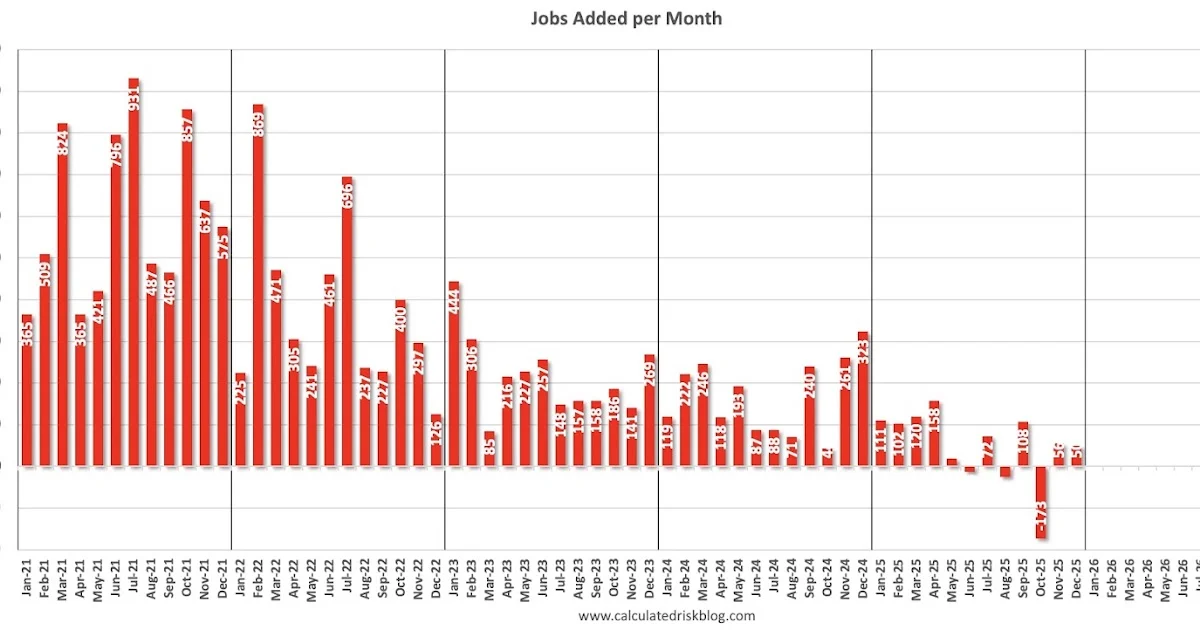
The headline job growth figures for December came in slightly below market expectations, casting a shadow over the end of the year. While the headline number provides a snapshot of current hiring, the true narrative is found in the revisions: October and November figures were slashed by a combined 76,000 jobs, signaling that the economy had been losing steam for several months longer than initially reported.
Despite the downward revisions, the official unemployment rate saw a slight decline, dipping to 4.4%. While a lower unemployment rate is typically viewed as a sign of economic health, in this context, it arrives alongside concerns regarding labor force participation and the quality of available work. The divergence between the headline unemployment rate and the nuanced realities of labor utilization suggests that while individuals are finding work, the nature of that employment remains increasingly precarious.

Chronology: The Arc of 2025
To understand the significance of the December report, one must view it as the final chapter of a tumultuous 2025.
- Q1-Q2 2025: The labor market began the year showing resilience, with wage growth attempting to stabilize following the inflationary spikes of the previous years.
- Q3 2025: As interest rates remained elevated, hiring began to thin out across manufacturing and technology sectors, leading to a steady, if gradual, increase in the number of individuals working part-time for economic reasons.
- October–November 2025: The realization that job creation had been overestimated during these months—a cumulative 76,000-job deficit—forced a recalibration of market expectations.
- December 2025: The final report of the year solidified the trend: a labor market that is no longer overheating, but one that is struggling to maintain its pre-pandemic stability.
Supporting Data: Dissecting Labor Health
The Prime-Age Participation Pivot
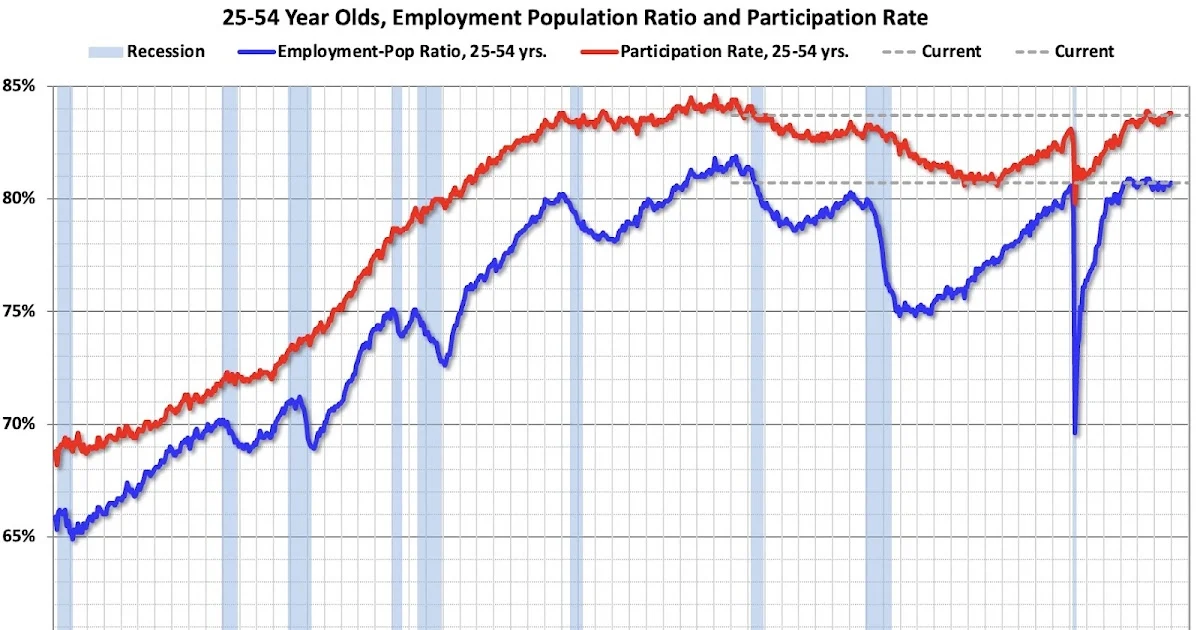
The most reliable indicator of a healthy labor market is the performance of prime-age workers (those aged 25 to 54). This cohort is less affected by demographic shifts like early retirement or students remaining in the workforce longer.
In December, the prime-age participation rate held steady at 83.8%, mirroring the November figure. Simultaneously, the employment-population ratio for this group edged up to 80.7% from 80.6%. While these metrics remain near the highest levels of the millennium—a testament to the resilience of the workforce—they have nonetheless drifted downward from their recent post-pandemic peaks. This stagnation suggests that the "easy" gains in labor force re-entry have been exhausted, and the market is now contending with structural barriers to full employment.
Wage Growth and Inflationary Pressures
Average hourly earnings for private employees continue to reflect the broader cooling of the economy. In March 2022, wage growth peaked at a staggering 5.9% year-over-year (YoY), driven by the post-pandemic scramble for talent. As of December 2025, that growth has decelerated to 3.8% YoY, up slightly from 3.6% in November.

This recovery in nominal wage growth is a double-edged sword. While it provides some relief to workers facing the residual effects of previous years’ inflation, it also suggests that wage-push inflation has not entirely vanished from the economy. The Federal Reserve will likely view this 3.8% figure as a critical indicator, balancing the need to avoid a wage-price spiral against the risks of suppressing income growth in a slowing economy.
Underemployment and the U-6 Metric
Perhaps the most concerning data point in the December report is the persistence of "part-time for economic reasons." There are currently 5.34 million Americans working part-time who desire full-time employment. This figure is substantially higher than pre-pandemic levels and reflects a labor market where many individuals are "stuck" in underemployment, unable to find the hours or full-time roles they require.
This contributes to the broader U-6 labor underutilization rate, which dropped to 8.4% in December from 8.7% in November. While this is a significant improvement from the catastrophic 22.9% recorded in April 2020, it remains well above the 7.0% seen in February 2020. The gap between current underutilization and pre-pandemic norms highlights the unfinished business of the labor market recovery.
Long-Term Unemployment
The cohort of workers unemployed for 27 weeks or more rose to 1.95 million in December, up from 1.91 million in November. This uptick in long-term unemployment is a lagging indicator that often signals structural mismatch—where the skills of the unemployed no longer align with the evolving needs of employers. With this figure trending above pre-pandemic levels, the specter of "scarring"—where long-term unemployment leads to a permanent loss of labor force attachment—remains a top concern for policymakers.

Official Responses and Economic Outlook
While the Federal Reserve and the Department of Labor rarely comment on a single monthly release, the market reaction has been swift. Economists from major financial institutions have characterized this as a "weak report." The combination of downward revisions to previous months and stagnant growth in core areas suggests that the economy is approaching a potential inflection point.
The narrative from analysts is shifting from "how much more can the economy grow?" to "how can the economy avoid a slide into recession?" The deceleration of hiring, combined with the uptick in long-term unemployment, suggests that businesses are becoming increasingly cautious in their capital expenditure and staffing plans.
Implications for the Future
The December employment report carries several critical implications for the year ahead:
- Monetary Policy Uncertainty: The Federal Reserve is now in a tighter bind. If the labor market continues to cool at this pace, the argument for lower interest rates will gain momentum. However, if wage growth remains at 3.8%, the fear of entrenched inflation may prevent the Fed from taking aggressive action to stimulate the market.
- Consumer Sentiment: With wage growth moderating and underemployment remaining high, consumer confidence is likely to face headwinds. As households grapple with these economic realities, personal spending—the primary engine of the U.S. economy—may begin to slow.
- Structural Shifts: The persistence of long-term unemployment and the elevation of the U-6 rate suggest that the labor market is not merely slowing down; it is changing. The challenge for 2026 will be to facilitate a transition for those trapped in part-time roles or those who have been out of the workforce for more than six months.
In summary, the December employment report is a sobering reminder that the era of rapid, pandemic-fueled labor market expansion has ended. As we move into 2026, the focus must shift from quantity of jobs to quality and stability. The labor market is currently holding its ground, but the foundations are thinner than they were a year ago, leaving little room for error as the country faces the economic headwinds of the coming year.