Executive Summary: A Cooling Labor Market
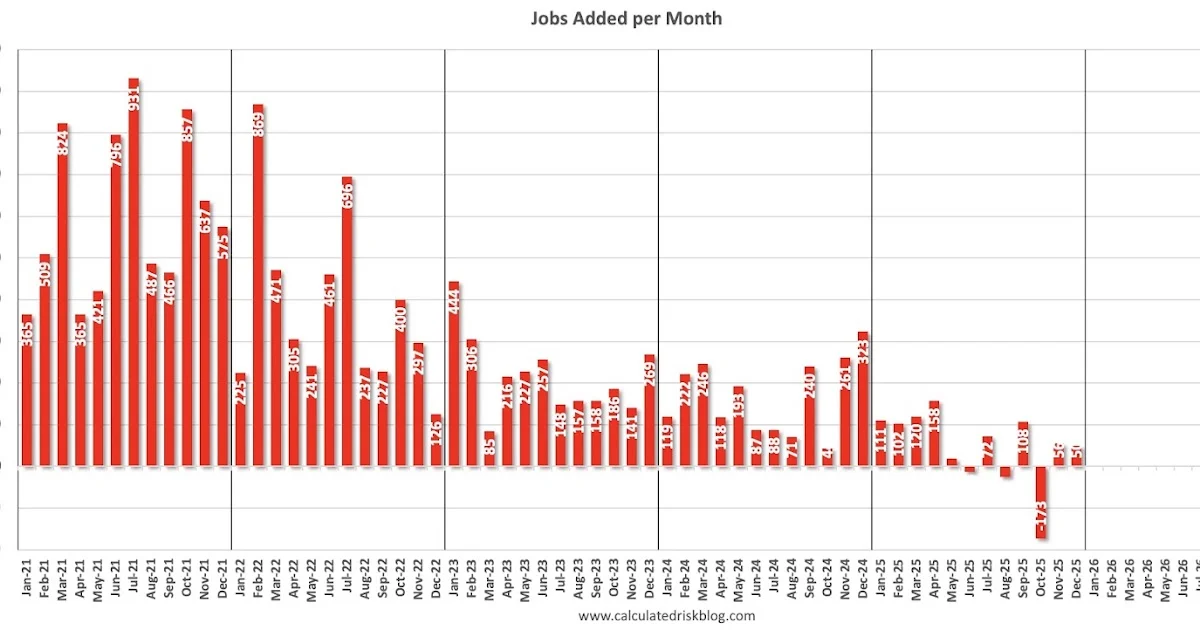
The U.S. labor market concluded 2026 on a somber note, as the Bureau of Labor Statistics (BLS) released its December employment situation report on January 9, 2026. The data paints a picture of a cooling economy, characterized by sluggish job creation and a significant downward revision of previous months’ performance. Total nonfarm payroll employment increased by a modest 50,000 in December, while the unemployment rate remained largely stagnant at 4.4 percent.
When accounting for substantial downward revisions to October and November figures, the broader narrative of the second half of 2026 shifts from one of modest growth to one of near-stagnation. With only 93,000 jobs added to the economy over the last eight months, economists and policymakers are increasingly concerned about the durability of the labor market as it faces high interest rates, persistent inflationary pressures, and shifting consumer demand.
Chronology of the December Report
The release of the December data follows a series of reports throughout the latter half of 2026 that signaled a loss of momentum. By mid-morning on January 9, the BLS confirmed that the anticipated "soft landing" for the economy was facing significant friction.
- October Revisions: Initially reported as a decline of 105,000, the BLS revised October’s job numbers downward by an additional 68,000, bringing the total loss for that month to 173,000.
- November Revisions: November’s figures, previously estimated at a gain of 64,000, were adjusted downward by 8,000, settling at 56,000.
- The Combined Impact: The cumulative effect of these revisions resulted in 76,000 fewer jobs in the economy than were previously accounted for. This adjustment significantly altered the quarterly outlook, confirming that the growth trajectory for the final quarter of 2026 was substantially weaker than market analysts had projected.
- December Performance: December added 50,000 jobs, a figure that, while positive, is insufficient to keep pace with population growth, leading to further questions regarding the structural health of the workforce.
Supporting Data and Sectoral Analysis
The December data highlights a growing divergence between sectors. While specific areas of the economy continue to provide stability, the overall trend is one of widespread slowing.

Sectoral Winners and Losers
The BLS report indicates that the modest growth observed in December was concentrated in a few key areas:
- Food Services and Drinking Places: Continued to show resilience, remaining a primary driver of service-sector employment.
- Health Care and Social Assistance: These sectors continue to be the backbone of current job growth, likely driven by demographic shifts and the aging population.
- Retail Trade: In a concerning sign for consumer-facing industries, the retail sector reported a net loss of jobs. This suggests a potential pullback in consumer discretionary spending or a shift in operational strategies as retailers prepare for a leaner fiscal environment.
Workforce Participation and Demographics
The broader labor market metrics provide additional context for the stagnation:
- Labor Force Participation Rate: The rate ticked down to 62.4% from 62.5% in November. This decline suggests that a portion of the population is stepping away from the workforce, a trend that warrants close observation in early 2026.
- Employment-Population Ratio: This metric saw a marginal increase, rising to 59.7% from 59.6%. While this technically represents an improvement, it must be viewed through the lens of the lower participation rate.
- Year-over-Year Growth: The annual pace of job creation has slowed to approximately 0.594 million jobs. This represents a sharp deceleration compared to the post-pandemic recovery era, confirming that the economy has exited its high-growth phase and entered a period of consolidation—or perhaps contraction.
Official Responses and Economic Context
The BLS data is typically treated as the definitive "scorecard" for the U.S. economy, and the reaction from the economic community has been one of cautious concern. While the unemployment rate of 4.4% remains historically low, the downward revisions suggest that the "low unemployment" figure is being bolstered by a shrinking labor force rather than robust hiring.
Analysts from various institutions have pointed out that the 93,000-job gain over the eight-month period starting in April 2026 is a critical red flag. In a healthy, growing economy, this number is typically reached in a single month or two. The current pace indicates that the private sector is becoming increasingly risk-averse, with companies tightening budgets and freezing hiring as they await clearer signals regarding interest rate paths and fiscal policy.

Implications for the Future: A Turning Point?
The implications of this report are wide-reaching, affecting everything from Federal Reserve policy to individual household financial planning.
Federal Reserve Policy
The Federal Reserve, which has spent the better part of the last two years attempting to balance inflation control with labor market stability, faces a dilemma. With job growth stalling, the "dual mandate" is being tested. If the labor market continues to soften, the Fed may be forced to shift its focus from inflation suppression to economic stimulus. The prospect of rate cuts, which has been a topic of debate for months, may now move from a speculative scenario to a near-term necessity if the unemployment rate begins to climb.
The Household Perspective
For the average American, the implications of this report are equally significant. A cooling labor market typically leads to reduced wage growth and fewer opportunities for career advancement. If sectors like retail—a major employer of lower-wage workers—continue to shed jobs, the resulting income pressure could dampen consumer spending, which accounts for approximately 70% of U.S. GDP. This creates a potential feedback loop: less spending leads to lower corporate revenue, which leads to further hiring freezes or layoffs.
Business and Investment Strategy
Businesses are likely to continue their trend of "labor hoarding" for a short while longer, but the persistent weakness in the numbers suggests that this may be unsustainable. For investors, the takeaway is one of defensive positioning. Markets are likely to react with heightened volatility as participants digest the reality that the tailwinds that characterized the 2021–2025 period have largely dissipated.

Conclusion: Looking Ahead to 2026
As we move further into the first quarter of 2026, the focus will remain on whether this weakness is a temporary blip or the beginning of a sustained downturn. The labor market is the engine of the U.S. economy, and for the past eight months, that engine has been misfiring.
Future reports will be scrutinized for any signs of a rebound in hiring or, conversely, evidence of a more systematic collapse in labor demand. Key metrics to monitor include:
- Job Openings and Labor Turnover Survey (JOLTS): Will provide insight into whether companies are simply unable to hire or if they have stopped looking for talent altogether.
- Wage Growth Data: If wages begin to stagnate, it will confirm that the cooling labor market is beginning to affect worker purchasing power directly.
- Regional Employment Data: Disparities between states may reveal which industries are the most vulnerable to the current economic environment.
In summary, the December employment report is a sobering reminder that economic cycles are finite. The era of rapid post-pandemic recovery has clearly ended, replaced by a period of fragility. Policymakers will have to walk a narrow path in the coming months, balancing the risks of recession against the potential for an unexpected inflationary resurgence. For now, the consensus remains that the economy is walking a fine line, with the labor market acting as the primary point of failure or success in the coming year.
As the situation develops, further analysis of the 25-to-54 age demographic—often referred to as the "prime-age" workforce—will be essential. This group’s employment-population ratio remains the most reliable indicator of underlying economic health. Until that metric shows signs of sustained vigor, the broader narrative of the U.S. labor market will remain one of caution, uncertainty, and a desperate search for stability in a shifting economic landscape.