By Editorial Staff | October 12, 2026
The global maritime industry, responsible for transporting over 80% of the world’s trade, is currently standing at a precarious crossroads. As international regulatory bodies tighten carbon emissions mandates and the volatility of global energy markets intensifies, ship owners are finding themselves paralyzed by a lack of viable, future-proof decarbonization strategies.
In a significant move to alleviate this systemic bottleneck, Colorado-based startup Blaze Energy announced this week that it has successfully closed a $6.5 million seed funding round. The investment is earmarked for the commercial scaling of its proprietary "Flex-Fuel Reformer System," a technology designed to allow legacy maritime engines to run on a diverse array of alternative fuels without requiring wholesale engine replacements.
The Core Challenge: Decarbonizing the "Hard-to-Abate" Sector
Maritime shipping is frequently classified as a "hard-to-abate" sector. Unlike the automotive industry, which has seen a relatively rapid shift toward electrification, maritime vessels—particularly large container ships and tankers—require immense power density that current battery technology cannot provide.
While alternative fuels like green ammonia, methanol, and liquefied natural gas (LNG) offer a path toward net-zero, they present a massive logistical and financial headache for operators. A ship built today is expected to remain in service for 20 to 30 years. Committing to a specific fuel infrastructure today—such as building a ship optimized solely for ammonia—is a high-stakes gamble in an environment where the "winning" fuel of the future remains undecided.
Ship owners are currently forced to choose between massive capital expenditure for new "dual-fuel" vessels or sticking to traditional bunker fuels, which puts them at risk of obsolescence as carbon taxes and environmental regulations escalate. Blaze Energy aims to bridge this gap.
The Technological Breakthrough: The Flex-Fuel Reformer System
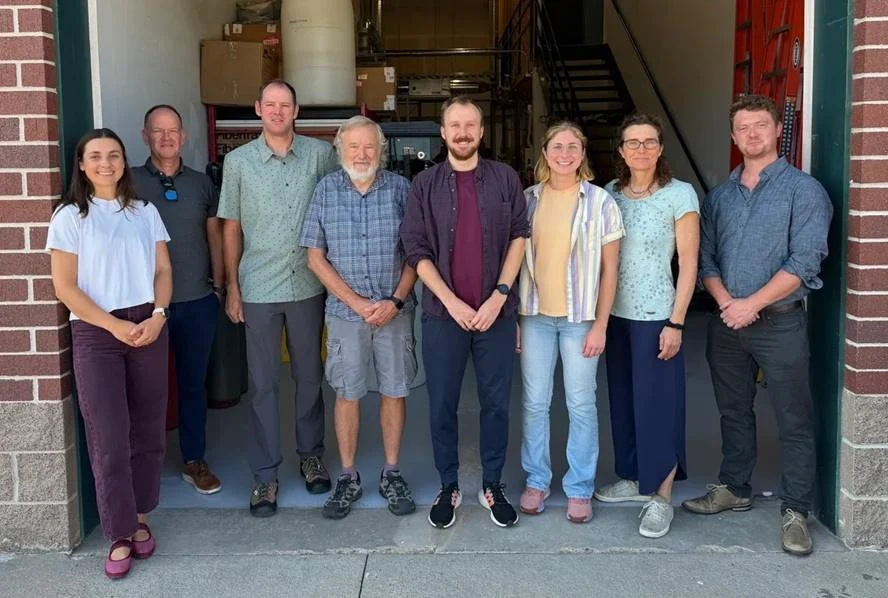
Founded in 2023, Blaze Energy has developed a hardware solution that acts as a bridge between current engine infrastructure and the next generation of cleaner fuels. At the heart of their offering is the Flex-Fuel Reformer System.
How It Works
The system utilizes compact, engine-integrated fuel reforming technology. Instead of forcing an engine to combust raw alternative fuels—which can be technically difficult and inefficient—the Blaze system converts these fuels into a hydrogen-rich mixture onboard the vessel. This process facilitates "hydrogen-assisted combustion." By introducing this hydrogen-rich gas into the combustion chamber of existing engines, the system achieves two primary objectives:
- Enhanced Efficiency: It improves the thermal efficiency of the combustion process.
- Emissions Reduction: It drastically lowers the carbon footprint by allowing the use of cleaner-burning fuels, even in legacy engine designs.
This "fuel-agnostic" approach is the startup’s primary value proposition. It allows ship owners to hedge their bets against energy market volatility. If the price of ammonia spikes, the vessel can potentially switch to methanol or LNG, with the Reformer System adjusting the onboard chemistry accordingly.
Chronology: A Path to Market
The journey for Blaze Energy has been one of rapid, focused development. Since its inception in 2023, the company has operated with a clear roadmap designed to move from theoretical chemistry to heavy-duty maritime application.
- 2023: Blaze Energy is founded, focusing on the intersection of chemical engineering and maritime propulsion. Initial laboratory-scale prototypes are developed.
- 2024: The company secures initial R&D support, moving into pilot-stage testing of the Reformer System in simulated engine environments.
- Early 2025: Successful proof-of-concept testing reveals significant improvements in combustion stability when using hydrogen-reformed fuels.
- Mid-2026: Blaze establishes a presence in Norway, a global hub for maritime innovation and sustainability, complementing its U.S. operations.
- October 2026: Closing of the $6.5 million seed funding round.
- 2027 (Planned): First sea trial scheduled on a vessel operated by Lomar Shipping. This will be the critical "make or break" moment for the technology under real-world ocean conditions.
- 2028 (Planned): Commercial launch of the product for retrofitting existing fleets and potential integration into newbuild designs.
Supporting Data: Why Investors Are Betting on Flexibility
The seed round was led by Propeller Ventures and Catalyzer Ventures, with participation from a robust syndicate including Safar Partners, SOSV, Desai Ventures, and Cartography Capital.
The investor interest stems from a cold, hard look at the economics of the shipping industry. According to industry reports, there are currently tens of thousands of large commercial vessels in operation. Replacing this fleet would cost hundreds of billions of dollars and take decades. Consequently, "retrofitting" is the only economically viable path to meeting the International Maritime Organization’s (IMO) 2050 decarbonization targets.

By enabling vessels to operate on diverse fuels, Blaze Energy is not just selling a piece of hardware; it is selling "operational resilience." In an era of geopolitical instability, where fuel supply chains can be disrupted overnight, the ability to switch fuel sources is a massive competitive advantage for fleet operators.
Official Perspectives: Addressing the Strategic Void
The leadership at Blaze Energy recognizes that the problem they are solving is as much about business strategy as it is about environmental science.
"Maritime shipping used to be about moving cargo safely, on-time, and economically," says Rok Sitar, CEO and Co-Founder at Blaze Energy. "Now, operators need to be experts in fuel markets, energy shifts, and geopolitics just to keep vessels running. Blaze exists to cut through that uncertainty, giving ship owners fuel flexibility through their existing assets, so they can stay resilient no matter what is thrown at them."
From the investor side, the sentiment is focused on the long-term viability of the maritime infrastructure. Kristina Johnson, Partner at Catalyzer Ventures, highlighted the practical necessity of the solution: "Blaze Energy’s Reformer System offers ship owners a practical, cost-effective pathway to meet increasingly stringent emissions requirements while preserving the value of their existing vessels and infrastructure."
The Broader Implications
The success of Blaze Energy’s upcoming pilot with Lomar Shipping in 2027 could have a ripple effect across the global logistics chain.
1. Reducing the "Stranded Asset" Risk
For shipping companies, the greatest fear is that their current vessels will become "stranded assets"—ships that are too expensive to operate under new carbon tax regimes. By providing a low-cost retrofit option, Blaze effectively extends the operational life of current fleets, preventing a massive wave of premature scrapping.

2. Market Acceleration for Alternative Fuels
One of the reasons alternative fuels like green ammonia have struggled to gain traction is the "chicken-and-egg" problem: fuel producers won’t scale up without demand, and ship owners won’t buy the fuel if they don’t have engines that can burn it. By providing the "engine side" of the equation, Blaze acts as a market catalyst, potentially increasing demand for green fuels and helping to stabilize their pricing through increased volume.
3. Geopolitical Stability
By decoupling specific vessel requirements from specific fuel sources, Blaze contributes to a more flexible energy market. Shipping lines will no longer be beholden to a single regional supplier of a niche fuel, allowing them to optimize their refueling stops based on global availability and price.
Conclusion: The Road Ahead
As the world moves toward a lower-carbon future, the solutions that win will not necessarily be the most radical or the most expensive; they will be the ones that provide the most seamless transition for established industries.
Blaze Energy has positioned itself at the nexus of this transition. By focusing on the "middle ground"—the massive, existing global fleet—they are addressing the most urgent needs of the maritime sector. With $6.5 million in fresh capital and a clear trajectory toward maritime testing in 2027, the company is set to become a pivotal player in the effort to decarbonize the veins of the global economy.
The coming eighteen months will be critical. As the team expands its operations between the United States and Norway, the maritime industry will be watching closely to see if the Flex-Fuel Reformer System can truly deliver on its promise of making the industry’s most traditional assets the keys to a cleaner future.