By Economic Analysis Desk
January 9, 2026
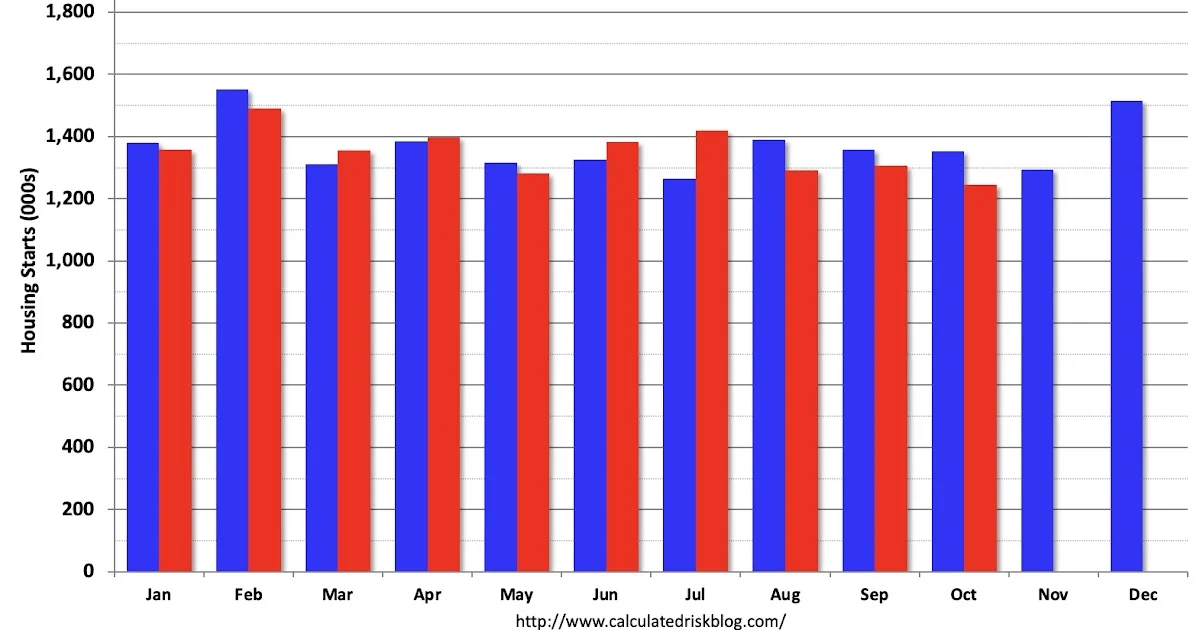
The U.S. residential construction sector is showing signs of renewed volatility as the latest data from the Census Bureau reveals a cooling trend in housing starts. According to figures released this morning, housing starts fell to a seasonally adjusted annual rate of 1.246 million in October 2025. This report, which provides a long-awaited glimpse into the autumn construction climate, underscores a complex landscape characterized by lingering bureaucratic reporting delays and a widening gap between single-family and multi-family development trajectories.
Main Facts: A Sector Under Pressure
The October data provides a snapshot of an industry struggling to maintain the momentum seen in the previous year. With an annual rate of 1.246 million, the construction sector is currently operating below the levels required to significantly ease the national housing inventory deficit.
The primary takeaway from the Census Bureau’s latest release is the year-over-year contraction. When measured against October 2024, total housing starts have retreated by 7.8%. This figure serves as a sobering reminder of the headwinds facing developers, ranging from high interest rates and labor shortages to fluctuating material costs.
For the year-to-date (YTD) period, the picture is one of near-stagnation rather than outright collapse, with total starts down by 0.7% compared to the same period in 2024. However, this aggregate figure masks a profound divergence in the market: while single-family starts have faltered, dropping 7.0% YTD, the multi-family sector has shown remarkable resilience, posting an 18.0% increase YTD. This dichotomy suggests that while the dream of individual homeownership is becoming increasingly difficult to break ground on, the demand for high-density rental units continues to drive urban and suburban development.
Chronology of the Reporting Lag
The release of these figures has been marred by significant logistical hurdles within the Census Bureau. As of January 9, 2026, the federal government is still in the process of rectifying a backlog in its economic reporting cycle.
The data released today covers both September and October 2025—a "catch-up" release designed to bridge the gap in the federal statistical record. Despite this effort, the Bureau remains behind schedule, with November 2025 data currently missing from the public ledger.
This delay creates a "blind spot" for investors, policy makers, and developers who rely on real-time data to gauge the health of the economy. In the construction industry, where lead times are long and capital allocation is highly sensitive to interest rate fluctuations, a multi-month reporting gap can lead to suboptimal decision-making. Analysts are now looking toward the upcoming release of the November figures, expected in the coming weeks, to determine if the October dip was an isolated event or the beginning of a sustained downward trend.
Supporting Data: The 2024 vs. 2025 Comparison
A comparative analysis of the monthly starts between 2024 and 2025 reveals a fluctuating recovery that has largely failed to consolidate.
In 2024, the housing market benefited from a relatively stable, albeit high-interest-rate, environment. By contrast, 2025 has been defined by increased sensitivity to federal monetary policy shifts and shifting consumer sentiment. The graph comparing these two years highlights that while 2025 began with a degree of optimism, the performance during the autumn months has consistently trailed the 2024 benchmarks.
The 7.8% year-over-year decline in October is particularly noteworthy because it reflects the period when mortgage rates typically begin to stabilize ahead of the holiday season. The fact that starts retreated during this period suggests that developers are becoming more cautious about inventory absorption.

The YTD performance provides the most accurate "health check" of the industry. The 7.0% decline in single-family starts reflects the ongoing "lock-in" effect, where existing homeowners with low mortgage rates refuse to sell, thereby forcing developers to rely on new construction to supply the market. Conversely, the 18.0% surge in multi-family starts indicates that developers are betting heavily on the rental market, likely anticipating that younger demographics will remain renters for longer due to the prohibitive costs of single-family entry.
Official Responses and Bureau Commentary
While the Census Bureau has offered little in the way of qualitative analysis to accompany the raw numbers, the statistical community has been vocal regarding the reporting delays. Officials have noted that the complexity of gathering data from disparate regional permitting offices, combined with recent budgetary constraints, has contributed to the processing lag.
Industry trade groups, including the National Association of Home Builders (NAHB), have expressed concern over the delayed data. Representatives noted that for a sector that is the primary engine of the U.S. economy, the lack of timely information creates an unnecessary layer of risk. "We are flying with a broken instrument panel," one industry analyst remarked, noting that the missing November data makes it nearly impossible to assess the immediate impact of recent Federal Reserve commentary on construction planning.
Furthermore, the Bureau has cautioned that seasonal adjustments—which are critical for interpreting housing starts—are being recalculated more frequently to account for the post-pandemic shifts in building patterns. This adds another layer of complexity to the 1.246 million annual rate figure, which is a seasonally adjusted projection rather than a raw count of ground-breakings.
Economic Implications: The Path Forward
The implications of these figures are far-reaching, affecting everything from municipal tax bases to the national inflation rate.
1. The Inventory Crisis
The most immediate concern is the lack of supply. With starts falling to 1.246 million, the U.S. remains well below the "Goldilocks" zone of housing production, which many economists estimate should be closer to 1.5 million or 1.6 million units annually to keep pace with household formation. A sustained decline in starts will inevitably keep home prices elevated, even if demand softens, simply due to the extreme scarcity of new listings.
2. Monetary Policy Sensitivity
The Federal Reserve keeps a close eye on residential investment as a proxy for economic vitality. The current slump in single-family starts provides a clear signal to the central bank that the "higher-for-longer" interest rate environment is having a tangible, chilling effect on real estate development. If the November data, when finally released, confirms this cooling trend, it may provide additional impetus for the Fed to consider a more dovish stance in the first quarter of 2026.
3. The Multi-Family Boom
The divergence between single-family and multi-family sectors suggests a structural shift in American housing. If developers continue to prioritize apartment complexes over detached homes, the suburban model of the 20th century may face a permanent transition toward higher-density urban and transit-oriented development. This has significant implications for local governments, which must now grapple with the infrastructure demands of rapidly densifying communities.
4. Labor and Supply Chains
The construction industry is also facing a "softening" of demand for labor. As starts decrease, the urgency to fill specialized construction roles may subside, potentially cooling wage inflation in the trades. However, this comes at the cost of long-term workforce development, as a prolonged slump could drive skilled workers to seek more stable employment in other sectors, exacerbating future labor shortages when the cycle eventually turns upward.
Conclusion
The report for October 2025 serves as a cautionary tale. While the economy has shown resilience in other sectors, the residential construction market remains tethered to the constraints of the current credit environment and administrative volatility.
As we look toward the forthcoming November data—and eventually the year-end totals for 2025—the narrative remains clear: the housing market is at a crossroads. The 7.8% drop in October is a signal that developers are hitting the brakes, and without a significant shift in the broader macroeconomic climate, the prospect of a housing supply surge remains distant. For now, the industry remains in a holding pattern, waiting for both the government to clear its reporting backlog and the market to find its footing in an era of high costs and restricted supply.