In an era where data is the lifeblood of enterprise, the concept of “data sovereignty” has undergone a radical transformation. Once relegated to the dusty corners of legal compliance and IT governance, it has now emerged as a fundamental pillar of business strategy. According to the latest findings from BARC’s 2026 global survey of 320 organizations, data sovereignty is no longer just about avoiding regulatory fines—it is a mandatory condition for executing AI-driven processes at an acceptable level of risk.
The Evolution of Data Sovereignty: From Compliance to Strategy
For years, the discourse surrounding data sovereignty was framed almost exclusively through the lens of regulation. Organizations viewed the protection of data—and the control over where it resides and how it is processed—as a checkbox exercise to satisfy regional mandates like the GDPR in Europe. However, as organizations have moved toward complex, multi-cloud architectures and aggressive AI adoption, the reality has shifted.
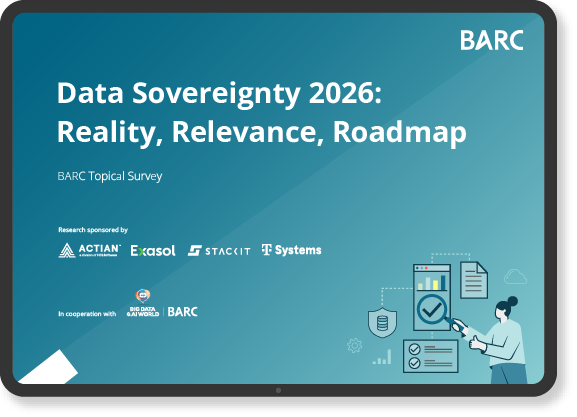
The survey “Data Sovereignty 2026: Reality, Relevance, Roadmap,” authored by industry experts Timm Grosser and Dr. Carsten Bange, highlights a critical juncture. The research reveals that the unchecked integration of third-party cloud services and generative AI tools has created a “sovereignty gap.” Companies are increasingly realizing that if they do not control the data pipelines powering their AI models, they are effectively ceding control of their intellectual property and operational continuity.
Chronology: The Road to the 2026 Landscape
To understand the urgency of the current findings, one must look at the trajectory of the last several years:
- 2021–2022: The initial focus was on “Data Localization.” Organizations scrambled to ensure that data remained within specific geographical borders to comply with nascent international data transfer laws.
- 2023–2024: The rise of Large Language Models (LLMs) and Generative AI shifted the focus toward “Data Integrity.” Companies began questioning the provenance of the training data being ingested by their AI systems.
- 2025: The “Sovereignty Crisis” peaked as major multinational firms reported data leakage incidents resulting from third-party vendor integrations.
- 2026: As of September 2026, the industry has reached a consensus: Data sovereignty is now a boardroom-level issue. It is defined by the ability to maintain independent control over data, regardless of the technological environment or the service provider being utilized.
Supporting Data: What the Numbers Tell Us
The BARC survey, which sampled 320 organizations worldwide, provides a quantitative look at how the perception of risk has evolved.
Nearly 70% of respondents identified “loss of control over sensitive IP” as their primary concern when deploying AI-driven analytics. This fear is not misplaced. The survey shows that for organizations failing to implement robust data sovereignty roadmaps, the cost of remediation—following a data breach or an unauthorized cross-border transfer—has increased by 40% year-over-year.

Furthermore, the data suggests a direct correlation between data sovereignty maturity and AI adoption success. Companies that have successfully implemented “sovereign clouds” or strictly enforced data residency policies are reporting 25% faster deployment cycles for their AI initiatives. Why? Because these organizations have already mapped their data flows and categorized their assets, reducing the friction typically caused by compliance audits during the development phase.
Official Perspectives: Expert Analysis
Timm Grosser, Senior Analyst at BARC, emphasizes that the challenge is as much organizational as it is technical. "The shift we are seeing is that sovereignty is now being treated as a strategic asset," Grosser notes. "If you cannot guarantee the provenance and the privacy of the data feeding your algorithms, you are essentially building your strategy on sand."
Dr. Carsten Bange, CEO of BARC, echoes this sentiment, framing the current landscape as a test of corporate resilience. "Over the past 25 years, we have seen various trends come and go, but the need for control—for sovereignty—is the most enduring. We are helping companies navigate this by moving away from reactive compliance to proactive data management. It is no longer just about where the data is; it is about who has the keys to the kingdom."

Implications: The New Roadmap for 2027 and Beyond
The implications of the 2026 study are clear: the status quo is unsustainable. Organizations that fail to address their data sovereignty posture will face three major risks:
1. The Risk of Operational Paralysis
As international regulations tighten further, companies with fragmented data governance will find themselves unable to pivot quickly. If a service provider is suddenly deemed non-compliant or if a data transfer mechanism is invalidated by a court ruling, those without a clear sovereignty strategy will face immediate operational shutdowns.
2. Intellectual Property Dilution
In the age of AI, the data is the algorithm. If an organization inputs proprietary, sensitive data into a public or even a semi-private cloud model without clear sovereignty controls, they risk that data being assimilated into the vendor’s broader model. This represents an existential threat to competitive advantage.
3. Regulatory and Reputational Damage
Beyond the financial penalties associated with data protection failures, the reputational cost is becoming the more significant deterrent. Customers, partners, and stakeholders are increasingly demanding transparency regarding data stewardship.
Building a Roadmap: The Path Forward
Based on the survey, the most successful organizations are adopting a multi-tiered approach:
- Infrastructure Decoupling: Moving toward architectures that allow the portability of workloads between providers, ensuring no single vendor has a “lock” on the data.
- Data Tiering: Categorizing data based on its sensitivity and sovereignty requirements. Not all data requires the same level of protection, but knowing where the “crown jewels” are is essential.
- AI Governance Committees: Establishing cross-functional teams comprising legal, IT, and business stakeholders to evaluate every AI integration through the lens of sovereignty.
The Role of BARC+ in the Modern Era
As the complexity of the data landscape increases, so too does the need for high-quality, independent research. The BARC+ subscription service, as highlighted in the latest report, provides professionals with the deep-dive insights required to navigate these challenges. For a monthly fee of €79, subscribers gain access to the extensive library of BARC’s market analysis, which serves as a compass for organizations looking to move from uncertainty to mastery.
In conclusion, the 2026 data sovereignty survey is a wake-up call. The era of passive data management is over. Organizations must now treat data sovereignty as a foundational element of their digital infrastructure. By prioritizing control, transparency, and strategic foresight, companies can not only mitigate the risks of the modern digital landscape but also unlock the full potential of their data and AI investments.
About the Authors
Timm Grosser
Senior Analyst, Data & Analytics
Timm Grosser specializes in the intersection of data strategy, governance, and management. With years of experience in guiding organizations through complex technological transformations, he has become a leading voice in how to reconcile the need for innovation with the necessity of control.
Dr. Carsten Bange
Founder and CEO, BARC
Dr. Carsten Bange has dedicated the last 25 years to helping enterprises become data-driven. As the leader of BARC, he oversees a team of experts that provide the critical analysis necessary for businesses to make sound, future-proof decisions in an increasingly complex and regulated technological world.