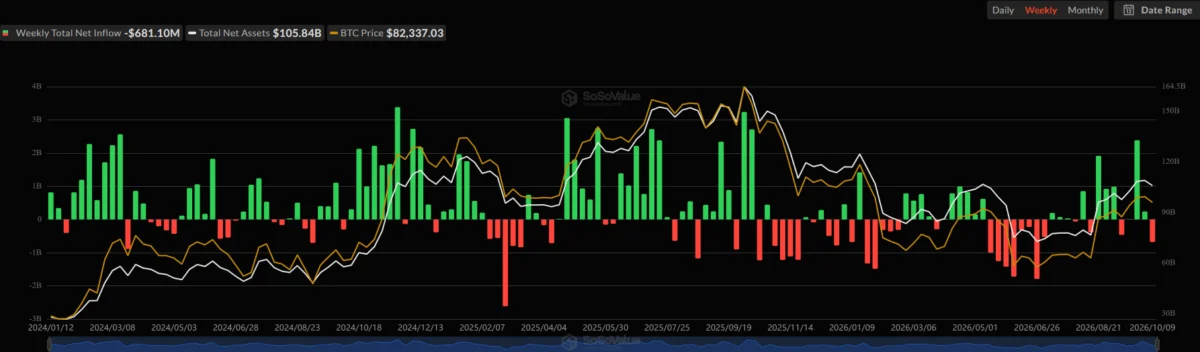
In a dramatic shift that has caught institutional analysts off guard, Bitcoin has fundamentally severed its ties with traditional financial benchmarks. For years, the world’s largest cryptocurrency has been tethered to the rhythmic pulses of the Nasdaq, the volatility of the US Dollar, and the perceived stability of gold. However, data from the past several weeks indicates that Bitcoin is no longer dancing to the beat of the broader macroeconomic drum. Instead, it has embarked on a solitary trajectory, one characterized by aggressive, independent momentum that defies conventional asset-class categorization.
According to the latest analytics from Santiment, the correlations between Bitcoin and its traditional counterparts—stocks, fiat currency, and precious metals—have evaporated in a historically short window. While the market had recently begun to treat Bitcoin as a "digital hedge" akin to gold, the events of the last few days have rendered that narrative obsolete. As BTC surges past the $87,000 threshold, it is increasingly moving in a vacuum, driven by unique market internalities rather than the broader geopolitical or monetary pressures that dictate the movement of traditional equities and commodities.
The Chronology of a Breakout: From Correlation to Autonomy
To understand the gravity of this shift, one must look at the recent timeline. As recently as early September, the financial world was captivated by a striking phenomenon: Bitcoin’s 90-day correlation with gold had climbed above 0.50, reaching a six-year high. At that moment, the prevailing wisdom was that Bitcoin was maturing, shedding its image as a volatile "high-beta" tech stock and adopting the mantle of a legitimate monetary hedge against currency debasement and rising government debt.
This consensus began to fracture following a series of high-stakes events. The first major stress test occurred with the legislative failure of the CLARITY Act, a bill intended to provide regulatory certainty for the crypto industry. In most previous market cycles, such a setback would have triggered a broad-based sell-off, pulling Bitcoin down alongside tech-heavy indices. Instead, after a brief dip to $75,000, Bitcoin staged a rapid, decisive rebound.
While the Nasdaq 100 remained sluggish and gold prices stagnated, Bitcoin’s momentum accelerated. By mid-September, the decoupling was undeniable. While the S&P 500 managed a meager 0.8% gain over a specific late-summer window, Bitcoin surged by more than 36%. Gold, meanwhile, experienced a 1.5% decline, highlighting a divergence that was unthinkable just thirty days prior. This was not a temporary fluctuation; it was a systemic shift in how the asset is being priced by the global market.
Supporting Data: Why the Narrative Changed
The data provided by Santiment Intelligence offers a granular look at this divergence. The firm’s metrics illustrate that the breakout began with a surge in accumulation among smaller holders—specifically those holding between 0.1 and 10 BTC. This retail-led buying pressure provided the foundation for the rally, eventually attracting larger institutional capital that recognized Bitcoin’s newfound resilience to external shocks.
The Breakdown of Traditional Ties
- The Gold Divergence: In early September, Bitcoin and gold were rallying in tandem, driven by the "debasement trade"—a strategy where investors buy assets that protect against the inflation of fiat currency. However, as the Federal Reserve maintained its restrictive monetary stance, gold retreated, while Bitcoin continued to climb. This proves that Bitcoin’s current rally is not merely a response to inflation fears, but rather a reflection of internal market demand.
- The Equity Decoupling: Historically, Bitcoin was traded as a proxy for the Nasdaq. When interest rates rose, Bitcoin plummeted. When tech stocks rallied, Bitcoin followed. Today, that sensitivity to interest rate announcements has been muted. Even as the market reacted to the latest Federal Reserve rate hikes, Bitcoin’s price action remained largely unshaken, suggesting that liquidity for BTC is coming from sources outside the traditional tech-investment pool.
- Volatility as an Independent Variable: The speed of this reversal is the most significant indicator of the shift. In previous cycles, it took months for Bitcoin to "uncouple" from equity markets. This year, the process took mere weeks, signaling a more mature, reactive, and independent market structure.
Official and Institutional Perspectives
Market analysts and institutional observers are currently split on the long-term implications of this decoupling. Some argue that Bitcoin’s independence is a sign of "hyper-adoption," where the asset has reached a critical mass of utility that no longer requires validation from legacy markets. Others remain cautious, noting that historical correlations have always been fluid, fluctuating based on liquidity cycles and macroeconomic policy.
Regulatory observers have noted that the failure of the CLARITY Act, rather than harming the market, may have emboldened it. "The crypto market has reached a stage of psychological maturity," noted one industry analyst. "Investors are no longer waiting for government permission to value the asset. They are pricing in the intrinsic demand for decentralized, censorship-resistant money regardless of what happens in the halls of Congress."
The Federal Reserve’s recent maneuvers have also provided a backdrop for this shift. While the Fed’s restrictive policies are typically "risk-off" for assets like stocks, Bitcoin has proven to be the exception to the rule. By absorbing both the news of the rate hike and the legislative disappointment, Bitcoin has signaled that it is no longer playing by the rules of traditional macroeconomic correlation.
Implications: What Lies Ahead?
The implications of Bitcoin’s detachment from traditional markets are profound for both institutional and retail investors. If Bitcoin no longer moves with the stock market, its role in a diversified portfolio must be re-evaluated.
1. Reassessing Risk Management
Traditional portfolio theory relies heavily on correlation coefficients to mitigate risk. If Bitcoin’s correlation with the S&P 500 effectively drops to near zero, it ceases to be a "high-beta" risk asset and becomes a genuine "diversifier." This could lead to a massive influx of institutional capital from pension funds and endowments that previously avoided the asset due to its high correlation with tech stocks.
2. The End of the "Digital Gold" Myth
While many in the community still prefer the "digital gold" moniker, the data suggests that Bitcoin is something entirely new. Gold is a commodity; Bitcoin is a global, digital-native monetary network. Its price is dictated by network effects, halving schedules, and global adoption rates, rather than the industrial demand or safe-haven status that drives the gold market.
3. Macroeconomic Resilience
The fact that Bitcoin could sustain a climb to over $87,000 in the face of negative regulatory news and monetary tightening is a testament to its resilience. It suggests that the market is beginning to treat Bitcoin as a "macro-asset" in its own right—one that functions as an alternative system, rather than a side-car to the existing financial order.
Conclusion: A New Frontier
While it would be premature to declare that Bitcoin has permanently decoupled from the macro environment—historical precedents suggest that all assets eventually find a correlation point during extreme liquidity events—the current trend is undeniable. Bitcoin is moving on its own terms.
For investors, this signifies a new frontier. The days of simply tracking the Nasdaq to predict the price of Bitcoin are over. Moving forward, the market must look toward on-chain metrics, global adoption rates, and the internal velocity of the Bitcoin network itself. As the asset enters this phase of unprecedented independence, it continues to challenge the definitions of value, risk, and the future of finance itself. Whether this rally holds remains to be seen, but one thing is certain: Bitcoin has officially broken free from the constraints of the traditional financial landscape.