By Yunes Bonay
In the bustling, high-tech kitchens of Singapore, sago is often relegated to the status of a culinary curiosity—a translucent, chewy pearl found in sweet coconut milk desserts. It is viewed through a lens of texture and tradition, largely detached from the landscapes that produce it. However, as global consumers increasingly look beyond the "gluten-free" label to interrogate the ethics, environmental footprints, and human stories behind their food, this humble palm starch is undergoing a radical re-evaluation.
In the heart of South Sorong, within Indonesia’s Southwest Papua province, sago is far more than a commodity. It is the bedrock of a sophisticated ancestral philosophy: “Tabraw’o mamfe teme”—or, “The forest is our Mother.” Here, a new generation of Indigenous youth and women is transforming this ancestral staple into a vehicle for economic independence and environmental restoration, proving that the path to a sustainable future may well be rooted in the wisdom of the past.
The Global Context: A Market in Transition
The modern food system is facing a reckoning. The global gluten-free market is projected to reach US$13.7 billion by 2034, with the Asia-Pacific region anticipating an annual growth rate of 11.1% between 2025 and 2030. In markets like Singapore, where health-conscious and ethically minded consumers are driving a 6.97% compound annual growth rate in plant-based alternatives, the reliance on imported ingredients has become a point of contention.
Singapore, with its limited agricultural capacity, relies entirely on imports for sago. As the city-state shifts toward a "30 by 30" food security goal—aiming to produce 30% of its nutritional needs locally by 2030—the provenance of its imports has never been more critical. The narrative of sago from South Sorong provides a compelling alternative to mass-produced, industrial alternatives. It offers a model of a restorative economy where the product’s value is inextricably linked to the health of the ecosystem from which it originates.
Chronology of Resistance and Renewal
The current movement in South Sorong did not emerge in a vacuum; it is the culmination of decades of careful stewardship and hard-fought resistance.
- 1996: The Tehit Knasaimos community formally begins its resistance against the encroachment of large-scale palm oil developments, choosing to preserve their customary forests rather than surrender them to monoculture plantations.
- 2018–2019: Recognizing that years of illegal logging and external pressures had left pockets of the forest barren, the community shifts from passive protection to active restoration. Residents begin replanting indigenous sago varieties, including Falya dla (non-thorny), Fa Sampe (thorny), Fablen (coastal), and Fanomik (partially thorny).
- Present Day: The Merdesa Village School (SEKAM), an initiative supported by the organization Bentara Papua, acts as a bridge between traditional knowledge and modern business management. Youth and women are now at the forefront of processing raw sago into high-value flour, noodles, and cookies, effectively turning the forest into a sustainable "bank."
When the Forest is Mother: The SEKAM Initiative
Ewil Woloin, a 23-year-old leader within the SEKAM initiative, represents a new breed of Indigenous activist. For Woloin and his peers, forest management is not merely a job—it is a responsibility passed down through generations.
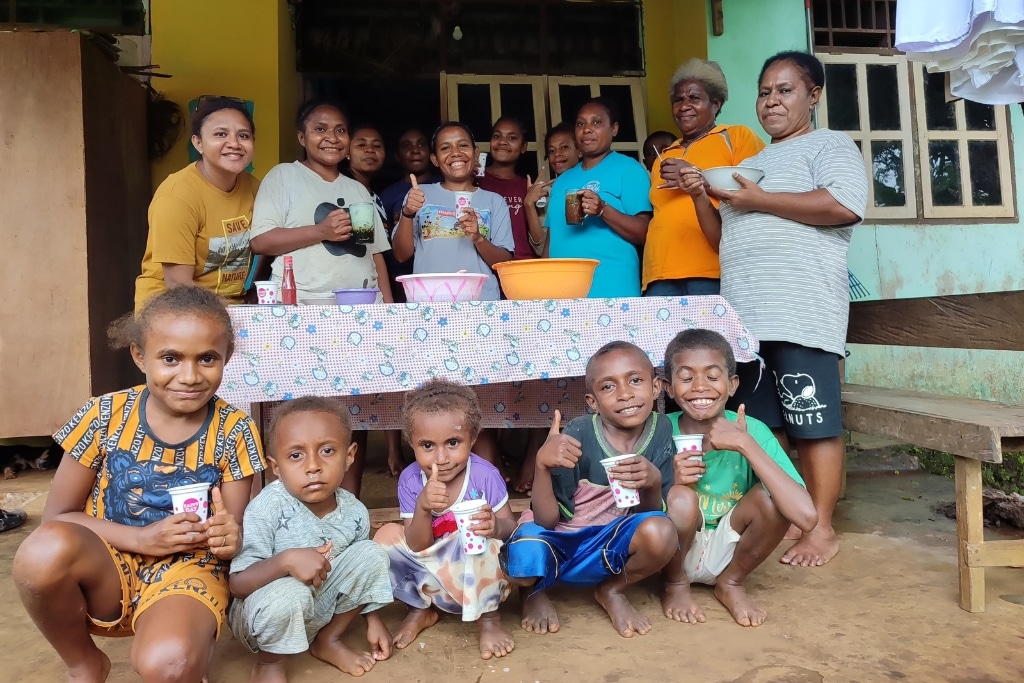
"We tried to educate the community to replant the sago they cut and use barren forest land for reforestation," Woloin explains. "Our struggle has been long. Since 1996, the community has consistently rejected palm oil to ensure this forest remains. The involvement of youth today is a guarantee that in the future, there will be no more barren forests and no more youth who lose their identity as indigenous children of Papua."
The SEKAM initiative serves as an educational and operational hub. It teaches young residents the scientific and cultural nuances of forest management while providing women—the traditional guardians of household food security—with the tools to scale their production. By selecting superior seeds and maintaining the diversity of sago varieties, these women are effectively building a biological and economic buffer against climate instability.
Data-Driven Impact: The Restorative Economy
The impact of this grassroots model is quantifiable. By shifting from raw resource extraction to the production of branded, value-added goods under the Tepung Sagu Mangsir label, the community has seen tangible socio-economic improvements.
- Income Growth: Participating households have reported an average increase in income of IDR 1 million (approximately US$56) per month. While modest by global standards, in the context of the South Sorong economy, this additional income is transformative, providing families with the ability to cover education costs and daily necessities.
- Increased Participation: Female and youth involvement in local economic initiatives has surged by 60%.
- Reforestation: To date, more than five hectares of degraded forest have been rehabilitated with sago palms. This effort has catalyzed the revival of 11 companion tree species, effectively restoring biodiversity in areas that were once nearing exhaustion.
- Institutional Strength: The Kna Mandiri Cooperative now acts as the commercial arm of the movement, streamlining the logistics of selling products in Sorong City and at provincial exhibitions, thereby bypassing exploitative middlemen.
Official Perspectives and Organizational Support
Alink Syafril, Coordinator of the Sira Bentara Papua Station, emphasizes that the initiative is built on a "restorative economic foundation." This model dictates that profits are not merely for personal consumption but are cycled back into the land and the community.
"Our main goal is to prove that they do not need to leave their hometown to prosper; it is enough to process what is on their own customary land," says Syafril. "Welfare does not have to come from destroying nature, but from how we honor what the sago forest has provided."
Bentara Papua’s role is critical in this structure. Beyond mere mentorship, the organization assists in the bureaucratic hurdles that often block Indigenous entrepreneurs, such as securing legal product permits and developing sophisticated marketing strategies that emphasize the "story" behind the product. By helping to secure nearly 100,000 hectares of Indigenous community forest land in Papua, the organization has created a legal shield that allows these small-scale, sustainable enterprises to flourish without fear of immediate industrial encroachment.
Implications for the Future of Global Food Systems
The South Sorong model offers a blueprint for a global food system that is currently struggling to reconcile consumption with conservation. As Singapore and other global hubs seek to diversify their supply chains, the lesson from Papua is clear: true food security is not achieved through reliance on global industrial supply chains, but through the empowerment of local, restorative economies.

1. Decoupling Prosperity from Extraction
The most significant implication is the decoupling of economic growth from environmental degradation. By valorizing non-timber forest products like sago, the community has turned the forest into a permanent asset. The standing forest is now more valuable to the local economy than a cleared plantation.
2. Retaining Cultural Identity
For many Indigenous communities, the "brain drain" to urban centers is an existential threat. By creating viable, high-status economic opportunities within their villages, the SEKAM initiative ensures that traditional knowledge—the kind that identifies which sago is best for which climate condition—is preserved by the next generation.
3. A New Metric for "Value"
In the current global market, sago is priced by the kilogram. In the restorative economy of South Sorong, sago is priced by the social and environmental stability it fosters. If global consumers can be encouraged to pay a premium for products that support biodiversity and Indigenous rights, the entire structure of global trade could shift toward a more ethical foundation.
Conclusion: Honoring the Forest Mother
As the sun sets over the sago forests of South Sorong, the work of the SEKAM youth continues. They are not merely farmers; they are stewards of a landscape that provides for them, and in return, they ensure the landscape thrives.
The story of South Sorong is a quiet rebuke to the industrial food complex. It is a reminder that the solutions to some of our most pressing global challenges—climate change, economic inequality, and food insecurity—are already growing in the soil of our ancestors. For the youth of Papua, the forest is not just a source of food; it is their Mother, their employer, their school, and their future. By supporting these restorative models, we are not just buying a product; we are investing in the survival of a way of life that recognizes, fundamentally, that nature is not something to be conquered, but something to be honored.