In an era where global social media users are projected to reach 5.75 billion by 2026, the digital landscape has transformed from a mere communication channel into the world’s largest, most candid focus group. For modern enterprises, the sheer volume of data generated daily is both a goldmine and a potential pitfall. Without a formal social listening strategy, brands risk drowning in a sea of mentions, effectively becoming reactive spectators to their own reputations.
A social listening strategy is far more than a collection of notifications. It is a deliberate, repeatable business process that defines what data is tracked, why it is tracked, the cadence of analysis, and how insights are disseminated to stakeholders. By moving from ad-hoc monitoring to a structured strategic framework, organizations can turn raw social noise into actionable business intelligence.
The Foundational Shift: Listening vs. Monitoring
The first step in developing a mature strategy is distinguishing between "social monitoring" and "social listening." While the terms are often used interchangeably, their roles within an organization are distinct.

Social monitoring is tactical and reactive. It focuses on individual mentions, direct messages, and comments, serving as the frontline for customer care teams. Its primary output is a resolved ticket, a quick reply, or a crisis mitigation effort.
Social listening, by contrast, is strategic and analytical. It operates at a higher altitude, aggregating data over weeks, months, and quarters to identify patterns, shifts in sentiment, and emerging market trends. Where monitoring answers, "Did we respond to this customer?" listening asks, "What do thousands of similar customer experiences suggest about our product roadmap?"
A robust organization requires both. Monitoring ensures your brand remains responsive, while listening ensures your brand remains relevant.

The Anatomy of a Winning Strategy
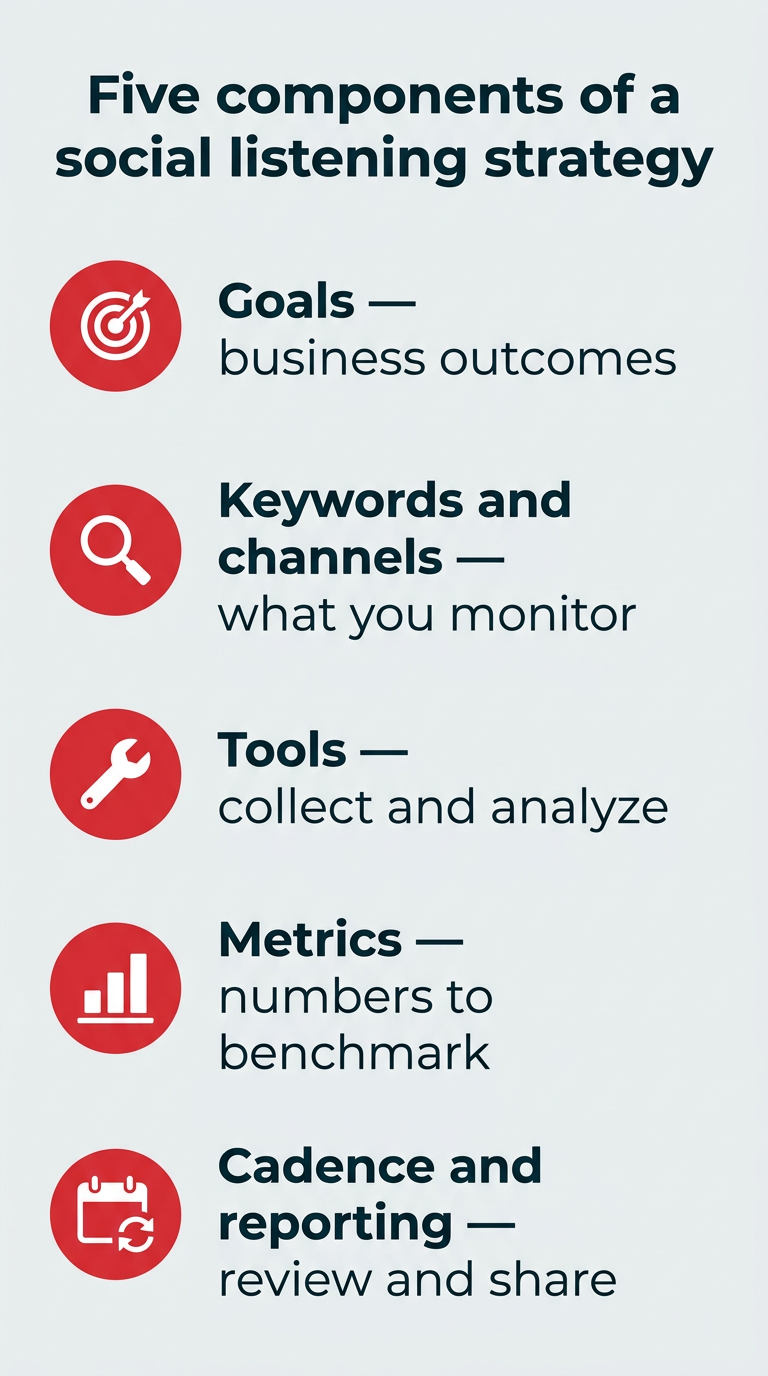
A comprehensive social listening strategy must be built upon a foundation of five core components: clear goals, defined keywords and channels, integrated tooling, a set review cadence, and a structured reporting framework.
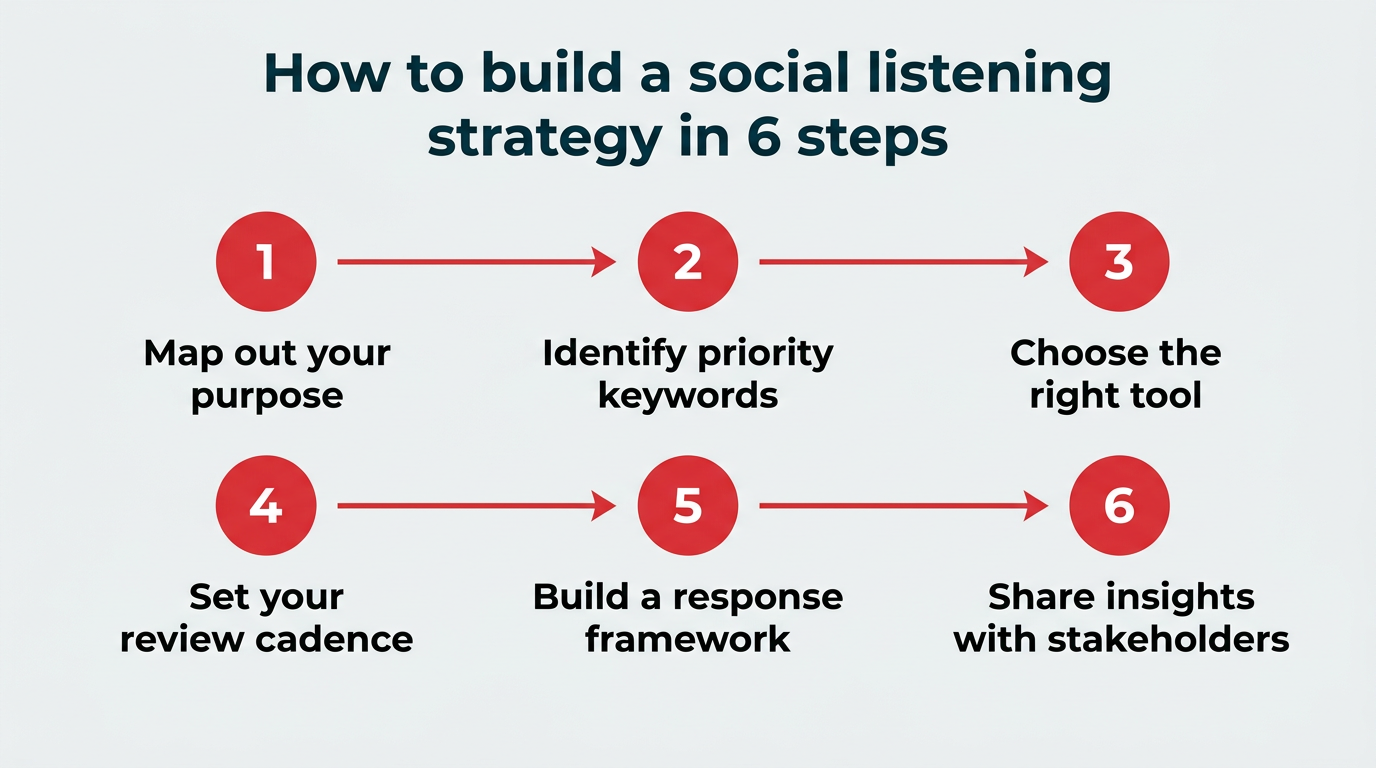
1. Mapping Purpose to Business Goals
Social listening should never exist in a vacuum. It must be mapped directly to organizational KPIs. Whether the objective is to protect brand reputation, drive product innovation through customer feedback, or gain a competitive edge by monitoring market share of voice, the strategy must be aligned with the broader business agenda.
2. Identifying Keywords and Priority Channels
Precision is the antidote to information overload. By identifying specific keywords—brand names, executive leaders, product identifiers, and industry-specific jargon—teams can filter out irrelevant noise. Furthermore, selecting the right channels is essential; for a B2B brand, the focus might be on LinkedIn and industry forums, while a B2C beauty brand might prioritize the visual-heavy, trend-driven environment of TikTok and Instagram.
3. Leveraging Advanced Tooling
As the volume of data grows, manual tracking becomes impossible. Modern platforms, such as the Hootsuite Social OS with its "Lumen" application, utilize AI and natural language processing (NLP) to interpret sarcasm, tone, and intent. These tools allow teams to move beyond volume metrics and into deep-dive sentiment analysis, audience demographics, and influencer identification.
4. Establishing a Review Cadence
A strategy is only as effective as its execution. High-priority mentions regarding customer service or potential crises require daily monitoring. However, for long-term trend analysis—such as identifying shifts in consumer values or competitor product gaps—a weekly or monthly review is often more productive. Automated alerts are the essential bridge, ensuring that unexpected spikes in negative sentiment trigger immediate action without requiring constant human oversight.
5. Creating an Actionable Response Framework
What happens when an insight is discovered? A successful strategy dictates the "who, what, and how" of the response. By tiering insights—ranging from general sentiment shifts to urgent crisis alerts—teams can ensure that the right information reaches the right stakeholders (Legal, PR, or Product Development) without delay.
Core Techniques: Sentiment, Trends, and Competition
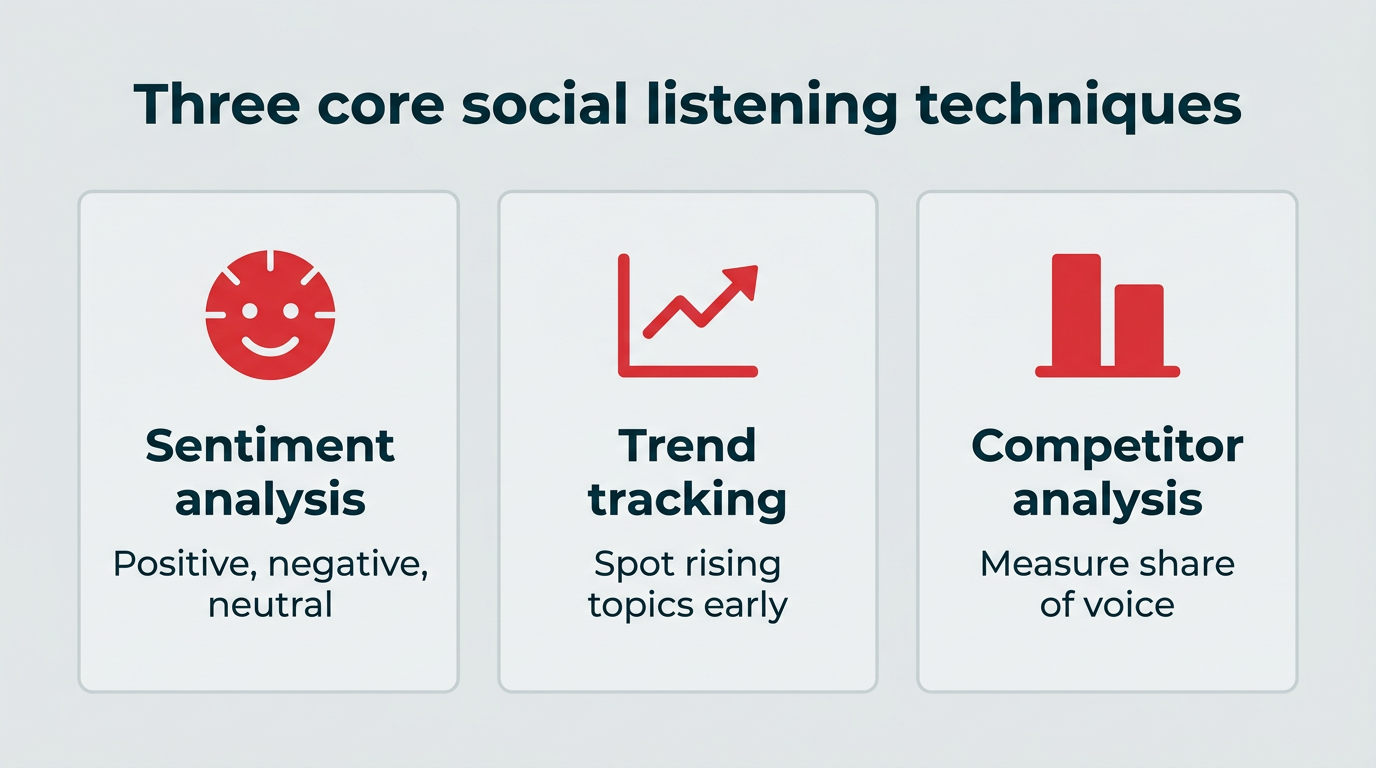
To master social listening, teams must rely on three primary analytical techniques:
- Sentiment Analysis: Modern NLP-driven tools classify conversations as positive, negative, or neutral. The real value lies in the "trend line." A spike in volume paired with a drop in sentiment is a warning light; a spike in volume with rising sentiment suggests a campaign’s success.
- Trend Tracking: This involves identifying topics, hashtags, and phrases gaining momentum before they reach peak popularity. This is the "early signal" that allows content teams to create relevant material and product teams to pivot development to meet emerging demands.
- Competitor Analysis: By tracking a competitor’s mentions and sentiment alongside your own, you can identify their weaknesses as your opportunities. If customers are consistently complaining about a competitor’s customer service, your brand can pivot its marketing to highlight your own superior support.
Implications for Organizational Success: Case Studies
The practical application of these strategies can yield transformative results, as demonstrated by leading global brands.
Yves Rocher: Shaping Product Innovation
The beauty giant Yves Rocher utilizes social listening to monitor ingredient perception. By tracking how customers discuss natural cosmetics, they identified a fundamental shift: consumers no longer view beauty products solely as a way to "hide flaws," but as an essential part of a self-care ritual. This insight allowed the company to pivot its entire marketing and product strategy to focus on wellness and inclusivity.
Zoo Zurich: Uncovering Un-tagged Conversations
For organizations like Zoo Zurich, many of the most valuable insights come from users who do not tag the brand. By expanding their scope to include non-tagged mentions, they successfully tapped into organic visitor feedback, turning UGC (User Generated Content) into a core part of their engagement strategy. This move effectively transformed the zoo from a passive location into an active participant in their community’s digital dialogue.
Dubai TV Channels Network: Data-Driven Production
For content creators, social listening serves as a real-time focus group. By analyzing audience reactions—character sentiment, plot feedback, and pacing—the Dubai TV Channels Network uses data to optimize future seasons of their shows. This move away from "gut-feeling" production to data-informed content creation significantly improves audience retention and satisfaction.
Defending the Program: The ROI of Listening
One of the greatest challenges for social marketers is securing internal buy-in. With 56% of social marketers reporting that their leadership does not fully grasp the value of social media, the ability to translate "social metrics" into "business impact" is paramount.

To calculate ROI, teams should log the insights they discover and the resulting business outcome. Did a sentiment analysis report prevent a PR crisis? Did a trend report lead to a product feature that increased sales? Did competitive intelligence lead to a change in pricing strategy? By documenting these connections, social teams can move from being perceived as a cost center to being recognized as a vital source of business intelligence.
Conclusion: The Path Forward
In the coming years, the divide between companies that listen and those that merely broadcast will only widen. A social listening strategy is not just about keeping a finger on the pulse of the market—it is about having the foresight to anticipate the next heartbeat.
By grounding your social efforts in clear, data-driven goals and utilizing the right technological tools, you ensure that your brand is not just heard in the digital noise, but that it actually understands the conversation. In a world of billions of voices, the competitive advantage belongs to those who know how to listen.