For decades, the marketing playbook has been built on a bedrock of predictable human behavior. We assumed that a prospect would search for a solution on Google, land on a website, download a whitepaper, and eventually enter a dialogue with a sales representative. We assumed that creative decisions, budgeting, and targeting were the exclusive domain of human intuition and data-driven analysis.
According to groundbreaking research from Professor Rajan Varadarajan of the Mays Business School at Texas A&M University, those foundational assumptions are not just being challenged—they are rapidly eroding. Published in the Marketing Strategy Journal, Varadarajan’s paper, "Dawn of the AI era in marketing strategy and twilight of the conglomerates era in corporate strategy," posits that we are witnessing a phenomenon of "knowledge decay," where the very strategies that defined modern marketing success are losing their utility because the environment they were designed for no longer exists.
The Mechanics of Knowledge Decay
Knowledge decay occurs when the environment for which a specific set of strategies was designed undergoes a fundamental shift, rendering those strategies obsolete. In the context of AI, this decay is being accelerated at an unprecedented pace.
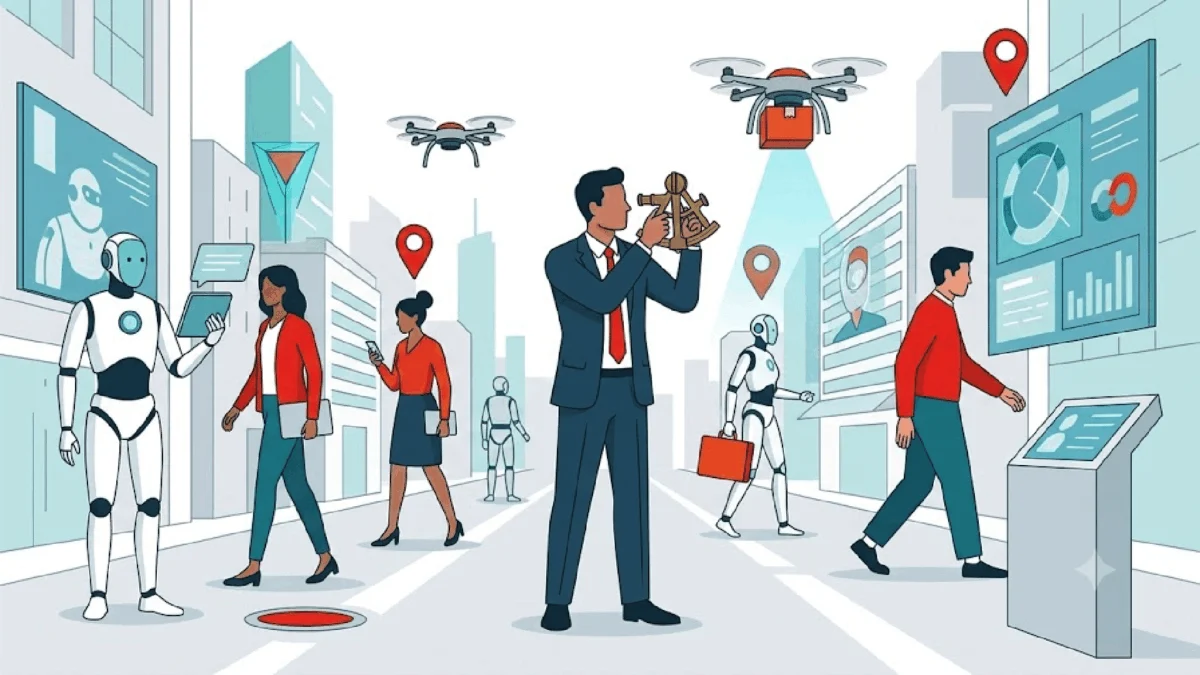
Unlike the advent of the internet or the rise of social media, which primarily transformed distribution channels, AI is fundamentally altering the cognitive process of the marketplace. On the company side, firms are increasingly delegating critical decision-making to algorithmic systems. On the buyer side, prospective customers are no longer browsing the open web in a linear fashion; they are turning to AI agents to research vendors, weigh pros and cons, and receive purchase recommendations.

The result is a shift from purely human-centric decision-making to a complex, hybrid model of human-AI collaboration. This transition renders many of the "best practices" of the last twenty years—such as traditional SEO-driven content funnels or linear lead-nurturing sequences—less effective, and in some cases, entirely irrelevant.
Chronology of the Shift: From Search to Synthesis
To understand the current crisis, one must look at the evolution of the marketing funnel over the last quarter-century:
- The Early Web Era (1995–2005): Marketing was about visibility. If you had a website and a search engine listing, you had a competitive advantage. The playbook was simple: optimize for keywords.
- The Social & Mobile Era (2006–2018): Marketing became about engagement and ubiquity. The focus shifted to building brand communities and ensuring a seamless mobile experience. The playbook expanded to include content marketing and social media advertising.
- The AI-Agent Era (2019–Present): We have entered the era of synthesis. The consumer no longer wants to be "marketed to" via a series of blog posts; they want an AI assistant to digest the information for them. The goal of the buyer is now to bypass the "middleman" of the marketing website entirely.
This chronology highlights that while the principles of marketing remain constant—brands must still differentiate, trust is still paramount, and customers still seek solutions—the instrumental knowledge (the tactics) has a rapidly shortening shelf life.
Supporting Data: The Disconnect Between Strategy and Reality
The core of Professor Varadarajan’s argument lies in the distinction between "conceptual knowledge" and "instrumental knowledge." Conceptual knowledge—understanding that a brand must provide value—is enduring. Instrumental knowledge—the specific steps taken to deliver that value—is fragile.

Consider the SEO landscape. For years, the gold standard for success was the "click." Marketers optimized content to earn top-tier placement in Google search results, hoping for a visit to their landing page. However, with the integration of AI-generated search summaries (SGE), the buyer often receives the information they need without ever clicking a link. If a marketer’s success is measured by website traffic or lead form submissions, their entire strategy is now disconnected from the user’s reality.
Furthermore, in B2B markets, the traditional "linear" funnel is collapsing. If an AI agent can scan a vendor’s public information, read their whitepapers, and compare their pricing against competitors before a human ever engages with a sales team, the marketing team’s assumptions about "nurturing" are effectively negated.
The Four-Question Stress Test
To survive this transition, marketers must conduct a "stress test" on their existing frameworks. Professor Varadarajan’s report suggests that before investing in new tools, organizations must answer four critical questions:
- Who is actually evaluating my product? Are you marketing to a human researcher, or are you trying to appease an AI agent that prioritizes data-dense, structured information over emotional storytelling?
- Does my "buyer journey" still exist? If your funnel relies on a specific sequence of downloads and webinars, are you ignoring the reality that your prospect may have already made a decision via an automated recommendation engine?
- Is my success metric a vanity metric? If you are optimizing for traffic that no longer converts because the "click" has been replaced by the "summary," you are measuring the past, not the future.
- Is my team over-reliant on historical data? If your strategy assumes that human behavior will mirror the patterns of the last decade, you are likely blind to the new behavioral constraints imposed by AI.
The New Competitive Advantage: Skepticism as a Strategy
The most significant implication of this shift is that the next wave of competitive advantage will not come from merely adopting the latest AI tool. It will come from the ability to unlearn.

The "twilight of the conglomerates era" mentioned in the report title refers to the decline of rigid, legacy corporate structures that are too slow to adapt to these shifts. The organizations that will thrive are those that foster a culture of institutional skepticism. They will treat their own playbooks as temporary experiments rather than sacred texts.
This requires a fundamental shift in talent acquisition and team structure. Marketing organizations need to move away from "functional specialists" who are trained to perform one task (like managing an ad spend) and toward "strategic generalists" who understand the interplay between consumer psychology and machine-led information synthesis.
Implications for the Future
The shift toward AI-driven purchasing will likely force a consolidation of marketing roles. As AI takes over the execution of tactical tasks—such as budget optimization, keyword bidding, and basic content creation—the human role must pivot toward higher-order strategy.
Marketers must become "architects of trust." As information becomes commoditized and summarized by machines, the brand’s ability to foster genuine human connection, provide verifiable expertise, and build long-term reputation will become the only true differentiator.

Moreover, organizations must reconcile their data infrastructure. As noted in recent industry discussions, companies often try to "fix everything" before implementing AI. However, the research suggests that the most successful companies will be those that isolate a single, critical problem—such as the breakdown of their lead-generation funnel—and build a targeted, AI-ready data infrastructure to address it.
Conclusion: Embracing the Twilight
We are in the twilight of the traditional marketing era, and while that may feel uncomfortable, it is also a moment of immense opportunity. The companies that cling to their outdated playbooks will find themselves fighting for relevance in a market that has moved on. Those that embrace the "knowledge decay" of their own best practices will be the ones who define the next generation of commerce.
As Prof. Varadarajan’s research makes clear, the goal is not to abandon the core principles of business, but to acknowledge that the tools we use to execute those principles are in a constant state of flux. The most important skill for a modern marketer is no longer mastery of a specific platform, but the intellectual humility to recognize when their best practice is no longer a practice at all.
For those looking to explore the full depth of this transition, the complete paper, "Dawn of the AI era in marketing strategy and twilight of the conglomerates era in corporate strategy," is available through the ScienceDirect platform.