In the rapidly evolving landscape of search engine optimization (SEO), staying abreast of Google’s incremental updates is no longer just a best practice—it is a competitive necessity. This week, the search giant delivered a series of updates that range from the integration of generative AI into core search features to nuanced clarifications on how Google’s systems interpret site architecture and experimental testing.
As Google marks its 25th anniversary, it continues to refine the balance between user-generated content and AI-synthesized responses. Simultaneously, key figures within the Google Search team, such as John Mueller, have provided critical insights into technical SEO practices that challenge long-held industry assumptions.
Main Facts: The Changing Face of Search
This week’s updates underscore a pivotal trend: Google is increasingly acting as both a curator of the web and an active creator of content.
1. Generative AI in Google Images
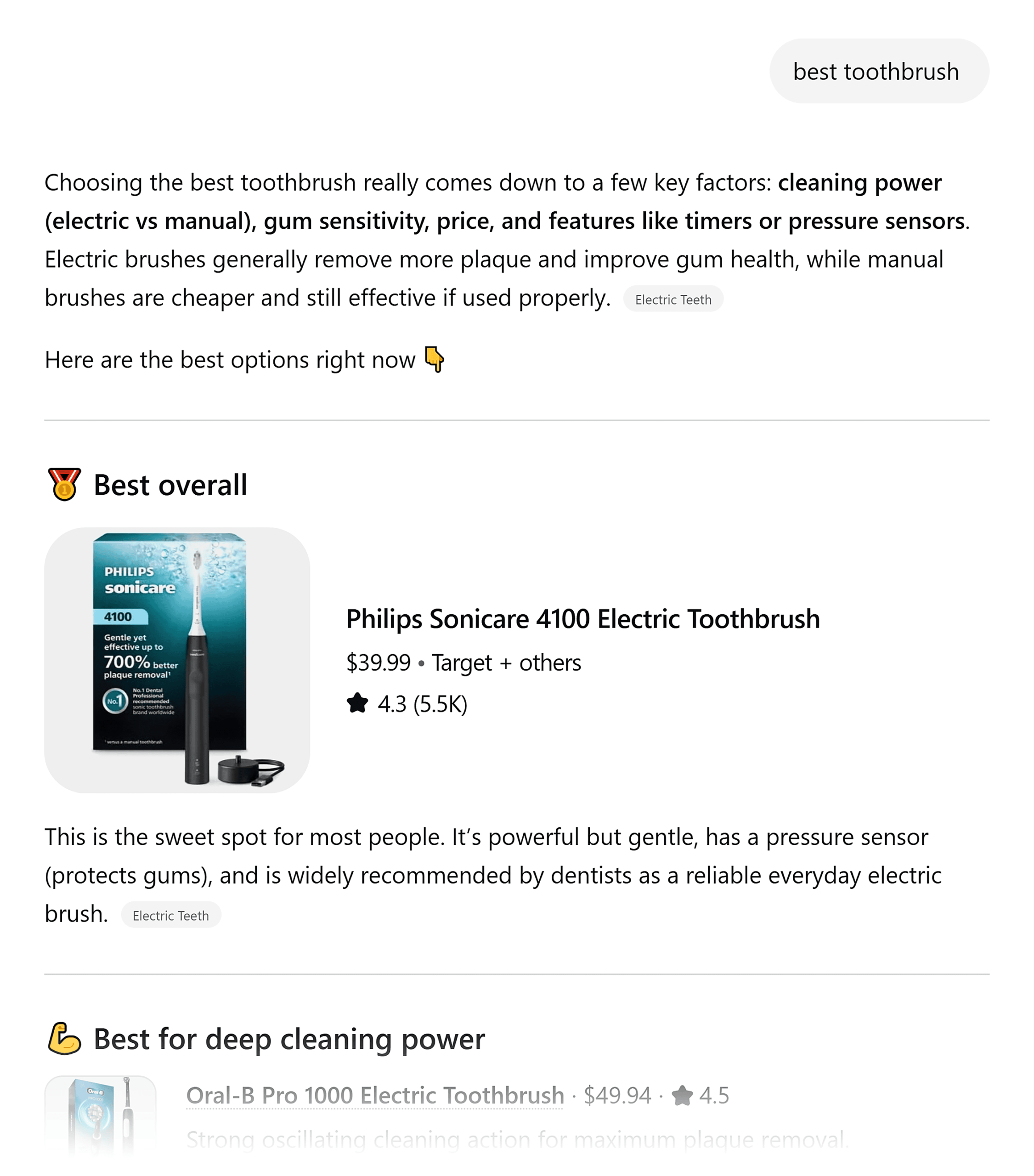
Google has announced the rollout of AI image generation directly within AI Overviews. Powered by the "Nano Banana" model, this feature allows users to convert text prompts into bespoke visuals without leaving the Search interface. Furthermore, the Google Images homepage is undergoing a massive aesthetic and functional overhaul. The new interface will function as a personalized, real-time feed that adapts to user interests, moving away from a strictly query-based model to a browseable gallery.
2. The "Two-Week" Canonical Benchmark
Google has formally updated its canonicalization troubleshooting documentation. A critical piece of data has been added: Google now specifies that content-based canonical fixes may take up to two weeks to be reflected in search index results. This provides SEO practitioners with a standardized timeline to communicate to stakeholders regarding the resolution of duplicate content issues.
3. Technical SEO Myths: Link Obfuscation
John Mueller addressed a common SEO strategy involving the "hiding" of homepage links to prioritize specific anchor text. Mueller advised against the practice, suggesting that such attempts to manipulate link equity via obfuscation are largely futile and potentially detrimental to user experience.
4. Long-Term A/B Testing Clarifications
In response to concerns regarding year-long A/B tests, Mueller clarified that Google’s crawlers do not necessarily penalize sites for running long-term experiments. However, he noted that the lack of consistency can complicate the debugging process and impact how search engines index varying versions of a page.
Chronology: A Week of Refinement
The week’s news cycle was characterized by a steady stream of information from official Google channels and community discourse.
- Early Week: The industry conversation was dominated by the technical debate on Reddit regarding "link priority." Practitioners questioned whether de-linking a primary button in favor of a secondary, keyword-optimized link would improve rankings.
- Mid-Week: John Mueller engaged with the community on Bluesky, clarifying the relationship between long-term A/B testing and indexation. This effectively created a counter-narrative to existing, more rigid, written documentation.
- Late Week: Google finalized its update to the Search Central documentation regarding canonicalization, officially acknowledging the two-week window for re-evaluation. Simultaneously, the announcement of the 25th-anniversary upgrades to Google Images and AI Overviews shifted the focus toward the future of generative search.
Supporting Data and Technical Context
To understand the weight of these updates, one must look at the technical mechanics underlying them.
Canonicalization and the "Two-Week" Rule
Google’s documentation has long been vague regarding the latency of canonical fixes. By quantifying the wait time at two weeks, Google is providing a "ceiling" rather than a standard. This implies that while indexation can happen faster—especially if the content is highly distinct—practitioners should not expect immediate results. This data is vital for project management, as it sets realistic expectations for clients who often demand "instant" fixes.
Link Priority and CSS/JS Alternatives
The debate over homepage links centers on the concept of "First Link Priority." For years, SEOs believed that the first time a URL appeared on a page, Google would prioritize its anchor text. Mueller’s dismissal of the plan to "hide" a button suggests that Google’s link graph analysis is far more sophisticated than simple position-based parsing. He recommended using CSS or JavaScript for visual positioning, keeping the semantic HTML structure intact.
Official Responses: Insights from the Search Advocate
John Mueller’s commentary remains the gold standard for navigating the "black box" of Google Search. His recent responses highlight a recurring theme: Don’t over-engineer for the machine.
Regarding the homepage button controversy, Mueller’s stance was clear: "I wouldn’t expect to see any visible change." This is a stark reminder that many "advanced" SEO tactics are essentially invisible to a system that processes trillions of signals. His advice focuses on usability; if a button is essential for the user, it should remain a link, regardless of how it sits in the site’s hierarchy.
On the topic of A/B testing, Mueller’s response highlighted a discrepancy between his advice and Google’s written documentation. While the documentation warns against running experiments longer than necessary, Mueller emphasized that there is no algorithmic "penalty" for the test itself. The takeaway for webmasters is that while the test is "safe" from a penalty standpoint, it creates a "messy" environment for crawlers, which can lead to unpredictable indexing behavior.
Implications: The "Vote vs. Veto" Paradigm
The overarching theme of this week’s developments is that the SEO professional’s role is shifting from "controlling" the search engine to "influencing" it.
The Loss of Absolute Control
When Google introduces generative images into AI Overviews, it is essentially reducing the number of organic clicks available to publishers. By providing the content directly, Google is keeping users within its ecosystem. The implication is that publishers must optimize for "value-add" content—material that AI cannot easily replicate or synthesize.
The Power of Quality Signals
In the case of canonicalization, the update implies that while you can request a change, the search engine retains the final veto. Google’s algorithms look for "distinctness" in content. If your pages are too similar, no amount of technical signaling will force Google to index them separately. The lever that remains under the webmaster’s control is the uniqueness and quality of the content itself.
Strategic Recommendations
- Embrace Generative Reality: If your site relies heavily on stock imagery, recognize that AI-generated alternatives in Search may impact your click-through rates (CTR). Focus on proprietary, high-quality photography that AI cannot mimic.
- Audit Your Architecture: Stop attempting to "game" link equity through link hiding. Focus on a clean, semantic structure that benefits the user. If you want a link to be prioritized, ensure it is the most relevant link for the user journey.
- Refine Your Testing Cadence: While A/B testing is vital for conversion rate optimization (CRO), keep your experiments focused. If you are running year-long tests, ensure you are managing the canonicalization of those variants properly to avoid confusing the search index.
- Manage Stakeholder Expectations: Use the "two-week" canonical fix window as a baseline for all technical SEO troubleshooting. Do not promise immediate results when Google’s own documentation now explicitly lists a 14-day potential lead time.
Conclusion: The Path Forward
The week’s events demonstrate that Google is moving toward a more personalized, automated experience. For the SEO community, the goalposts have not moved, but the game has become more nuanced. We are no longer simply trying to rank pages; we are trying to provide the foundational data upon which Google’s AI models and search algorithms rely.
By aligning technical practices with the reality that Google will always have the final say, professionals can stop chasing the "hacks" that Mueller describes as ineffective and start focusing on the long-term, sustainable strategies that satisfy both the search engine and the human user. As we look toward the next quarter, the focus must remain on producing distinct, high-value content that gives the search engine a clear reason to prioritize your domain over the competition.