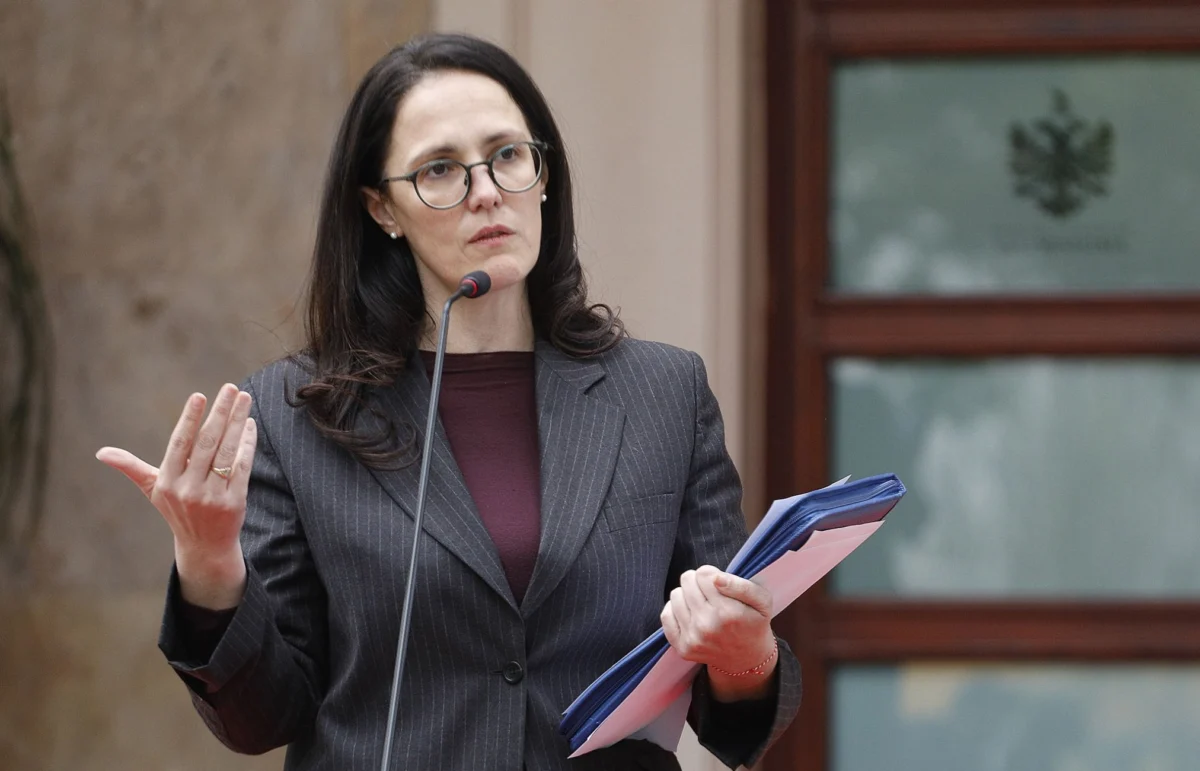
Tirana, Albania – In a move that has ignited both hope among the elderly and concern among watchdogs, Albania’s Minister of Economy and Innovation, Delina Ibrahimaj, announced a significant doubling of the monthly bonus for all pensioner categories. This initiative, revealed through a widely shared social media video, is presented as a key component of a broader strategy to bolster the financial security of retirees, aiming to ensure full pensions reach at least 40,000 ALL and partial pensions at least 22,000 ALL by 2030. However, the timing of this announcement, occurring in close proximity to upcoming electoral cycles, has drawn sharp criticism, with accusations of leveraging public funds for electoral gain.
The government has earmarked an additional 22.4 billion ALL in the national budget to finance this enhanced pension support. Minister Ibrahimaj framed the measure as a "concrete commitment to gradually increase the income of pensioners by 2030." The monthly bonus concept was first introduced in 2026 as a response to rising inflation, with amounts varying between 600 and 1,800 ALL per month depending on the pension category. The doubling of this bonus is expected to provide a more substantial cushion against the cost of living for Albania’s aging population.
A Closer Look at the Enhanced Pension Support
The announcement by Minister Ibrahimaj signals a substantial commitment from the Albanian government towards its pensioner demographic. The core of this initiative lies in the doubling of the existing monthly bonus, a measure designed to provide immediate financial relief. This increase is not a one-off payment but rather an embedded enhancement to the regular income of all pensioners, regardless of their specific category or the amount of their existing pension.
The financial implications are significant. The government has allocated an additional 22.4 billion ALL to the state budget specifically for this purpose. This substantial investment underscores the perceived importance of addressing the financial well-being of pensioners.
Beyond the immediate bonus increase, the announcement also reiterates long-term goals for pension levels. The target is for full pensions to reach a minimum of 40,000 ALL and partial pensions a minimum of 22,000 ALL by the year 2030. This long-term vision suggests a strategic approach to pension reform, aiming to gradually improve the living standards of retirees over the next decade. The current monthly bonus, which was initially introduced in 2026 with amounts ranging from 600 to 1,800 ALL, will now see its upper limit effectively doubled, providing a more impactful supplement to monthly incomes.
Minister Ibrahimaj emphasized the forward-looking nature of this policy, stating, "This is a concrete commitment to gradually increase the income of pensioners by 2030." This statement suggests that the current bonus enhancement is part of a larger, phased strategy rather than an isolated intervention. The initial introduction of the bonus in 2026 was a direct response to inflationary pressures, highlighting the government’s awareness of the economic challenges faced by pensioners. The current amplification of this support indicates a continued recognition of these pressures and a desire to provide more robust assistance.
Chronology of Pensioner Support and Electoral Cycles
The history of government-issued bonuses for pensioners in Albania is closely intertwined with electoral timelines, a pattern that has consistently drawn criticism from civil society organizations and international observers. This latest announcement of a doubled monthly bonus is no exception, falling within a period that raises questions about its timing.
2025 Parliamentary Elections: Reports indicate that a few months prior to the 2025 parliamentary elections, the government announced the distribution of two bonuses, each ranging from 10,000 to 15,000 ALL, for approximately 730,000 pensioners. This measure incurred a cost of 163 million Euros and was widely criticized as an attempt to influence the voting intentions of a significant segment of the electorate.
2026 Introduction of Monthly Bonus: The concept of a monthly bonus was first implemented in 2026. This was presented as a measure to mitigate the impact of rising prices. The bonus amounts varied from 600 to 1,800 ALL per month, depending on the pensioner category. While framed as an anti-inflationary measure, its introduction also occurred in a period leading up to potential electoral considerations.
Current Announcement (Leading up to 2027 Elections): The recent announcement of a doubled monthly bonus, made public through a social media video, places the government squarely within the "four-month window" prior to elections. This timing is a recurring theme, prompting accusations that such significant financial incentives are being used as electoral tools.
This pattern suggests a strategic deployment of public resources aimed at garnering favor with a substantial voter bloc. The demographic of pensioners, often characterized by lower incomes and a reliance on state support, is seen as particularly susceptible to such financial inducements.
Supporting Data and Financial Projections
The financial commitments outlined in the announcement provide a quantitative basis for the government’s pension support strategy.
- Additional Budgetary Allocation: The government has committed an additional 22.4 billion ALL to the national budget to fund the increased monthly bonus. This figure represents a significant portion of public expenditure dedicated to social welfare.
- Long-Term Pension Targets (by 2030):
- Full pensions: Minimum of 40,000 ALL.
- Partial pensions: Minimum of 22,000 ALL.
- Current Monthly Bonus Range (pre-doubling): 600 ALL to 1,800 ALL.
- Estimated Cost of 2025 Bonuses: 163 million Euros for two bonuses distributed to approximately 730,000 pensioners.
These figures highlight the scale of financial resources being channeled towards pensioners. The projected increase in pension values by 2030 suggests a sustained effort to improve retirement incomes. However, the immediate impact of the doubled bonus will be a more tangible and immediate benefit for current retirees.
The funding mechanism for these bonuses, primarily drawn from the national budget, raises questions about fiscal responsibility and the potential impact on other public services. While the intention is to alleviate financial hardship, the timing and scale of these disbursements invariably lead to scrutiny regarding their primary motivation.
Official Responses and Criticisms
The government, through Minister Delina Ibrahimaj, has framed the doubled monthly bonus as a genuine commitment to improving the lives of pensioners and ensuring their financial security. The minister’s statement, "This is a concrete commitment to gradually increase the income of pensioners by 2030," emphasizes the long-term vision and the step-by-step approach to achieving these goals. The bonus is presented as a tool to combat inflation and provide a much-needed supplement to the often-modest incomes of retirees.
However, these assurances have been met with significant skepticism and criticism from various quarters.
Civil Society Concerns: Rigels Xhemollari from the organization "Qendra Qytetare" (Civic Center) expressed grave concerns about the timing of the government’s decision. He stated to BIRN, "This is a government decision that perfectly corresponds to the four-month period before elections." This highlights the perception that the timing is strategically chosen to influence voter behavior rather than solely address genuine social needs.
Xhemollari further elaborated on this point: "The government offers the increase due to inflation or a deserved increase as an electoral lure to a large contingent of citizens, namely pensioners, who fall prey to this electoral bait due to their basic life needs." This analogy of an "electoral bait" underscores the criticism that the bonus is designed to be a political tool, exploiting the financial vulnerabilities of pensioners for electoral advantage.
International Observer Scrutiny: The Organization for Security and Co-operation in Europe (OSCE) Office for Democratic Institutions and Human Rights (ODIHR) has repeatedly raised concerns about the use of public resources for electoral purposes in its election observation reports. While specific mentions of this particular bonus might not be in past reports, the recurring theme of such practices being scrutinized by international bodies lends weight to the criticisms leveled against the Albanian government. The OSCE/ODIHR’s focus on ensuring a level playing field and preventing the misuse of state apparatus for political gain makes their observations particularly relevant in this context.
Political Opposition: While not explicitly detailed in the provided text, it is a common occurrence in Albanian politics for opposition parties to criticize such government initiatives, particularly when they are perceived as vote-buying tactics. Such criticisms often focus on the sustainability of these financial measures and their impact on the national debt and future fiscal stability.
The government’s narrative of support and long-term planning stands in stark contrast to the critical perspective that views these actions as politically motivated maneuvers aimed at securing electoral success. The debate centers on the intent behind the policy: is it a genuine social welfare initiative, or a calculated electoral strategy?
Implications for Albania’s Political Landscape and Future Governance
The announcement of the doubled monthly pension bonus carries significant implications that extend beyond the immediate financial relief for pensioners. It highlights a persistent challenge in Albanian governance: the blurred lines between social policy and electoral strategy.
Electoral Impact: The primary implication of this policy is its potential impact on the upcoming 2027 elections. Pensioners constitute a substantial and often highly mobilized segment of the electorate. By providing a tangible financial benefit shortly before elections, the government aims to cultivate goodwill and secure a significant portion of their votes. This strategy, if successful, could significantly influence the electoral outcome.
Public Trust and Governance: The recurring pattern of election-timed bonuses erodes public trust in the sincerity of government social policies. When such measures are perceived as politically motivated rather than driven by genuine societal needs, it can foster cynicism and disengagement among citizens. This can have long-term consequences for the legitimacy of democratic institutions and the quality of governance.
Fiscal Sustainability: While the immediate impact of the bonus is on pensioners, the long-term fiscal implications are also a concern. The allocation of significant public funds for such initiatives, especially if they become a regular feature of electoral cycles, can strain the national budget and potentially divert resources from other essential public services like healthcare, education, or infrastructure development. The sustainability of such policies needs careful consideration to avoid creating future fiscal burdens.
International Scrutiny and Democratic Standards: The continued focus by international observers like OSCE/ODIHR on the use of public resources for electoral purposes puts Albania under a spotlight. Repeated instances of such practices can impact the country’s image and its progress towards adhering to democratic standards, potentially affecting its relations with international partners and its aspirations for European integration.
The Future of Social Policy: This incident also raises questions about the future direction of social policy in Albania. Will future governments continue to employ similar tactics, or will there be a move towards more transparent, needs-based, and sustainable social welfare programs? The current debate underscores the need for a robust framework that ensures social policies are implemented for the benefit of citizens, independent of electoral considerations.
In conclusion, while the doubled monthly pension bonus offers immediate financial relief to Albania’s pensioners, its announcement is fraught with political undertones. The government’s commitment to improving the lives of its elderly citizens is undeniable, but the persistent question remains: to what extent are these well-intentioned measures intertwined with the pursuit of electoral victory? The answer to this question will shape not only the upcoming elections but also the broader trajectory of governance and public trust in Albania.