Introduction: Shifting Sands and Rising Tensions
As October 2026 draws to a close, the African continent finds itself navigating a period of profound volatility. From the resurgence of armed conflict in the Democratic Republic of the Congo (DRC) to the sudden eruption of civil unrest in the idyllic tourist hub of Mauritius, regional stability is being tested by a complex interplay of historical grievances, resource competition, and political disillusionment. Simultaneously, major powers and international bodies are grappling with the limitations of their influence, as seen in the fraying peace efforts in the Great Lakes region and the controversial expansion of European migration funding in Libya.
This week’s briefing unpacks the critical developments defining Africa’s current trajectory, examining how the convergence of old guard power-plays and new-age technological anxieties is reshaping the continent’s socio-political landscape.
The DRC: A New Front in an Old War
The conflict in the eastern Democratic Republic of the Congo, a region long plagued by militia violence, has taken a dramatic and potentially nation-altering turn. The emergence of the Front for the Refoundation of the Nation (FRN) marks a significant escalation, transitioning from local insurgencies to a concerted, high-stakes challenge against President Félix Tshisekedi’s administration.
The Kabila Factor
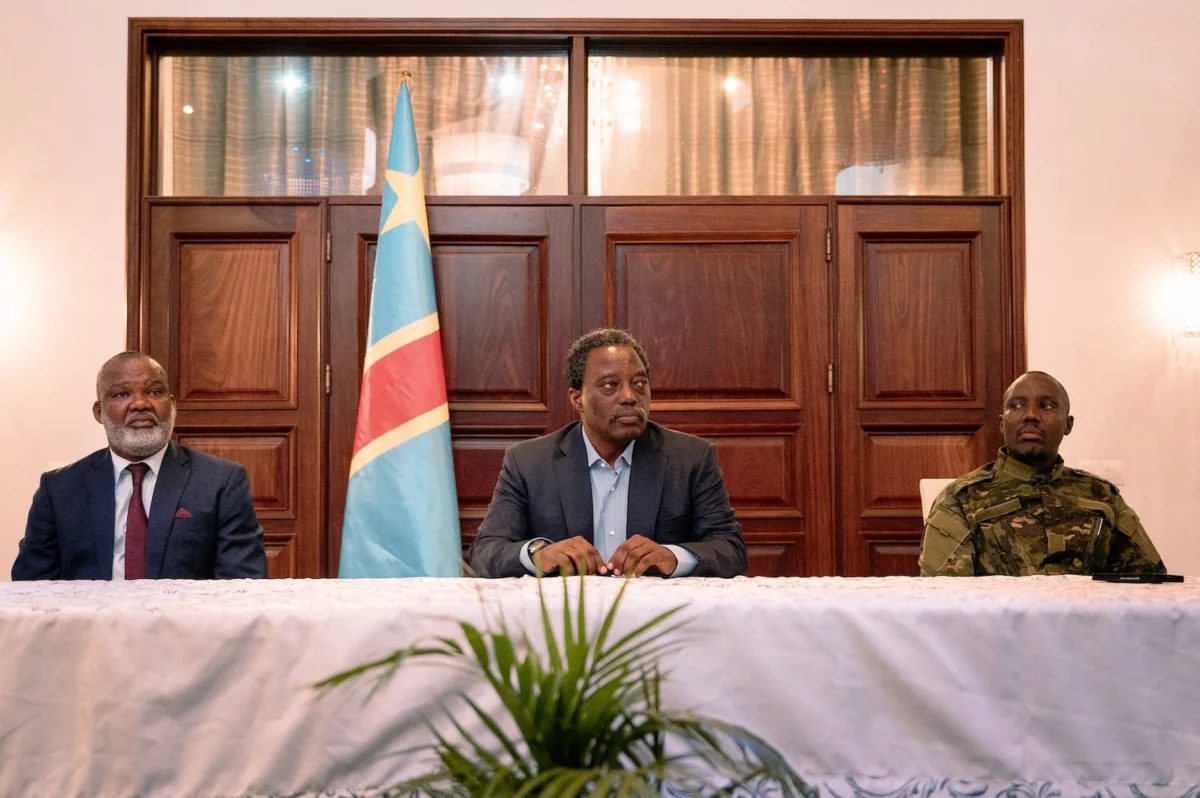
The central pillar of this new crisis is the direct involvement of former President Joseph Kabila. Having led the country from 2001 to 2019, Kabila’s decision to align himself with the FRN—a coalition encompassing the Rwanda-backed M23 movement and the Congo River Alliance—is a seismic shift. Analysts suggest that Kabila’s deep-seated knowledge of the state’s security architecture, combined with his enduring political networks, provides the insurgency with a level of strategic depth it previously lacked.
Chronology of Escalation
- 2019: Joseph Kabila oversees the first peaceful handover of power in DRC history, transferring the presidency to Félix Tshisekedi.
- 2022: The M23 movement initiates a major resurgence, seizing significant territory in the eastern provinces.
- September 2025: A Congolese military court sentences Kabila to death in absentia on treason charges, alleging his support for M23.
- October 2026: Kabila formally joins the FRN coalition, vowing to challenge the current government "by all means, including force."
- Late October 2026: Reports emerge of potential plans to expand the insurgency toward Kinshasa, raising alarms among regional observers.
Implications: The Resource Curse and Humanitarian Toll
The conflict remains fundamentally anchored in the competition for mineral wealth. The DRC is the engine of the global green transition, supplying over 70% of the world’s cobalt. The failure of the 2025 peace deal, brokered by the Trump administration, underscores the inherent fragility of agreements that prioritize mineral access over long-term stability. As the fighting spreads, the human cost is catastrophic: over 8 million people are displaced, and the region faces a grim resurgence of sexual violence and child soldier recruitment. Compounding this is a severe Ebola outbreak that has claimed 4,000 lives, a crisis currently receiving insufficient international attention due to the overshadowing political turmoil.
Mauritius: The Erosion of Stability
Mauritius, long regarded as one of Africa’s most stable democracies, is currently reeling from its worst civil unrest in decades. What began as protests against the rising cost of living and acute water shortages—driven by climate-induced drought and failing infrastructure—transformed into a violent standoff between citizens and the state.
The Spark and the Response
The tipping point arrived on October 9, when a demonstrator was shot and wounded by police, sparking widespread rioting. Authorities responded with a curfew and the arrest of nearly 100 individuals, including minors. The government’s proposal to lower the age of criminal responsibility from 14 to 12 has further inflamed public anger, casting a shadow over the nation’s reputation for civic peace.
Regional Snapshots: Libya, Ethiopia, and Egypt
EU Migration Funding in Libya
Despite widespread condemnation from human rights organizations, the European Union has committed an additional €25 million to bolster border management in eastern Libya. This funding, channeled to forces aligned with Gen. Khalifa Haftar, continues a pattern of prioritizing the "securitization" of migration over the protection of human rights. Rights groups argue that this support effectively subsidizes a system of detention and abuse, as reports of torture and forced labor continue to emanate from both Tripoli and Benghazi.
Ethiopia’s Fragmented North
The conflict in northern Ethiopia remains opaque and volatile. Following the withdrawal of the Tigray People’s Liberation Front (TPLF) from the regional capital of Mekelle, the federal government has installed a new interim administration. While federal troops have regained control of key border towns, the situation remains precarious. Observers remain deeply concerned about the regionalization of the conflict, particularly the potential for a border war with Eritrea, which continues to be a flashpoint for geopolitical instability in the Horn of Africa.
Egypt: The Succession Blueprint
President Abdel Fattah al-Sisi has made a public commitment to vacate the presidency by 2030. However, his proposed "military academy" for future presidential candidates—focused on instilling institutional loyalty in the next generation of leaders—suggests a desire to cement the military’s role as the permanent arbiter of Egyptian statehood. This move occurs even as the country navigates IMF-mandated reforms that theoretically require the military to reduce its pervasive control over the economy.
The Rwanda Grand Prix: Progress or Sportswashing?
Rwanda’s successful bid to host an annual Formula 1 Grand Prix starting in the early 2030s has sparked a continental debate. While the deal is being celebrated as a historic milestone for African sport, it has drawn sharp criticism from groups like Human Rights Watch, who argue it serves as a "sportswashing" campaign to obscure Rwanda’s authoritarian reputation.
The competitive reaction from South African officials, particularly Sports Minister Gayton McKenzie, highlights a deeper desire for pan-African representation on the global stage. McKenzie’s argument—that a continent of 54 nations should not be limited to a single race—reflects a growing sentiment that Africa deserves equitable access to global sporting and economic platforms.
Literary Ethics in the Age of AI
The cultural sphere has not been immune to the broader climate of uncertainty. The recent Caine Prize controversy, where the winning story by Simbarashe Kundizeza was flagged as AI-generated, has ignited a fierce debate within the African literary community.
The Erosion of Trust
The incident raises fundamental questions about the future of creative output. Critics like James Folta argue that the "omnipresence" of AI creates an environment of pervasive doubt, which disproportionately impacts writers from marginalized backgrounds who already face systemic barriers to entry.
Furthermore, scholars like Doyle D. Calhoun point to a more sinister trend: the disproportionate surveillance of Black and brown writers under the guise of AI policing. This, he argues, is a manifestation of an "anti-woke" agenda designed to gatekeep the literary world, effectively using the fear of technology to re-establish old hierarchies.
Conclusion: A Continent in Flux
Whether in the battlefields of the Congo, the streets of Port Louis, or the pages of contemporary African literature, the common thread is a struggle for legitimacy and agency. As 2026 progresses, the ability of African states to balance economic modernization, political succession, and the protection of civil liberties will determine the stability of the coming decade. The international community, meanwhile, faces a reckoning: will it continue to engage in transactional politics that favor short-term security, or will it invest in the long-term, structural stability that the continent so desperately requires?