In the modern digital landscape, a brand’s reputation is no longer built over decades of steady service; it is defended, hour by hour, in the volatile arena of social media. You may spend years cultivating a vibrant, positive brand identity—nailing the customer experience and delivering unparalleled service—only to see that hard-earned goodwill threatened by a single viral post or a misunderstood customer interaction.
For contemporary marketing leaders, the reality is sobering. According to data from the 2025 Axios Harris Poll, 46% of corporate reputations have declined between 2019 and 2025. This erosion of trust is not merely a public relations headache; it is a fundamental business risk that can destabilize market value and customer loyalty. To navigate this, organizations must pivot from reactive damage control to a proactive, data-driven strategy known as corporate reputation management.
Defining the Modern Corporate Reputation Strategy
Corporate reputation management is the systematic practice of proactively influencing and maintaining how the public perceives a brand. It is an intersectional discipline that blends public relations, customer service, and data analytics. At its core, it involves monitoring the digital ecosystem for brand mentions, resolving friction points with agility, and amplifying positive narratives to shape a resilient public image.
In the 21st century, corporate reputation management is inseparable from online reputation management. Today’s consumers view social media as the primary theater for brand interaction. A Q2 2026 Sprout Social Pulse Survey underscores this shift, revealing that social media is the number one channel where consumers first encounter news of a brand crisis. Furthermore, 64% of consumers demand that companies respond publicly on these platforms rather than retreating behind a formal press release or a static website statement. Consequently, social media teams have transitioned from community managers to the front lines of corporate defense.
A Chronology of Crisis: From #ChickenCrises to Modern Scrutiny
The evolution of reputation management is best understood through the milestones of brands that navigated the "trial by fire" of social media.
The 2018 #ChickenCrises: A Masterclass in Humility
Perhaps the most iconic case study in modern reputation management is the 2018 KFC crisis in the UK. When a logistical failure led to the closure of over 750 branches, the brand faced an immediate, visceral backlash. Rather than issuing a corporate apology filled with legal jargon, KFC utilized social listening to gauge the public’s frustration.
Their response was a masterclass in "radical transparency." They rearranged the letters of their name on a chicken bucket to spell a mild curse word, effectively signaling, “We messed up.” This edgy, self-aware approach defused the tension, humanized the brand, and actually turned a logistics disaster into a viral moment of brand loyalty. Eight years later, it remains the gold standard for how to "own" a mistake.
The 2025 GameStop Heist: Precision and Speed
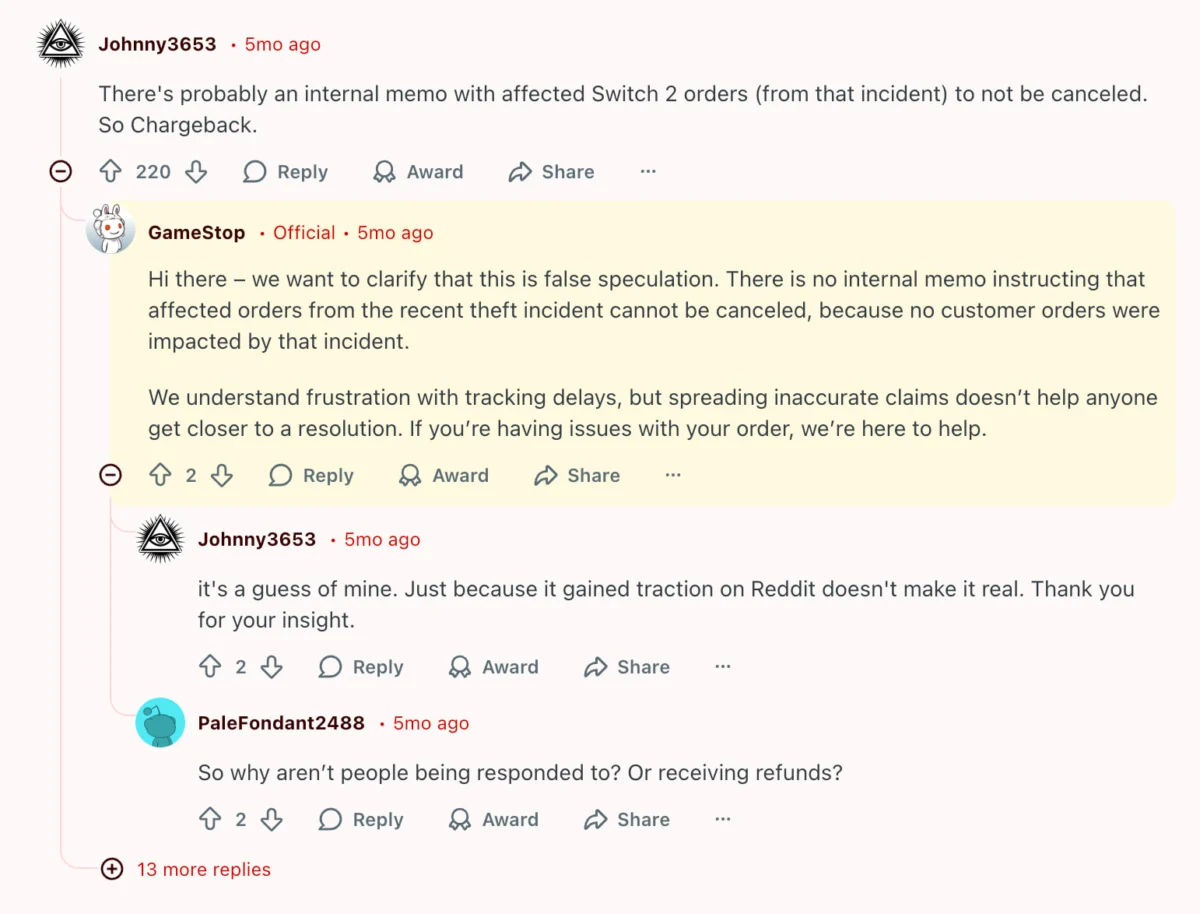
Fast forward to 2025, when a Reddit user claimed that GameStop was charging customers for unreceived products following a $1.4 million merchandise theft. In an era where misinformation spreads with lightning speed, the rumor could have easily spiraled into a catastrophic loss of consumer trust.
However, GameStop’s social media team acted with immediate, evidence-based precision. They bypassed the standard corporate bureaucracy, addressed the Reddit post directly, and clarified that no customer orders had been affected. By listening, researching, and responding with clarity, they contained the narrative before it reached the mainstream news cycle. This case highlights a critical shift: in the age of digital volatility, silence is rarely the best strategy.
Supporting Data: Why Trust is the New Currency
Reputation is no longer a "soft" metric; it is a primary driver of financial performance. According to research from the Phillips Group, 63% of consumers cite trust as a critical factor in their business-related decisions. When trust is broken, the consequences are quantifiable.
The Intangible Asset Risk
A landmark Harvard Business Review study, Reputation and Its Risks, notes that 70-80% of the modern economy’s market value is derived from "hard-to-assess intangible assets," such as brand equity. If your reputation is your most valuable asset, damage to it is a catastrophic liability. This is reflected in the Aon Global Risk Management Survey, which ranks "damage to reputation or brand" as the eighth biggest risk to companies worldwide.

The Consumer Demand for Authenticity
The Q3 2026 Sprout Social Pulse Survey provides further evidence of the shifting consumer psyche:
- Active Addressing: 93% of customers believe companies should be more active in addressing misinformation.
- The Authenticity Mandate: Consumers rank authenticity as the primary trait they want to see in digital brand content.
- The 24-Hour Clock: 70% of consumers now expect brands to respond to outreach within 24 hours.
Official Responses and Strategic Frameworks
To manage this risk effectively, marketing leaders are adopting a four-pillar framework designed to ensure organizational resilience.
1. Daily Social Listening and Predictive Intelligence
Manual monitoring is no longer sufficient. Organizations are turning to advanced tools like Sprout Social Listening and NewsWhip. These platforms provide the automation necessary to scan sentiment across global news cycles and social channels. Predictive analytics allow brands to understand when a story is "primed" to explode, enabling them to decide whether to intervene immediately or practice "strategic silence."
2. Authentic, Personalized Engagement
As identified in the GameStop example, engagement must be personalized. Automated, robotic responses are often perceived as a sign of indifference. Modern teams use "Smart Inboxes" to centralize communications, ensuring that social media professionals have the context needed to reference specific customer concerns, thereby showing genuine empathy.
3. The Crisis Communication Model
Every organization must maintain a "social media newsroom model." This involves a pre-approved crisis communication plan that defines clear roles: who leads the response, who approves the messaging, and how information is cascaded internally. By having these structures in place before a crisis occurs, brands can achieve the clarity and speed necessary to maintain public trust.
4. Measuring the ROI of Reputation
Reputation management is not an expenditure; it is an investment in revenue growth. To track progress, marketing leaders should focus on:
- Sentiment Score: Monitoring the ratio of positive to negative mentions.
- Share of Voice: Assessing how often your brand is mentioned compared to competitors in positive contexts.
- Average Response Time: Tracking the velocity of service, which directly correlates to customer satisfaction.
- Conversion Attribution: Linking sentiment improvements to spikes in lead generation and customer lifetime value.
Implications for Future Business Leaders
The implications for modern business are clear: the wall between "public relations" and "customer experience" has collapsed. A business that fails to listen to its customers on social media is effectively flying blind in a hurricane.
As we look toward the latter half of the decade, the winners will be the organizations that treat their online presence as a living, breathing relationship rather than a broadcast channel. By utilizing social listening to spot small, repeatable inconsistencies—as seen in the success of the Atlas Copco group—companies can identify and resolve systemic issues before they escalate into high-profile crises.
Conclusion: The Unified Approach
Corporate reputation management is an "always-on" discipline. It requires the courage to be authentic, the tools to listen at scale, and the organizational agility to respond with speed. Whether it is a misunderstood fee structure in the financial services sector or a viral social media rumor, the ability to protect and nurture your brand narrative is the ultimate competitive advantage.
By integrating unified management tools—like those offered by Sprout Social—companies can bring all their channels into one platform, turning social media from a point of vulnerability into the most powerful engine for brand equity and sustained business growth. In the end, a positive reputation is not just about avoiding the negative; it is about building a foundation of trust that allows your business to thrive, regardless of the challenges the digital world throws your way.