By Max Garland | October 8, 2026
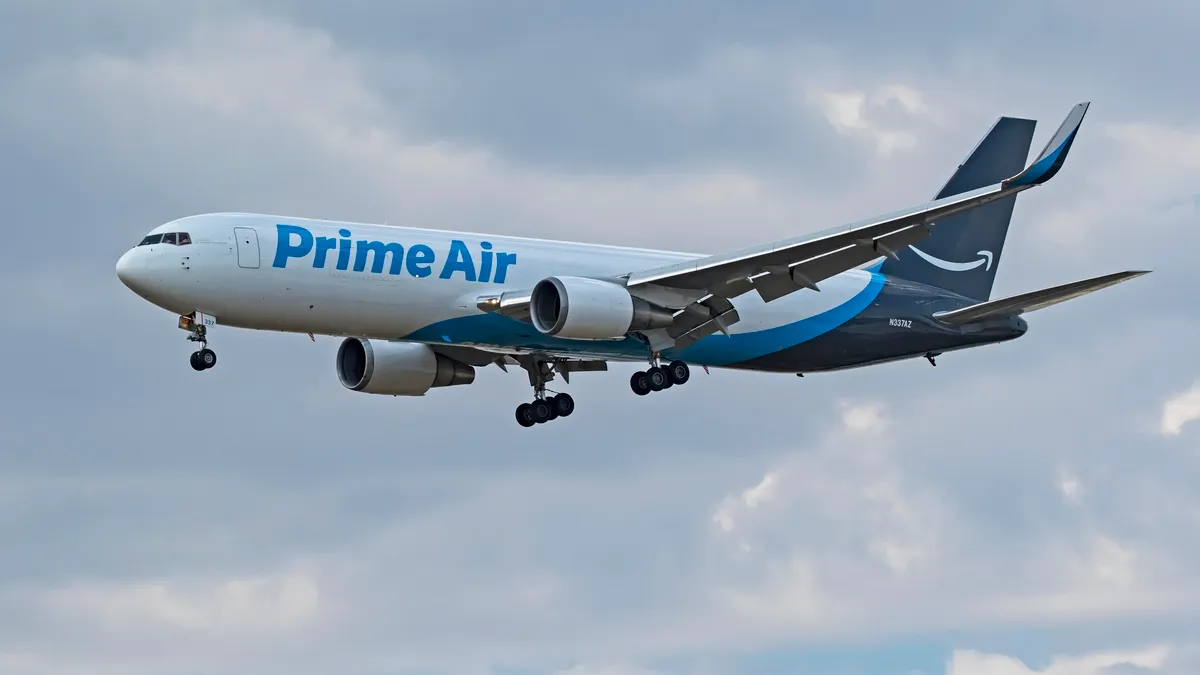
In a strategic move designed to further tighten its grip on the global e-commerce supply chain, Amazon has unveiled two new air freight services under its Amazon Global Logistics (AGL) umbrella: Air SMP (Seller Managed Placement) and Economy Air. These additions represent the latest evolution in the e-commerce giant’s multi-year effort to shorten delivery windows, provide sellers with granular control over inventory distribution, and hedge against the volatility of global shipping lanes.
As the retail industry approaches the high-stakes demands of the peak holiday shopping season, Amazon is positioning these services not merely as transportation options, but as strategic tools for inventory management. By offering a middle ground between the high cost of express air freight and the slow, often unpredictable nature of ocean shipping, Amazon is attempting to solve one of the most persistent pain points for third-party sellers: the "stockout" cycle.
Main Facts: A New Tier of Logistics Agility
The introduction of Air SMP and Economy Air comes at a time when Amazon is aggressively regionalizing its fulfillment network. By incentivizing sellers to place their inventory closer to the end consumer, Amazon reduces the "last-mile" distance, thereby lowering costs and accelerating delivery speeds.
- Air SMP (Seller Managed Placement): This service is an extension of Amazon’s existing Seller Managed Placement capabilities. It allows businesses to split their inventory at the origin—before it ever touches a warehouse floor—and ship it directly to specific regional fulfillment centers. This preemptive distribution is designed to ensure that products are available in the right geography before customer demand spikes.
- Economy Air: Positioned as a bridge between premium air and traditional ocean transit, this service prioritizes cost-efficiency while maintaining a velocity far superior to maritime shipping. While standard air freight from major Asian hubs like Hong Kong or Shanghai to the U.S. typically takes about seven days, Economy Air moves inventory in 11 to 15 days.
- Strategic Utility: Amazon explicitly markets these services as recovery tools. Whether a seller is facing an unexpected stockout, prepping for a seasonal surge, or executing a time-sensitive product launch, these air options provide a buffer that ocean transit—often plagued by port congestion and extended transit times—cannot match.
Chronology: The Evolution of Amazon’s Logistics Empire
Amazon’s logistics journey has been characterized by a transition from a consumer-facing marketplace to a comprehensive, "end-to-end" supply chain orchestrator.
2023–2024: The Foundation of AGL
Amazon began consolidating its logistical offerings under the Amazon Supply Chain Services brand. This move was designed to simplify the complex journey a product takes from a factory floor in Vietnam or China to an Amazon fulfillment center in the U.S. or Europe.
Early 2025: The Regionalization Shift
Recognizing that centralized fulfillment centers were causing "distance drag" on delivery speeds, Amazon began incentivizing sellers to distribute inventory across a broader network of regional hubs. This shift was supported by updated logistics software that allowed for better demand forecasting.
Mid-2025: Rail and Multi-Modal Integration
In a notable expansion, Amazon introduced a direct rail service for domestic shipments, moving goods from the West Coast to the East Coast to bypass congested long-haul trucking routes and reduce carbon footprints.
October 2026: The Air Freight Expansion
The launch of Air SMP and Economy Air serves as the latest chapter, filling the gap in Amazon’s "speed-versus-cost" matrix. By providing a tiered air freight system, the company has effectively created a full spectrum of transit options: Express Air for urgency, Economy Air for balance, and Ocean/Rail for bulk cost-savings.
Supporting Data and The Velocity Gap
To understand why these services matter, one must examine the "velocity gap" in global shipping. For many third-party sellers, the choice has historically been binary: pay a premium for air freight to avoid stockouts, or gamble on ocean shipping and risk being out of stock for weeks at a time.

According to data points provided in the program’s documentation:
- Transit Time Differential: Traditional ocean freight from Asia to the U.S. can take anywhere from 30 to 60 days, depending on port congestion and transit routes.
- The "Economy" Advantage: By offering a 11-15 day window, Economy Air cuts transit time by approximately 60% compared to ocean freight, while likely costing significantly less than the 7-day "standard" air freight service.
- Inventory Positioning: Sellers utilizing Air SMP can effectively "pre-stage" their inventory. Data suggests that products distributed across multiple regional fulfillment centers at the point of origin see a 15-20% reduction in average delivery times for the end consumer.
These metrics suggest that Amazon is not just moving boxes; they are optimizing the probability of a sale by ensuring the product is geographically positioned to meet the Amazon Prime delivery promise.
Official Responses and Strategic Implications
In its announcement, Amazon emphasized that these services are part of a broader commitment to helping sellers grow. "Both services are ideal for peak season preparation, stockout recovery, or time-sensitive product launches," the company stated in a press release.
Industry analysts observe that this move is a defensive and offensive maneuver. Defensively, it prevents sellers from migrating to third-party 3PL (third-party logistics) providers who might offer more flexible, albeit less integrated, shipping solutions. Offensively, it binds the seller more tightly to the Amazon ecosystem. By using AGL, a seller gains seamless visibility into their inventory status, a feature that becomes incredibly valuable as a business scales.
The Implications for the Global Supply Chain
The introduction of these services carries significant implications for the wider logistics market:

- Pressure on Freight Forwarders: By offering integrated air and ocean solutions directly, Amazon is effectively bypassing traditional freight forwarders for a significant portion of its seller base. Small-to-medium enterprises (SMEs) that previously relied on third-party forwarders may find the "one-stop-shop" convenience of AGL too compelling to ignore.
- Increased Focus on "Just-in-Time" Inventory: The rise of faster, more reliable air options encourages a "just-in-time" inventory model. While this reduces holding costs for sellers, it also places immense pressure on Amazon’s fulfillment centers to maintain high-velocity throughput.
- Peak Season Resilience: With the global supply chain remaining susceptible to geopolitical disruptions and labor unrest at major ports, having an "air-bridge" readily available for replenishment gives sellers a vital insurance policy. This capability is likely to become a standard expectation for any seller competing for the "Buy Box" during the critical Q4 holiday season.
- Integration of Data: Perhaps the most significant, yet understated, implication is the data integration. Amazon’s portal provides sellers with a unified view of their inventory. When a seller uses Air SMP, they are not just booking a flight; they are updating the Amazon database, which in turn influences search rankings and customer delivery estimates. This level of synchronization is a significant competitive moat.
Conclusion: The New Standard for E-commerce Logistics
As Amazon continues to refine its global supply chain, the lines between a marketplace and a logistics provider continue to blur. The launch of Air SMP and Economy Air demonstrates that the company is no longer satisfied with merely providing a platform for sales; it intends to control the physical flow of goods from the factory to the doorstep.
For the modern e-commerce entrepreneur, these tools represent a sophisticated evolution of the "Prime" promise. As delivery windows shrink and customer expectations for "same-day" or "next-day" service rise, the ability to rapidly replenish inventory via intelligent air freight will likely become the definitive factor between market leadership and obsolescence. While pricing details remain undisclosed, the value proposition—control, speed, and reliability—is clear. Amazon is betting that by making the complex world of global logistics simpler and faster, it can make its own marketplace the only logical choice for the global merchant class.