
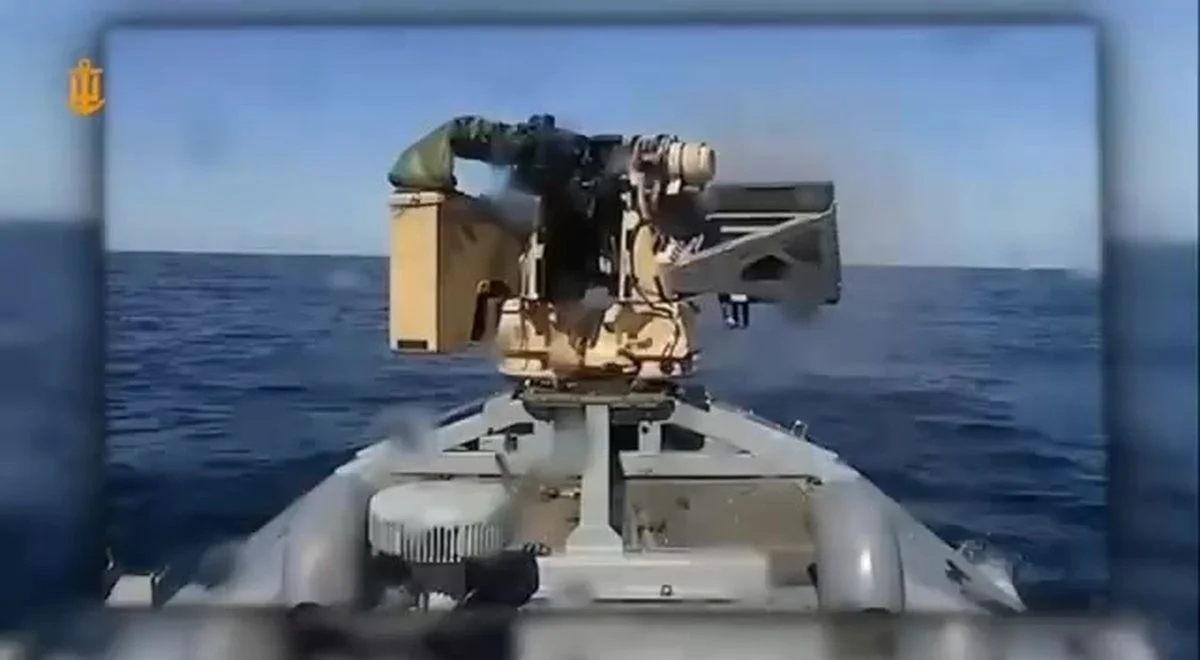
The landscape of maritime warfare has undergone a seismic shift. In a development that signals the transition from human-crewed naval engagements to the era of autonomous robotic conflict, a Ukrainian unmanned surface vessel (USV) has reportedly destroyed a Russian drone boat in the Black Sea. This engagement, involving the Ukrainian Sargan-3000, is widely considered the first military encounter of its kind—a "drone-on-drone" duel fought at sea, without a single human sailor on either bridge.
While the incident remains subject to the fog of war and has yet to be independently verified by third-party intelligence agencies, it underscores a rapidly evolving tactical reality. As both nations continue to innovate under the pressure of ongoing conflict, the Black Sea has effectively become a laboratory for the future of naval combat.
The Anatomy of an Autonomous Engagement
The encounter reportedly occurred in the contested waters of the Black Sea. According to reports, the Ukrainian Sargan-3000 detected an approaching Russian unmanned craft. Rather than relying on traditional crewed interceptors, the Ukrainian command structure—coordinated by the Defense Intelligence Directorate—authorized the autonomous platform to engage.
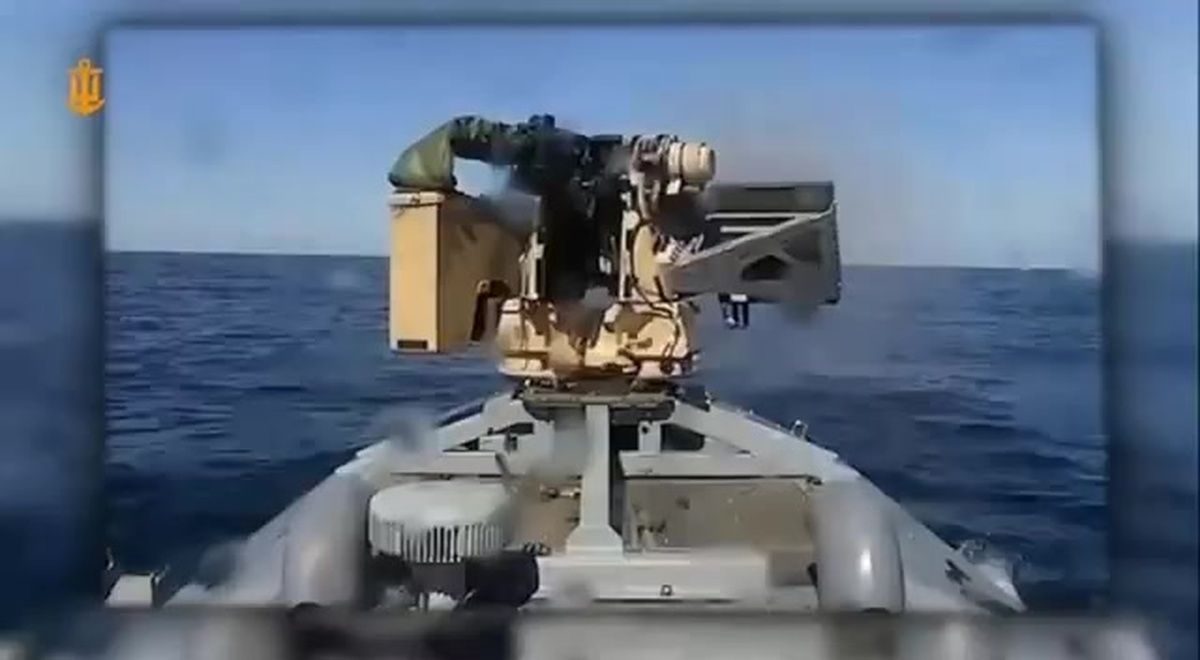
The Sargan-3000 utilized its integrated Protector Remote Weapon Station (RWS). This modular turret system, capable of housing various armaments including machine guns, grenade launchers, and specialized anti-tank guided missiles, proved decisive. During the engagement, a remote-controlled 12.7mm machine gun—likely an M2 Browning or an NSV heavy machine gun—was deployed to neutralize the target. By successfully tracking and destroying the hostile drone, the Sargan-3000 demonstrated not just the efficacy of its weapon systems, but the viability of remote-operated interception in high-speed, dynamic maritime environments.
The Sargan-3000: A Modular Multi-Purpose Platform
Introduced into active service in April 2026, the Sargan-3000 was designed specifically to address the multifaceted requirements of modern naval warfare. Unlike older, singular-purpose vessels, the Sargan-3000 is classified as a "multi-purpose platform." This design philosophy prioritizes modularity, allowing the vessel to be rapidly reconfigured to house various sensors, surveillance suites, or weapon modules depending on the specific mission profile.
Its "highly maneuverable" chassis allows it to operate effectively in both the open Black Sea and the more restricted, shallow waters of the Sea of Azov. While its physical specifications remain classified, its ability to integrate the Protector RWS suggests a robust power-to-weight ratio and sophisticated stabilization technology, necessary for maintaining accuracy while firing from an unstable platform moving at high speeds across choppy water.
Chronology of Maritime Drone Evolution
To understand the gravity of this "drone-on-drone" engagement, one must view it as the latest milestone in a sustained campaign of technological escalation.
- Pre-2026: Ukraine begins experimenting with repurposed civilian jet skis and small craft, marking the genesis of its asymmetric naval strategy.
- Early 2026: The emergence of specialized drone units within the Ukrainian Navy and the Security Service of Ukraine (SBU) leads to the mass deployment of USVs.
- April 2026: The Sargan-3000 is officially commissioned, providing a platform that bridges the gap between reconnaissance and direct kinetic action.
- July 2026: A pivotal incident occurs off the coast of Gelendzhik. A Ukrainian USV successfully sinks the Russian border patrol ship PSKR Izumrud. This incident solidified the role of USVs as "ship-killers" capable of forcing the Russian Black Sea Fleet to retreat from its traditional strongholds in Crimea.
- Late 2026: The present day. The engagement between the Sargan-3000 and an unidentified Russian drone marks the transition from asymmetric attacks on large, slow-moving warships to direct, autonomous combat between robotic systems.
A Comparative Analysis: The Ukrainian Drone Arsenal
Ukraine’s naval drone strategy is characterized by diversity. By utilizing different platforms for different roles, Kyiv has created a resilient network that is difficult for Russian naval assets to counter.
The Sea Baby
Operated primarily by the Security Service of Ukraine (SBU), the Sea Baby is a robust, 6-meter-long platform. It is designed for endurance and heavy payload delivery, boasting a reported range of 1,000 km. With an 850 kg payload capacity, it is frequently utilized for strikes against moored targets or critical maritime infrastructure, acting as a "suicide" or "loitering" munition that can be deployed over vast distances.
The Magura V5
Under the command of the Defence Intelligence group, the Magura V5 is a smaller, more agile cousin to the Sea Baby. While it lacks the extreme range of the larger craft, its speed and lower profile make it ideal for swarm tactics and rapid, hit-and-run engagements. Its presence in the Black Sea has been a constant thorn in the side of the Russian navy, forcing defensive shifts in how Moscow patrols its own waters.
The Sargan-3000
The Sargan-3000 occupies a unique niche. By incorporating the Protector RWS, it transitions from a "one-way" weapon to a reusable platform capable of engaging multiple targets, providing cover for other drones, or conducting persistent patrols. It represents the maturation of Ukrainian naval drone technology—moving from simple explosives-laden hulls to sophisticated, multi-mission naval combatants.
Official Responses and the Fog of War
As of this writing, both sides remain notably tight-lipped regarding the specifics of the encounter. Ukraine has provided the initial reports of the incident, yet it has refrained from releasing precise GPS coordinates, timestamps, or high-definition footage of the destruction. This silence is typical in modern conflicts, where information regarding the performance of new military hardware is treated as a state secret.
Russia, for its part, has declined to confirm the loss of any vessel. Moscow’s strategy regarding these incidents is twofold: first, to deny the effectiveness of Ukrainian technology to preserve the morale of its fleet and the public; and second, to avoid acknowledging the shift in naval superiority. By remaining silent, Moscow avoids admitting that its own drone programs are being effectively countered by Ukrainian autonomous systems.
The Strategic Implications of Autonomous Sea Combat
The implications of this engagement extend far beyond the immediate tactical result. We are witnessing the birth of a new domain of warfare where the "rules of the sea" are being rewritten by software and remote operators.
1. The Death of the "Large Vessel" Doctrine
The ability of inexpensive drones to track and destroy both capital ships and other drones suggests that the era of massive, expensive naval vessels may be entering a period of decline. If a multi-million dollar ship can be disabled or destroyed by a small, relatively cheap USV, the economic and strategic calculus of naval power projection is fundamentally altered.
2. The Rise of "Swarm" Warfare
The Sargan-3000’s ability to defend itself against another drone indicates that the next stage of naval conflict will involve "swarms." Future naval battles will likely feature dozens of autonomous units operating in concert, with some acting as sensors, others as shields, and others as strike platforms. This requires artificial intelligence capable of making split-second decisions without human intervention, raising significant ethical and legal questions regarding the use of lethal force by machines.
3. The New "No-Go" Zones
By successfully utilizing USVs to force the Russian Black Sea Fleet away from Crimea, Ukraine has effectively turned the Black Sea into a "no-go" zone for conventional Russian surface vessels. This has created a logistical nightmare for Moscow, which must now rely on more vulnerable land-based supply chains or risk the loss of its fleet to unseen, autonomous threats.
4. Technological Arms Race
The success of the Sargan-3000 will inevitably trigger a global arms race. Naval powers worldwide—from the US and China to the UK and India—are watching these events closely. The focus is shifting toward "Counter-USV" technology: electronic warfare systems, laser-directed energy weapons, and advanced sonar arrays designed specifically to detect and disable small, low-profile, fast-moving surface drones.
Conclusion
The engagement between the Ukrainian Sargan-3000 and its Russian adversary serves as a stark warning: the future of naval warfare is robotic, remote, and increasingly autonomous. While the world waits for independent verification of the event, the broader trend is undeniable.
The Black Sea has become the crucible for the next generation of military technology. As these drones grow more sophisticated, the line between human-directed war and machine-executed conflict will continue to blur. For now, the Sargan-3000 stands as a symbol of Ukraine’s innovative approach to an asymmetric fight—a testament to how a nation with a smaller conventional navy can use technology to achieve dominance in a theater of war that was, until recently, dominated by massive, steel-hulled leviathans.
Whether this incident marks a permanent change in how navies are structured remains to be seen, but one thing is certain: the era of the autonomous naval duel has officially begun.