In the rapidly evolving landscape of consumer electronics, Valve Corporation has consistently positioned itself as an architect of disruption. From the democratization of PC gaming via Steam to the portable revolution ignited by the Steam Deck, Gabe Newell’s company has never shied away from hardware experimentation. Now, a new contender has emerged from the labs of Bellevue: the "Steam Frame."
Part Steam Deck, part high-fidelity VR headset, the Steam Frame represents a bold synthesis of portable computing and immersive reality. As early impressions hit the tech community, the device is being hailed as a potential bridge between the desktop-bound VR experience and the untethered freedom of modern handhelds.
Main Facts: What is the Steam Frame?
The Steam Frame is best described as a "Steam Deck for your face." It is a standalone, wearable computing unit that aims to bring the entire Steam library into a virtual environment. Unlike traditional VR headsets that tether the user to a powerful PC, the Steam Frame leverages a localized processor capable of running sophisticated titles, most notably the landmark VR experience Half-Life: Alyx.
Core Specifications and Design
The device features a modular design, prioritizing ergonomics to allow for extended sessions. Key hardware highlights include:
- Processor & Performance: Built on a custom architecture that mirrors the philosophy of the Steam Deck, allowing for handheld-level performance in a head-mounted display.
- Optics & Display: High-resolution lenses designed for a wide field of view, though early testers have noted challenges regarding fit for those who wear prescription glasses.
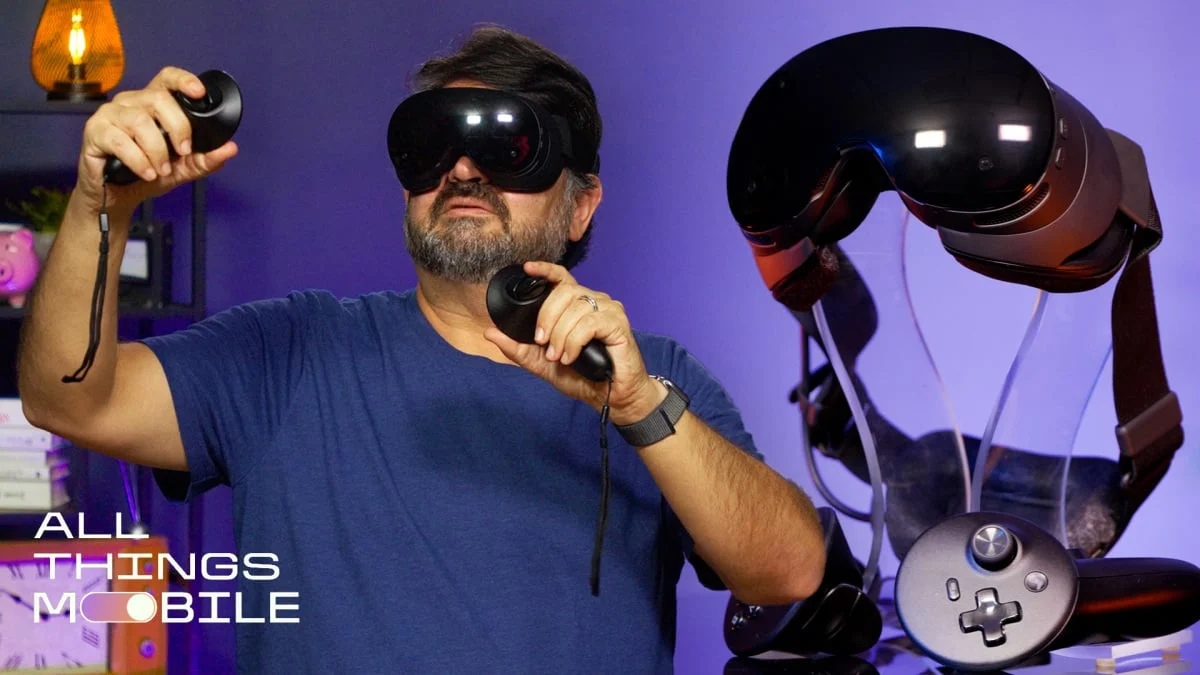
- Controller Integration: A unique controller suite heavily laden with sensors to ensure precise tracking without the need for external base stations.
- Pass-through Technology: The inclusion of high-fidelity pass-through cameras, suggesting a focus on mixed-reality (MR) capabilities rather than just isolated virtual experiences.
Chronology: The Evolution of Valve’s Hardware Ambitions
Valve’s path to the Steam Frame was not a straight line. It is the culmination of over a decade of hardware R&D.
- The Steam Machine Era (2013-2015): Valve’s first attempt to bring Steam into the living room. While the hardware failed to gain market traction, it laid the groundwork for SteamOS—the Linux-based backbone of all current Valve hardware.
- The HTC Vive Collaboration (2016): Partnering with HTC, Valve established the gold standard for room-scale VR. This period taught Valve the complexities of tracking, haptics, and software latency.
- The Index & The "Knuckles" (2019): Valve’s first proprietary headset showcased their commitment to ergonomics and high-fidelity interaction.
- The Steam Deck Revolution (2022): The defining moment for the company. By proving that a handheld Linux device could handle a vast library of AAA titles, Valve created the portable template that the Steam Frame now adopts.
- The Present (2024/2025): The Steam Frame emerges as the marriage of these two lineages: the portability of the Deck and the immersion of the Index.
Supporting Data: Performance and Limitations
While the prospect of a mobile VR Half-Life: Alyx is thrilling, the reality of physics and battery life poses significant hurdles.
The Power-to-Weight Ratio
Valve has opted for a modular design, likely to distribute weight effectively. However, the internal processor must work overtime to handle both rendering and tracking. Early benchmarks suggest that while the device handles moderate indie titles with ease, "heavy" VR titles require aggressive foveated streaming or reduced settings to maintain a comfortable frame rate.
Compatibility Hurdles
One of the most critical facts disclosed by early testing is that not all games will work. Because the device operates on a Linux-based architecture (similar to the Steam Deck), it relies on Proton for compatibility. While this works seamlessly for 2D games, VR titles have unique requirements—specifically concerning motion drivers and controller mapping. Users should expect a "Verified" badge system similar to the Steam Deck to manage expectations regarding performance.
The Display Experience
The viewing experience is characterized by a crisp, high-resolution output. However, the ergonomics of the frame present a "challenge for glasses wearers," a common pain point in the VR industry. The spacing within the facial interface is tight, suggesting that users with prescription eyewear may need custom lens inserts to fully utilize the device’s potential.
Official Responses and Strategic Implications
Valve has remained characteristically enigmatic, preferring to let the hardware speak for itself. In industry briefings, the company has emphasized that the Steam Frame is an "iterative product." They are not looking to conquer the market overnight; rather, they are "testing the architecture" of what a wearable PC can look like in the next decade.
The "Steam Frame" Strategy
The implications for the broader industry are profound:
- The Linux Dominance: By pushing the Steam Frame, Valve is further cementing Linux as a primary gaming platform. This reduces their dependency on Windows and allows them to maintain a "walled garden" that is both open-source and highly optimized.
- VR as a Lifestyle, Not a Peripheral: By making the device standalone, Valve is attempting to move VR out of the "hobbyist" corner and into the "portable console" category. If successful, this could force competitors like Meta and Sony to pivot their own hardware strategies.
- Developer Impact: For game developers, the Steam Frame creates a new requirement: "VR-portable optimization." Developers may soon be asked to provide "Frame-ready" versions of their games, further expanding the work required for a successful Steam release.
The Future of the Steam Frame
As the industry watches closely, the Steam Frame stands as a testament to Valve’s philosophy of "long-term thinking." This is not a device designed for the masses to purchase next week; it is a developer-forward, early-adopter piece of technology.
What the Steam Frame suggests is that Valve is looking toward a future where the distinction between a desktop, a handheld, and a headset disappears. If the Steam Deck was the "Proof of Concept" for portable PC gaming, the Steam Frame is the "Proof of Concept" for portable spatial computing.
Looking Ahead
The path forward will likely involve several iterations. As processor efficiency increases and battery technology advances, we can expect the "modular design" to become more streamlined. Valve has hinted that "expect more later," suggesting that the current iteration is merely the foundation for a larger ecosystem of modular accessories—perhaps tracking pucks, extended batteries, or specialized controllers.
In conclusion, the Steam Frame is not just a headset. It is a declaration of independence for Valve. By integrating their own OS, their own hardware, and their own massive library of games into a single, wearable unit, Valve is effectively building the "console" of the future—one that you don’t play on a screen, but rather, one that you step inside. Whether or not the market is ready for a portable, Linux-based VR experience remains to be seen, but one thing is certain: Valve has once again redefined the boundaries of what a gaming device can be.
Reporting by Scott Stein; additional analysis by the tech desk.