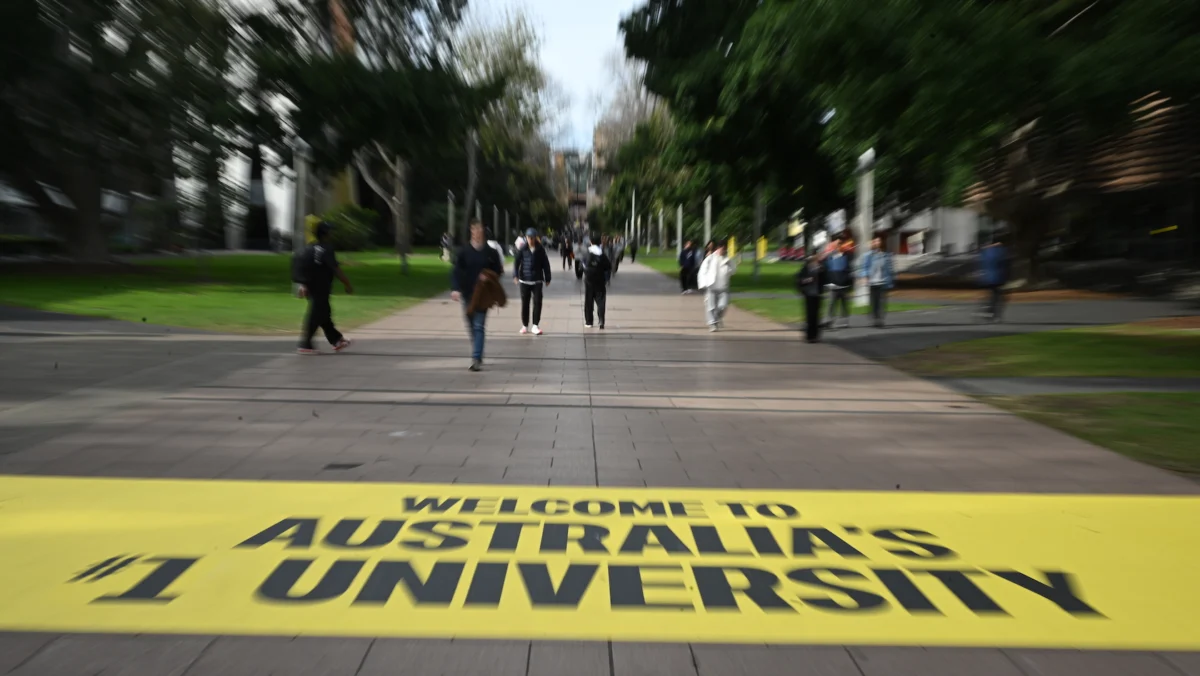
In the competitive landscape of Australian venture capital, where early-stage investors often vie for the most promising founders, the University of New South Wales (UNSW) has delivered a sharp, strategic reminder that some of the most influential "VCs" in the country are currently operating out of lecture halls and research labs.
In a move that has sent ripples through the startup ecosystem, the UNSW Founders 10x Accelerator has deployed $1.6 million into 16 high-potential pre-seed startups. This capital injection, which provides $100,000 to each venture, represents more than just a financial boost; it is a calculated validation of the university’s role as an engine for commercializing academic excellence.
The Financial Mechanics: A Model of Accessibility
The structure of the investment is as noteworthy as the amount itself. UNSW utilizes a Simple Agreement for Future Equity (SAFE) note, featuring a 20% discount and notably, no valuation cap. This approach is designed to be founder-friendly, lowering the barrier to entry for early-stage entrepreneurs who often struggle with the dilution concerns inherent in traditional venture capital term sheets.
For the vast majority of these 16 startups, UNSW served as the "first check"—the critical piece of capital that bridges the gap between an idea on a whiteboard and a functioning entity. In instances where a startup had already secured preliminary funding, the university committed to matching the existing terms, ensuring that their involvement acted as a catalyst rather than a complication in the cap table.
Beyond the core $1.6 million, the cohort received an additional endorsement of confidence. Three women-founded ventures within the group were awarded a non-dilutive grant of $20,000 each, courtesy of a partnership with Westpac. This supplementary funding highlights an increasing emphasis on equity and diversity in the Australian tech sector, ensuring that promising founders have the runway to scale without immediate pressure to surrender further equity.
A Chronology of Growth: From Research to Revenue
The success of this year’s cohort is the culmination of a multi-stage funnel that has been refined over several years. UNSW Founders, the university’s flagship entrepreneurship program, operates on a philosophy that treats startups not as academic side-projects, but as high-growth commercial enterprises.
The Pipeline Development
Long before the $100,000 checks were cut, the 16 startups underwent a rigorous selection process. The cycle typically begins months in advance, with the university scouting talent across its diverse faculties—from engineering and artificial intelligence to biotechnology and sustainable design. Unlike traditional VCs that may spend weeks performing due diligence on a cold lead, UNSW’s model benefits from prolonged exposure to these founders during their time as students or researchers.
The Accelerator Intensive
Once selected for the 10x Accelerator, the founders enter an intensive period of mentorship, product-market fit validation, and operational scaling. The 10x program is specifically designed to transition founders from the "campus mindset" to the "market mindset." By the time the funding is finalized, these startups have already survived the crucible of intensive coaching, making them far more attractive to follow-on investors in the seed and Series A rounds.
Supporting Data: The University’s VC Footprint
The data surrounding university-backed startups in Australia tells a compelling story of resilience and performance. According to recent industry reports, startups birthed within university accelerators often have a higher survival rate than those launched in isolation.
The $1.6 million deployed by UNSW is part of a broader trend of "university-led venture." As global VCs become increasingly risk-averse, universities are stepping in to fill the "pre-seed gap." The statistics are clear:
- Capital Efficiency: University-backed startups are often leaner, utilizing research facilities and institutional networks to keep burn rates lower in the early stages.
- Survival Rates: Research indicates that startups supported by university programs have a nearly 30% higher success rate in reaching a Series A funding round compared to the national average.
- Long-term Value: The "SAFE" structure utilized by UNSW has become a standard, yet its deployment by an institution signals a professionalization of academic tech transfer that was lacking a decade ago.
Perspectives from the Ecosystem
The reaction from the broader investment community has been one of professional respect, albeit with a side of competitive scrutiny.
"The landscape has shifted," says a lead analyst at an independent Sydney-based VC firm. "When we see UNSW moving with this level of speed and conviction, it signals to the market that the quality of university-bred startups has fundamentally matured. They aren’t just playing with grant money; they are investing with the discipline of a fund."
Internal stakeholders at UNSW emphasize that the goal is not to replace private venture capital, but to prime the pump. "Our role is to de-risk these ventures to a point where the traditional VC market can comfortably take over," notes an administrator at the Founders program. "By providing that first $100,000, we aren’t just funding a company; we are building a bridge for the next generation of Australian unicorns."
The Strategic Implications for Australia’s Tech Future
The emergence of universities as dominant pre-seed players has profound implications for the Australian innovation economy.
1. Reducing the "Valley of Death"
The most dangerous phase for any startup is the period between the prototype and the first institutional investment. By providing $1.6 million in total, spread across 16 companies, UNSW is effectively shielding these startups from the "Valley of Death"—the point where funding dries up before commercial viability is proven.
2. Talent Retention
Historically, Australia has suffered from a "brain drain," where top-tier academic talent moved to Silicon Valley or London to find capital. By embedding funding directly into the university experience, UNSW is effectively retaining top-tier intellectual property within the country, fostering a domestic ecosystem that is increasingly self-sufficient.
3. A New Benchmark for Institutional Investors
This move forces other universities and institutional bodies to re-evaluate their own commercialization strategies. If a university can outperform traditional angel investors in identifying and funding early-stage winners, it raises the bar for the entire "innovation precinct" model in Australia.
4. The Cultural Shift in Academia
Perhaps the most significant implication is the changing culture within the university itself. Professors and students are increasingly viewing entrepreneurship as a legitimate career path rather than an alternative to research. The integration of 10x Accelerator funding into the university’s identity suggests that the institution now views its success not just through the lens of research citations, but through the lens of market disruption.
Looking Ahead: The Next Cycle
As these 16 startups begin to deploy their capital, the focus will shift to their ability to raise follow-on rounds. The performance of this cohort will be a bellwether for the efficacy of the university-as-investor model.
If the 10x Accelerator continues to churn out companies that are not only viable but highly scalable, we can expect to see a surge in similar programs across the Group of Eight universities. For now, however, UNSW has set a clear precedent: the future of Australian venture capital is being written in the labs and incubators of our universities.
The $1.6 million investment is not just a financial transaction; it is a signal to the world that Australia’s academic institutions have evolved. They are no longer content with being the starting line; they are now actively participating in the race, ensuring that the best ideas don’t just stay in a journal, but arrive on the desks of global customers.
In the final assessment, the UNSW model proves that when academic rigor meets venture-style agility, the result is a formidable force that can compete with—and often out-hustle—the traditional venture capital establishment. As the 16 startups begin their journey, the Australian tech community will be watching closely, ready to see which of these university-backed ventures will be the next to hit the global stage.