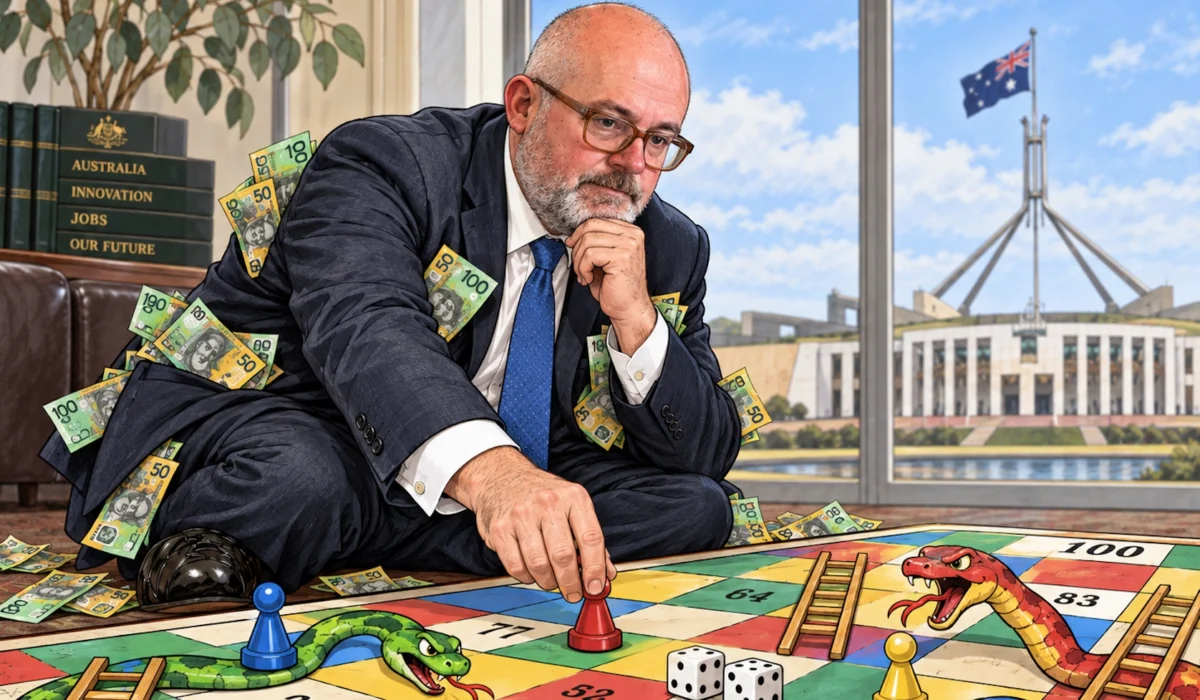
At this week’s National Innovation Policy Forum, Assistant Minister for Manufacturing and Trade Tim Ayres delivered a speech that has sent shockwaves through Australia’s entrepreneurial heartland. For many startup founders and small business owners, the address was not merely a policy update; it was a sobering confirmation of a long-held suspicion: in the eyes of the current federal government, the Australian startup sector is a secondary concern, existing only on the periphery of serious economic strategy.
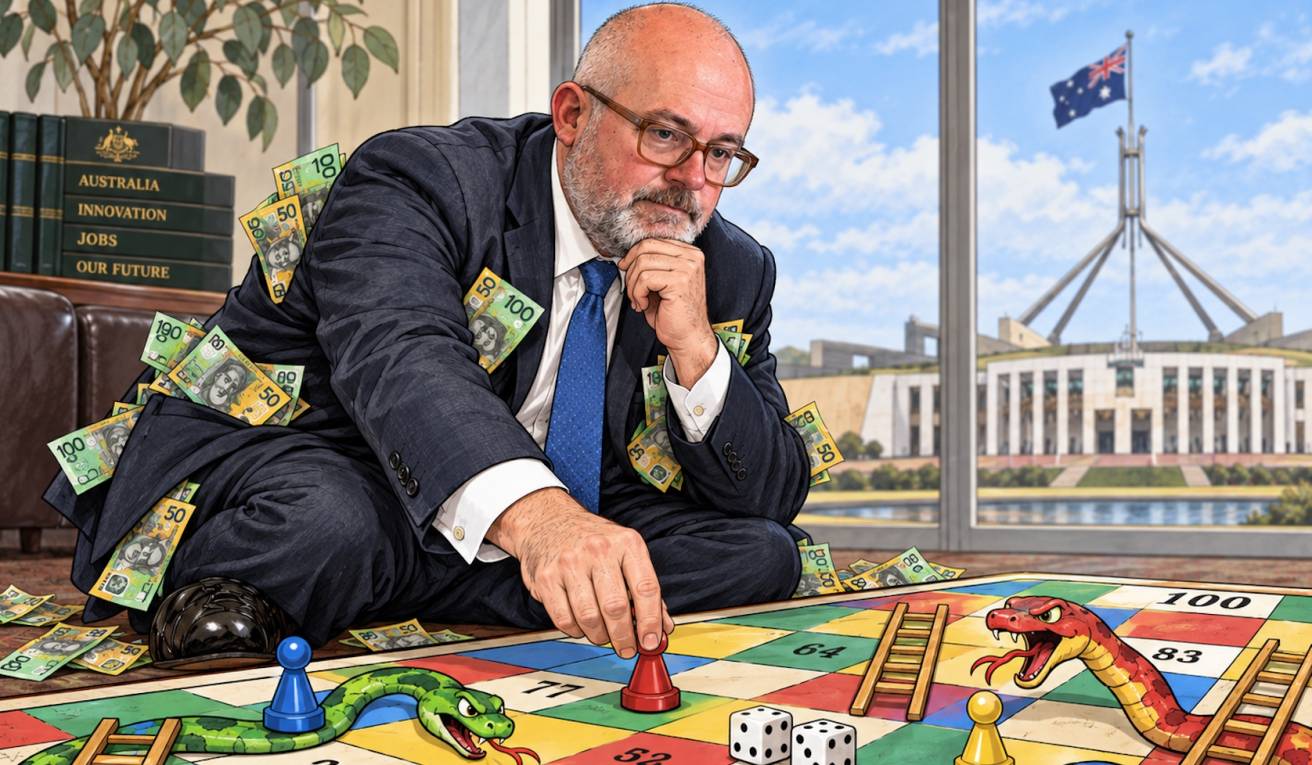
The sentiment among the innovation community is palpable. Founders who have spent years navigating the “valley of death” with minimal state support feel that when it comes to capital allocation, the government’s eyes are firmly fixed on the giants, while the nimble, high-growth startups are left to rely on metaphorical ladders that seem to vanish the moment they are reached for.
The National Innovation Policy Forum: A Catalyst for Discontent
The forum, intended to be a beacon for Australia’s industrial future, instead became a stage for a deepening divide. Minister Ayres’ remarks focused heavily on the government’s preference for supporting established, large-scale industrial players. While proponents argue that this is a necessary strategy for sovereign capability and economic stability, the startup community views it as a fundamental misunderstanding of how modern innovation economies are built.
The criticism is not that large business is unimportant, but rather that the balance of support is skewed to the point of exclusion. As the startup sector continues to struggle with a tightening venture capital market and a lack of direct government R&D incentives, the sight of hundreds of millions of dollars flowing to established entities—some of which barely meet the intended criteria for innovation funding—has ignited a fierce debate about the government’s vision for the future.
Chronology of a Policy Divergence
To understand the current frustration, one must look at the recent trajectory of government industrial policy.
- Mid-2023: The government announces the National Reconstruction Fund (NRF), a $15 billion commitment aimed at diversifying Australia’s industrial base. Expectations were high that this would provide a bridge for late-stage startups and scale-ups.
- Late 2023 – Early 2024: Early announcements regarding NRF recipients begin to surface. While some are innovative, others appear to be traditional manufacturing plays with limited "startup" DNA.
- Mid-2024: The "valley of death" for Australian startups deepens as global interest rates remain high and domestic venture capital becomes increasingly risk-averse.
- October 2026: The National Innovation Policy Forum takes place. Minister Ayres delivers his keynote, explicitly defending the focus on large-scale industrial joint ventures, effectively dismissing the call for more targeted startup support.
- Present Day: A vocal backlash from the startup ecosystem, spearheaded by industry leaders and founders, who claim the "ladders" of government support are inaccessible to the very companies that represent Australia’s future economic growth.
The Case of Built Living: A Case Study in Controversy
The most specific point of contention cited by critics is the allocation of $120 million in NRF funds to Built Living, a housing joint venture. For many in the startup world, this allocation is emblematic of a broader issue.
Critics argue that Built Living—a venture focused on established housing construction—does not represent the "innovation" or "disruption" that the NRF was originally marketed to foster. When taxpayers see large capital injections going toward existing industrial sectors rather than high-growth, high-tech startups, the narrative of "supporting industry" starts to look like "protecting incumbents."
For a startup founder, the contrast is stark. While a housing venture secures a nine-figure sum, a deep-tech startup attempting to commercialize proprietary software or medical hardware might struggle to secure a fraction of that amount in grants, often facing years of administrative hurdles that discourage applications altogether.
Supporting Data: The Innovation Gap
The data suggests that Australia is at a crossroads. According to recent industry reports, while Australia’s venture capital market has matured significantly over the last decade, it remains heavily dependent on private funding. Unlike the US, Israel, or even parts of Europe, the Australian government’s direct participation in early-stage risk funding is historically conservative.
Furthermore, Australia’s R&D tax incentive, while useful, is often insufficient to cover the high burn rates required for global scaling. When the government pivots its focus to "sovereign manufacturing" via large-scale grants, it inadvertently signals that the risk profile of the startup sector is too high for the public purse.
However, historical global data shows that economies that prioritize the protection of incumbents over the cultivation of startups tend to see lower long-term productivity growth. Startups are the primary engine for job creation and the adoption of new technologies; when they are treated as an "afterthought," the entire economy risks stagnation.
Official Responses and Ministerial Intent
In his speech, Minister Ayres maintained that the government’s mandate is to protect the foundations of the Australian economy. He argued that by strengthening large-scale industrial capability, the government is creating a "rising tide" that will eventually lift all boats, including smaller enterprises and startups.
"Our focus is on sovereign capability," Ayres noted during the forum. "We need to ensure that Australia can build, manufacture, and sustain itself in an increasingly volatile global environment. This requires scale."
However, this justification has done little to appease the startup community. The prevailing view is that "scale" should not be the sole prerequisite for government support. If the government only funds what already exists, it is inherently unable to fund what needs to be created. By the time a startup reaches the "scale" required to satisfy current NRF criteria, it has often already left Australia or been acquired by foreign entities, leading to a "brain drain" of talent and intellectual property.
Implications for the Future: A Disconnected Economy
The implications of this policy direction are significant. First, there is the risk of a "talent flight." If the brightest minds in Australia feel that the government is not interested in their success, they will take their ventures to markets like Singapore, the UK, or the US, where government support for innovation is more integrated into national strategy.
Second, the reliance on incumbents to drive innovation may prove to be a strategic error. History is littered with examples of "national champions" who failed to adapt because they lacked the competitive pressure of a healthy, funded startup ecosystem.
Finally, the social contract between the Australian government and the entrepreneurial community is fraying. Founders are increasingly looking to the private sector and offshore markets for support, effectively bypassing the government altogether. While this might encourage a certain type of independence, it also means that the government loses its ability to steer the direction of the national economy toward a digital, high-tech future.
Conclusion: Rebuilding the Ladder
The current tension between the federal government and the startup ecosystem is not merely a dispute over funding; it is a fundamental disagreement over what constitutes "the economy."
Minister Ayres and the government seem to view the economy as a collection of established pillars that need to be fortified. Startup founders, conversely, view the economy as a living, evolving organism that requires constant nourishment of new ideas, high-risk ventures, and disruptive talent.
To bridge this divide, the government must move beyond the "snakes and ladders" approach. This means developing a more nuanced funding strategy that acknowledges the role of startups not as "afterthoughts," but as the essential architecture of the next century of Australian prosperity. If the ladders continue to vanish, the government may find that the innovation sector is no longer waiting at the bottom of the board—it will have simply walked away to a game where the rules are fairer and the growth is more inclusive.
As the industry reflects on the National Innovation Policy Forum, one thing is clear: the path forward requires a shift in perspective. Without a genuine commitment to supporting the grassroots of the Australian economy, the country risks becoming a comfortable home for the giants of yesterday, while missing out on the transformative potential of the startups of tomorrow.