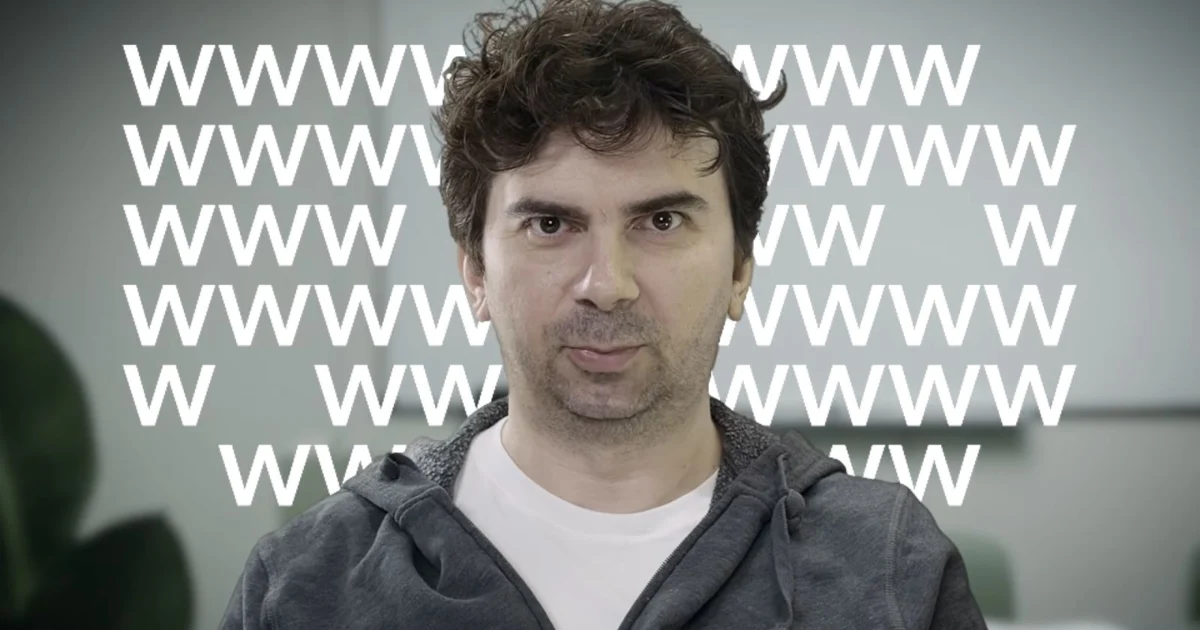
In an era where search engine optimization (SEO) is increasingly dominated by generative AI and complex algorithmic shifts, Google has launched a new initiative designed to tackle the "unanswerable" questions that haunt the industry. On October 14, 2024, Google’s Search Central team debuted "The Non-Canonical Cabinet," a sitcom-style video series hosted by Search Relations team members Gary Illyes and Cherry Prommawin.
Unlike previous educational series that focused on the foundational pillars of crawling and indexing, this project shifts the spotlight toward the "edge cases"—those peculiar, niche, and highly specific technical quandaries that website owners struggle with but rarely find addressed in standard documentation.
A New Approach to Search Education
The genesis of the series lies in the frustration often felt by SEO practitioners when standard documentation fails to address unique site configurations. As described in the series’ promotional materials, the show focuses on "questions that don’t belong on a standard FAQ page but are still useful for Search and generative AI features."
The series follows in the footsteps of the 2024 "How Search Works" series, which provided a comprehensive, five-part walkthrough of the mechanics of search—from crawling to indexing to serving. However, while "How Search Works" was a top-down educational roadmap, "The Non-Canonical Cabinet" is bottom-up, driven entirely by the curiosity and technical headaches of the SEO community. By utilizing a comedic, sitcom-inspired format, Google is attempting to lower the barrier to entry for complex technical discussions, making the often-dry world of protocol standards and URL structures more digestible.
Chronology: From Teaser to Technical Deep-Dive
The launch of the series was marked by a strategic rollout designed to foster community engagement:
- October 6, 2024: Google published a trailer for "The Non-Canonical Cabinet." This short clip introduced the premise of the show and explicitly invited viewers to submit their most challenging, "edge-case" technical SEO questions in the comments section of future videos.
- October 14, 2024: The first full-length episode was released. This premiere addressed the technical limits of domain names, the feasibility of emojis in URLs, and the persistent debate surrounding keywords as a ranking factor.
- Future Outlook: While no rigid release schedule has been established, Google has confirmed that the upcoming episode will delve into the complexities of the
robots.txtfile—a file that frequently serves as a source of catastrophic configuration errors for webmasters.
Technical Standards: Domains vs. URL Paths
One of the most valuable takeaways from the inaugural episode is the clear distinction between how Google perceives domain names versus URL paths. These two components of a web address are governed by fundamentally different sets of rules.
The Rigidity of Domain Names
Domain names are subject to strict international standards established by the Internet Engineering Task Force (IETF), specifically RFC 1035 and RFC 1123. These standards dictate that domains are limited to a specific set of characters: letters, numbers, and hyphens.
Prommawin and Illyes clarified that Google adheres strictly to these standards. While Internationalized Domain Names (IDNs)—which allow for non-Roman scripts like Chinese or Arabic—are supported, they operate through a translation mechanism known as "Punycode." These are represented by a string starting with "xn--". While browsers often render these in their native script to improve user experience, the underlying technical reality remains a rigid, standardized string.
Illyes also cautioned against the potential for "homograph attacks," where characters from different languages that look identical to the Latin alphabet (such as a Cyrillic ‘p’ vs. a Latin ‘p’) are used to mislead users.
The Emoji Debate
A significant point of contention has long been the use of emojis in domains. According to a 2017 ICANN Board Resolution, emojis are currently prohibited under the technical standards for IDNs. While some country-code top-level domains (ccTLDs) may allow them at the second level, they are not universally supported and are generally considered a liability rather than an asset for SEO.
The Flexibility of the URL Path
In contrast to the domain name, the URL path is significantly more permissive. Illyes confirmed that Googlebot is fully capable of crawling paths that contain emojis. When a browser encounters an emoji in a URL path, it automatically converts it into percent-encoded format (e.g., a chicken emoji becomes %F0%9F%90%94).
While Google’s systems can process these, the practical implication is one of caution. Not every browser, social media platform, or analytics tool handles these percent-encoded strings gracefully; some may display them as "gibberish," which can lead to broken tracking, social sharing issues, and a degraded user experience.
The Myth of Keyword-Dense URLs
Perhaps the most critical segment of the first episode involved the debunking of "keyword stuffing" within URL strings. For years, some SEOs have prioritized cramming keywords into URLs under the impression that it acts as a primary ranking signal.
Illyes dismissed this notion, labeling keywords in a URL as an "incredibly small signal." He explained that for established websites, the presence of keywords in the URL is "basically irrelevant." The only scenario in which these keywords might hold any weight is for a brand-new site that possesses absolutely no other content or signals for Google to analyze. Once Google gains access to the page content, the importance of the URL string effectively drops to zero.
This aligns with long-standing statements from other Google Search Relations members, including John Mueller, who has consistently described URL keywords as a "very, very lightweight factor." The clear directive from the Cabinet is simple: stop attempting to manipulate rankings by inflating URL strings with excessive keywords.
Word Separators: The Hyphen vs. The Underscore
The episode also addressed the long-standing debate regarding separators in URLs. Google’s stance remains consistent with its published documentation: hyphens are the preferred separator.
Illyes explained that Google’s crawlers treat words joined by underscores as a single, concatenated word, whereas hyphens are correctly interpreted as distinct word separators. While Google is often smart enough to parse the intended meaning behind underscores, relying on them is suboptimal. The recommendation for hyphens is rooted in "historical reasons," as underscores have traditionally functioned as connectors for variables in programming languages, whereas hyphens have served as the standard delimiter for natural language on the web.
Implications for SEO Professionals
The premiere of "The Non-Canonical Cabinet" serves several important functions for the SEO industry:
- Validation of Best Practices: For many practitioners, the episode confirms that current documentation—such as Google’s official URL structure guidelines—is the "gold standard." If a website is already following these guidelines, there is no need for immediate modification.
- Strategic Resource Allocation: The clarification regarding keyword density in URLs allows SEOs to stop wasting time on minor, ineffective optimizations. By pivoting away from the "keyword-stuffed URL" strategy, professionals can dedicate more time to high-impact areas like content quality, E-E-A-T (Experience, Expertise, Authoritativeness, and Trust), and technical performance.
- A Forum for the "Unanswered": The most powerful aspect of the series is the interactive component. By using the comments section to aggregate edge cases, Google is essentially crowdsourcing its future content. This creates a feedback loop where the industry’s most pressing, unaddressed technical issues are prioritized for official, on-the-record answers.
Conclusion: A Shift Toward Transparency
"The Non-Canonical Cabinet" represents a significant evolution in how Google communicates with the SEO industry. By moving away from general "Search 101" topics and focusing on the complex, weird, and highly technical edge cases, Google is providing a level of transparency that has historically been rare.
For webmasters and SEO professionals, this series is a vital resource. It provides a direct line to the engineers who define the standards that dictate search visibility. As the series continues, the industry can expect to see more of these "micro-myths" debunked and a clearer understanding of how the mechanics of search interact with the increasingly creative (and sometimes messy) ways in which websites are built.
Whether you are dealing with character encoding, complex URL structures, or obscure robots.txt configurations, "The Non-Canonical Cabinet" is set to become an essential, if unconventional, viewing experience for anyone serious about mastering the technical side of search.