In the rapidly evolving digital landscape, the corporate blog remains a staple of the marketing mix. For years, the formula seemed simple: write quality content, optimize for search engines, and watch the traffic grow. However, as Orbit Media’s 11th Annual Blogger Survey reveals, the ground is shifting beneath the feet of content marketers. With the rise of generative AI and the decline of traditional search traffic, the "old ways" of blogging are yielding diminishing returns.
To navigate this new reality, we must look beyond vanity metrics and understand how top-performing brands are adapting. In this deep dive, we explore the core findings of Orbit Media’s latest research and sit down with Andy Crestodina, co-founder of Orbit Media, to discuss what the future of content strategy actually looks like.
The Main Facts: The Resilience of Time and Effort
One of the most persistent questions facing marketers today is whether the advent of generative AI has slashed the time required to produce content. With tools capable of drafting articles in seconds, one might expect the average time-to-publish to plummet.

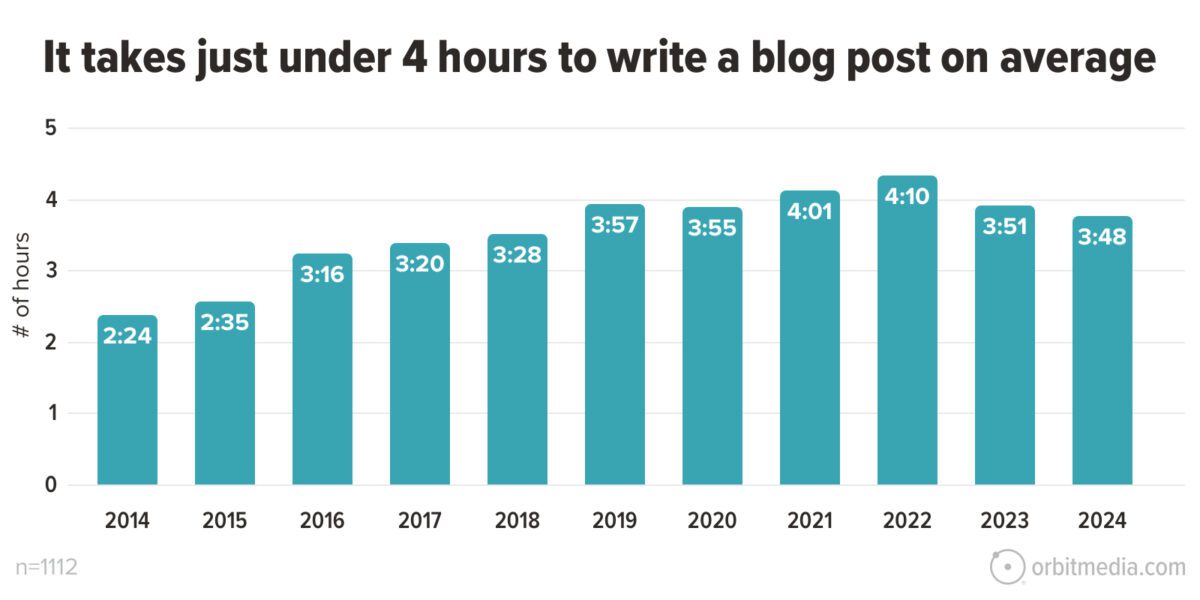
The data, however, tells a different story. The average blog post today takes three hours and forty-eight minutes to write—a mere three-minute decrease from the previous year. This resilience in production time suggests that while AI is being widely adopted (with 80% of bloggers now using it, up from near zero in 2022), it is not a "magic bullet" that replaces the need for human strategy, rigorous review, and creative editorial oversight.
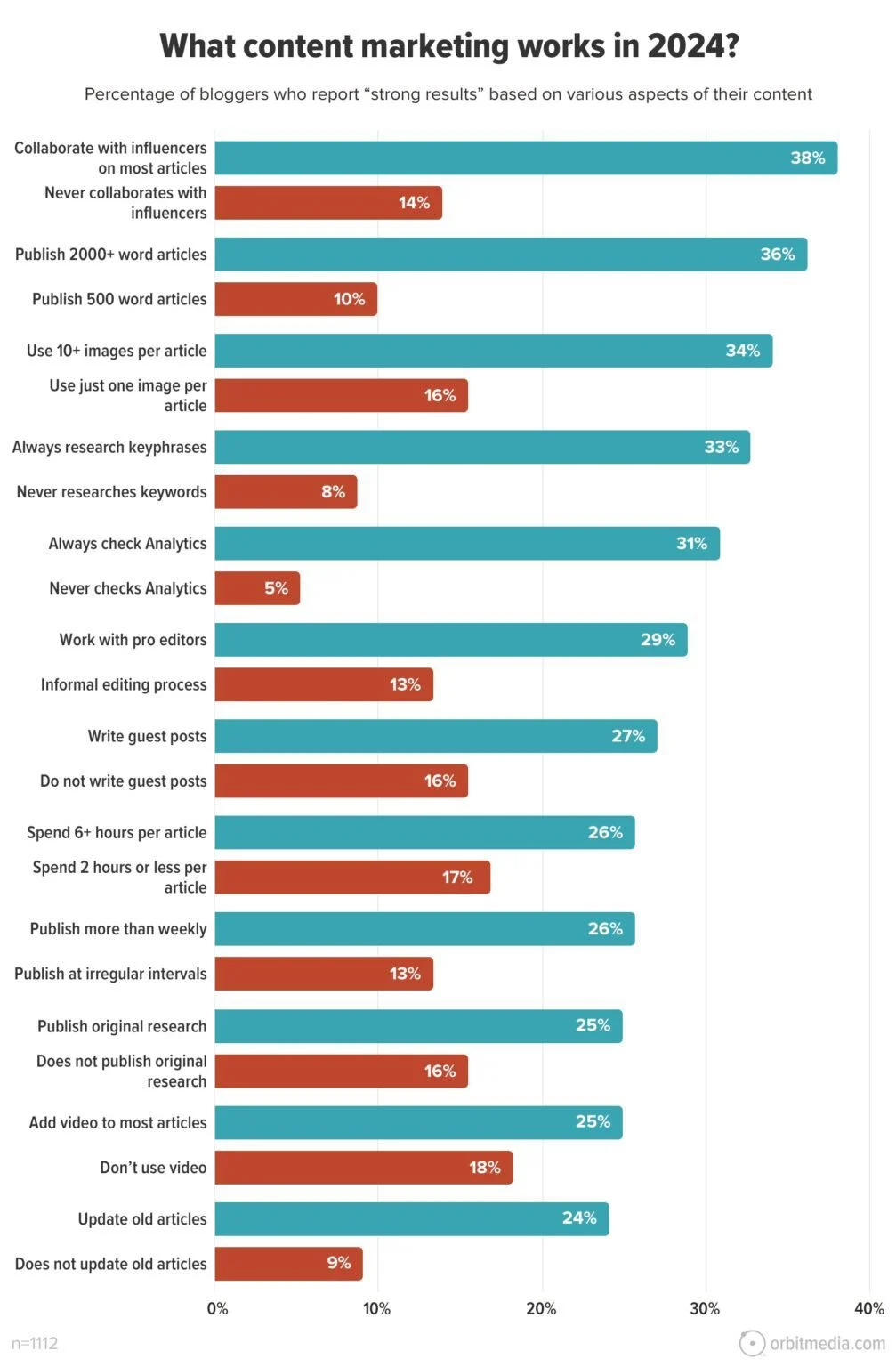
Instead, the data highlights a persistent truth: high-effort content produces high-impact results. Bloggers who consistently produce long-form content (2,000+ words) and maintain a minimum bi-weekly posting cadence are significantly more likely to report "strong results."
Chronology: The Decade of Data
For over ten years, the Orbit Media survey has served as a lighthouse for content marketers. By tracking trends over a full decade, the study provides a clear longitudinal view of the industry.
- 2014–2019: The "Golden Age" of SEO-driven blogging, where consistent publishing and keyword targeting reliably delivered compounding traffic.
- 2020–2022: The pivot toward remote work and digital transformation saw a massive surge in content production, but also the beginning of content saturation.
- 2023–2024: The "Zero-Click" era. The rise of AI-generated content, coupled with search engines prioritizing direct answers over outbound links, has led to a noticeable decline in traditional organic traffic for many brands.
The survey illustrates a stark reality: fewer content marketers are reporting "strong results" today than at any point in the last nine years. This is not necessarily due to a lack of talent, but rather a structural shift in how users consume information.
Supporting Data: Why "More" is Not Always Better
The research points to several critical performance drivers that separate the winners from the rest of the pack:
- The Depth vs. Frequency Trade-off: While consistency is vital, quality is the force multiplier. The data shows that investing 4+ hours per post is a threshold for success. Rushing content to meet an arbitrary quota often leads to "content debt"—a library of thin, uninspired posts that do nothing to build brand authority.
- The Social-Blog Hybrid: The most successful blogs are beginning to treat their feeds like social media streams. This means prioritizing engagement, community interaction, and visual storytelling—elements that social platforms have spent millions to optimize.
- The Power of Audio: Interestingly, those who integrate podcasts into their content ecosystem are twice as likely to report strong results. While the sample size is smaller, the correlation is clear: podcasters tend to be more collaborative, creative, and consistent, often repurposing audio into written assets that carry more weight than standard blog posts.
Official Responses: Insights from Andy Crestodina
We spoke with Andy Crestodina, CMO and Co-Founder of Orbit Media, to unpack these findings. His perspective is rooted in the "brutal honesty" of the data.

Q: What was the most surprising takeaway for you this year?
"The data is telling us, year after year, that big efforts drive big outcomes. It’s not surprising in theory, but when you look at the side-by-side performance of low-effort versus high-effort programs, it’s stark. What is surprising is that so many marketers continue to run low-effort programs—no research, no collaboration, no video—and then wonder why their results are stagnant. The data shows us exactly what works, yet many refuse to pivot."
Q: If traffic is down, how should we be measuring success?
"We need to stop worshipping the ‘traffic’ metric," Crestodina explains. "Traffic is easy to track, but it’s often the least important indicator of business health. We should be looking at conversion rates, time-on-page, email signups, and, crucially, bottom-of-funnel indicators. The most important outcomes—word-of-mouth and top-of-mind awareness—are hard to measure, but they are the ones that actually drive revenue."
Q: You’ve been vocal about the importance of ‘rented land.’ Can you explain?
"Years ago, we were told never to build on rented land. But when organic search started to decline, I realized that LinkedIn was where our audience was living. We launched a LinkedIn newsletter, and while our website traffic is lower than it was four years ago, our visibility has exploded. We aligned our goals with the platforms that our audience uses. My #1 tip for B2B brands right now is to stop trying to force everyone back to your website and start meeting them where they are."

Implications: The New Content Playbook
For marketing leaders, these insights necessitate a fundamental shift in strategy for 2025 and beyond.
1. Realigning Measurement
Move away from "vanity metrics" like total page views. Instead, track metrics that signal intent:
- Conversion attribution: How many leads interacted with a specific piece of content before converting?
- Newsletter growth: A loyal, owned audience is the best hedge against volatile search algorithms.
- Depth of engagement: Are users consuming the content, or just bouncing after a few seconds?
2. Emphasizing "Human-in-the-Loop" AI
AI should be used to eliminate the drudgery—brainstorming, outlining, and formatting—but it cannot replace the brand’s unique voice or original research. If your content can be easily replicated by a generic AI prompt, it is not competitive. Invest in original data, expert interviews, and proprietary storytelling that AI cannot synthesize.

3. Embracing Platform-Native Content
Crestodina’s advice on LinkedIn newsletters is a harbinger of a broader trend: platform-native distribution. In a "zero-click" search environment, success comes from building community on the platforms where your audience already spends their time. This may mean publishing full-length articles on LinkedIn, creating video summaries for YouTube, or launching a branded podcast.
4. The "Long-Game" Commitment
The data confirms that there is no shortcut to authority. Whether it is long-form research, collaborative guest-posting, or multimedia production, the most successful content programs require sustained, high-level effort.
Conclusion
The era of the "autopilot" blog is over. As the landscape grows more competitive and search behavior changes, content marketers must stop chasing traffic for traffic’s sake. Instead, the path forward lies in creating high-effort, high-value assets, meeting audiences on their preferred platforms, and measuring success through the lens of brand authority and customer conversion.

As Andy Crestodina aptly put it: "Literally any extra effort can make an impact." In a world of noise, the brands that invest the time to create truly distinct, valuable, and accessible content will be the ones that win.