For the better part of a decade, the digital marketing playbook has remained remarkably static. Budgets are funneled into a familiar triumvirate: Google Ads, LinkedIn campaigns, and Facebook retargeting. These platforms offer the siren song of “measurable ROI”—a dashboard of clicks, impressions, and conversions that marketers can neatly package for stakeholders. But is this reliance on the “safe bets” blinding us to more effective, organic ways to reach audiences?
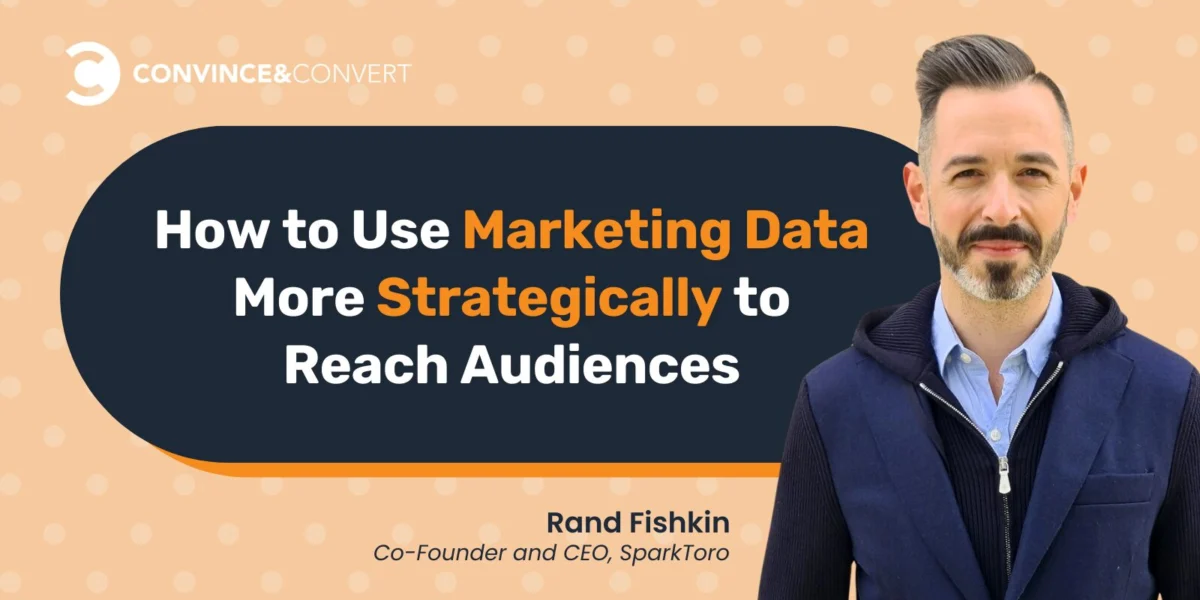
As the digital landscape becomes increasingly saturated, the battle for attention is no longer just about who has the largest ad budget; it is about who best understands the nuanced habits of their target demographic. According to Rand Fishkin, co-founder of SparkToro, many organizations are inadvertently sabotaging their growth by prioritizing attribution metrics over genuine audience resonance.
The Illusion of Attribution: The "Middleman" Problem
A critical friction point in modern marketing is the obsession with last-click attribution. Marketers frequently point to a successful Google Ads campaign as the primary driver of growth. However, Fishkin argues that this perspective is often fundamentally flawed.
“A ton of what happens in Google is actually a response to something else,” Fishkin explained on the Data-Driven Decisions podcast. “People who performed a search query in Google, very rarely was that a spontaneous first-touch thing. It was like, ‘Oh, I heard about this software, so I went to Google and searched for it and clicked on it.’ And of course, the attribution looks like Google drove all the value. No, Google was just the middleman.”
The Implication of the "Middleman" Bias
When marketing teams optimize exclusively for platforms that provide clear, immediate attribution, they fall into a dangerous trap: they ignore the “top-of-funnel” discovery phase. If a potential customer first learns about a product through an industry podcast, a niche forum, or a peer-to-peer recommendation, they are already primed to purchase. By the time they hit Google, they are a high-intent lead.
If a brand invests only in Google Ads and ignores the channels where the customer was actually influenced, they are essentially paying a premium to capture demand they already generated elsewhere, while leaving the discovery phase completely untapped.
Chronology of a Strategy Shift: From Paid Ads to Niche Communities
The evolution of digital strategy is moving away from broad, paid reach and toward deep, community-driven engagement. This shift is characterized by a transition from "interruptive" advertising to "value-added" presence.
Phase 1: The Broad-Spectrum Approach
In the early 2010s, the emergence of advanced tracking pixels and retargeting technology allowed brands to follow users across the web. This created a culture of “tracking-first” marketing, where reach was favored over depth.
Phase 2: The Saturation Wall
As privacy regulations (such as GDPR and the deprecation of third-party cookies) have tightened, the cost of paid acquisition has skyrocketed. Simultaneously, ad blindness has increased, making it harder for generic paid ads to capture genuine interest.
Phase 3: The Data-Informed Niche Era
The current era is defined by the intelligent use of audience data to find hyper-relevant hubs. As Fishkin notes, the goal is to stop buying ads and start participating in the spaces where your audience lives, learns, and solves problems. By analyzing where target customers spend their time—which websites they read, which podcasts they consume, and which influencers they trust—marketers can move their resources into high-conversion, low-competition zones.
Case Studies in Audience-Centric Marketing
The effectiveness of this redirected approach is best illustrated through real-world applications of audience intelligence.
The Podcaster’s Growth Loop
Consider a podcaster seeking to maximize sponsorship revenue. Rather than relying on paid social ads to find listeners, they can use audience data to identify the influencers who already hold the attention of their desired demographic. By inviting these influencers as guests, the podcaster leverages the influencer’s pre-existing authority. The result is a natural, organic inflow of high-quality listeners, which in turn creates a more attractive environment for potential sponsors.
The Tech Event Organizer
Similarly, event organizers often struggle with low attendance or misaligned sponsor interests. By identifying the specific speakers and topics that resonate with their target audience, organizers can curate content that inherently attracts both the right attendees and the right sponsors. This is a far more sustainable model than casting a wide net with paid advertising and hoping for a conversion.
The Rise of "Zero-Click" Marketing
Perhaps the most disruptive concept to emerge from this shift is “Zero-Click Marketing,” a term coined by Amanda Natividad, VP of Marketing at SparkToro.
In a zero-click model, the objective is to provide value directly on the platform where the user resides, rather than forcing them to click a link to visit a landing page. This might mean posting an insightful, data-backed infographic on Reddit’s r/dataisbeautiful, or providing a comprehensive, educational video series on YouTube that answers common industry questions without a hard sell.
Why Zero-Click Works
- Trust Building: Users are more likely to trust a brand that provides value without demanding a transaction in return.
- Platform Preference: Most social platforms prioritize content that keeps users on their site. By creating “native” value, brands gain better organic reach.
- Top-of-Mind Awareness: When the user eventually moves to the consideration or purchase phase, they don’t search for a generic solution; they search for the brand that consistently provided them with value.
Supporting Data and Strategic Resource Allocation
The argument for shifting away from traditional paid models is supported by the law of diminishing returns. Fishkin notes that in almost every large marketing budget, the “top 10%” of spend—the most expensive, last-ditch efforts to squeeze out conversions—often yields zero incremental customers.
“If you find spending money there is really valuable, don’t let me stop you,” Fishkin says. “But if you think to yourself, the top 10% of spend that I do at those places is probably bringing me no incremental customers… maybe redirect that to some more creative, thoughtful and audience data-driven forms of marketing.”
The Role of Qualitative Data
While quantitative data is essential for identifying where an audience spends time, it cannot explain the why behind their behaviors. This is where qualitative research—customer interviews, surveys, and focus groups—becomes indispensable.
Data can tell you that your customers are visiting a specific website, but it cannot tell you what frustrates them about your current product or what features they are dying to see. To create a truly robust strategy, organizations must balance the "Big Data" of platform habits with the "Small Data" of human conversation.
Implications for the Future of Marketing Teams
The implications of this shift are profound for marketing leadership.
- Organizational Alignment: Marketing is no longer just about “lead gen.” It is about brand building, community management, and product-led growth.
- Skillset Evolution: The modern marketer needs to be part data analyst, part journalist, and part community builder. The ability to craft content that resonates within specific subcultures is becoming more valuable than the ability to optimize a bidding strategy on an ad platform.
- Measurement Transformation: KPIs must evolve. If a brand shifts to a zero-click strategy, they cannot measure success purely by “click-through rate.” Success must be measured through brand sentiment, share of voice in niche communities, and ultimately, organic search growth and customer retention.
Conclusion: Being Responsible with Data
Ultimately, the goal is not to abandon paid advertising entirely, but to ensure that data informs a more holistic, intelligent, and efficient strategy. As Zontee Hou, Managing Director at Convince & Convert and author of Data-Driven Personalization, has emphasized throughout the Data-Driven Decisions series, data is a tool for understanding human behavior, not a replacement for human intuition.
Marketing success is moving away from the “chase” and toward the “connection.” By identifying where your audience already gathers and providing meaningful value in those spaces, you build a foundation of trust that no amount of Google Ads can replicate.
As we look toward the future, the winners in the digital space will be those who stop viewing their customers as data points to be captured and start viewing them as communities to be engaged. The data is available—the challenge lies in whether we have the courage to stop relying on the easy metrics and start doing the harder, more rewarding work of building brand authority where it truly matters.