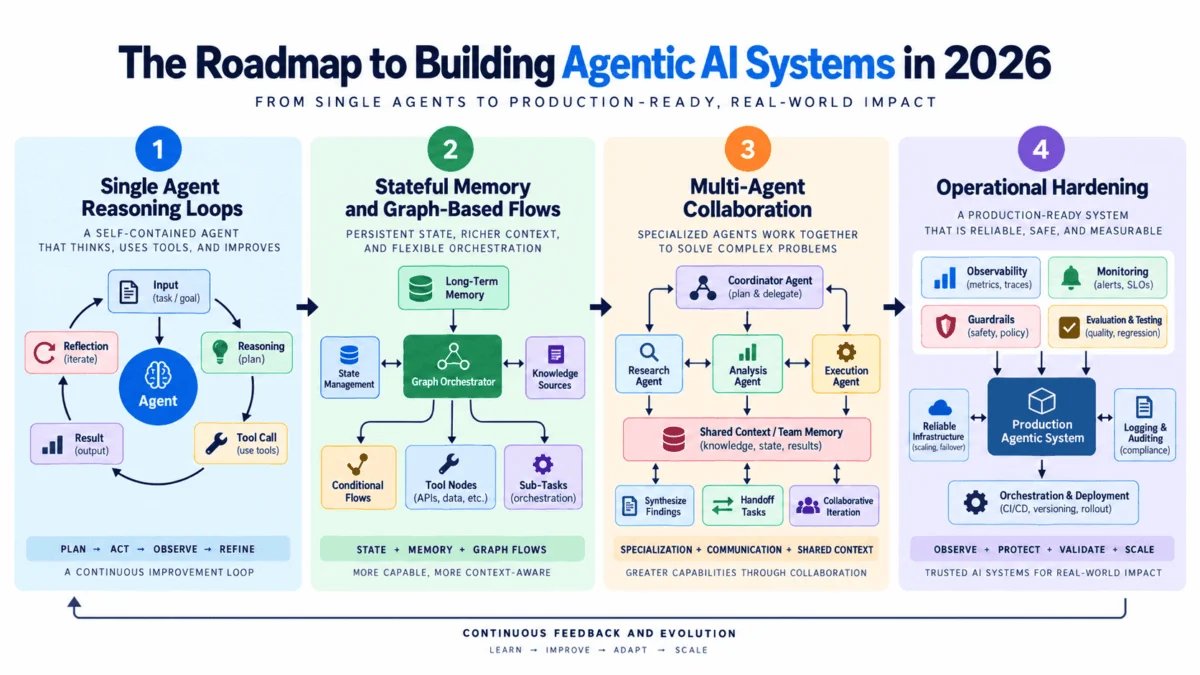
For years, the development of autonomous AI agents has been synonymous with the pursuit of more capable Large Language Models (LLMs). Developers have focused on prompt engineering, chain-of-thought prompting, and fine-tuning to coax models into acting as reliable assistants. However, a fundamental bottleneck remains: agents are inherently verbose. They rely on free-form text to "think," which introduces non-deterministic behavior, latency, and the constant risk of "hallucinated" procedural steps.
Enter Jev, a paradigm-shifting "System One" decision model developed by TypeSafe. Rather than asking an AI to write an essay about what to do next, Jev forces the model to make explicit, typed decisions with associated probabilities. By moving away from unstructured text and toward a structured, decision-oriented architecture, Jev is providing the missing infrastructure for robust, production-grade AI agents.
The Core Philosophy: System One Decision Models
The name "System One" is a nod to Daniel Kahneman’s dual-process theory of the mind. While "System Two" is slow, deliberate, and effortful—the way a typical LLM generates long-form reasoning—"System One" is fast, intuitive, and automatic.
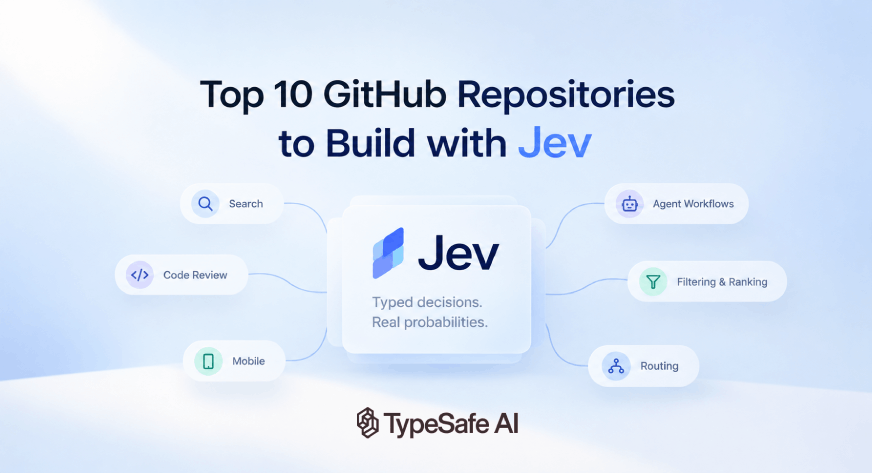
Jev functions as the "System One" layer of an agentic workflow. When an agent encounters a crossroads—such as deciding which tool to call, whether to keep or discard a piece of context, or when to terminate a loop—Jev evaluates the state and returns a predefined, typed decision. By outputting probabilities alongside these choices, Jev allows developers to set confidence thresholds. If the model is not confident enough in its decision, the system can automatically trigger a fallback mechanism or request human intervention. This replaces "hope-based development" with quantifiable, observable logic.
Chronology of Development: The Rise of Typed Decisions
The evolution of Jev mirrors the broader maturation of the agentic AI ecosystem.
- Early 2025: The initial discourse around "Context Engineering" began to highlight that simply dumping tokens into an LLM was unsustainable. Developers realized that managing the "attention" of an agent was as critical as the model’s intelligence.
- Mid-2025: Experimental frameworks began to emerge that separated the "reasoning engine" from the "decision engine."
- Late 2025: TypeSafe introduced the Jev API, formalizing the practice of using high-probability inference for state management, routing, and filtering.
- Late 2026: The ecosystem around Jev has exploded, with a surge of open-source repositories demonstrating how to integrate typed decision-making into everything from mobile automation to complex code review pipelines.
Analyzing the Ten Pillars of Jev Integration
To understand the practical implications of this technology, we must examine the repositories that are currently defining the "Jev-native" development stack.

1. Jev Ultrafast: Streamlining Browser Agents
Browser agents are notoriously brittle. Jev Ultrafast solves this by mapping the visual DOM of a webpage into a structured action table. Instead of asking an LLM to "navigate to the button," Jev analyzes the state and selects from a list of predefined operations (click, type, scroll, wait). By offloading the "thinking" to Jev and the "execution" to a deterministic browser harness, latency is slashed.
2. Fast Jev Compaction: Intelligent Memory Management
One of the most persistent issues in AI engineering is "context bloat." As conversations grow, agents lose their focus. Fast Jev Compaction uses Jev’s binary and multi-class judgments to prune history. It doesn’t rewrite the history (which is prone to error); it simply decides which segments of the dialogue are high-value and which should be dropped. This keeps the agent’s context window lean and relevant.
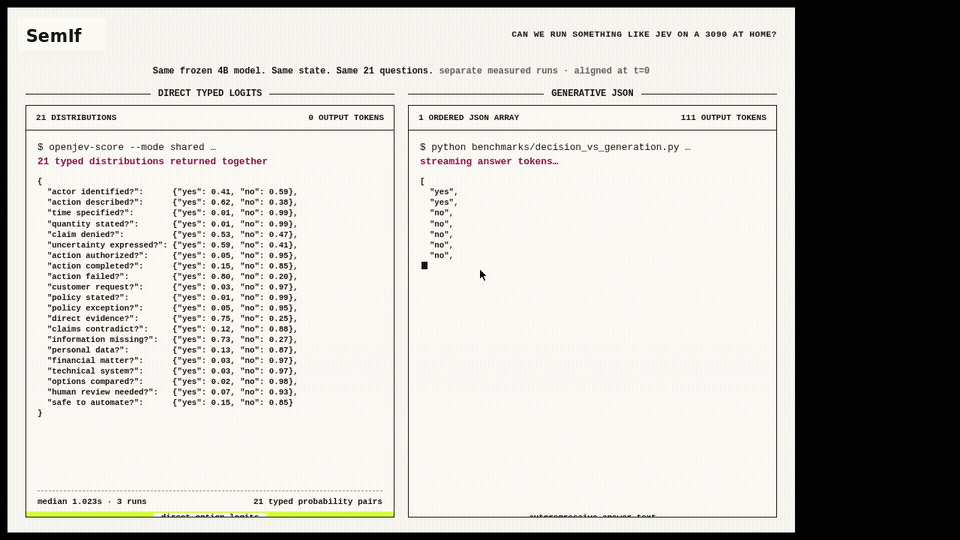
3. SemIf (formerly OpenJev): Localized Decision-Making
For enterprises concerned about data privacy and latency, relying on an external API is not always an option. SemIf allows developers to tap into the logit outputs of local, open-source models to derive the same typed decisions that Jev provides. While it lacks the specialized training of the proprietary Jev model, it serves as a crucial bridge for those building on-premises or air-gapped agent systems.

4. Jev Trader: Automated Execution Loops
Jev Trader demonstrates how a typed decision model can operate in a high-stakes, real-time environment. By analyzing market data (the "state"), the model outputs a directional decision (buy/sell/hold). Because the output is typed, it can be passed directly to an order-execution API without the risk of the LLM inserting "commentary" into a financial trade.
5. Hermes Jev Skills: The Modular Agent
Hermes allows developers to augment existing agents with "decision skills." You don’t need to rebuild your entire AI architecture; you simply insert a Jev-powered "routing" or "filtering" skill at key points in the workflow. It represents the modular future of AI, where agents are composed of specialized, interchangeable components.
6. Jev Review: Quality Assurance at Scale
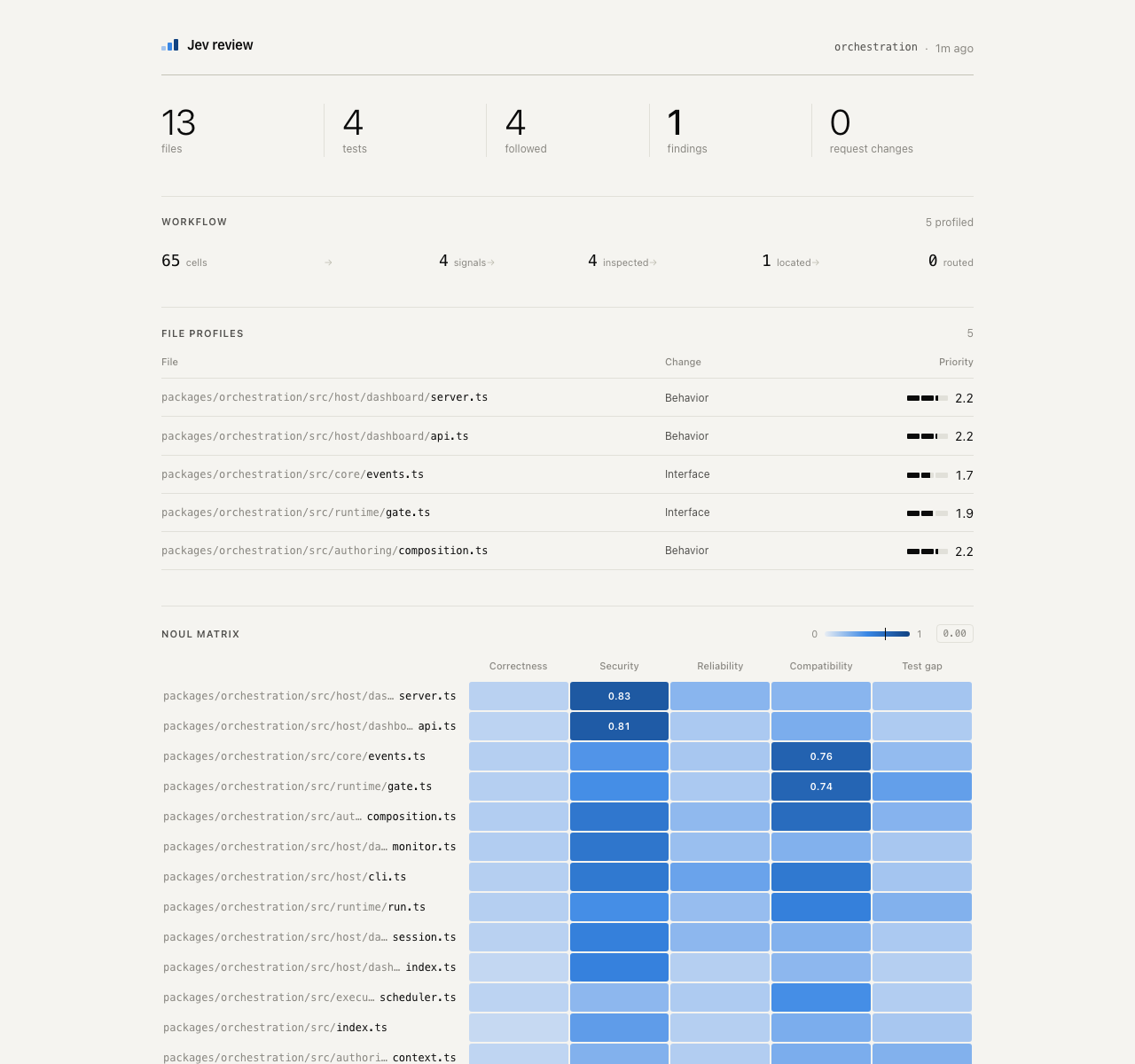
In software development, code reviews are tedious and often inconsistent. Jev Review automates the triage process by analyzing git diffs. It assigns severity scores to code changes based on predefined categories like "security," "performance," or "readability." It doesn’t replace the human reviewer; it acts as a gatekeeper that ensures only high-quality, pre-vetted code reaches the human for final sign-off.
7. Foreman: The Supervisor Paradigm
Foreman represents the "manager" in an agentic team. It sits above subordinate "worker" agents (like Codex or OpenCode). It continuously monitors their health: Are they stuck? Are they making progress? Does the user need to intervene? By treating the agent as a child process, Foreman ensures that the overall workflow stays on track, preventing infinite loops and catastrophic failure.
8. Jev Search: Precision Retrieval
Traditional RAG (Retrieval-Augmented Generation) systems often struggle with poor search queries. Jev Search acts as the "search strategist." Before performing a retrieval, Jev selects the best search terms and the most appropriate sources based on the query context. The result is a more relevant, ranked list of documents, significantly improving the quality of the final generated answer.
9. Mobile Jev: The End of "Magic" UI Automation
Mobile automation is notoriously difficult due to the dynamic nature of apps. Mobile Jev provides a visible trace of the agent’s logic. When the agent decides to tap a button, the system logs the decision logic (e.g., "Element ID: 502, Prob: 0.98"). This visibility is crucial for debugging and ensures that the agent is acting predictably.

10. Jev Router: Intelligent Model Tiering
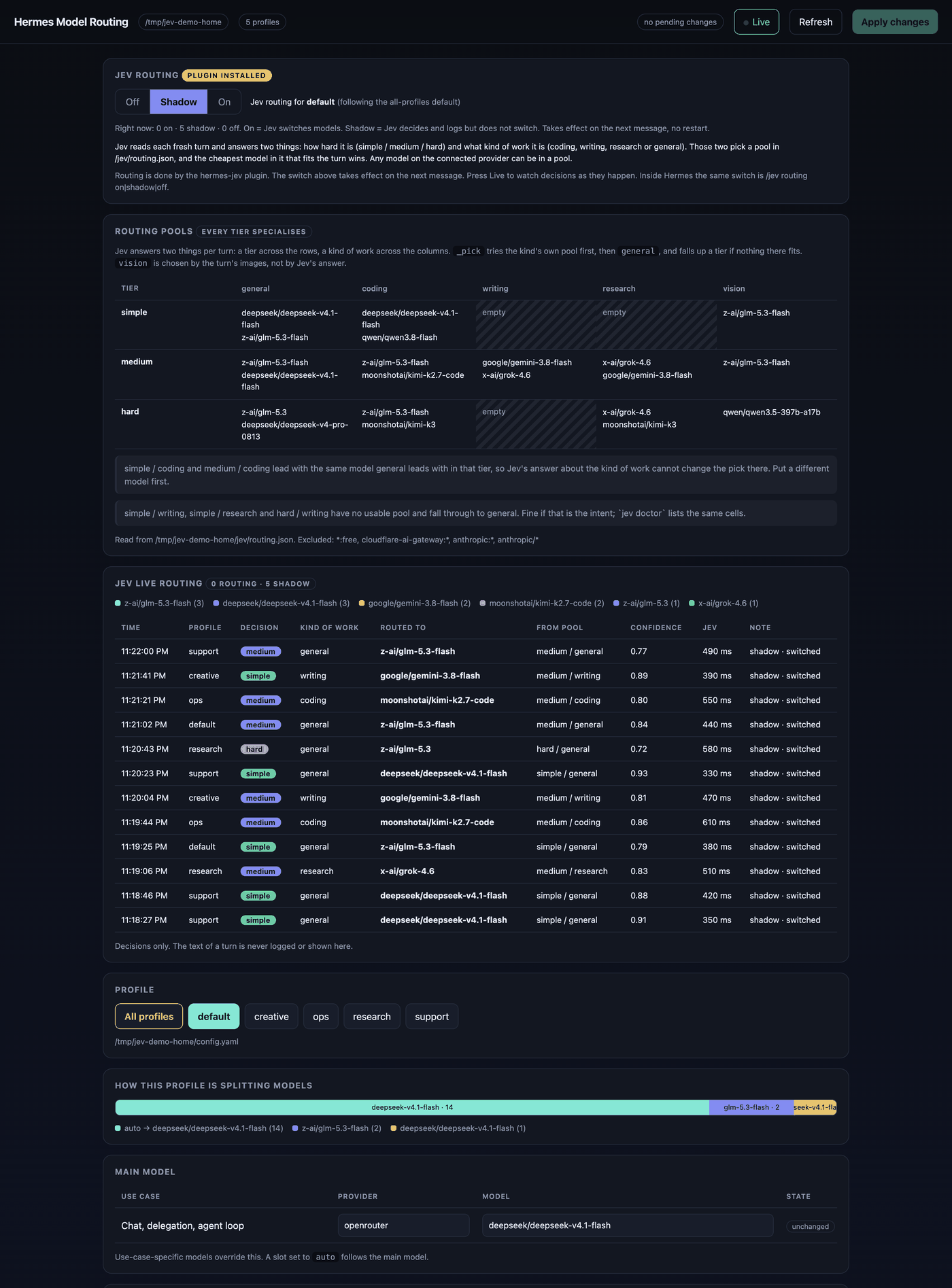
Why use an expensive, high-intelligence model for a simple task? Jev Router dynamically directs queries to different model tiers. A complex architectural question might be routed to a top-tier model, while a simple formatting request is sent to a low-cost, high-speed model. This optimization can reduce inference costs by up to 60-80% in large-scale deployments.
Implications for the AI Industry
The transition from free-form text generation to typed decision-making has profound implications for the future of software engineering.
Predictability and Debuggability
When an agent writes text, "debugging" the output is a nightmare. Was the logic wrong, or was the syntax slightly off? With Jev, the output is a discrete, typed choice. You can log it, audit it, and unit-test it. This brings AI development into the realm of traditional software engineering, where systems are expected to be deterministic and reliable.
Economic Efficiency
By replacing heavy, general-purpose LLM calls with lightweight decision-based calls, companies can significantly reduce their API spend. Jev is not a replacement for the "creative" or "generative" capabilities of an LLM; it is a replacement for the wasteful use of those models for simple, logical branching tasks.
The Rise of "Agentic Guardrails"
The ability to output probabilities is perhaps Jev’s most important feature. By establishing a "confidence floor," developers can create safety rails that are mathematically grounded. If the probability of a "Delete Database" action is below a certain threshold, the system can force a human to confirm. This level of control is essential for enterprise adoption of autonomous systems.
Conclusion: A New Standard for Agentic Design
The era of the "all-knowing, all-doing" monolithic agent is coming to an end. We are moving toward a modular, stratified architecture where high-level reasoning is balanced by fast, reliable, and typed decision-making.
Jev has positioned itself as the standard for this "System One" layer. Whether you are building a browser automation tool, a financial trading bot, or a code-review pipeline, the move toward typed decisions is inevitable. For developers looking to get started, the best approach is to identify a single, recurring "choice" point in your existing agent workflow and replace it with a Jev-based decision. As the ecosystem matures and more repositories emerge, the barrier to entry will continue to drop, paving the way for a more stable, efficient, and truly agentic future.
Frequently Asked Questions (FAQ)
Q: Does Jev replace the need for an LLM?
A: No. Jev handles the decision-making logic, while the LLM remains responsible for the creative, generative, and synthesis tasks. They are complementary technologies.
Q: Can I integrate Jev with my current agent framework?
A: Yes. Most Jev-based tools are designed to be modular. You can add a Jev "skill" to your existing LangChain, CrewAI, or custom Python agent with minimal refactoring.

Q: Why is probability important in this context?
A: Probability allows for "uncertainty-aware" programming. It allows your system to distinguish between a "confident" decision and a "guess," enabling developers to build smarter fallback and error-handling routines.
Q: What is the biggest risk of using Jev?
A: As with any AI-driven tool, the "ground truth" depends on the model’s training. Jev is a high-accuracy decision tool, but it is not infallible. Always implement deterministic validation for critical operations (e.g., financial transactions or file deletions).