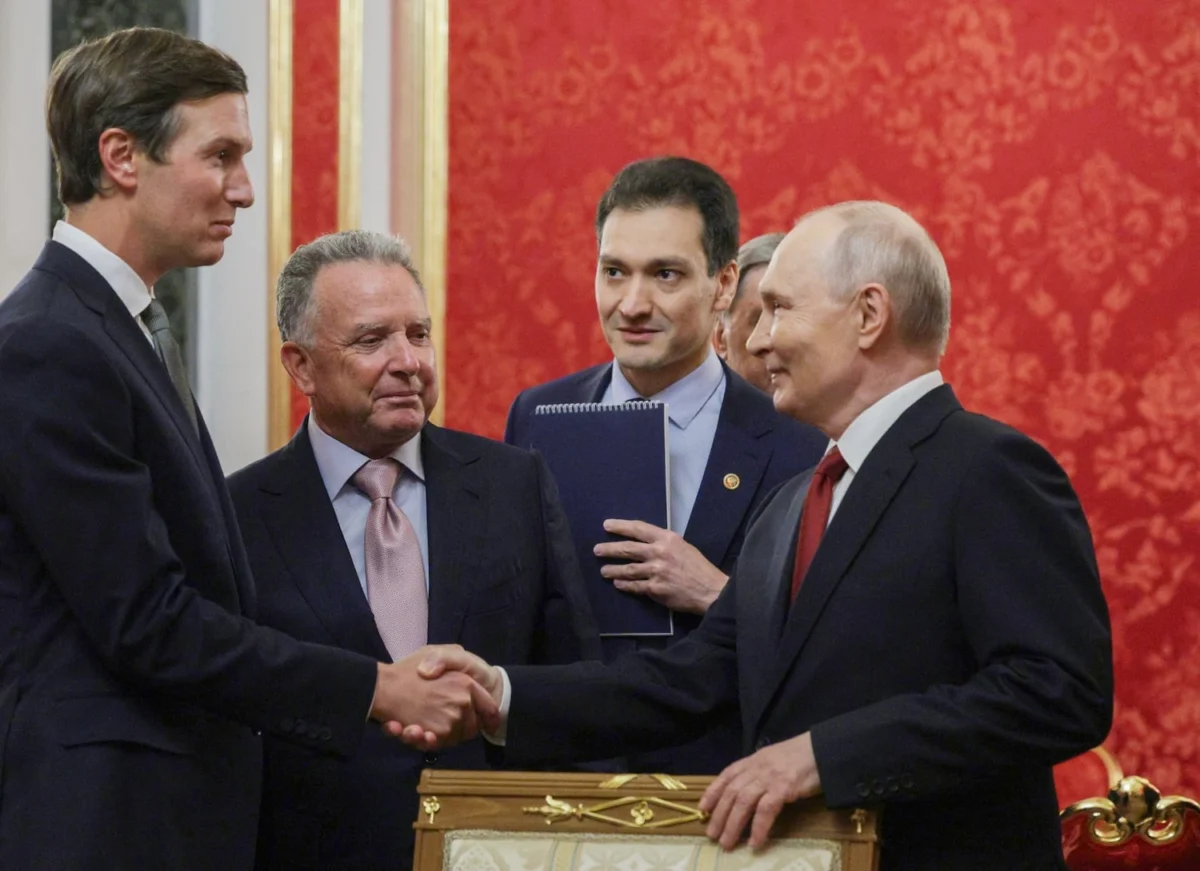
The intersection of private investment and public diplomacy has long been a sensitive area of American governance, but rarely has it been as starkly illuminated as in the case of Jared Kushner. On October 6, Representative Robert Garcia, the ranking member of the U.S. House Oversight Committee, launched a formal investigation into Kushner’s complex web of business interests. The inquiry seeks to determine if the former presidential advisor, now serving as a "volunteer" diplomatic envoy, has leveraged his proximity to the corridors of power to benefit his private equity firm, Affinity Partners—a firm almost entirely bankrolled by foreign sovereign wealth.
The investigation follows explosive revelations from CNN, which identified Affinity Partners as the largest shareholder in Phoenix Financial, an Israeli conglomerate with significant stakes in at least nine military suppliers. This discovery is particularly incendiary given that Kushner is currently tasked with negotiating a peace settlement between Israel and Hamas. The revelation has forced a long-simmering debate about the "revolving door" of American politics into the center of the national conversation.
A Chronology of Capital and Conflict
The seeds of the current controversy were sown almost the moment the first Trump administration concluded. On January 21, 2021—merely 24 hours after leaving his formal White House role—Kushner established Affinity Partners. By April 2022, the nonprofit organization DAWN (Democracy for the Arab World Now) began publicly sounding the alarm, petitioning the Justice Department and Congress to investigate a $2 billion investment into Affinity from Saudi Arabia’s Public Investment Fund (PIF).
The timeline of these financial arrangements coincides with Kushner’s prior tenure as a senior advisor, during which he championed massive arms sales to Riyadh and the United Arab Emirates (UAE). His role in rehabilitating the image of Saudi Crown Prince Mohammed bin Salman following the 2018 murder of journalist Jamal Khashoggi remains one of the most contentious chapters of his time in government.
Congressional oversight began in earnest in June 2022, when then-Chairwoman of the House Oversight Committee, Carolyn Maloney, launched an investigation into whether Kushner’s government policy decisions had been influenced by the promise of future financial windfalls. Senator Ron Wyden escalated these efforts in 2024, probing whether the foreign payments to Affinity exploited loopholes in the Foreign Agents Registration Act (FARA). Despite these initiatives, the legislative branch ultimately failed to pass meaningful reforms, leaving the legal landscape surrounding former officials largely unchanged.
The Anatomy of a $3 Billion Portfolio
Data gathered during these investigations reveals a staggering reliance on foreign capital. By March 2024, at least 99 percent of the $3 billion managed by Affinity Partners originated from foreign sources, primarily the governments of Saudi Arabia and the UAE.
These entities are not merely passive investors; they are, according to financial disclosures, paying Kushner’s firm tens of millions of dollars in annual advisory fees. The irony of this arrangement has now reached a fever pitch: Saudi sovereign wealth is being invested through a chain of ownership—Affinity to Phoenix Financial—that feeds directly into the Israeli defense industrial base. This creates a geopolitical paradox where the very nations condemning the war in Gaza are effectively profiting from the weapons manufacturing supporting it through their investment in Kushner’s firm.
Official Responses and Strategic Denials
Jared Kushner has consistently denied any wrongdoing, maintaining that his business dealings are entirely separate from his diplomatic pursuits. In response to the recent CNN reporting, representatives for Kushner argued that he does not personally direct the individual investments of the companies in which his firm holds shares. He further contends that there is no empirical evidence to suggest his private financial interests have dictated the terms of his negotiations or policy advice.
However, the lack of transparency remains a major point of contention. Because the current administration has not formally designated Kushner as a "Special Government Employee" (SGE), he is not currently subject to the rigorous public financial disclosures or recusal requirements that apply to other high-level diplomatic envoys. This regulatory gray zone allows him to operate as an extension of the State Department without the ethical guardrails that typically accompany such authority.
The Legal and Ethical Implications
The broader implications for American ethics laws are profound. The current framework is riddled with gaps:
- The Cooling-Off Period: There is no federal law preventing former senior officials from immediately soliciting business from foreign governments they previously negotiated with.
- FARA Loopholes: Investment advisory services are frequently exempted from the disclosure requirements of the Foreign Agents Registration Act, allowing millions of dollars to flow from foreign regimes to former officials under the guise of "business."
- The "Volunteer" Designation: By labeling appointees as "volunteers," administrations can sidestep 18 U.S.C. § 208, which requires the recusal of officials from matters that would have a "direct and predictable effect" on their personal financial interests.
Watchdog groups like Citizens for Responsibility and Ethics in Washington (CREW) have pointed out that other figures, such as special envoy Steven Witkoff, have complied with disclosure requirements despite serving without a salary. The administration’s refusal to apply these same standards to Kushner has invited accusations of favoritism and intentional lack of transparency.
A Future of Unchecked Influence
The potential for conflict is not limited to the Middle East. Recent reports indicate that Kushner is also involved in brokering potential multibillion-dollar Russian oil asset sales involving investors connected to his own family and that of Steve Witkoff. The fact that he can simultaneously negotiate high-stakes foreign policy, shape U.S. interests, and manage billions in foreign-controlled capital represents a structural failure in American governance that shows no sign of abating.
With the current makeup of Congress, the path forward is difficult. Without subpoena power—which is currently held by a majority that has shown little interest in investigating the former president’s inner circle—Democratic lawmakers are effectively powerless to compel the production of records that would clarify the extent of these conflicts.
Conclusion: The Need for Legislative Reform
The "Kushner case" serves as a textbook example of why the current U.S. ethics system is in urgent need of an overhaul. When a new legislative session begins, a comprehensive reform agenda must be prioritized if the United States is to maintain the integrity of its diplomatic institutions.
Necessary reforms should include:
- Mandatory Cooling-Off Periods: Enacting a five-year ban on former senior officials from entering into business agreements with foreign governments they worked with while in office.
- Closing the FARA Loophole: Amending the Foreign Agents Registration Act to classify foreign-funded investment advisory services as political activity, requiring full public disclosure.
- Standardizing Diplomatic Appointments: Eliminating the distinction between "paid" and "volunteer" envoys. Anyone exercising diplomatic authority on behalf of the United States must be held to the same financial disclosure and recusal standards as any other cabinet-level official.
Until these gaps are closed, the American public is left with a system where foreign governments can effectively influence U.S. foreign policy by paying the individuals tasked with crafting it. The question is no longer just whether Jared Kushner has a conflict of interest—it is whether the American system of government is capable of preventing such conflicts from becoming the new standard.