Introduction: A Continent Under Siege
In the early hours of October 8, Moldovan President Maia Sandu took the stage at the Moldova Security Forum in Chișinău to deliver a sobering assessment that transcended regional borders. Her address was not merely a report on national sovereignty; it was a clarion call regarding the deteriorating security architecture of Europe. Sandu revealed that in the span of just one month, over twenty Russian drones had violated Moldovan airspace—a staggering figure that eclipsed the total incursions recorded throughout the entirety of 2025.
These were not mere navigational errors. Many of these drones detonated upon impact, causing physical damage to infrastructure. As these metal harbingers of war tore through the sky, they were accompanied by psychological warfare: anonymous Telegram messages pinging the phones of Moldovan citizens, chillingly warning them that the incursions were the direct price of their nation’s support for Ukraine. This dual-track strategy—kinetic violence paired with digital terror—has become the hallmark of Vladimir Putin’s increasingly aggressive campaign against the transatlantic community.
A Chronology of Chaos: The Maritime Front
The escalation is no longer confined to the land borders of Eastern Europe; it has spilled aggressively into the Black Sea, threatening the global maritime trade upon which the Western economy relies.
The timeline of recent weeks illustrates a calculated, systematic push against NATO’s periphery:
- October 5: A Russian drone struck a merchant vessel within Romania’s exclusive economic zone (EEZ). The precision of the attack resulted in two fatalities, marking a grim turning point in the safety of Black Sea shipping lanes.
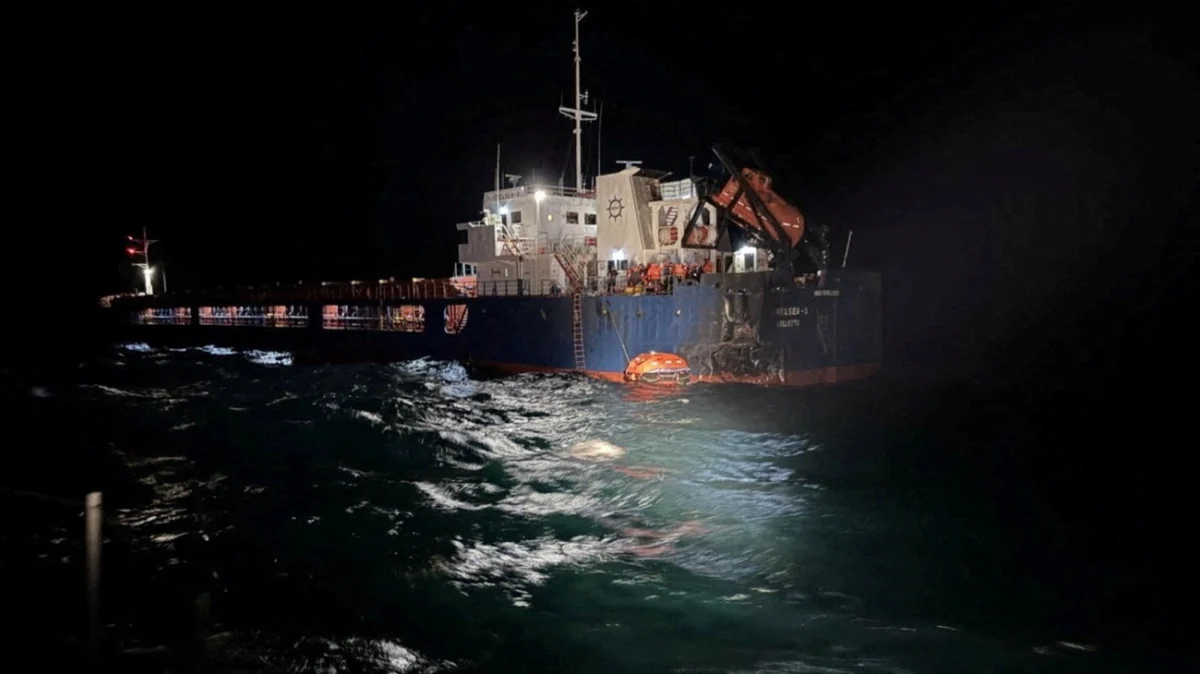
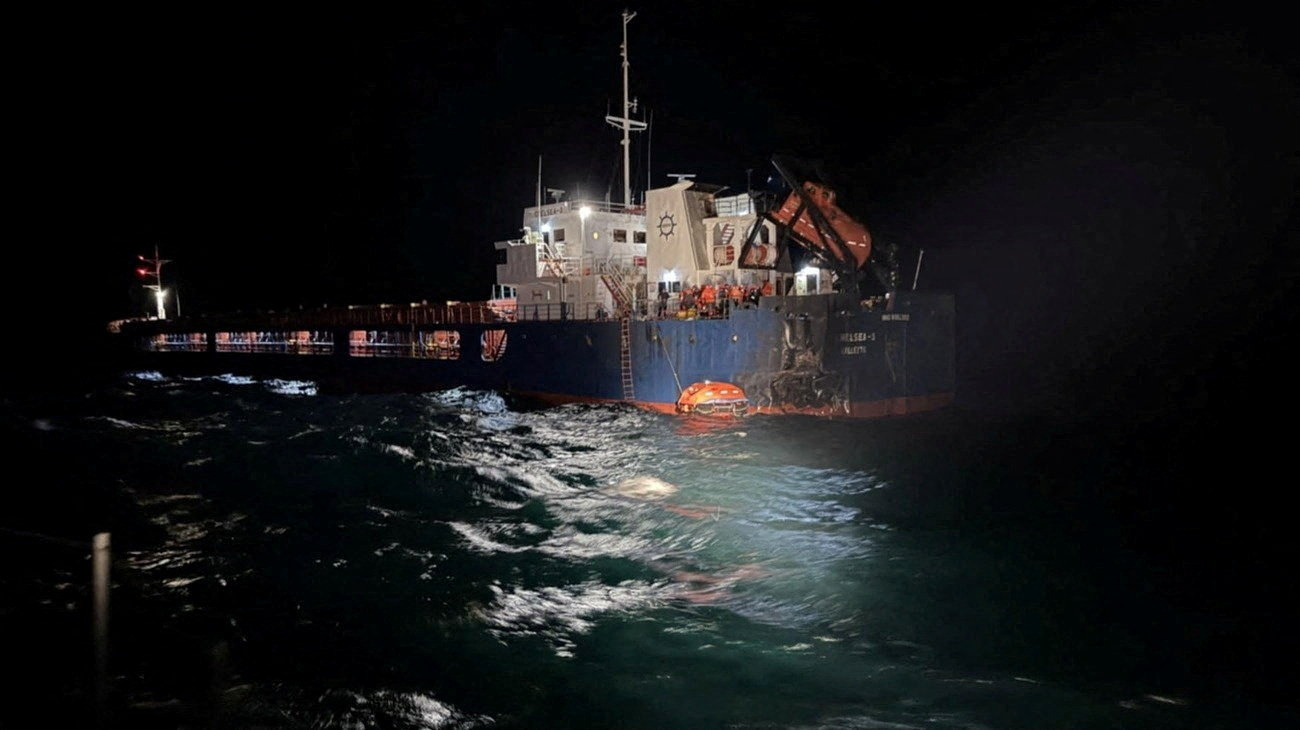
- October 6: The aggression intensified as Russian drones targeted two merchant ships in Bulgarian waters. One vessel was struck with such force that it sank rapidly, with its entire crew listed as missing and presumed dead. A second ship sustained heavy damage, leaving two sailors critically injured.
- October 7: Just twenty-four hours after NATO’s top military commander articulated the Alliance’s updated "Theory of Victory"—a strategic blueprint for repelling a potential Russian invasion—Moscow ignored the signal of strength entirely. It launched a fresh assault on two more merchant ships, only twenty miles off the Bulgarian coast. The outcome was devastating: eleven crew members are currently missing from one vessel, while the second ship, though crippled, saw all fifteen of its crew rescued.
These incidents follow a pattern of "salami slicing" tactics. In September 2025, Poland was forced to scramble its defenses as nearly two dozen unarmed Russian drones penetrated deep into its territory overnight. While those drones were unarmed, the recent lethal attacks in Bulgarian and Romanian waters indicate that the Kremlin has moved beyond mere provocation. The deliberate, lethal targeting of commercial vessels represents a qualitative shift in Russia’s willingness to risk direct conflict with NATO member states.
Supporting Data: The Asymmetry of Power
To understand the current crisis, one must look past the headlines and examine the fiscal and strategic disparity between the Russian Federation and the NATO Alliance.
The collective GDP of NATO member states currently sits at approximately $55 trillion—a figure more than twenty-five times that of Russia. In terms of defense spending, the Alliance has committed over $1.5 trillion in the current fiscal year, dwarfing Russia’s record-breaking $200 billion expenditure on its war machine. On paper, the transatlantic community possesses an overwhelming "overmatch" in conventional military capability, technological sophistication, and economic endurance.
However, as the recent drone incursions demonstrate, capability is not the same as influence. Putin has correctly identified that the primary constraint on Western action is not a lack of weapons, but a chronic deficit of political will. Over the past two decades, Russia has engaged in a "shadow war" consisting of over one hundred documented incidents in the last year alone. These range from cyberattacks on critical infrastructure and election interference to the sabotage of undersea cables and targeted assassinations. By keeping each incident below the threshold of "total war," Putin has successfully manipulated the West’s fear of escalation, creating a environment where the aggressor dictates the pace of the conflict.
Official Responses and the Failure of Deterrence
The official response from Western capitals has been, by and large, defensive and reactive. NATO’s current posture, exemplified by operations like "Eastern Sentry" and "Baltic Sentry," focuses on enhanced vigilance and border surveillance. While these measures are necessary to prevent accidents, they have proven ineffective as a deterrent against a Kremlin that views caution as an invitation to probe deeper.
President Sandu’s reality check in Chișinău highlighted the exhaustion of the "incremental response" strategy. When the West has responded to Russian aggression, it has largely relied on economic sanctions—tools that, while damaging, have thus far failed to alter Putin’s strategic calculus. Intelligence agencies across the Baltic and beyond have issued repeated warnings that Moscow is preparing for more decisive action, yet the policy response remains trapped in a cycle of condemnation and minor tactical adjustments.
The "Theory of Victory" presented by NATO’s top brass is an essential intellectual exercise, but it remains theoretical until backed by the credible threat of force. If the Alliance cannot protect the shipping lanes in the Black Sea—a fundamental element of international law and maritime freedom—the credibility of Article 5, NATO’s mutual defense clause, begins to erode.
The Five Principles for Restoring Deterrence
The current trajectory is unsustainable. If the West is to avoid a wider, more catastrophic war in Europe, it must fundamentally recalibrate its approach to Russia. Experts and policymakers suggest five guiding principles for this transition:
1. Acknowledging the Total War
The West must move past the fallacy that Russia is only at war with Ukraine. Putin’s stated objectives—reasserting control over the former Soviet sphere and dismantling the post-WWII security architecture—are directed at the transatlantic community as a whole. His invasion of Georgia in 2008 and his ongoing subversion of Moldova are not isolated events; they are pieces of a singular, coherent campaign to return Europe to a system of spheres of influence.
2. The Deterrence Gap
Deterrence is currently failing because the costs of aggression are lower than the perceived benefits. To restore balance, the West must move from a posture of "defensive vigilance" to one of "active deterrence." This means demonstrating that the consequences of violating NATO airspace or sinking commercial vessels will be immediate, punitive, and painful for the Russian military and intelligence apparatus.
3. The Escalation Ladder
The longer the West hesitates, the more emboldened Putin becomes. He has concluded that he controls the escalation ladder because the West fears the climb more than he does. Restoring deterrence requires signaling that the Alliance is willing to accept the risks associated with a firm response. As Polish Foreign Minister Radek Sikorski noted, the goal is not to "merrily avoid escalation," but to convince the Kremlin that further escalation will yield no gains.
4. Political Will vs. Capability
The West’s failure is not a matter of equipment shortages; it is a crisis of confidence. The massive economic and military advantage held by the transatlantic community is being neutralized by a lack of political unity. Putin is a master of probing for fractures in the alliance; until the West presents a unified, uncompromising front, these fractures will continue to be exploited.
5. A Return to Cold War Realism
During the Cold War, deterrence was neither cheap nor risk-free. It required the deployment of significant forces and the empowerment of commanders to act decisively in the defense of allied territory. Post-Cold War attempts to achieve "risk-free" security have failed. A return to a more robust, clear-eyed, and costly deterrent posture is the only way to convince the Kremlin that the era of impunity is over.
Conclusion: The Cost of Inaction
The drones falling in Moldova and the merchant ships sinking in the Black Sea are not just regional tragedies; they are indicators of a systemic failure. The transatlantic community stands at a crossroads. It can continue to hope that Putin’s ambitions will be sated by incremental gains, or it can acknowledge the reality of the war being waged against it.
Restoring deterrence will require the courage to face the risks that the West has spent decades trying to avoid. It requires a level of leadership that prioritizes long-term security over the short-term comfort of the status quo. If the West does not act with the necessary resolve, it risks finding itself in a conflict it is ill-prepared to manage, not because it lacks the power to win, but because it lacked the will to lead.