By Dambisa Moyo
October 14, 2026
The modern global economic landscape is no longer defined by isolated shocks but by a persistent, interlocking series of systemic fractures. While the constituent risks—stubbornly high inflation, unprecedented levels of public debt, extreme market concentration, and deepening geopolitical volatility—are well-documented, the true danger lies in their convergence. It is rare, and arguably unprecedented in the post-Bretton Woods era, for these structural threats to manifest with such intensity simultaneously.
From the vantage point of Jaipur, the view of the global economy is one of profound fragility. We are witnessing a moment where traditional policy levers are proving insufficient, and the foundations of international economic cooperation are being tested as never before.
The Anatomy of the Current Crisis: Main Facts
The global economy is currently navigating what economists are increasingly calling a "polycrisis." Unlike the 2008 financial crisis or the 2020 pandemic-induced downturn, today’s volatility is not limited to a single sector or asset class. Instead, it is a horizontal failure affecting every pillar of the global system.
1. The Persistence of Inflation
Despite central bank interventions, inflation remains sticky. The transition from a low-interest-rate environment to one of structural cost-push pressures—driven by energy transitions, supply chain re-shoring, and labor market shifts—has left households and businesses in a state of permanent adjustment.
2. The Debt Overhang
Global public debt-to-GDP ratios have reached heights not seen since the aftermath of the Second World War. With interest rates remaining higher for longer, the fiscal space for developing and developed nations alike has evaporated, creating a feedback loop where debt servicing costs crowd out essential public investment.
3. Market Concentration
The dominance of a few mega-cap technology firms and systemic financial institutions has created a "too-big-to-fail" environment that extends beyond banks. This concentration stifles innovation and creates systemic vulnerabilities where the failure or stagnation of one entity can trigger a contagion effect across global indices.
4. Geopolitical Fragmentation
The era of hyper-globalization has ended, replaced by "geoeconomic fragmentation." Trade barriers, strategic decoupling between major powers, and regional conflicts have transformed global supply chains from efficiency-optimized networks into security-optimized, but significantly more expensive, clusters.
A Chronology of Instability: How We Arrived Here
To understand our current predicament, one must look at the sequence of events that eroded the global resilience buffers.
- 2020-2021 (The Liquidity Infusion): The immediate response to the pandemic involved a massive injection of liquidity into global markets. While it prevented a collapse, it sowed the seeds of the subsequent inflationary surge.
- 2022 (The Geopolitical Catalyst): The outbreak of conflict in Eastern Europe shattered the energy security paradigm of Europe and accelerated the movement toward regionalization.
- 2023-2024 (The Monetary Pivot): Central banks were forced into the most aggressive synchronized tightening cycle in decades, exposing the weaknesses in highly leveraged financial institutions and sovereign balance sheets.
- 2025-2026 (The Structural Realignment): We have now entered a phase where markets are no longer reacting to temporary shocks but are attempting to price in a permanent state of volatility. The lack of clear policy coordination between major blocs has left markets to navigate the "known unknowns" on their own.
Supporting Data: The Indicators of Stress
The gravity of this situation is not merely anecdotal; it is reflected in the raw data that defines the current fiscal reality:
- Debt Servicing Costs: According to recent data, interest payments as a percentage of government revenue in several G20 nations have doubled since 2021. For emerging markets, this has led to a "silent debt crisis" that threatens to derail decades of development gains.
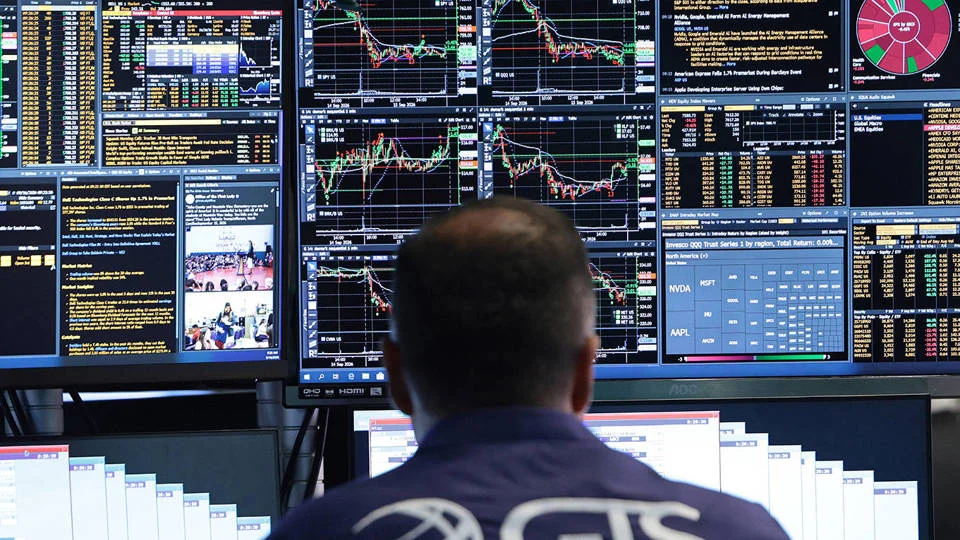
- The Volatility Index (VIX): The VIX, often called the "fear gauge," has shown a higher baseline average over the last 24 months compared to the pre-2020 decade. This indicates that investors are not merely reacting to events but are fundamentally hedging against long-term instability.
- Trade-to-GDP Ratios: Global trade as a percentage of global GDP has seen a marked decline. The proliferation of trade-restrictive measures—ranging from export controls on semiconductors to protectionist agricultural policies—has created a fragmented global economy that is structurally less efficient.
Official Responses and Policy Paralysis
The response from international institutions, such as the IMF and the World Bank, has been one of increasing urgency, yet the policy output remains hampered by political friction.
The Central Bank Dilemma
Central bankers are caught between the mandate to curb inflation and the need to prevent systemic financial collapse. The "higher for longer" narrative has evolved into a "fragile for longer" reality. Most central banks have signaled that they have reached the end of their aggressive tightening cycles, yet they remain paralyzed by the fear that cutting rates too early will re-ignite inflation, while maintaining them will trigger a recession.
Intergovernmental Stagnation
The G7 and G20, once the primary forums for global economic coordination, have become arenas for geopolitical posturing. Official statements from these bodies often emphasize the need for "multilateral cooperation," yet their substantive actions—such as the implementation of unilateral industrial policies—run directly contrary to those sentiments. The lack of a unified response to the sovereign debt crisis in the Global South is a testament to this breakdown in global governance.
Implications: The World Ahead
What are the long-term consequences of this confluence of risks? The implications are profound, touching upon the very nature of democracy and capital allocation.
The End of the "Great Moderation"
The economic stability that characterized the period from 1990 to 2019 is unlikely to return. We must prepare for a future where "economic security" takes precedence over "economic efficiency." This will lead to higher structural costs for goods and services, permanently altering the consumption patterns of the global middle class.
The Rise of Populism and Social Instability
When economies falter and the cost of living remains high, the social contract is inevitably tested. We are already seeing a rise in political populism as electorates demand protection from the perceived failures of globalization. This creates a volatile political environment where short-term populist policy often triumphs over long-term structural reform.
Capital Allocation Shifts
Institutional investors are moving away from traditional diversified portfolios toward assets that offer "inflation hedges" and "geopolitical safety." This flight to safety is starving emerging markets of the capital they need to transition toward greener, more resilient economies, further widening the gap between the developed and developing worlds.
Conclusion: The Path Forward
The current state of the global economy is not a temporary inconvenience; it is a fundamental shift in the global order. Navigating this environment requires a move away from the reactive policy-making that has dominated the last few years.
Policymakers must acknowledge that the traditional tools of fiscal and monetary policy are no longer sufficient to address a systemic crisis that is as much about geopolitics and structural demographics as it is about interest rates. We require a new framework for international cooperation—one that acknowledges the realities of a fragmented world while preserving the essential benefits of the global trade system.
The risks are indeed well known, but acknowledging them is only the first step. The true test of our leadership and our economic institutions will be their ability to act in concert before the convergence of these crises leads to a total breakdown of the global economic order. The time for incremental adjustment has passed; we are in an era where the structural foundations of the global economy must be rebuilt, or we risk a long and painful period of stagnation and decline.