As the festive season approaches, the digital storefront becomes a stage for one of the most critical performances of the year. For online retailers, the holiday season is not merely a period of increased volume; it is a high-stakes test of operational integrity. Customers are no longer just buying products—they are buying the promise that their gifts will arrive before the celebration begins.
In an era of heightened consumer expectations, every shipping detail—from the cost of delivery to the clarity of tracking updates—serves as a building block for customer loyalty. If you fail to meet these expectations, you don’t just lose a sale; you lose the trust that fuels repeat business.
The Psychology of the Holiday Shopper: Reliability Over Speed
Contrary to popular belief, "fastest" does not always equate to "best" in the eyes of the consumer. While the modern shopper has been conditioned by rapid-delivery giants, they are surprisingly pragmatic during the holidays. Research from eTail Insights and Narvar highlights a fascinating consumer trend: 76% of shoppers are willing to trade speed for the benefit of free shipping.
However, this flexibility comes with a caveat. The same research indicates that 95% of consumers view an accurate delivery date as "somewhat" or "very" important. In short, shoppers are willing to wait, but they are unwilling to be surprised. Your holiday shipping strategy must be anchored in transparency, providing a reliable delivery window that accounts for the entire fulfillment journey—from the moment an order is clicked to the day it hits the porch.

Establishing the Foundation: Carrier Deadlines for 2026
The first pillar of your shipping strategy is understanding the constraints of your logistics partners. Carrier deadlines are the "hard" constraints of your season. If you miss these windows, no amount of customer service outreach can make up for a gift that arrives on December 26.
Major carriers have already set the stage for the 2026 holiday season. Below are the key cutoffs for shipments within the contiguous United States:
| Carrier | Service | Recommended Send-by Date |
|---|---|---|
| USPS | Ground Advantage | December 17 |
| USPS | Priority Mail | December 18 |
| FedEx | Ground / Home Delivery | Dec 17 – 23 (Route-specific) |
| FedEx | FedEx 2Day | December 22 |
| UPS | Ground | Review route-specific transit times |
| UPS | 2nd Day Air | Pending confirmation |
These dates are your "North Star." However, they are not your customer-facing deadlines. You must factor in your internal processing time—the time your team spends picking, packing, and labeling. If a carrier requires a package on the 17th, and your team requires two days for processing plus a one-day "buffer" for unforeseen volume surges, your customer-facing cutoff date should be no later than December 13.
Data-Driven Planning: The "Reality Check" Approach
To set these deadlines with confidence, look backward. Your most valuable planning tool is the data from your own busiest week in 2025.

Start by pulling a sample of orders from that period. Compare the date the order was placed against the carrier’s first acceptance scan. Did the order sit in your warehouse for 24 hours? 48 hours? Did personalized items cause a bottleneck?
By mapping this history, you can build a buffer that is grounded in reality rather than wishful thinking. If you know your team historically hits a snag with custom gift-wrapping or specific regional zones, build that lead time into the product page dynamically. A personalized item should clearly state a different—and earlier—shipping cutoff than an off-the-shelf product.
Managing the Financials: Surcharges and Margins
The holiday season brings with it a complex layer of "peak season surcharges." Carriers like USPS and FedEx apply temporary price increases to account for the massive surge in volume. This creates a financial ripple effect that can erode your profit margins if not carefully managed.
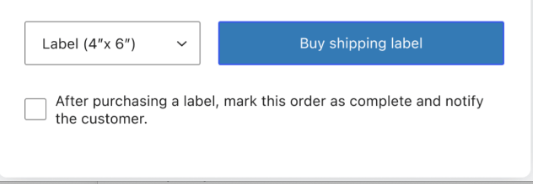
Consider this: If your standard shipping label costs $7, but holiday surcharges push that to $8, that $1 difference across 2,000 orders is a $2,000 impact on your bottom line. You have three primary levers to address this:
- Absorb the cost: Keep your prices flat to drive volume and conversion, viewing the surcharge as a marketing expense.
- Adjust the flat rate: Pass the increase to the customer as a modest shipping fee.
- Optimize thresholds: Increase your "Free Shipping" minimum order value to ensure that the average order size covers the additional logistics costs.
Before launching your holiday promotions, audit your shipping zones in your WooCommerce settings. Test your heaviest and most distant packages to ensure your flat-rate or free-shipping thresholds remain profitable.
Communication as a Customer Service Tool
The final, and perhaps most critical, element of the holiday strategy is communication. The customer journey does not end when the "Buy Now" button is clicked; it ends when the package is delivered.
Visibility is the antidote to customer anxiety. If an order is not yet in transit, do not use language that implies it is. Be specific:
- "Order Received": Acknowledges the transaction.
- "In Production/Packing": Sets the expectation that the item is being prepared.
- "Shipped": Reserved strictly for when the carrier has scanned the package.
Using tools like the WooCommerce Shipping extension, you can provide real-time tracking numbers directly to the customer. For higher-volume merchants, platforms like ShipStation offer branded tracking pages. These pages keep the customer within your digital ecosystem, reinforcing your brand identity even while they check the status of their package.
If a delay is inevitable—and in the logistics world, the unexpected is the only constant—the golden rule is proactive communication. Reach out to the customer before they reach out to you. Provide an updated estimate and a clear path to support.
The "Stress Test": Before the Rush
Before the chaos of Black Friday and Cyber Week descends, perform a comprehensive stress test of your entire fulfillment chain. Place test orders for various scenarios:
- A standard, in-stock item.
- A complex, personalized item with longer lead times.
- An order destined for a high-cost or distant shipping zone.
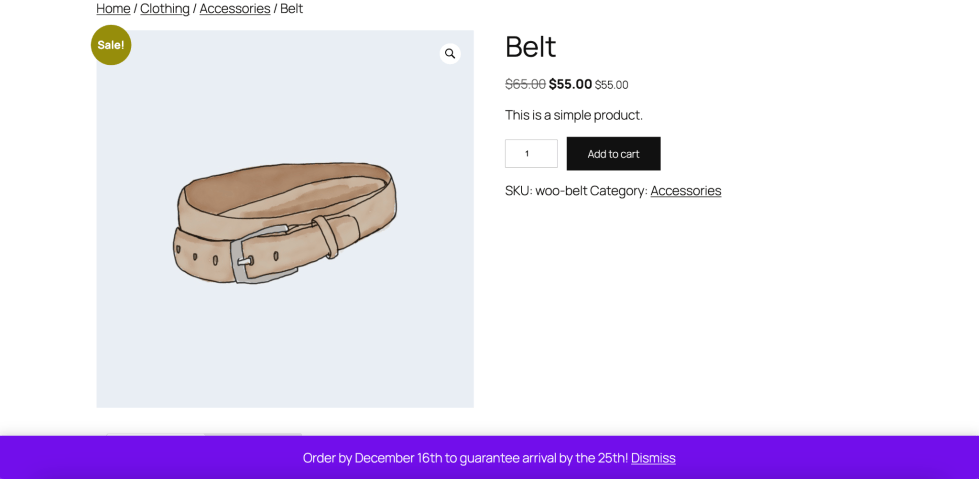
Verify that your site-wide "Store Notice" displays the correct information, that your checkout reflects the accurate shipping costs, and that your automated confirmation emails are triggering as expected.
Bring your fulfillment team into this process. They are the ones on the front lines, and their feedback on volume capacity will be more accurate than any spreadsheet. Confirm that your staffing levels align with the projected volume and that your inventory levels are sufficient to support your advertised shipping promises.

Implications for Future Growth
Ultimately, the goal of a robust holiday shipping strategy is to transform logistics from a back-office necessity into a core component of your brand promise. When a customer knows exactly when to expect their package, and when that package arrives on time, they develop an emotional connection to your brand.
By setting realistic, data-backed deadlines, managing your surcharges with precision, and maintaining transparent communication, you are doing more than just moving boxes. You are building the foundation for a sustainable, high-growth business that can survive—and thrive—in the most demanding season of the year.
As you finalize your plans for 2026, remember: A customer who trusts your shipping promise today is a customer who will return to your store in 2027 and beyond. Treat every shipment as an opportunity to reinforce that trust, and you will find that the holiday rush is not a threat to your operations, but a catalyst for your success.