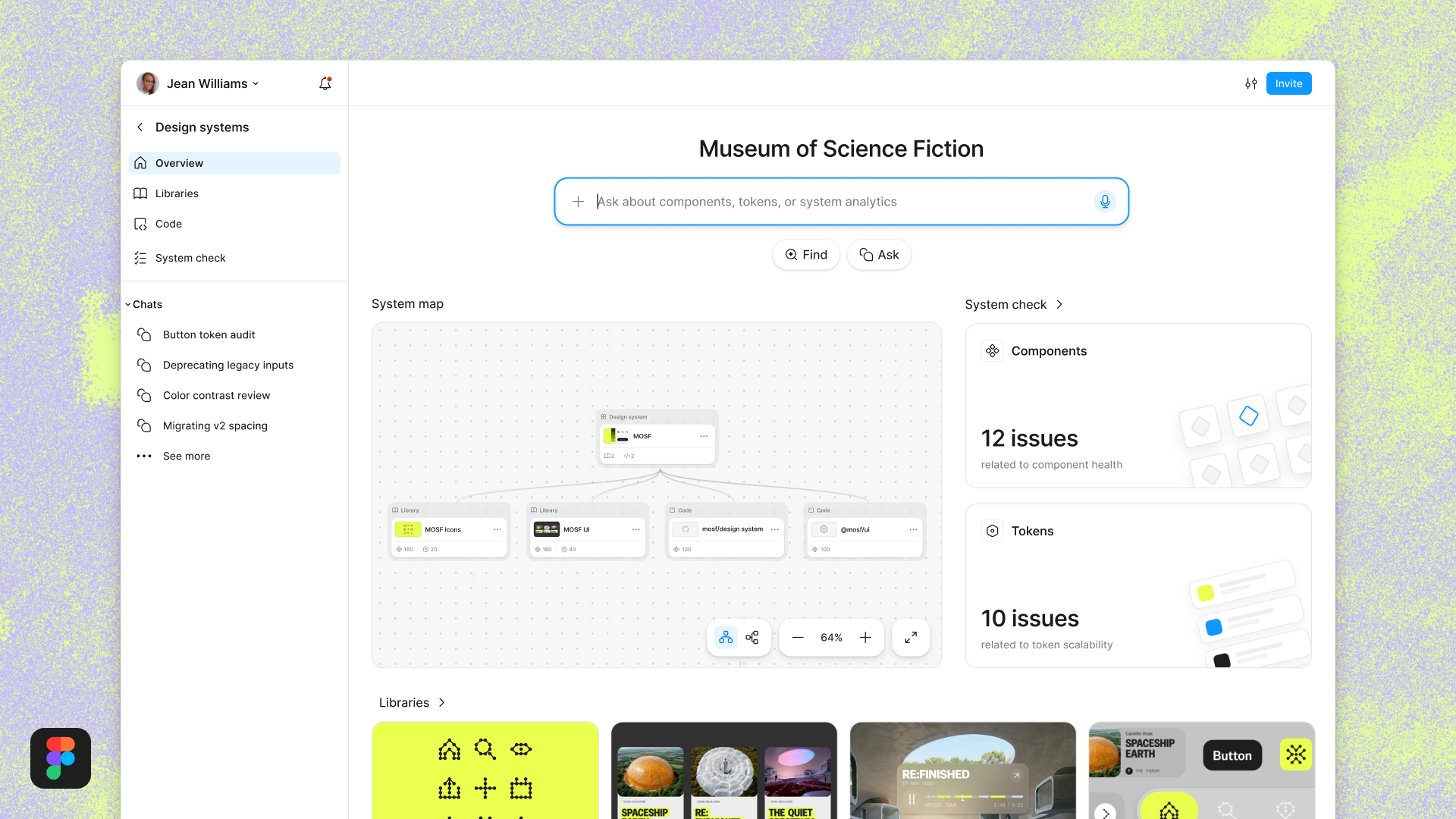
At its inaugural Config event in India, design platform powerhouse Figma unveiled a suite of transformative features aimed at fundamentally reshaping the bridge between creative design and technical execution. As the platform looks to solidify its role as the central operating system for product teams, it has introduced a Markdown-based editor, expanded its integration with the Payload headless CMS, and pushed its AI-driven "Code Layers" feature into public beta. These moves are not merely iterative updates; they represent a tactical shift toward making design systems more robust, predictable, and actionable in an era of rapid AI-assisted development.
The Core Innovation: Figma Specs
At the heart of the announcements is Figma Specs, a sophisticated Markdown-based editor integrated directly into the Figma environment. In an increasingly complex digital landscape, maintaining brand consistency across large-scale design systems has become a logistical hurdle. Figma Specs addresses this by allowing teams to define their design language—including typography, color palettes, spacing, and interaction rules—within a structured, human-readable document.
Unlike static documentation stored in disparate tools, Figma Specs can exist either as a standalone file or live directly within the design canvas. This integration allows users to reference specific canvas elements, embed FigJam diagrams, and link directly to code layers or design tokens. By centralizing this "source of truth," Figma is effectively providing a structured knowledge base that both human designers and AI agents can consult to ensure that all output remains strictly within the guardrails of a company’s established brand identity.
Bridging the Gap: AI, Code, and Predictability
The rapid proliferation of AI tools has led to an explosion in code generation, but it has not necessarily translated into a proportional increase in high-quality, shippable software. During the event, Figma’s Chief Design Officer, Loredana Crisan, highlighted this discrepancy: "There are 17-times more lines of code being produced today than in the past. But when you’re looking at releases, only 1.3-times more releases. A lot of that code actually is not necessarily built to ship, but really built to discover what the product is. It’s built to design."
To combat this "design-code drift," Figma has moved its Code Layers feature into public beta. Initially revealed in private beta this past June, the tool allows designers to inject functional code directly into their prototypes. This enables a new paradigm of interactivity where a design is no longer just a static visual representation but a semi-functional bridge to the final product. Users can now prompt an AI agent to convert a specific design component into production-ready code or iterate on existing code snippets to test new features in real-time.
By giving AI agents access to these centralized design and code libraries, Figma aims to move beyond the "non-deterministic" nature of generative AI. By anchoring the agent’s actions in the firm, verified logic of the user’s defined design system, the output becomes significantly more predictable and, more importantly, production-ready.
Chronology: From Acquisition to Integration
The current suite of announcements is the result of a deliberate, multi-year strategy to own the entire product development lifecycle.

- June 2026: Figma introduced the Code Layers feature in private beta, signaling the company’s intent to allow designers to move closer to the metal of the codebase.
- Late 2025: Following a significant push to expand its international footprint, Figma opened its first office in India, establishing key functions in sales, go-to-market, and product support.
- 2025/2026: Figma acquired Payload, an open-source headless CMS. This was a pivotal moment, as it allowed the company to move beyond design assets and into the realm of dynamic, data-driven content management.
- October 2026: At Config India, the integration of Payload into the "Figma Make" product was unveiled, allowing for the generation of dynamic websites that are managed via a cohesive ecosystem.
This chronology illustrates a company transitioning from a niche design tool into an all-encompassing development platform. The integration of Payload, which has seen its downloads increase sixfold over the last year, serves as the backbone for this evolution, allowing designers to manage content and structure without leaving the Figma workspace.
Supporting Data: Why India?
Figma’s decision to host its inaugural India Config event is rooted in compelling market data. India has emerged as the company’s largest market for users outside the United States. The platform’s reach is extensive, currently utilized by 40% of the top 100 companies listed on the Bombay Stock Exchange.
This concentration of users represents a sophisticated, tech-forward demographic that is increasingly looking to automate and professionalize their design-to-development pipelines. By focusing on the Indian market, Figma is not just tapping into a growing user base; it is engaging with a hub of global engineering talent that is actively seeking ways to bridge the gap between creative intent and technical implementation.
Furthermore, the company is demonstrating its commitment to an open ecosystem by supporting over 20 new tools via its Model Context Protocol (MCP). Notable integrations include Open Code, Dia, Grok Bot, and the prominent Indian AI startup Sarvam, signaling a move to make Figma a connective tissue in the broader AI-development ecosystem.
Official Perspectives: The CDO’s Vision
Loredana Crisan’s commentary during the event underscored the philosophy driving these updates. She framed the current state of software development as a "discovery" process. For Figma, the goal is to make the design phase as efficient as possible so that the jump to production is shorter.
"We see Figma as the place where software teams come to decide what they build and ship," Crisan noted. This sentiment encapsulates the strategic pivot: moving from being a "drawing board" to being the "decision engine" of the software industry. By providing the tools to define design systems, manage content through Payload, and generate code through AI, Figma is positioning itself as the indispensable layer between the initial product spark and the final, shipped software.
Implications: The Future of "Design-as-Code"
The implications of these announcements are profound for the UX/UI design industry and software engineering at large.

1. The Death of Static Handoffs
The traditional "handoff"—where designers send PDFs or static links to developers—is becoming an artifact of the past. With Figma Specs and Code Layers, the documentation is live, version-controlled, and linked directly to the codebase. This drastically reduces communication errors and the "translation" time required for developers to interpret design intent.
2. AI Guardrails
The industry has long grappled with "AI hallucination," where generative models produce designs that look correct but break established UI patterns or accessibility standards. By providing AI with a "rulebook" via Figma Specs, companies can ensure that their AI agents act as extensions of their design teams rather than chaotic generators of "on-brand-looking" noise.
3. Empowerment of the Product Designer
Designers are increasingly becoming "product engineers." With the ability to manage content via Payload and tweak code via AI agents, the scope of a designer’s responsibility is expanding. This creates a more unified product team where the boundaries between "building" and "designing" are blurred, potentially leading to faster iteration cycles and more cohesive user experiences.
4. A New Competitive Landscape
By integrating a CMS (Payload) and a code editor, Figma is encroaching on territories previously occupied by developer-centric tools. This puts them in direct competition with platforms like Webflow or various headless CMS providers, but with a unique advantage: they already own the creative process.
Conclusion
Figma’s announcements at Config India signal a mature phase of the company’s evolution. By focusing on the "plumbing" of the design process—the documentation, the content management, and the code-translation—Figma is effectively building a moat around its platform. As the industry moves toward AI-integrated workflows, the companies that provide the best "steering" for those AI agents will likely emerge as the winners. With Figma Specs and the broader integration of its product suite, Figma is making a strong case that it is not just the best place to design, but the best place to build the software of tomorrow.