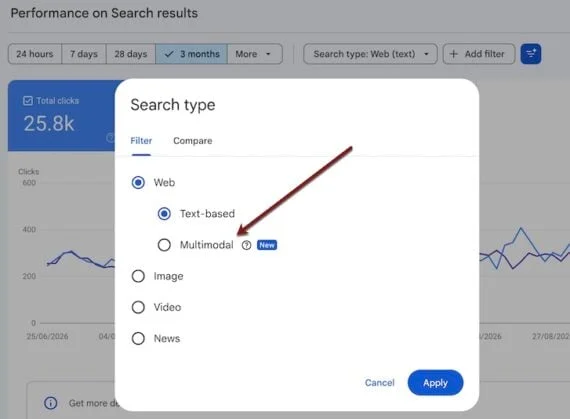
The landscape of search engine optimization (SEO) has fundamentally shifted. For decades, the digital economy was built upon the bedrock of text-based queries. Today, however, the rise of visual intelligence—driven by Google Lens and sophisticated computer vision—has transformed how consumers discover products. In a significant move to provide transparency into this opaque channel, Google has introduced a new "Multimodal" filter within Google Search Console (GSC). This update allows merchants and site owners to track how their URLs perform when users engage in image-based discovery.
The Main Facts: Understanding the Multimodal Shift
Google’s introduction of the Multimodal filter represents a major milestone in search analytics. While Google has offered image search capabilities for years, the ability to quantify exactly how users interact with content via image-based discovery has been limited.
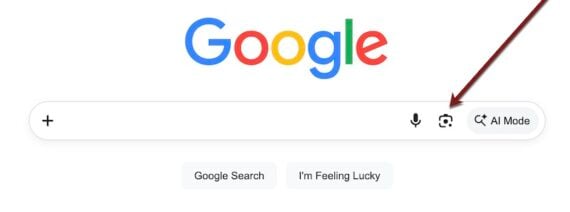
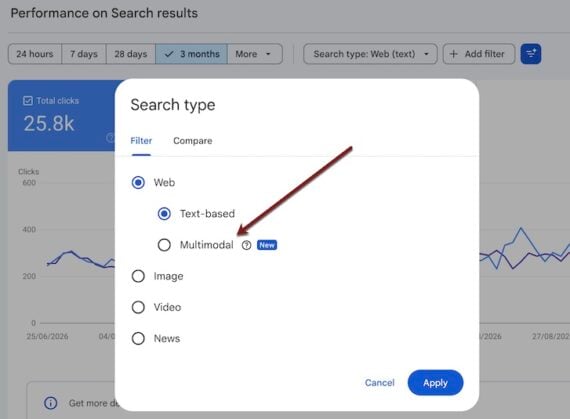
The new filter is accessible within the Performance report in Google Search Console. By navigating to Performance > Search results, users can change the "Search type" from the default "Web" to the new "Multimodal" option. This setting specifically isolates traffic originating from image-based search interfaces—such as Google Lens or the camera icon integrated into the Google app and desktop search bar.
It is critical for practitioners to understand what this filter does and, perhaps more importantly, what it does not do. It is not a traditional text-based search tracker; it does not list individual queries because, in a multimodal context, the "query" is an image file uploaded by the user, not a string of keywords. Furthermore, the report does not show the specific source image that triggered the result. Instead, it provides granular data on:
- Impressions: How often your product or content pages appear in visual search results.
- Clicks: How often users clicked through to your site after discovering it via an image match.
- Click-Through Rate (CTR): The efficiency of your visual assets in driving traffic.
- Average Position: Where your pages rank in the visual search result grid.
For ecommerce merchants, this is a game-changer. Shoppers are increasingly using "visual shopping" to find products they see in the wild, in magazines, or on social media. This filter finally provides the data necessary to justify investments in high-quality product photography and visual SEO.

Chronology: The Evolution of Visual Search
The journey to the Multimodal filter was not instantaneous. It is the culmination of years of iterative development by Google to bridge the gap between the physical world and digital commerce.
- 2017: The Launch of Google Lens: Google introduced Lens, an AI-powered visual recognition technology that allowed mobile users to point their cameras at real-world objects to identify them.
- 2020–2022: Expansion into Desktop: Recognizing that visual search was not just a mobile phenomenon, Google integrated image search capabilities into the desktop browser interface, allowing users to upload saved images to identify products.
- 2023: The Rise of "Multimodal" Search: As Google integrated its Gemini and other generative AI models into search, the concept of "Multimodal" search—combining text and images—became a core pillar of the Search Generative Experience (SGE).
- 2026 (September): The Launch of GSC Multimodal Reporting: Google officially rolls out the Multimodal filter in Search Console, responding to years of requests from SEO professionals for visibility into non-textual traffic sources.
This progression reflects a broader shift in consumer behavior. As users become more comfortable with AI assistants, the reliance on typing "blue running shoes" is being replaced by taking a photo of a friend’s sneakers.
Supporting Data: Why Visual Optimization Matters
The business case for optimizing for visual search is supported by both user behavior trends and the technical requirements of Google’s algorithms. According to industry analysis, visual search is particularly potent in retail verticals such as fashion, furniture, and home decor.
The Role of Image Sitemaps
Google’s image indexation is not automatic for every file hosted on a server. By utilizing image sitemaps, site owners provide a roadmap for Google’s crawlers. Shopify and WooCommerce users have specific tools at their disposal to ensure that every product photo is registered in the search index. Without a dedicated image sitemap, a significant percentage of a catalog may remain invisible to the Multimodal filter, resulting in missed revenue opportunities.
The Correlation with Traditional SEO
There is a common misconception that visual search requires a completely different technical strategy. However, the data suggests that traditional SEO foundations are the primary drivers of visual performance. Images that appear at the top of organic text search results are statistically more likely to be prioritized in visual search matching. Keywords in alt text, descriptive file names (e.g., modern-oak-dining-table.jpg rather than IMG_001.jpg), and page-level metadata remain the primary signals for Google’s image-ranking algorithms.
Official Responses and Strategic Perspectives
While Google’s documentation remains technical, industry experts and search optimizers have been quick to interpret the implications. Marie Haynes, a prominent voice in the SEO community, has emphasized the role of GenAI in augmenting visual search performance.
Her perspective is that the "Multimodal" era requires a change in creative production. If a product page is failing to attract clicks in the Multimodal filter, it is often a symptom of "visual mismatch." If a user searches for a specific aesthetic, such as "minimalist Scandi-style living room," the product photography must not only contain the product but must also be staged in an environment that matches the intent of the searcher.
Google’s own guidance reinforces this: visual search identifies objects regardless of angle or lighting, but the ranking mechanism favors results that align with the user’s uploaded perspective. If a customer uploads a photo of a product taken from a 45-degree angle, the images in the search results that match that specific angle are significantly more likely to receive the click.
Implications for E-commerce and Content Strategy
The introduction of the Multimodal filter necessitates a fundamental pivot in how marketing teams manage visual assets.
1. Diversify Your Product Photography
For years, the standard for ecommerce was a "white background" product shot. While these are essential for conversion, they are often not what users are searching for when they use Google Lens. Merchants should begin diversifying their image galleries to include:
- Lifestyle shots: Products in use within a real-world setting.
- Detailed close-ups: High-resolution textures, stitching, and material quality.
- Multiple angles: Side, top-down, and 45-degree views.
2. High-Resolution Standards
The Multimodal filter allows you to track clicks. If you find that your impressions are high but your clicks are low, you have a conversion problem at the visual level. Users are seeing your image but choosing not to engage. This often indicates poor image resolution or a lack of clarity. By testing high-resolution versions of your "collection" thumbnails, you can directly influence the CTR of your visual results.
3. Leveraging Generative AI
As the dashboard in Search Console grows more complex, using generative AI to analyze your performance is becoming a standard practice. By exporting your Multimodal performance data into a GenAI tool, you can ask for strategic insights, such as: "Based on my top-performing images, what visual elements are common across my highest CTR products?" This can lead to actionable creative briefs for your photography team, focusing on the specific colors, lighting, or textures that resonate with your audience.
4. The Future of the "Visual Storefront"
The ultimate implication is that your product photos are now your primary landing pages. A user might never visit your homepage or your category page; they might bypass the entire traditional sales funnel by clicking a direct link from a visual search result. This makes the "visual journey" from search to checkout more critical than ever.
Conclusion: The New SEO Baseline
The rollout of the Multimodal filter in Google Search Console is not merely a new reporting tool; it is a signal that visual search has arrived as a primary traffic driver. For the forward-thinking merchant, this data is an invitation to treat visual assets with the same analytical rigor previously reserved for keyword research and backlink analysis.
As we move forward, the most successful brands will be those that integrate their visual and textual strategies. By ensuring that images are properly indexed, descriptive in their metadata, and diverse in their presentation, businesses can capture the growing wave of shoppers who prefer to "search by seeing." The Multimodal filter provides the final piece of the puzzle—the ability to measure, test, and optimize this visual storefront, ensuring that every click translates into tangible growth.

The era of blind optimization is over. With the Multimodal filter, you finally have a map for the visual frontier. The question remains: how will you evolve your creative to meet the searcher’s eye?