
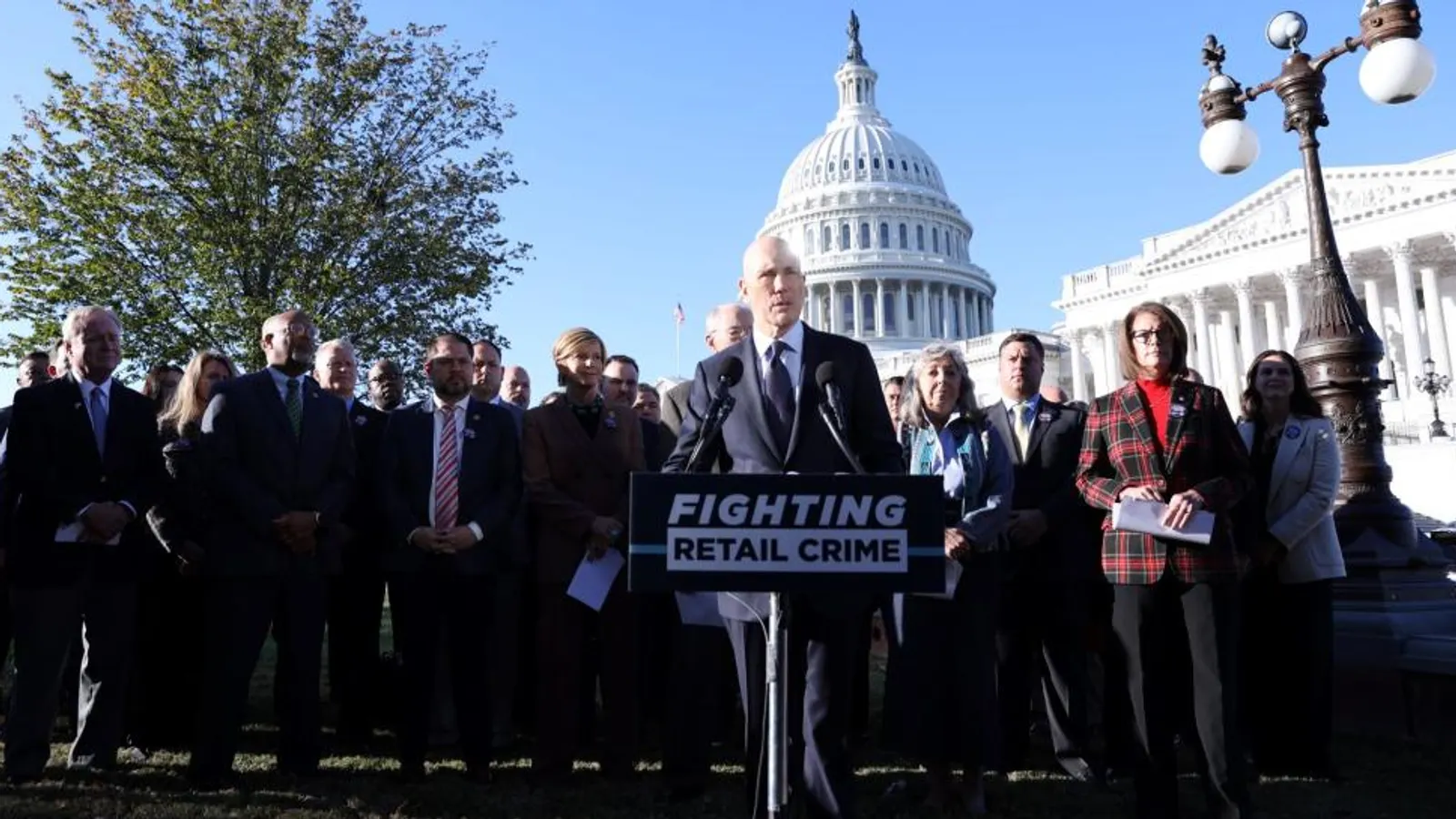
In a decisive move aimed at curbing the rising tide of organized retail crime (ORC), the U.S. House of Representatives passed comprehensive, bipartisan legislation on Tuesday. The bill, which seeks to formalize and centralize the federal government’s response to the illegal acquisition and resale of retail goods, marks a significant milestone for retail industry trade groups that have spent years lobbying for federal intervention.
While the bill now advances to the Senate, it arrives amid a shifting landscape in the retail sector, where the narrative surrounding "shrink"—the industry term for inventory loss—has become increasingly complex and, at times, contentious.
The Legislative Framework: A Centralized Response
The legislation is designed to address the sophisticated nature of modern retail theft, which has evolved far beyond localized shoplifting into complex, cross-jurisdictional, and often international criminal enterprises. According to the bill’s text, the primary objective is to combat organized crime syndicates that illegally acquire retail goods and cargo for the express purpose of selling them through both physical and online marketplaces.
To facilitate this, the bill mandates the creation of an "Organized Retail and Supply Chain Crime Coordination Center" under the jurisdiction of the Department of Homeland Security (DHS). This center is envisioned as a nexus for federal, state, local, territorial, and tribal law enforcement agencies, designed to foster information sharing and collaborative investigations. Under the proposed structure, the office would be overseen by a director appointed by U.S. Immigration and Customs Enforcement (ICE), signaling a shift toward treating retail theft as a matter of federal security and organized criminal activity rather than merely a localized nuisance.
Chronology: A Long Road to Capitol Hill
The journey to this legislative milestone has been marked by years of persistent advocacy from two of the nation’s largest retail trade organizations: the National Retail Federation (NRF) and the Retail Industry Leaders Association (RILA).
For years, these groups have organized "fly-ins," bringing retail asset protection professionals to Washington, D.C., to lobby members of Congress. They have provided expert testimony, conducted research, and engaged directly with municipal and federal law enforcement agencies to frame retail theft as a systemic threat to the economy and public safety.
- Pre-2020: Organized retail crime was largely handled at the municipal level, with retailers relying on internal security and local police departments to manage losses.
- 2020–2022: As the pandemic disrupted supply chains and public discourse, reports of "smash-and-grab" incidents began to dominate national news cycles. Retail groups ramped up their calls for federal support, arguing that the interstate nature of these criminal rings required a federal solution.
- 2023: A turning point in the public debate occurred when the NRF faced significant scrutiny over the accuracy of its data regarding retail crime. After an investigative report by Retail Dive revealed that a key statistic concerning the impact of ORC was off by an order of magnitude, the NRF was forced to retract the data, sparking a wider debate about the transparency of retail industry metrics.
- 2024: The NRF ceased its decades-long practice of conducting annual research into inventory loss, leaving a vacuum in industry-wide data. Meanwhile, many retailers began reporting that shrink levels were stabilizing or returning to pre-pandemic baselines.
- 2025: The House of Representatives passed the current iteration of the anti-crime bill, setting the stage for potential Senate action.
Supporting Data: The Statistics of Controversy
The debate surrounding the bill has been defined by a tension between anecdotal reports of rampant store theft and the hard data regarding inventory loss. The bill itself cites a specific statistic: from 2019 to 2023, larceny incidents rose by 93%, with a 90% rise in the average dollar loss per incident.
However, industry analysts have pointed out that this data—the only NRF-sourced statistic included in the final House bill—does not tell the full story. Crucially, the bill omits the total financial impact of these losses, a figure that has been a point of extreme sensitivity since the 2023 data scandal.
The absence of a clear, universally accepted metric for ORC-related loss has led to skepticism among some industry experts. If the industry’s own representative bodies have struggled to quantify the problem accurately, critics argue, it is difficult to determine whether federal legislation is the most efficient mechanism for solving it. Furthermore, the recent trend reported by major retailers shows a decrease in total shrink, with many firms noting that losses have receded from their pandemic-era peaks.
Official Responses: Industry Perspectives
Industry leaders have lauded the passage of the bill as a victory for retailers and their employees. David French, the NRF’s chief lobbyist, emphasized the organization’s long-term commitment to the issue.
"NRF has been leading the fight on behalf of retailers for passage of this legislation through direct engagement with federal, state, and municipal law enforcement," French stated following the vote. He noted that the organization’s efforts—including coordinating professional lobbying, providing expert testimony, and conducting research—were instrumental in bringing the issue to the floor of the House.
Both the NRF and RILA have issued separate statements urging the Senate to move quickly on the legislation. They maintain that while operational changes at the store level are helpful, they are insufficient to deter the professional criminal syndicates that operate across state lines and utilize online platforms to launder stolen goods.
Implications: The "Operational" Reality
Despite the optimism from industry trade groups, some loss-prevention experts argue that the legislation may have a more limited impact on the corporate bottom line than lawmakers suggest.
Brand Elverston, a veteran loss-prevention specialist, suggests that the focus on "Organized Retail Crime" may be a distraction from the broader, more mundane operational issues that contribute to shrink. According to Elverston, the most effective way to combat inventory loss has historically been through better store management: increasing staffing, improving inventory accuracy, and preventing pricing or merchandising errors.
"When the math is hammered out, ORC is estimated as a single-digit (if not fractional) percentage of the single-digit percentage of total sales lost to shrink," Elverston noted. He argues that while the bill is a positive step for law enforcement—providing them with much-needed legal tools to track interstate criminal networks—it is unlikely to appear on a retailer’s profit-and-loss statement.
The Problem of Definition
A primary challenge in addressing retail crime is the lack of a standardized definition of what constitutes "organized" theft versus common shoplifting. Because retailers often do not differentiate these categories in their internal reporting, they frequently lack a clear understanding of the true impact of ORC on their total shrink.
By creating a federal coordination center, the bill may eventually provide the data standardization that the industry currently lacks. If the new center succeeds in tracking patterns and identifying the "nodes" of these criminal networks, it could provide a more evidence-based approach to loss prevention.
The Path Forward
For the legislation to become law, it must survive the Senate, a body that has historically been more cautious about expanding federal jurisdiction into areas traditionally managed by state and local authorities.
Proponents are hopeful that the bipartisan nature of the House vote—which transcended typical party lines—will serve as a catalyst for swift action in the Senate. However, the bill faces a complex political landscape. Opponents or skeptics may point to the fluctuating data and the potential for federal overreach, arguing that the problem is best addressed by bolstering local law enforcement budgets rather than creating a new federal bureaucracy.
Ultimately, the legislation represents a significant symbolic victory for the retail sector. Whether it translates into a tangible reduction in inventory loss, however, remains to be seen. For retailers, the path forward is likely to remain a hybrid strategy: continuing to refine in-store operational procedures while simultaneously offloading the burden of investigating large-scale, interstate criminal enterprises to the federal government.
As the debate moves to the Senate, the retail industry will be watching closely, hoping that this legislative push marks the beginning of a more stable, secure environment for both brick-and-mortar stores and their customers. The era of the "smash-and-grab" may be receiving its first concerted federal challenge, but the true measure of success will be found in the quarterly earnings reports and the security of the nation’s retail supply chains in the years to come.