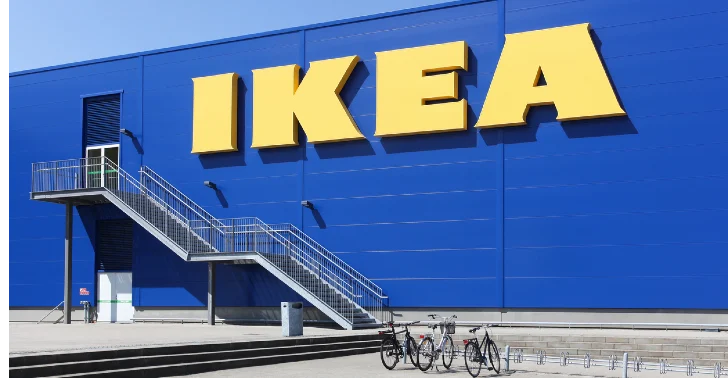
In a strategic maneuver that reinforces its position as the preeminent force in the global home furnishings sector, furniture giant IKEA is significantly accelerating the expansion of its peer-to-peer (P2C) second-hand marketplace. The Swedish retailer has announced the official launch of its pre-owned platform in the United Kingdom, Ireland, and Germany, marking a pivotal moment in the company’s transition toward a circular business model.
This expansion brings the total number of active markets for the platform to nine, signaling a robust commitment to sustainability and the secondary economy. Furthermore, the company is diversifying its service offerings by piloting a new "Buyback" initiative in Portugal and Spain, allowing customers to sell their pre-loved furniture directly to the retailer. These developments, which come on the heels of the company being named Europe’s best-performing cross-border seller by Cross-Border Commerce Europe, highlight a broader industry shift where retail giants are reclaiming the lifecycle of their products to foster long-term customer loyalty and reduce environmental impact.
The Chronology of a Circular Ambition
IKEA’s foray into the second-hand market is not a sudden pivot but the culmination of a deliberate, data-driven strategy. The initiative began in earnest in 2024, when the company launched a pilot project for a C2C (customer-to-customer) marketplace in Spain and Norway. The objective was clear: to capture the growing segment of consumers who prefer sustainable, pre-owned options while maintaining brand ecosystem engagement.
Following the initial success of the pilot, the platform demonstrated immediate utility, prompting a rapid rollout across other European territories. By mid-2025, the service had been extended to Portugal, Poland, Sweden, and Belgium. The inclusion of the UK, Ireland, and Germany—three of the company’s most significant revenue-generating markets—represents the most aggressive scaling phase to date.
The timeline of the platform’s growth is as follows:
- Early 2024: Launch of the C2C marketplace pilot in Spain and Norway.
- Mid-2024 to 2025: Strategic expansion into Poland, Portugal, Sweden, and Belgium, refining the user experience based on localized feedback.
- Late 2026: Official launch in the United Kingdom, Ireland, and Germany.
- December 2026 (Scheduled): Implementation of the direct-to-IKEA "Buyback" pilot program in Portugal and Spain.
This incremental growth strategy has allowed the Ingka Group—the largest franchisee of IKEA stores—to test operational logistics, such as customer verification and product condition assessment, before committing to larger, more complex retail environments.
Supporting Data: Why the Marketplace Matters
The financial and operational metrics underpinning the marketplace’s expansion are compelling. As of August 31, 2026, the platform had logged 15 million site visits and facilitated the creation of 95,700 unique product listings. These figures illustrate a strong, pre-existing demand for a trusted, brand-specific channel for reselling IKEA furniture, effectively bypassing the fragmented and often unreliable nature of generalist platforms like Facebook Marketplace or eBay.
Perhaps most significantly for the company’s long-term retention strategy, the marketplace has acted as a powerful acquisition tool for the IKEA Family loyalty program. Data indicates that 25.5% of marketplace users are either new or reactivated members of the IKEA Family program. This is largely attributed to the incentive structure: members are permitted to post items on the marketplace for free, creating a low-friction entry point that encourages shoppers to integrate themselves into the broader IKEA digital ecosystem.
The data suggests that the marketplace is not merely a service for the environmentally conscious; it is a retention engine. By providing a platform where customers can easily cycle out old items and earn credit or cash, IKEA creates a closed-loop environment where the "exit" from one product life cycle becomes the "entry" into the next purchase.
The Buyback Option: Bridging the Gap Between C2C and Retail
A major highlight of the current update is the introduction of a direct Buyback option. Historically, the second-hand market was restricted to C2C transactions, where the onus of negotiation, communication, and fulfillment lay entirely with the buyer and seller. With the new Buyback service, IKEA is inserting itself as a central participant in the secondary market.
How the Process Functions
Under the new pilot program launching in Portugal and Spain, the process is designed for maximum convenience:
- Listing: When a customer lists an eligible product on the marketplace, they will be presented with a prompt to receive a direct offer from IKEA.
- Valuation: As long as the item remains listed, the customer has the flexibility to wait for a peer-to-peer buyer or accept the guaranteed price offered by IKEA.
- Completion: If the customer chooses the Buyback option, they simply take the product to a designated IKEA store, where the transaction is completed.
This hybrid approach addresses one of the primary friction points in the circular economy: the time and effort required to sell used goods. By offering a "guaranteed sale" through the retailer, IKEA provides consumers with peace of mind, ensuring that even if a peer buyer is not found, the product has a viable path to resale or recycling, rather than ending up in a landfill.
Official Responses and Strategic Rationale
The expansion is viewed internally as a "practical next step" in a multi-year effort to simplify the circular experience. Emily Birkin, Development & Transformation Manager at the Ingka Group, emphasized the importance of the company’s "test and learn" philosophy.
"We started small, listened closely and have developed the marketplace step by step," Birkin noted in a recent statement. "The data tells us there is clear interest. Testing the option for customers to sell direct to IKEA on the marketplace and exploring delivery partnerships are practical next steps. Together with the launch in the UK and Ireland, these tests will help us make it simpler for the many people to buy and sell pre-owned IKEA products."
This measured language reflects the company’s caution. IKEA is well aware that entering the secondary market carries risks—primarily regarding brand reputation if product quality is mismanaged, or the operational complexity of handling logistics for non-new goods. By limiting the Buyback pilot to specific regions and focusing on a phased rollout, the company is ensuring that its supply chain and store-level operations can handle the influx of returned items without compromising the standard customer experience.
Implications for the Retail Landscape
The implications of IKEA’s expanded marketplace are profound for both the furniture industry and the broader retail sector.
1. Disrupting the "Linear" Business Model
Traditional retail is predicated on the "take-make-waste" model. By formalizing a second-hand marketplace, IKEA is actively working to decouple its revenue growth from the consumption of virgin raw materials. This is not just a PR exercise; it is an economic necessity as regulatory bodies in the EU and elsewhere tighten standards regarding product longevity and waste management.
2. Deepening Customer Ecosystems
By becoming the primary marketplace for its own used goods, IKEA is reclaiming the "customer journey" that previously ended at the checkout counter. When a customer uses the IKEA marketplace, they are interacting with the brand’s interface, receiving IKEA-branded communications, and—crucially—often using the proceeds from their sale to purchase a new IKEA item. This creates a powerful loyalty loop that competitors lacking a unified brand marketplace will struggle to emulate.
3. The Future of Delivery and Logistics
As Birkin mentioned, the company is also "exploring delivery partnerships." This suggests that the next phase of the marketplace will likely include integrated logistics solutions. If IKEA can facilitate the transport of second-hand furniture between private individuals, it will solve one of the biggest headaches for the pre-owned market: the logistics of bulky goods.
4. Setting the Standard for Competitors
With IKEA being recognized as Europe’s top cross-border seller, its success in this space provides a blueprint for other major retailers. JYSK, H&M, and other large-scale home and lifestyle brands will likely watch the UK and German pilots closely. If IKEA succeeds in these high-volume, highly competitive markets, it will set a new industry benchmark for what is expected of a modern, sustainable retailer.
Conclusion: A Blueprint for the Future
The expansion of the IKEA second-hand marketplace is more than just a new feature on a website; it is a fundamental reconfiguration of the retailer’s business model. By integrating C2C sales, direct Buyback options, and loyalty program incentives, IKEA is creating a circular ecosystem that benefits the company’s bottom line as much as it benefits the planet.
As the platform scales into the UK, Ireland, and Germany, the focus will inevitably shift toward operational efficiency and the integration of these services into the physical store experience. While the project is still in its experimental phase, the data is clear: consumers are hungry for a sustainable, branded, and trusted way to recirculate their furniture. In meeting this demand, IKEA is not only solidifying its lead in the furniture market but is also defining what the future of responsible retail looks like in the 21st century.