By Nancy Qian
October 12, 2026
For at least a generation, the narrative of China’s rise was defined by an inexorable, upward trajectory. It was an "economic miracle" that transformed a nation of rural poverty into a global industrial juggernaut. During this epoch, the Chinese people began to view Americans not as inhabitants of a vastly wealthier, unreachable world, but as potential peers. Today, however, that comparison has taken on a more somber tone. China and the United States have become peers in a different, more precarious sense: both societies are now grappling with the painful, disillusioning realization that the era of boundless growth has reached a structural impasse.
The End of the Upward Trajectory: Main Facts
For forty years, the direction of travel in China was unambiguous: forward. At the dawn of the 1990s, the nation’s per capita GDP sat at a mere $300. By the mid-2020s, that figure had multiplied exponentially, accompanied by a physical transformation that defied historical precedent. China’s skyline became a testament to rapid urbanization, with cities bristling with skyscrapers, intricate subway systems, and world-class highway networks.
This transformation was deeply personal for hundreds of millions. Families who once focused on the basic necessity of caloric intake pivoted toward the acquisition of private assets—apartments, vehicles, and the latest consumer electronics. The social contract was underpinned by the promise of intergenerational mobility: children were expected to attend universities their parents could scarcely have imagined, securing white-collar roles in a modernized, globalized economy.
However, the "China Miracle" was predicated on specific, finite conditions: cheap labor, massive state-led infrastructure investment, and a receptive global trade environment. As the country joined the World Trade Organization, hosted the Olympic Games, and cemented its position as the world’s factory, the underlying mechanisms of that growth began to fray. Today, the country faces a "rude awakening"—the same sobering reality that Americans encountered when their own post-war boom stalled, leaving behind a legacy of stagnant wages, wealth inequality, and political polarization.
A Chronology of the Rise and Stagnation
To understand the current malaise, one must look at the timeline of China’s rapid ascent and the subsequent cooling of its economic engines.
- 1990–2001: The Launchpad. Following the liberalization policies of the late 20th century, China began its formal integration into the global order. The GDP growth rates during this period consistently hit double digits, lifting hundreds of millions out of absolute poverty.
- 2001–2010: The Golden Decade. WTO accession in 2001 acted as a catalyst, integrating China into global supply chains. This period saw the explosive growth of the manufacturing sector and the massive urbanization of the coastal provinces.
- 2010–2018: The Era of Leverage. As internal demand slowed, the government pivoted toward credit-fueled infrastructure investment. While this prevented a recession following the 2008 global financial crisis, it planted the seeds of the current debt overhang.
- 2019–2023: The Great Disruption. A combination of global geopolitical tensions, trade frictions with the West, and a stringent regulatory crackdown on the private tech sector signaled a shift in state priorities. The pandemic served as the final stress test that revealed the fragility of the existing model.
- 2024–2026: The New Normal. The current era is characterized by deflationary pressures, a collapsing real estate market, and a youth unemployment crisis that has shattered the promise of the middle-class dream.
Supporting Data: The Indicators of Distress
The quantitative evidence of China’s slowdown is no longer speculative; it is systemic.
- Demographic Headwinds: China’s working-age population is shrinking at a pace that complicates the traditional "catch-up" growth model. The dependency ratio is climbing, placing an unprecedented burden on the social safety net and the pension system.
- Real Estate Insolvency: Real estate once accounted for nearly 30% of China’s GDP. The crisis among major developers has not only erased household wealth—given that most Chinese families hold the vast majority of their assets in property—but has also paralyzed local government revenue, which relied heavily on land sales.
- Productivity Plateaus: While China continues to lead in specific high-tech sectors like green energy and electric vehicles, the broader economy is struggling with diminishing returns on capital. The efficiency of new infrastructure projects has plummeted, and private sector investment has stalled due to policy uncertainty.
- Consumer Sentiment: Retail sales growth has decoupled from historical trends. Even as the government attempts to stimulate consumption, the prevailing mood among the urban middle class is one of "involution"—a state of intense, unproductive competition where people work harder just to maintain their current standard of living.
Official Responses and Policy Shifts
Beijing’s response to these challenges has been a complex mixture of ideological redirection and tactical intervention. Faced with a slowing economy, the state has pivoted away from the growth-at-all-costs mentality of the previous decades.
Instead, current policy emphasizes "High-Quality Development" and "Common Prosperity." These slogans signify a shift in priority from sheer GDP growth to social stability and technological self-sufficiency. By focusing on domestic supply chains and reducing dependence on foreign markets, the leadership is attempting to insulate the economy from external shocks. However, critics argue that these policies, while strategically sound for long-term security, act as a drag on short-term dynamism. The state has increased its oversight of the private sector, leaving entrepreneurs wary of ambitious expansion.
Furthermore, recent monetary easing has been cautious. Beijing is clearly haunted by the specter of the 2008 U.S. financial crisis; they are attempting to deleverage the economy without triggering a systemic collapse—a task that has proven to be a delicate, and often volatile, balancing act.
Implications: The Shared Fate of Great Powers
The implication of this transition is profound, not just for the Chinese people, but for the global order. When the American "miracle" stalled, the resulting domestic friction reshaped global politics, contributing to the rise of populism and protectionism. China is now experiencing the early stages of a similar transformation.
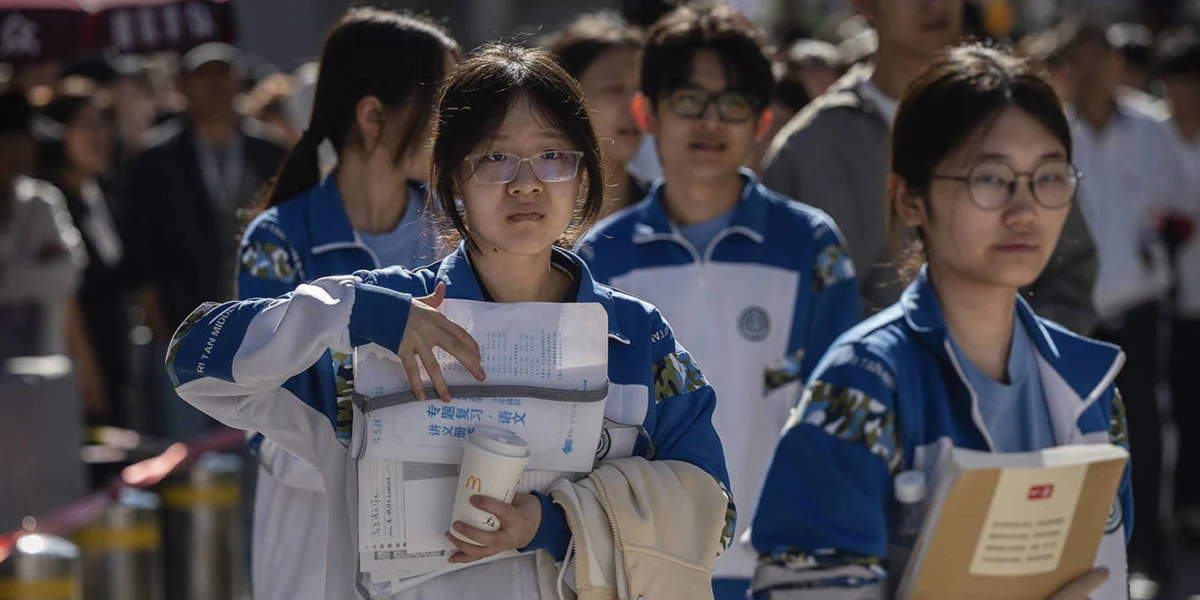
For the Chinese citizen, the social contract is being rewritten. The expectation that the future will always be brighter than the past—the bedrock of the legitimacy of the post-reform era—is being tested. This leads to a sense of shared disillusionment with the American experience. Just as Americans grapple with the "American Dream" being out of reach for the youth, Chinese citizens are facing a future where education no longer guarantees employment and homeownership no longer guarantees wealth.
For the international community, the implications are equally stark. A China that is no longer growing at a blistering pace will be a less reliable engine for global demand. If Beijing turns inward to manage its internal economic anxieties, the global landscape will become more fragmented.
In conclusion, we are witnessing the end of an era of convergence. The "miracle" provided a sense of optimism that bridged the Pacific. Now, the commonality between the two nations is the struggle to manage the expectations of a population that has been promised perpetual progress. The transition from a miracle-growth economy to a mature, slow-growth state is rarely peaceful, and the coming years will likely be defined by how both China and the United States navigate the inevitable, and often rude, awakening that follows the end of an era.