After nearly two decades of anticipation, bureaucratic hurdles, and architectural refinement, the cinematic landscape of Los Angeles has been permanently altered. George Lucas, the visionary creator behind the Star Wars and Indiana Jones franchises, has officially unveiled his long-awaited Lucas Museum of Narrative Art. Situated in the heart of Exposition Park, the institution stands not merely as a monument to one man’s filmography, but as a sprawling, ambitious tribute to the universal human impulse to tell stories through visuals.
For a city already defined by the history of Hollywood, the museum represents a shift in focus. It moves beyond the mechanics of film production to celebrate the foundational art forms that preceded, influenced, and continue to surround the medium of cinema.
The Architectural Marvel: A Spaceship for Storytelling
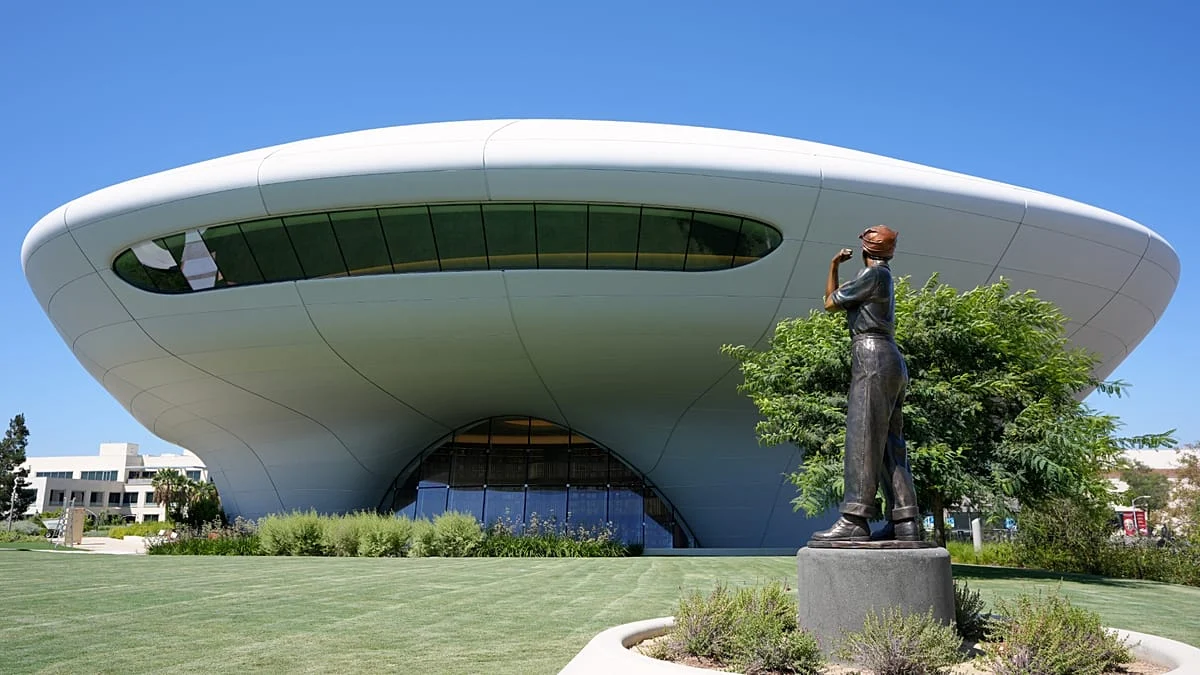
The museum’s physical presence is impossible to ignore. Designed by the internationally acclaimed Chinese architect Ma Yansong of MAD Architects, the 10,000-square-metre structure is a feat of futuristic engineering. With its sweeping, fluid lines and elevated massing, the building is frequently likened to a landed spaceship—a fitting aesthetic for a project born from the mind of the man who redefined the space opera genre.
Ma Yansong, known for his ability to blend organic, natural forms with high-tech materials, has created a structure that defies traditional museum architecture. The design intends to bridge the gap between the built environment and the lush greenery of the surrounding parkland. "The building is meant to be a landscape," Ma noted during the unveiling. "I want the architecture to spark curiosity and new ideas, inviting the public to see the world not as it is, but as it could be."
The interior design is equally radical, prioritizing flow and accessibility. The expansive, light-filled galleries are organized to encourage a non-linear experience, allowing visitors to drift between eras, cultures, and artistic mediums. By integrating massive glass apertures with reinforced steel, the design ensures that the surrounding park is always visible, grounding the ethereal, futuristic structure in the earthly reality of Los Angeles.
A Chronology of a Vision: Two Decades in the Making
The road to this opening has been long and, at times, turbulent. The genesis of the museum dates back nearly twenty years, when George Lucas began contemplating how to share his vast, eclectic private collection with the public.
- 2005–2010: The Conceptual Phase. Lucas begins formalizing his vision for an institution that celebrates "narrative art"—a broad term he uses to describe any art form that tells a story, from ancient tapestries to modern manga.
- 2014: The Chicago Bid. Initially, Lucas sought to build the museum in Chicago, near the home of his wife, Mellody Hobson. However, the proposal faced significant opposition from local advocacy groups regarding the use of lakefront land, leading to the project’s cancellation in that city.
- 2016: The Los Angeles Pivot. Lucas announces that Los Angeles will be the permanent home for the institution. The city, with its deep-rooted cultural infrastructure and proximity to the film industry, is viewed as the ideal location.
- 2018: Groundbreaking. After securing the necessary permits and overcoming local environmental concerns, construction finally commences in Exposition Park.
- 2020–2022: Pandemic Delays. Like many global infrastructure projects, the museum faces significant supply chain disruptions and labor shortages caused by the COVID-19 pandemic, pushing the opening timeline back.
- 2024/2025: Completion and Grand Opening. The building is finalized, collections are installed, and the museum officially opens its doors to the public, marking the culmination of a twenty-year journey.
The Collection: Beyond the Jedi Order
While the casual observer might expect a museum dedicated to the man who created Darth Vader to be an exhaustive shrine to the Skywalker saga, the reality is far more nuanced. The Star Wars artifacts—which include the iconic Princess Leia costume from The Empire Strikes Back, Luke Skywalker’s landspeeder, and the original screen-used R2-D2 and C-3PO units—serve as a powerful draw for the general public. However, they represent a mere 7% of the total collection.
The museum’s scope is breathtakingly wide. It acts as a repository for the visual language of the 20th and 21st centuries. The galleries house an extensive collection of:
- Golden Age Illustration: Featuring the works of Norman Rockwell, J.C. Leyendecker, and N.C. Wyeth.
- Comics and Graphic Novels: Original panels from legendary comic artists, exploring the evolution of the superhero mythos.
- International Animation: A deep dive into the artistry of anime and manga, highlighting the influence of Japanese visual storytelling on global culture.
- Contemporary Social Commentary: Works by artists such as Banksy, showcasing how visual narrative can be used to critique modern politics and social structures.
- Historical Narrative Art: Pieces dating back centuries, proving that the human need to capture a story in a single image is a timeless endeavor.
By positioning Star Wars alongside Rockwell and Banksy, the museum makes a bold curatorial statement: the distinction between "high art" and "popular culture" is an artificial construct. Lucas’s intent is to elevate the illustrators and concept artists who have historically been sidelined by traditional art institutions, granting them the reverence typically reserved for classical painters.
Official Responses and Curatorial Philosophy
George Lucas and his wife, Mellody Hobson, have been vocal about the museum’s mission statement throughout the construction process. For Lucas, the museum is a form of legacy management, but not in the narcissistic sense. He has frequently stated that he wants to provide a space where young artists can see the "behind-the-scenes" process of storytelling.
"We are honoring the people who bring stories to life," Lucas said at the opening press conference. "Often, these artists—the concept artists, the comic book illustrators, the children’s book designers—are the unsung heroes of our culture. This museum is their stage."
Mellody Hobson, the chair of the museum’s board of directors, has emphasized the role of the institution in the community. "We didn’t want to build a private bunker," Hobson stated. "We wanted to build a democratic space. Narrative art is for everyone. It is the language we all speak, whether we are reading a comic, watching a film, or looking at a painting."
Architectural critics have largely praised the bold vision of Ma Yansong. While some initial skeptics questioned whether the "spaceship" design would age well, recent reviews have lauded the structure for its commitment to the public experience, noting that the building itself is the first piece of "narrative art" the visitor encounters.
Implications for the Future of Los Angeles
The opening of the Lucas Museum of Narrative Art shifts the cultural gravity of Los Angeles. Exposition Park, already home to the Natural History Museum and the California Science Center, has become a premier global destination for education and entertainment.
Economic and Social Impact:
The museum is expected to draw hundreds of thousands of international tourists annually, providing a significant boost to the local economy. Beyond tourism, the museum has committed to extensive outreach programs, including partnerships with local schools and art collectives, aiming to provide resources for underrepresented youth in the Los Angeles area.
Defining the Narrative:
Perhaps the most significant implication is the museum’s role in defining the future of art curation. By blending digital and physical media, and by prioritizing "story" over "medium," the museum challenges other institutions to rethink their own collections. It asks a fundamental question: In a world dominated by digital screens, what is the value of the original, tangible artifact?
As the doors open, the Museum of Narrative Art stands as a testament to the fact that stories are the glue that holds society together. Whether it is a hand-painted canvas from the 1920s or a digital render for a space-faring hero, the message remains the same: we are a species defined by our stories. And now, in a quiet corner of Los Angeles, those stories finally have a home worthy of their scale.
As Lucas himself once famously noted, "The secret is to have a good story." With this museum, he has provided the physical manifestation of that philosophy, ensuring that the visual stories of the past century will be preserved, analyzed, and celebrated for generations to come.