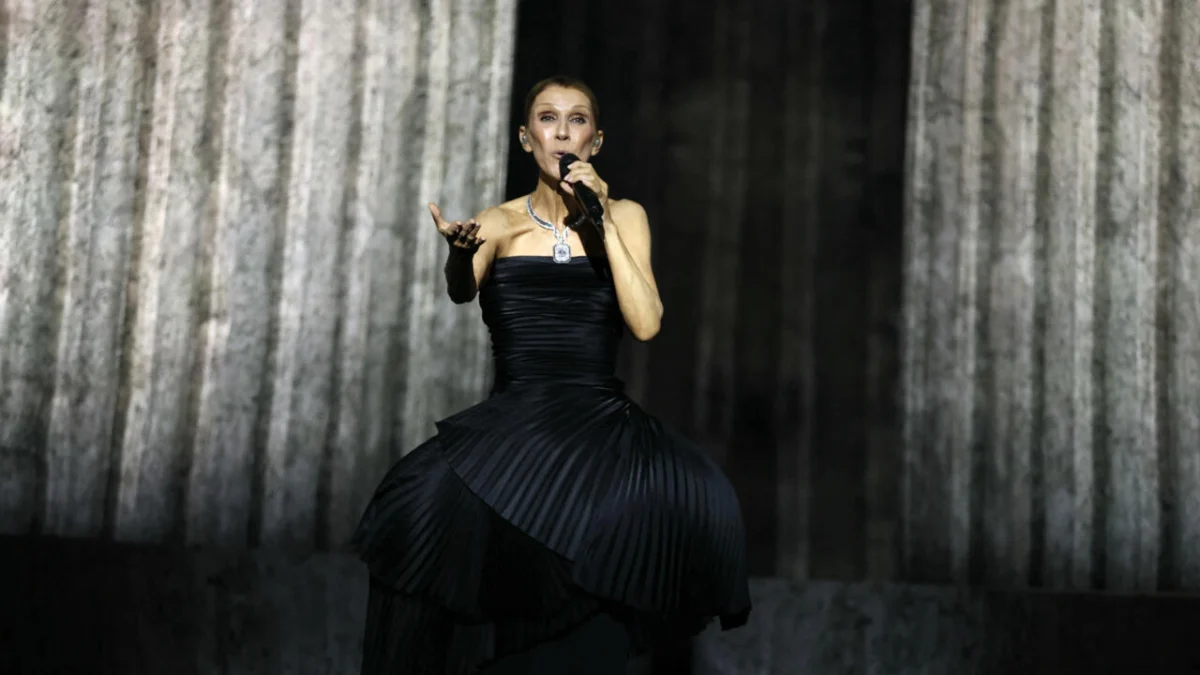
In an event that will undoubtedly be etched into the annals of music history, the legendary Céline Dion has officially returned to the stage. On Saturday evening, the French-Canadian icon performed her first full-scale concert in six years at the Plenitude Arena, located on the western outskirts of Paris. For the 30,000 fans in attendance, the night was far more than a musical performance; it was a testament to human resilience, the power of medical perseverance, and the indomitable spirit of a global superstar who, just two years ago, faced the terrifying prospect of never performing again.
The atmosphere inside the arena was electric, thick with a palpable sense of anticipation and relief. As the lights dimmed and the opening notes of her 1990s French-language classic "On ne change pas" ("One Doesn’t Change") filled the air, the audience erupted into a roar of adoration. Dion, visibly overcome with emotion, paused briefly before the microphone, her eyes glistening as she looked out at a sea of supporters. It was a moment of vulnerability that only deepened the connection between the singer and her audience—a silent acknowledgment of the "rocky path" she had traversed to stand there once more.
A Chronicle of Resilience: From Silence to the Spotlight
The journey to this stage began in the darkest corners of uncertainty. In December 2022, the world watched in shock as Dion announced her diagnosis of Stiff Person Syndrome (SPS), a rare and incurable autoimmune neurological disorder. The condition, which causes severe muscle rigidity and agonizing spasms, had forced the singer to cancel her long-standing international tour, casting a shroud of mystery over her future.
The Timeline of the Comeback:
- December 2022: Dion publicly reveals her diagnosis of Stiff Person Syndrome, detailing how the condition creates a sensation of being "strangled" and causes muscle spasms so intense they have resulted in broken ribs.
- 2023–2024: A period of intensive medical treatment and physical therapy. The singer maintains a low profile, focusing entirely on her health and rehabilitation.
- July 2024: In a surprise appearance that stunned the global audience, Dion performs Edith Piaf’s "Hymn to Love" from the Eiffel Tower during the Paris Olympic Games opening ceremony, signaling to the world that her voice—and her spirit—remained intact.
- September 2026: The official launch of her 26-show residency in Paris, marking her return to a full-length concert format.
The transition from that brief, powerful appearance at the 2024 Olympics to a full-scale, multi-show residency was a calculated, rigorous process. Behind the scenes, medical teams, vocal coaches, and physical therapists worked in tandem with the star to ensure that her body could handle the physical demands of a two-hour performance.

Supporting Data: A Global Phenomenon
The sheer scale of the "Céline Phenomenon" in Paris is difficult to overstate. The city, which has long held a special place in its heart for the singer, transformed into a makeshift festival site in the days leading up to the performance.
Economic and Cultural Impact:
- Ticket Demand: The 16 shows scheduled for September and October sold out in record time, with an additional 10 shows already confirmed for May 2027.
- Economic Stimulus: Projections indicate that the residency will generate hundreds of millions of euros for the Paris metropolitan area, boosting local hospitality, tourism, and retail sectors.
- Global Attendance: Fans traveled from as far as Tahiti, Brazil, and Japan, with London-based attendees reporting expenditures of over £1,500 per person just to secure seats, a price they described as "a small sacrifice for a historic moment."
- City-Wide Tribute: The local suburban train station serving the arena was temporarily renamed "Céline," while the city hosted tribute cruises on the Seine and organized public karaoke parties, effectively turning the capital into a cathedral of devotion for the star.
The Human Element: Voices from the Arena
The demographic of the crowd was a testament to Dion’s cross-generational appeal. Attendees arrived in sequined attire, glittered cheeks, and vintage tour T-shirts, creating a shimmering mosaic of fandom.
"I was convinced we would never see her again," said Elisabeth Landry, a 38-year-old fan from Quebec who traveled to Paris specifically for the opening night. "To see her walk out, to hear that voice hit those notes… it’s not just a concert. It’s a miracle in real-time."
Outside the Royal Monceau hotel, where the star has been staying, the atmosphere was equally charged. Fans kept vigil for hours, hoping for a glimpse of their idol. On several occasions, a seemingly rejuvenated Dion stepped out to greet them, proving that her warmth toward her public remains as potent as ever. Even those without tickets found solace in the communal spirit, participating in free public singalongs that echoed through the city streets.

Official Perspectives and Medical Context
While the music industry celebrates the commercial success of the comeback, the medical community remains fascinated by the clinical implications of her recovery. Stiff Person Syndrome is a notoriously difficult condition to manage, typically involving complex regimens of immunosuppressants and muscle relaxants.
"What we are seeing is an extraordinary example of how a patient’s mental fortitude can influence their physical outcomes," said one observer familiar with the singer’s rehabilitation journey. "Céline has been transparent about the pain, the fear, and the limitations, which has resonated with millions who suffer from chronic conditions. She isn’t just performing; she is advocating for the possibility of living with, and through, a life-altering diagnosis."
Dion herself addressed the crowd with characteristic candor: "The path was rockier than expected. But I held on to a faint ray of light in the distance, deep in the mountains. Tonight, I want to sing for you, sing for myself, sing for life."
The Implications of a Legend’s Return
The success of these Paris dates sets a new precedent for the entertainment industry. It challenges the conventional narrative of the "retired" aging pop star, suggesting instead that the bond between an artist and their audience can act as a catalyst for recovery.

Looking Forward:
- The Tour Expansion: Given the overwhelming demand, there is significant speculation regarding whether the residency will expand to other European capitals or return to North America.
- The New Standard for Performance: Dion’s return has highlighted the necessity for flexible, health-conscious touring schedules. The industry is watching to see how her team manages the stamina required for the upcoming 26-show run.
- Cultural Legacy: By performing in Paris—the city that hosted her triumphant Olympic return—Dion has solidified her status as not just a Canadian icon, but a global cultural institution.
As the curtains fell on the first night, and the final echoes of her encore faded into the night air of the Parisian suburbs, one thing was clear: the woman who has sold 260 million albums worldwide has successfully reclaimed her throne. Whether through the lyrics of her ballads or the story of her personal struggle, Céline Dion has proven that even in the face of an incurable condition, the human voice—when fueled by passion and purpose—can still reach for the moon.
For the thousands of fans who walked out of the Plenitude Arena on Saturday night, the world felt a little brighter. The music, it seems, is truly coming back to them—and for the first time in a long time, the future of one of the world’s greatest voices looks as stable as the resolve of the woman behind it.