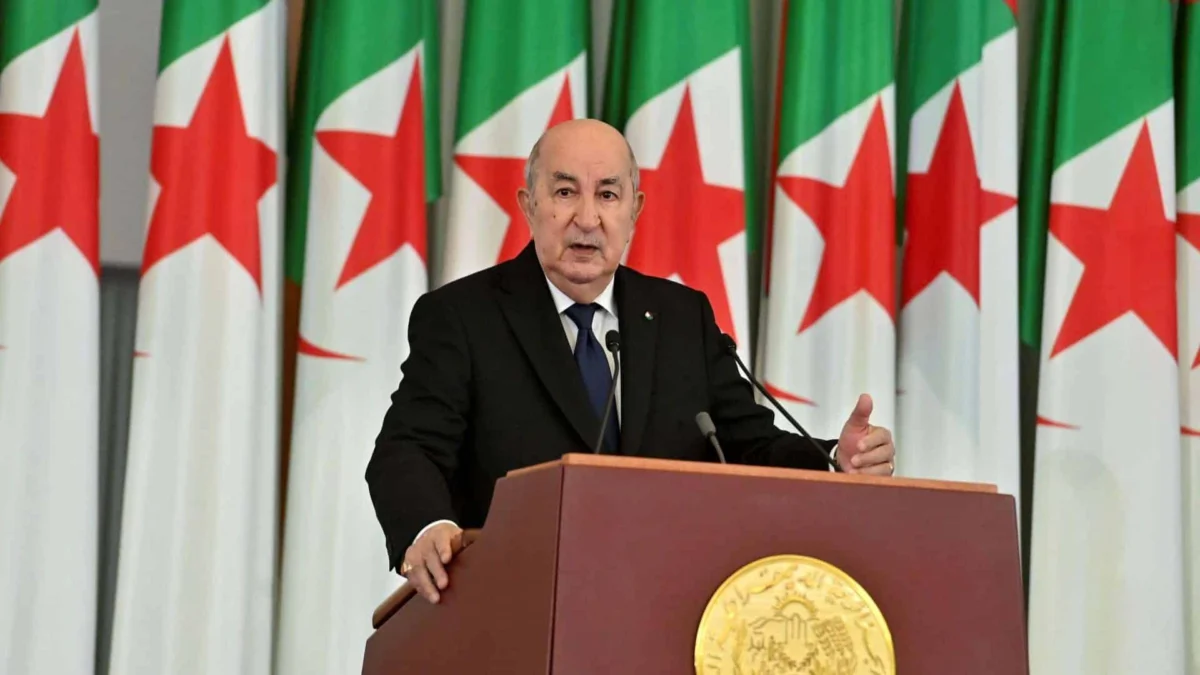
In a move that has sent shockwaves through the Arab world and recalibrated the geopolitical landscape of North Africa and the Sahel, the Algerian government announced on Thursday a complete severance of diplomatic relations with the United Arab Emirates (UAE). The decision, characterized by Algiers as a necessary response to persistent "hostile and provocative actions," includes the immediate closure of Algerian airspace to all UAE-registered aircraft—both civilian and military.
This historic rupture marks the end of a long-simmering period of regional friction, transforming what was once a manageable bilateral cold war into an overt, state-level confrontation. As the Algerian Foreign Ministry issued an ultimatum giving the Emirati diplomatic mission 48 hours to vacate, the international community is left to grapple with the potential fallout of this sudden diplomatic isolation.
The Core Conflict: A Summary of the Rupture
The Algerian Ministry of Foreign Affairs confirmed the decision in a formal communiqué, citing a "sustained campaign of interference" that they claim threatens Algerian national sovereignty. Beyond the severance of diplomatic channels, the closure of Algerian airspace—a vital transit corridor for North-South travel—represents a significant economic and logistical blow to Emirati aviation interests.
The Algerian government summoned the UAE ambassador to Algiers on Thursday to formally communicate the decision. The atmosphere, according to sources within the ministry, was icy and brief. While the UAE has attempted to adopt a conciliatory tone in the immediate aftermath, the speed and finality of the Algerian decree suggest a deep-seated frustration that has been building for years, rather than a reaction to a singular recent event.
Chronology of Deterioration
To understand the suddenness of this announcement, one must look at the gradual erosion of the relationship over the past decade. The trajectory from strategic partnership to "outright animosity" did not happen overnight.
2018–2020: The Abraham Accords Catalyst
The initial fissures appeared when the UAE became a primary architect of the Abraham Accords, normalizing relations with Israel. For Algeria, a country whose foreign policy is deeply rooted in anti-colonialism and a firm rejection of diplomatic ties with Israel, the UAE’s move was viewed as a regional betrayal. This ideological divide created a permanent tension in the League of Arab States.
2021–2023: The Western Sahara Dispute
The conflict intensified as the UAE threw its full diplomatic and financial weight behind Morocco’s sovereignty claims over Western Sahara. By opening a consulate in Laayoune, the UAE effectively challenged Algeria’s long-standing support for the Polisario Front. This was seen by Algiers as a direct affront to its security interests in the Maghreb.
2023–2024: The Sahelian Crucible
The final breaking point appears to have been the instability in the Sahel. As military juntas took power in Mali, Niger, and Burkina Faso, the UAE positioned itself as a key power broker, fostering close ties with these regimes. Algeria, which shares vast, porous borders with these nations, saw its traditional influence in the region systematically undermined by Emirati maneuvers.
September 2026: The Final Break
The culmination of these mounting grievances led to Thursday’s formal announcement, cementing the reality that the two nations are no longer simply "rivals," but active adversaries on the regional stage.
Strategic Friction: Supporting Data and Geopolitical Interests
The animosity between Algiers and Abu Dhabi is not merely a clash of personalities; it is a fundamental collision of national interests.
The Israel Factor
Algeria’s foreign policy is anchored by its historic support for the Palestinian cause. The UAE’s pivot toward Israel has placed the two nations on opposite sides of the most emotive issue in the Middle East. Algeria perceives the UAE’s regional influence as a tool for "Zionist expansionism" in North Africa, a narrative that has gained significant traction within the Algerian military and political elite.
Influence in the Sahel
The Sahel has become the primary theater for this geopolitical competition. While Algeria has long attempted to position itself as the primary mediator and security guarantor for the Sahelian states, the UAE has utilized its sovereign wealth and pragmatic diplomacy to build ties with the region’s new military rulers. For Algiers, this is an existential threat; a destabilized Sahel, influenced by external actors who do not share Algeria’s security concerns, poses a direct risk to its internal stability.
Economic and Logistical Warfare
The closure of airspace is a major tactical move. By restricting Emirati carriers, Algeria has demonstrated a willingness to prioritize political signaling over regional economic cooperation. This move forces airlines to reroute, increasing fuel costs and flight times, and serves as a tangible reminder that geography remains a potent weapon in the hands of the Algerian state.
Official Responses and Diplomatic Posturing
The Algerian Stance
In its public statements, the Algerian Foreign Ministry has been characteristically uncompromising. The rhetoric emphasizes "sovereignty" and the "preservation of regional security against foreign meddling." Algiers has made it clear that it views the UAE’s actions not just as unfriendly, but as a deliberate attempt to encircle Algeria through strategic alliances in Morocco and the Sahel.
The UAE’s Reaction
The UAE Ministry of Foreign Affairs issued a brief, measured statement expressing "profound regret" over the Algerian decision. "The United Arab Emirates remains committed to the principles of brotherly relations and common interest," the statement read, adding that the UAE hopes this "rupture is only temporary."
Diplomatic analysts suggest this measured response is typical of the UAE’s "soft power" strategy—avoiding escalation in public while attempting to work through back-channel diplomacy. However, given the intensity of the Algerian declaration, it is unclear if there is a path to reconciliation in the short term.
Global and Regional Implications
The severance of ties between these two regional heavyweights will have ripple effects across several sectors:
- Arab League Cohesion: The move exposes the widening cracks within the Arab League. It will be increasingly difficult for the organization to maintain a unified stance on regional conflicts when two of its most prominent members are in an active diplomatic feud.
- Sahelian Instability: With Algeria and the UAE effectively working at cross-purposes in Mali and Niger, the prospects for a peaceful transition in the Sahel are dimmer. The "proxy" nature of this rivalry could exacerbate local tensions and prolong the influence of military juntas.
- Aviation and Logistics: The closure of Algerian airspace to UAE aircraft will complicate transit routes between the Gulf and West Africa. While not a global catastrophe, it adds to the rising costs of regional logistics at a time when global supply chains are already fragile.
- Energy Diplomacy: Both nations are major energy players. While their oil and gas strategies have occasionally aligned within OPEC+, the current political climate will make future cooperation in energy markets significantly more difficult.
Conclusion: A New Era of North African Realignment
The decision by Algeria to cut ties with the UAE is a definitive turning point. It signals the end of a long period where the Arab world operated under a veneer of collective interest, even when bilateral disagreements existed. Today, the lines are clearly drawn.
For the UAE, the challenge will be to determine whether its influence in the Sahel and its strategic alignment with Morocco are worth the price of losing a significant partner in the Maghreb. For Algeria, the challenge will be managing the consequences of its isolationist stance. As both nations settle into this new, hostile reality, the rest of the world will be watching to see if this is a temporary diplomatic spat or the start of a prolonged realignment that could reshape the security architecture of the entire Mediterranean and Sahara region.
The next 48 hours will see the final departure of the Emirati diplomatic mission from Algiers, a physical manifestation of a bridge that, for the moment, has been burned beyond repair.