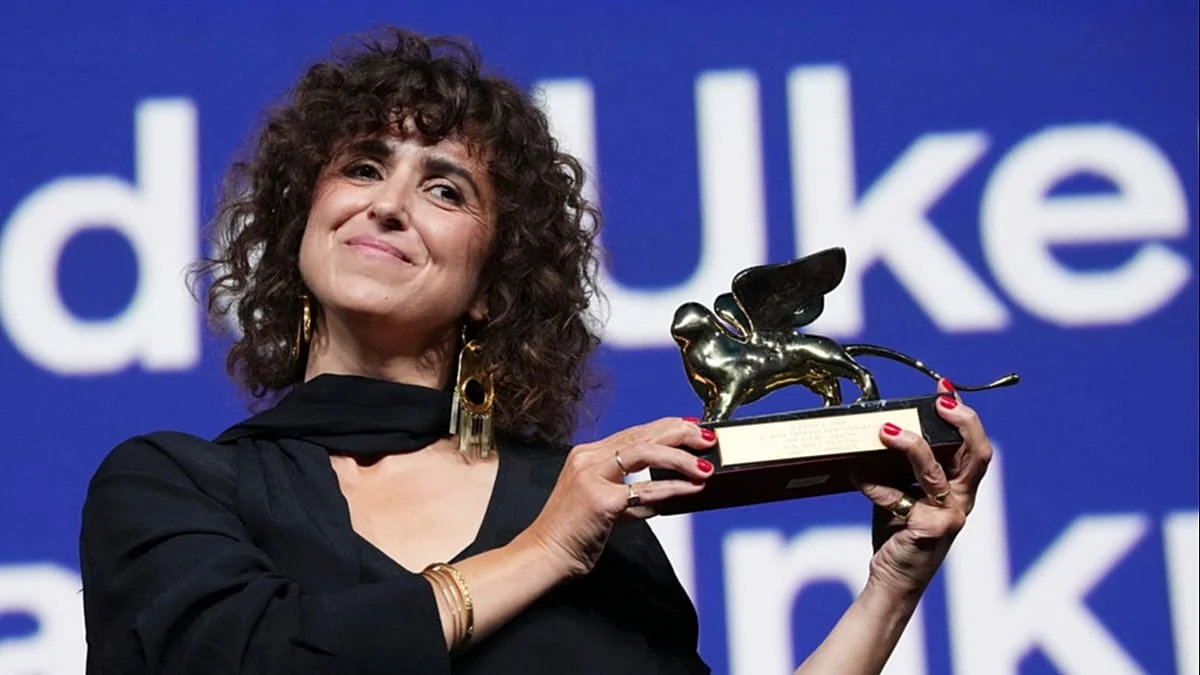
The 83rd Venice Film Festival drew to a close this Saturday, leaving an indelible mark on the landscape of contemporary cinema. In a ceremony marked by both celebratory euphoria and somber reflection, the jury—presided over by actor and filmmaker Maggie Gyllenhaal—awarded the festival’s highest honor, the Golden Lion, to May el-Toukhy for her post-World War II Danish drama, Woman Unknown.
The victory represents a landmark moment for the festival. El-Toukhy, who stood as the sole woman to solely direct a film in the main competition this year, has navigated the complexities of historical memory with a precision that resonated deeply with the jury. Her film, which also earned a Best Actress award for its star, Mathilde Arcel, serves as a searing exploration of complicity, survival, and the fragile nature of reputation in the wake of the Nazi occupation of Denmark.
A Chronology of the 83rd Venice Film Festival
The festival, which spanned nearly two weeks on the Lido, was defined by a tension between high-concept artistic ambition and the pressing urgency of modern political crises.
The early days of the festival saw a flurry of excitement surrounding the late entry of the documentary NAZA. Initially excluded from the primary lineup, the film was added at the filmmakers’ insistence, sparking intense speculation. Its premiere proved to be the defining moment of the event, as the audience rose for a record-breaking 25-minute standing ovation, a display of emotional fervor rarely witnessed in the Sala Grande.
As the competition progressed, the focus shifted toward the veteran powerhouses. Lee Chang-dong’s return to the big screen after an eight-year hiatus was met with profound anticipation, while Martin McDonagh’s latest dark comedy, Wild Horse Nine, reinforced his status as a Venice darling. The closing days were a whirlwind of press conferences and red-carpet spectacles, culminating in a ceremony that acknowledged not just the craft of filmmaking, but the bravery of those who use the medium to interrogate the past and present.
Main Competition: The Jury’s Verdicts
The Golden Lion: Woman Unknown
May el-Toukhy’s Woman Unknown captured the jury’s imagination with its atmospheric and emotionally taxing narrative. Set in the immediate aftermath of the German occupation, the film follows Marie (Mathilde Arcel), a housemaid who secures a marriage proposal from her wealthy employer, only to find her trajectory shattered by the resurfacing of a secret past affair with a Nazi soldier. The film functions as both a period piece and a psychological thriller, questioning how much of one’s identity can be reclaimed after being forged in the fires of survival.
The Silver Lion (Grand Jury Prize): Possible Love
South Korean auteur Lee Chang-dong, whose 2018 masterpiece Burning left an enduring impact on global cinema, returned to the spotlight with Possible Love. A poetic, meditative look at the intersections of class and labor, the film marks a distinct shift toward a more intimate, character-driven style for the director. By exploring the quiet struggles of the working class, Lee has once again proven his ability to find the profound within the mundane.
The Silver Lion (Best Director): Dau
Ilya Krzhanovsky’s win for Dau marks the culmination of a two-decade-long odyssey. The film, a sprawling examination of the Soviet physicists who birthed the atomic bomb, is as much a historical artifact as it is a cinematic feat. Krzhanovsky’s commitment to the project—and his vocal stance against the war in Ukraine—added a layer of gravity to his win. In his acceptance, he dedicated the accolade to the people of Ukraine, emphasizing the personal cost of history.
Supporting Data and Notable Mentions
The diversity of the award winners highlights a festival that sought to honor both established veterans and rising stars.
- Best Actor: John Malkovich received the award for his role in Wild Horse Nine. His performance as a CIA agent in the lead-up to the 1973 Chilean coup d’état was hailed as a return to form, blending dark humor with the chilling indifference of Cold War politics.
- Best Actress: Mathilde Arcel’s win for Woman Unknown was a historic double-victory for the film. Her performance, described as "haunting and deeply vulnerable," solidified her position as a new force in European acting.
- Best Screenplay: French director Stéphane Brizé took home the screenplay prize for A Good Little Soldier, a corporate drama that dissects the erosion of morality within the modern workplace.
- Marcello Mastroianni Award: Malou Khebizi was recognized as the best emerging actor for her work in Cédric Kahn’s 15/18 (A Place to Heal), a sensitive portrayal of life within an adolescent psychiatric ward.
Official Responses and the Voice of the Filmmakers
The most politically charged moment of the festival undoubtedly belonged to the creators of NAZA. The documentary, filmed in secret over three years on the rooftops of Tel Aviv, features testimony from 24 Israeli military insiders. The film provides an unflinching look at military strategy and the systemic killing of civilians in Gaza.
"It is really, really especially important to us that Israelis watch this film," said filmmaker Yuval Abraham during the festival. The Special Jury Prize awarded to NAZA acknowledges the extreme risk taken by the filmmakers and their subjects to bring these narratives to light. The 25-minute ovation following the premiere served as a testament to the audience’s recognition of the film’s journalistic and moral significance.
Similarly, John Malkovich’s video message provided a touch of levity and humility. Speaking from a film set in Montreal, he remarked, "I am humbled to be chosen for this award which has been given to so many wonderful actors." The sentiment was echoed by Martin McDonagh, whose film Wild Horse Nine was the other major crowd favorite, receiving a 10-minute ovation that underscored the continued popularity of his sardonic, high-stakes storytelling.
Implications for Global Cinema
The 83rd Venice Film Festival has sent a clear signal to the industry: the audience is hungry for stories that challenge the status quo.
The success of Woman Unknown and NAZA suggests that film festivals are increasingly becoming theaters of conscience. By awarding films that deal with the "unspoken" aspects of history—whether it is the trauma of occupation or the internal dissent within military structures—the jury has validated the role of cinema as an essential tool for historical accountability.
Furthermore, the festival’s recognition of emerging talent like Malou Khebizi and the rare double-victory of a first-time lead actress like Mathilde Arcel suggests a changing of the guard. As the industry moves away from traditional studio-led narratives toward more international, auteur-driven projects, Venice has reinforced its position as the premier launchpad for global cinema.
The victory of May el-Toukhy is particularly symbolic. In a year where the lack of female representation in major competition categories remains a point of contention globally, her success highlights the necessity of providing platforms for diverse directorial voices. As the curtain falls on the Lido, the lasting legacy of this year’s festival will not just be the films that won, but the difficult conversations they have forced the international community to have.
From the rooftops of Tel Aviv to the psychiatric wards of France, and from the remnants of the Cold War to the aftermath of WWII, the 83rd Venice Film Festival has proven that while cinema is an art of the imagination, its most powerful function remains the reflection of the human condition in all its beauty, failure, and enduring capacity for truth.