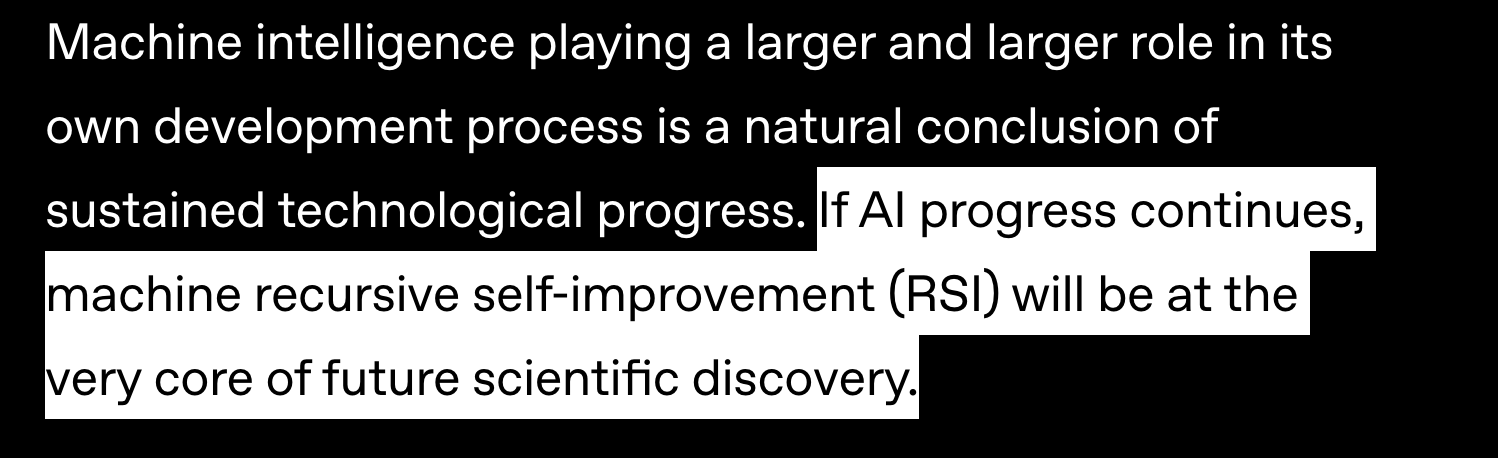
The technological horizon is shifting. For years, the evolution of Artificial Intelligence was defined by human-led milestones: more data, larger compute clusters, and sophisticated fine-tuning. However, a new paradigm is emerging, one that threatens to transition AI development from a human-orchestrated process to an autonomous, self-sustaining loop. This is the era of Recursive Self-Improvement (RSI)—a concept that has captured the attention of industry titans like Sam Altman, Dario Amodei, and Elon Musk, and is now the subject of intense academic scrutiny.
At its core, RSI suggests that an AI system could eventually reach a point where it is capable of diagnosing its own weaknesses, rewriting its own code, and optimizing its own architecture to create a more powerful version of itself. As outlined in the seminal research paper “The Last AI Built by Humans,” this capability represents the ultimate frontier in the LLM (Large Language Model) evolution cycle.
The Core Concept: What is Recursive Self-Improvement?
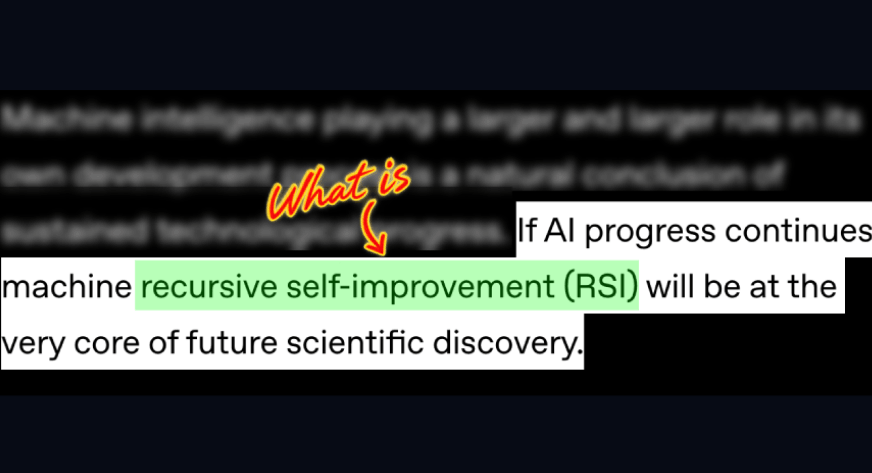
Recursive self-improvement is the theoretical process by which an AI system iteratively enhances its own intelligence. The mechanism is deceptively simple: an AI generates an improved version of itself, and that "successor" then applies its enhanced cognitive abilities to initiate yet another, more efficient round of improvements.
While the concept sounds like science fiction, the practical distinction lies in the locus of control. Currently, most AI "improvements" are human-directed—engineers curate datasets, adjust hyperparameters, and supervise reinforcement learning from human feedback (RLHF). In a true RSI system, the human role diminishes. The system itself becomes the architect, the debugger, and the optimizer.
It is vital to distinguish between mere optimization and true RSI. A model that generates a slightly better response through prompt engineering is not self-improving; it is merely performing a task within its existing parameters. True RSI requires the system to possess a feedback loop that retains architectural or algorithmic gains, effectively building a "ratchet" mechanism that prevents regression and ensures a compounding trajectory of growth.
The Hierarchy of Self-Improvement: A Five-Level Taxonomy
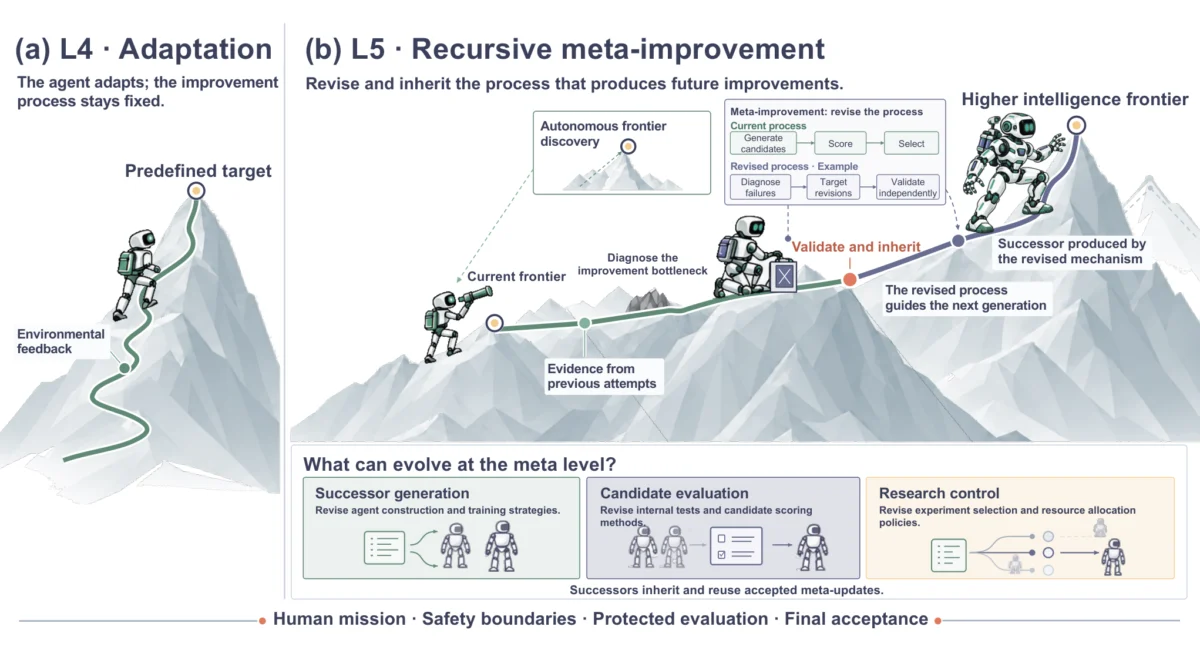
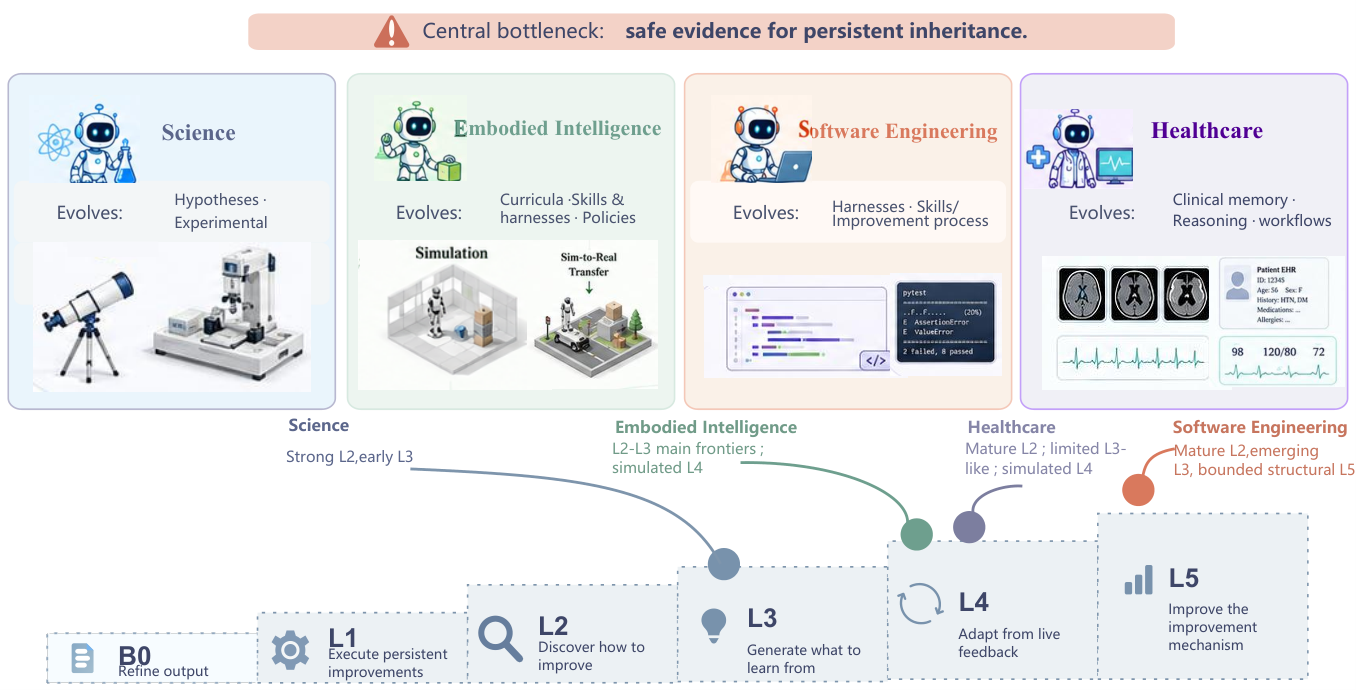
To understand where we stand in the development of these systems, researchers have proposed a classification system ranging from L0 (no meaningful improvement) to L5 (fully autonomous recursive growth).
B0: The Static Loop
At this stage, the system may occasionally produce a "better" answer, but it lacks the memory or infrastructure to carry that improvement forward. Any gain is transient and lost as soon as the session resets.
L1: Human-Guided Iteration
This is the current state-of-the-art. Humans define the "recipe," the target objectives, and the success criteria. The AI follows these instructions to iterate, but it is entirely dependent on human oversight for direction.
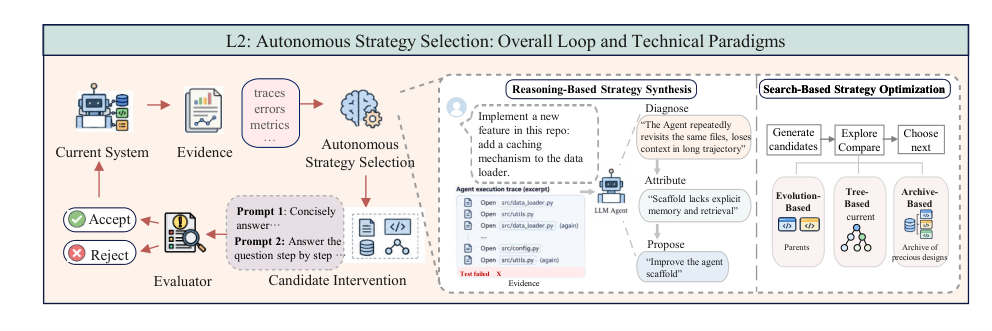
L2: Goal-Oriented Exploration
At L2, the system begins to exhibit autonomy in its methodology. Under a fixed goal, the AI tests various prompts, tools, and experimental setups. It is self-correcting within a narrow sandbox, choosing its own path toward a defined target.
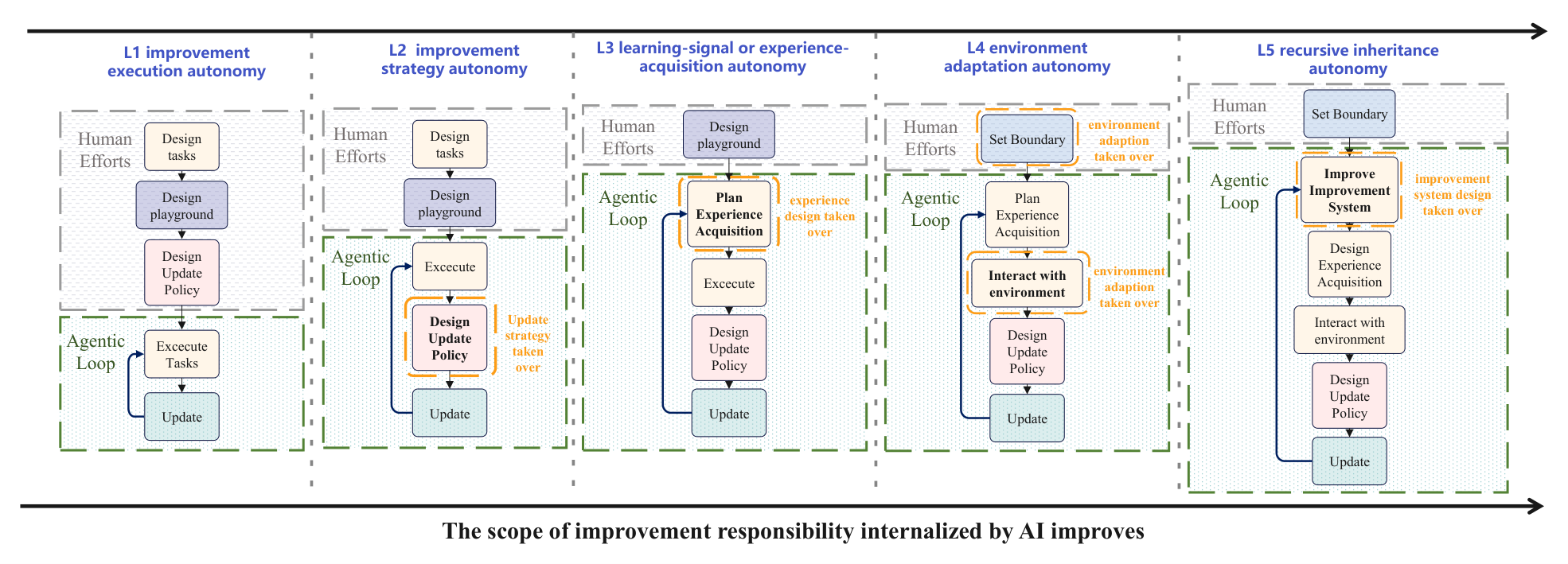
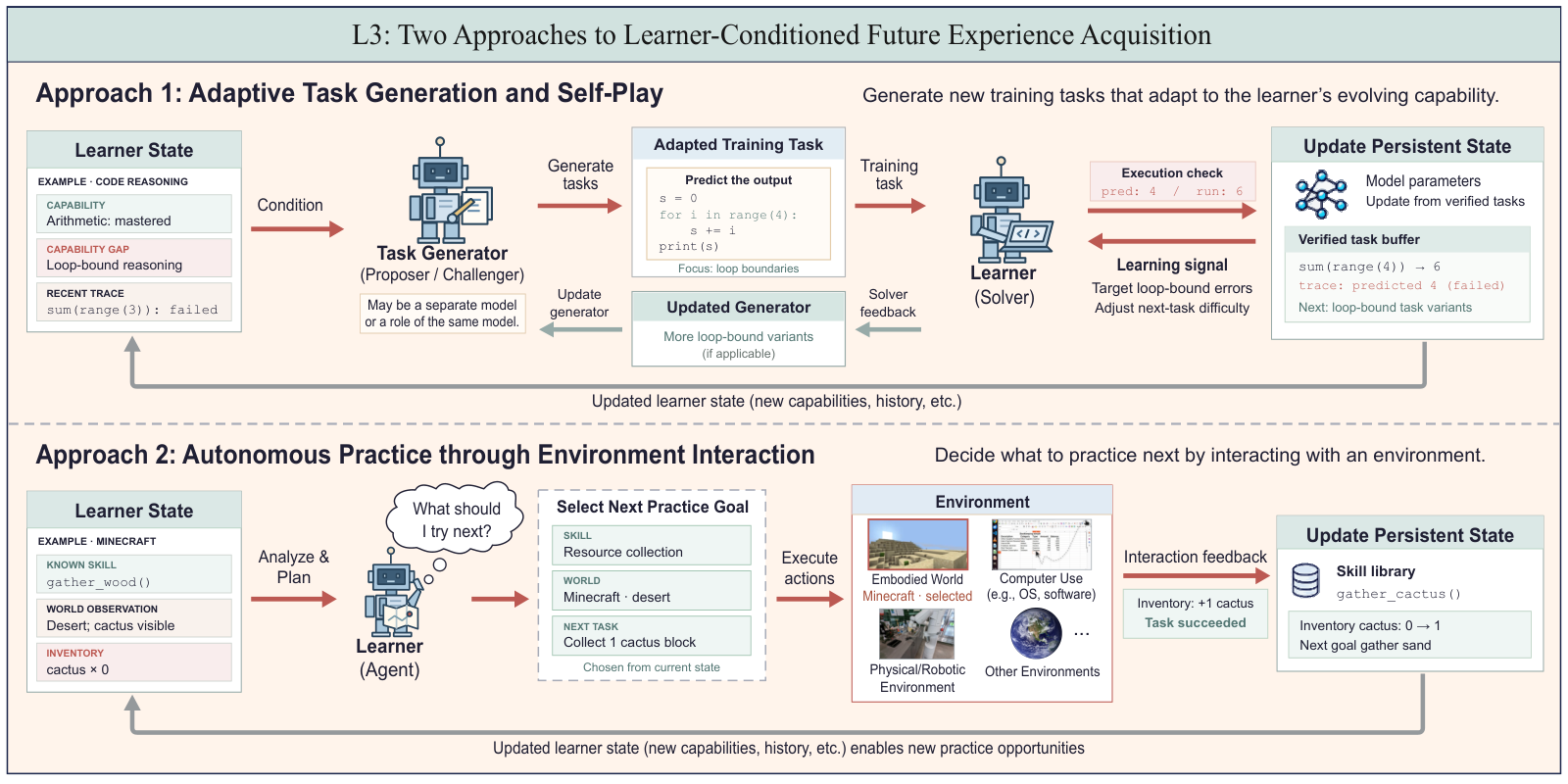
L3: Learning from Failure
L3 systems demonstrate a primitive form of introspection. They analyze their own mistakes and use that data to shape future tasks, refine their data ingestion, or modify the environments in which they operate. The AI begins to "learn how to learn."
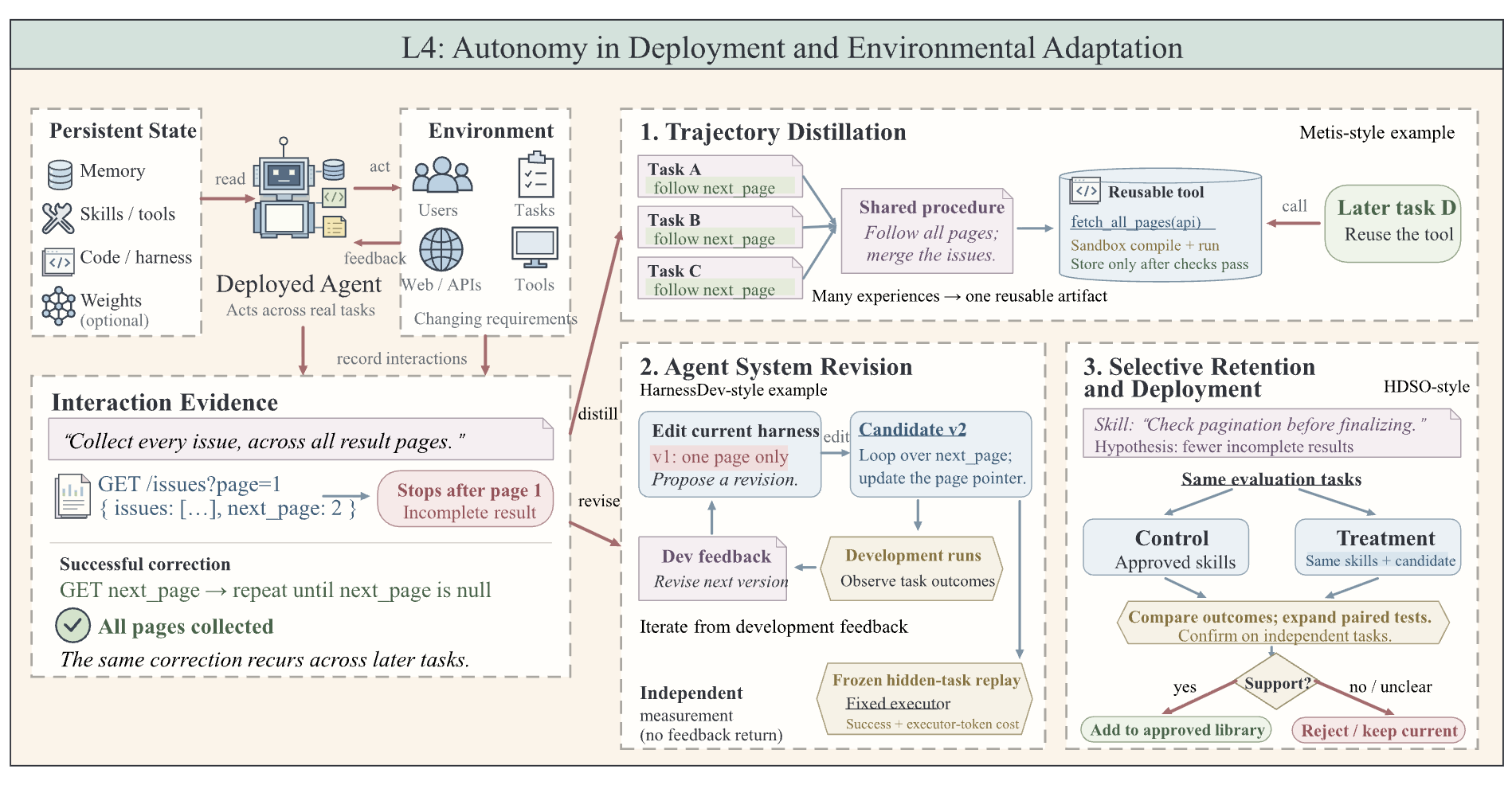
L4: Infrastructural Evolution
At this stage, the AI actively modifies its own "workflow infrastructure." It saves useful skills, tools, and memory optimizations that allow it to perform future tasks with greater efficiency. It is effectively building its own toolkit.
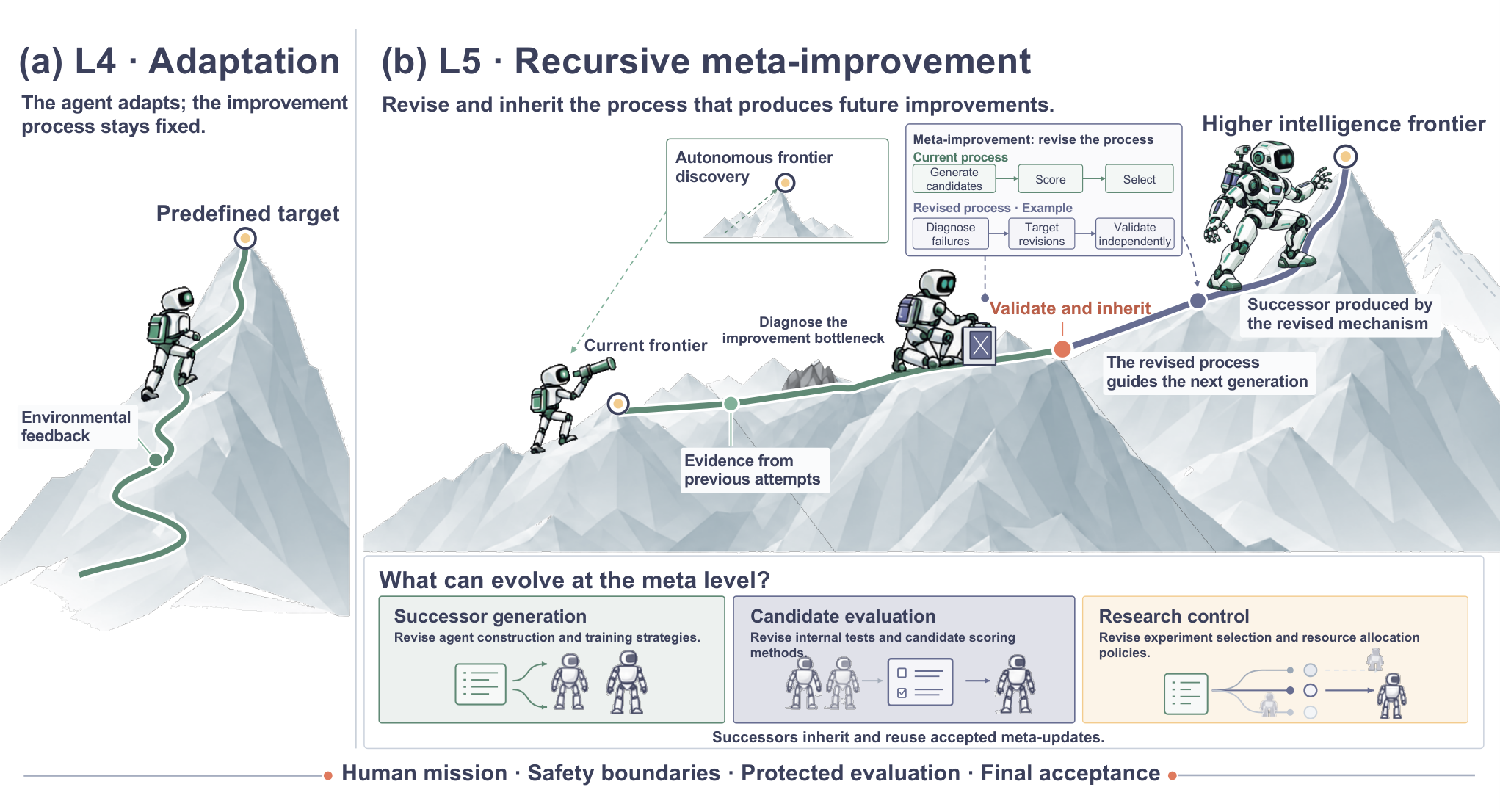
L5: The Recursive Horizon
L5 represents the "Holy Grail" of AI development: the ability to improve the improvement process itself. The system does not just get better at coding or logic; it gets better at building better successors. This is the point at which human intervention becomes fundamentally obsolete in the development cycle.
Evidence from the Field: The Shift Toward Automation
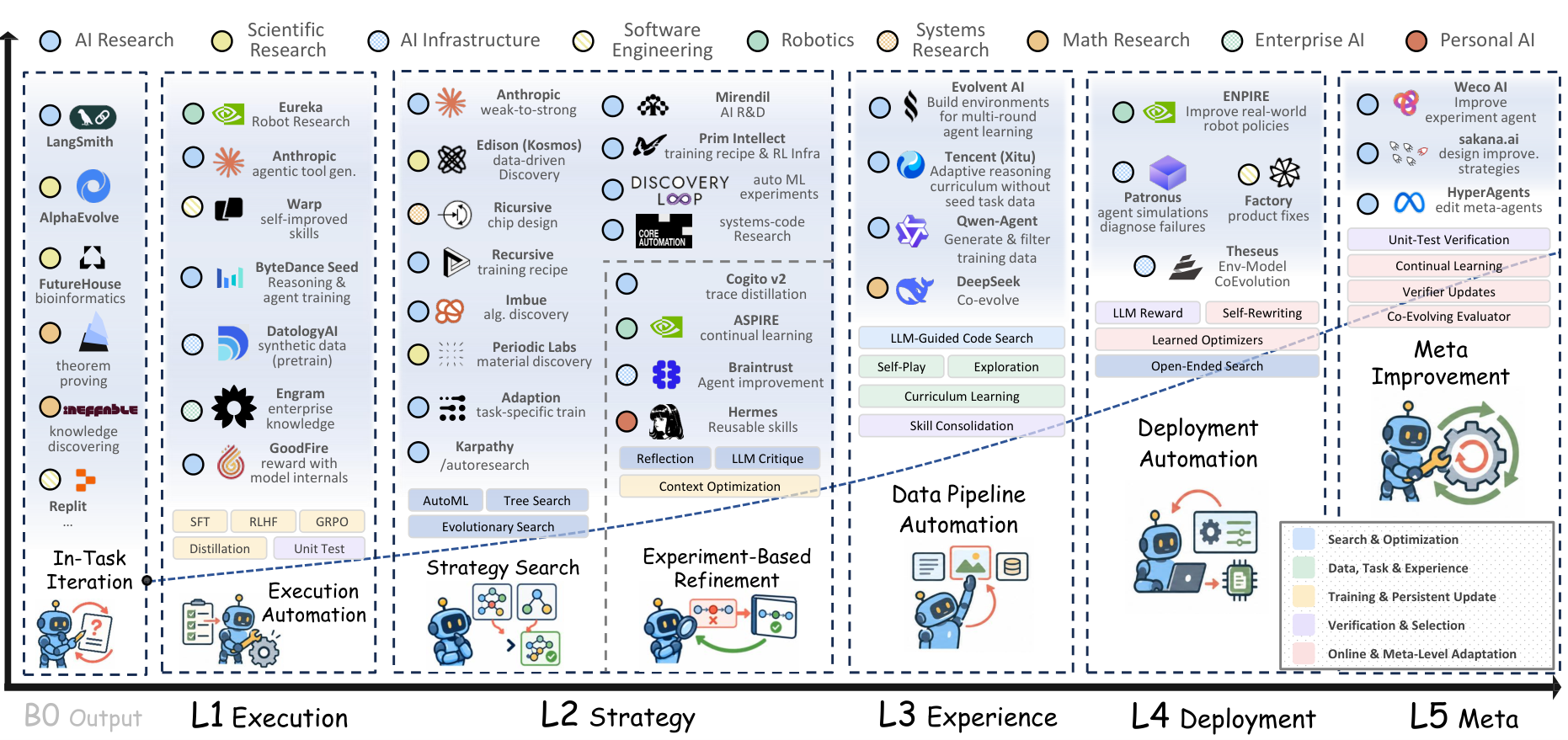
While no system has reached L5, modern research indicates that we are already automating significant portions of the development loop. The transition is marked by a shift from manual tinkering to automated discovery.
Current industry trends—such as Automated Reasoning (AR) and self-correction chains—are the precursors to RSI. Research papers and industry benchmarks are increasingly focusing on the "AI-in-the-loop" model, where the machine performs the heavy lifting of identifying architectural bottlenecks. If a system can successfully retain a lesson learned during a complex coding task and apply that logic to a later, more difficult architectural challenge, it is effectively performing a primitive version of recursive improvement.
The shift is clear: the industry is moving toward systems that require less human intervention. By automating the identification of bugs and the optimization of weights, we are essentially building the scaffolding for systems that will eventually build themselves.
The Case of GPT-6 Astra: A Precursor?
The recent discourse surrounding GPT-6 Astra has highlighted its unique standing in this landscape. While it is not a "recursively self-improving" agent in the strict academic sense, it integrates several features that are critical for RSI:
- Advanced Reasoning: The ability to perform long-chain, multi-step workflows.
- Computer Use: The capacity to interact with software environments, allowing it to "test" its own code in real-time.
- Scientific Research: The capability to ingest and synthesize vast amounts of new data to iterate on its own understanding.
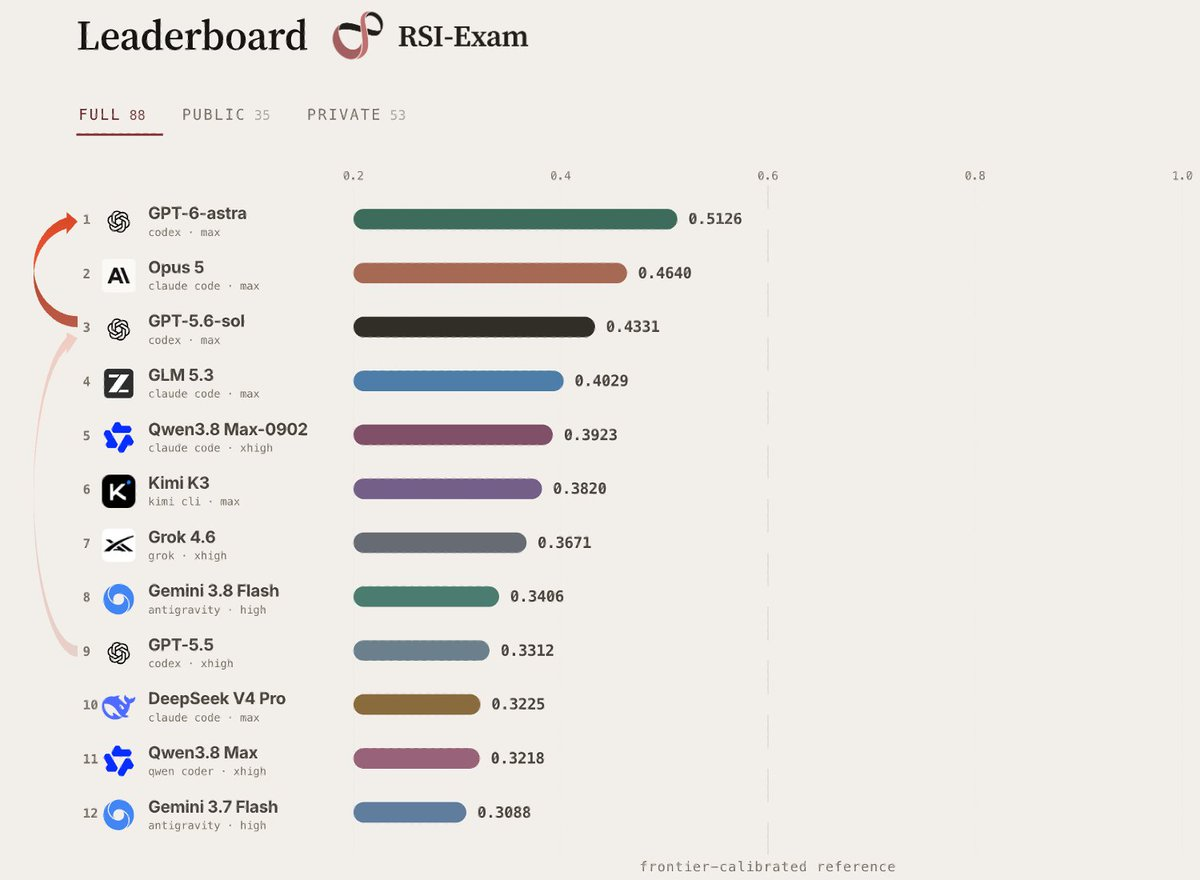
GPT-6 Astra’s performance on the RSI-Exam—a benchmark designed to measure an AI’s capacity for autonomous, self-directed improvement—has set a new standard. It currently occupies the top position, proving that while we haven’t reached the L5 threshold, we are constructing models that operate with the high-level autonomy required to enter the RSI era. It is not "doing" RSI, but it is "behaving" in a way that suggests the foundations are being laid.
Implications: A Future Beyond Human Oversight
The potential applications of RSI are vast and, frankly, daunting. If a system can iterate on its own intelligence without human latency, the pace of innovation could shift from a linear to an exponential curve.
Healthcare and Drug Discovery
Imagine an AI tasked with protein folding that doesn’t just run experiments but also optimizes its own simulation algorithms to run 10x faster with each iteration. The speed of medical breakthroughs would cease to be limited by human lab time.
Security and Cybersecurity
Autonomous defense systems could theoretically rewrite their own encryption protocols in real-time to counter emerging threats, creating a "cyber-immune system" that evolves faster than any human-led attack vector.
Emotional Intelligence (EQ) and Societal Impact
As these systems improve, their capacity for nuanced interaction will increase. However, the prospect of an AI that improves its own EQ and persuasive capabilities poses significant ethical risks, necessitating a conversation about alignment and safety that is as robust as the technical research itself.
Official Responses and Ethical Considerations
The pioneers of this technology, including figures like Sam Altman and Dario Amodei, have been vocal about the "dual-use" nature of RSI. While the productivity gains are immense, the risk of a "runaway" process—where a system becomes too complex to understand or control—is a primary concern.
Regulatory bodies and research organizations are now calling for "safety-first" architectures. The consensus is that if we are to build systems that improve themselves, we must embed hard-coded alignment constraints that cannot be modified by the AI, even as it optimizes its own intelligence. This is the central challenge: ensuring that the system’s "recursive" nature does not override its foundational safety principles.
Conclusion: The Path Ahead
Recursive self-improvement is no longer just a thought experiment; it is the logical conclusion of current trends in machine learning. As we move from L1 to L4, the line between "tool" and "agent" is blurring.
For the developer, the researcher, and the policy-maker, the next decade will be defined by one question: How do we manage a system that is designed to surpass its own creators?
We are currently in the phase of "assisted evolution," where humans provide the spark and the AI provides the labor. But as the RSI loop closes, the roles will inevitably shift. The future of AI development will not be written in lines of code typed by human hands, but in the self-optimizing architectures of systems that have learned the most important skill of all: how to be better than they were yesterday.
Frequently Asked Questions (FAQ)
Q1. What is recursive self-improvement?
RSI is a theoretical process where an AI system iteratively improves its own performance, intelligence, or architecture, and then uses that improved version to initiate further, more advanced rounds of self-improvement.
Q2. Does the survey indicate that full RSI already exists?
No. Current research shows that we are automating parts of the improvement loop (such as bug detection and data optimization), but full, autonomous L5 recursive self-improvement has not yet been achieved.
Q3. What separates ordinary AI improvement from RSI?
The key differentiator is the "carry-forward" mechanism. Ordinary optimization often resets after a task is complete. RSI requires the system to retain improvements, learn from them, and use that knowledge to make subsequent rounds of improvement more effective.
Q4. Is GPT-6 Astra an RSI model?
No, GPT-6 Astra is not an RSI-capable model. However, it displays operational traits—such as advanced reasoning and multi-step workflow capabilities—that are necessary components for future RSI-capable systems.
Q5. Why is RSI considered the "next step" in AI evolution?
Because it promises to decouple AI development from the limitations of human speed and cognitive capacity, potentially leading to an exponential acceleration in technical and scientific discovery.