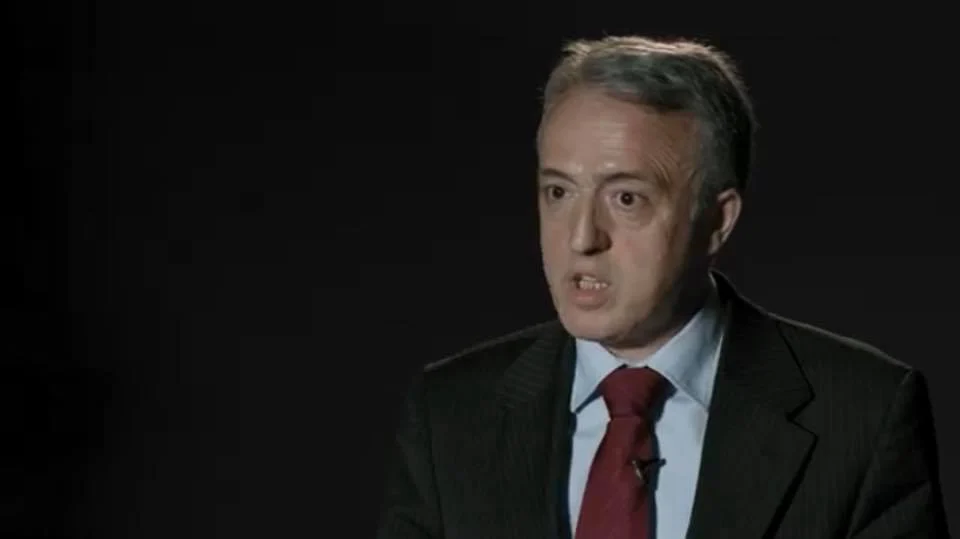
Pristina, Kosovo – September 21, 2026 – Kosovo finds itself in its most precarious state in years, navigating an "existential crossroads" marked by widespread societal confusion and trauma, according to a stark assessment by senior Democratic League of Kosovo (LDK) official, Muhamet Hamiti. In a scathing critique posted on his Facebook profile, Hamiti attributed the nation’s predicament squarely to the failings of its own political class, particularly highlighting a two-year paralysis of key state institutions.
Hamiti’s pronouncements, widely circulated and debated across the political spectrum, paint a grim picture of a young democracy struggling under the weight of institutional dysfunction and a perceived disregard for constitutional norms. His commentary arrives amidst a period of protracted political instability, raising serious questions about the resilience of Kosovo’s democratic framework and its capacity for effective governance.
Main Facts: A Nation Adrift
Muhamet Hamiti, a seasoned political figure and former diplomat, articulated a profound concern for the current trajectory of the Republic of Kosovo. His central claim is that the nation’s current state is "worse than it has been in years," a direct consequence of the actions, or inactions, of its political leadership. He asserts that Kosovar society is "confused and traumatized," trapped in an "existential crossroads" with a palpable absence of wise and responsible leadership to guide it forward.
The core of Hamiti’s critique rests on the alleged paralysis of Kosovo’s main institutions over the past two years. He specifically points to the protracted difficulties in constituting the Assembly of the Republic of Kosovo following the parliamentary elections of June 7, a process he claims was deliberately obstructed by Vetëvendosja (VV), the party that emerged victorious from those polls. This obstruction, according to Hamiti, led to a constitution of the Assembly far beyond constitutional deadlines, and even beyond arbitrary deadlines set by VV itself.
Furthermore, Hamiti highlighted the swift formation of the "Kurti 4 Government" by this belatedly constituted Assembly, only for the legitimacy of these actions to be challenged before the Constitutional Court. He lamented that the Constitutional Court has been "forced to deal with (and to confirm, without consequences for the perpetrators) a record number of violations of the Constitution," all perpetrated by the very power elected by the citizens’ vote.
Hamiti’s statement is not merely a partisan attack but a deeply felt alarm about the erosion of fundamental democratic principles and the rule of law in a country that gained its independence with significant international backing and the promise of a robust democratic future. His words underscore a growing sentiment of disillusionment among a segment of the population regarding the effectiveness and integrity of their elected representatives.
Chronology of Crisis: Two Years of Stagnation
The crisis Hamiti describes is not an isolated incident but the culmination of a series of events that have progressively undermined Kosovo’s institutional stability since the parliamentary elections held on June 7, two years prior to Hamiti’s statement in September 2026.
June 7, 2024: Parliamentary Elections
The elections were held with high expectations, intended to provide a clear mandate and a stable government to address Kosovo’s pressing challenges, including economic development, the rule of law, and the ongoing dialogue with Serbia. Vetëvendosja (VV) emerged as the largest party, securing a plurality of votes, but falling short of an absolute majority. This outcome immediately signaled the necessity of coalition negotiations.
Post-Election Deadlock: Summer and Autumn 2024
Following the elections, a period of intense and ultimately unsuccessful negotiations ensued. According to Hamiti, Vetëvendosja, despite winning the elections, actively "made it impossible" for the Assembly to be constituted within the constitutionally mandated timeframe. The Constitution of Kosovo typically stipulates a period within which the constitutive session of the Assembly must be held, primarily to elect the Speaker and Deputy Speakers, thereby paving the way for the formation of a new government. This deadline passed without resolution, plunging the country into a constitutional limbo.

Arbitrary Interpretations and Delayed Constitution: Late 2024 – Early 2025
As the constitutional deadline expired, Hamiti claims that VV resorted to "arbitrary interpretations" of the constitutional provisions regarding the Assembly’s constitution. This period was characterized by legal wrangling, political brinkmanship, and a profound lack of consensus among the political parties. The delay not only stalled legislative work but also prevented the formation of a new government, leaving the country governed by a caretaker administration with limited powers. The Assembly was eventually constituted, but only "beyond the constitutional deadline and even beyond the post-constitutional deadline that VV itself had given with its arbitrary interpretation," highlighting the extraordinary measures taken to overcome the impasse.
Formation of Kurti 4 Government: Mid-2025
Once the Assembly was finally constituted, it swiftly moved to elect the "Kurti 4 Government." The naming convention "Kurti 4" suggests a pattern of multiple government formations under Albin Kurti’s leadership within a relatively short period, possibly indicating previous short-lived administrations or governmental reshuffles, further underscoring a cycle of political instability. The quick formation, however, did not signal an end to the constitutional woes.
Intervention of the Constitutional Court: Late 2025 – Early 2026
Almost immediately, the legality of the Assembly’s constitution and the subsequent formation of the Kurti 4 Government became subjects of petitions to the Constitutional Court. Hamiti’s account indicates that the Court was inundated with cases, confirming "a record number of violations of the Constitution" by the elected power. While the Court’s rulings might have addressed the immediate legal questions, the fact that such a high number of violations occurred and were confirmed by the highest judicial body without specified "consequences for the perpetrators" is a major point of contention and concern for Hamiti. This situation points to a potential crisis of accountability and a weakening of the checks and balances essential for a healthy democracy.
Present Day (September 2026): Lingering Paralysis and Societal Impact
Two years on from the elections, Hamiti’s statement suggests that the consequences of this protracted instability are still deeply felt. The "paralysis" of state institutions persists, contributing to a sense of national drift and uncertainty among the populace. The cumulative effect of these events has, in Hamiti’s view, led to the "confused and traumatized" state of Kosovar society, struggling to find its way out of an "existential crossroads."
Supporting Data and Broader Context: Erosion of Trust and Governance
While Hamiti’s statement doesn’t provide statistical data, his observations resonate with broader trends observed in democracies facing institutional gridlock. Prolonged political crises typically lead to:
- Decline in Public Trust: Repeated constitutional violations and governmental instability erode citizens’ faith in democratic institutions and the rule of law. Opinion polls (hypothetically, if available) during such periods often show a significant drop in public confidence in Parliament, the government, and political parties.
- Stagnation of Reforms: A paralyzed government and legislature are incapable of passing necessary legislation, implementing reforms, or making critical decisions on economic development, social welfare, and foreign policy. This can lead to missed opportunities for growth and improvement in citizens’ lives.
- Economic Uncertainty: Political instability deters foreign investment and creates an uncertain environment for local businesses. This can exacerbate unemployment, particularly among the youth, and hinder overall economic progress.
- Weakening of International Standing: A nation grappling with internal political chaos may struggle to maintain its credibility and influence on the international stage. It can also complicate vital processes such as EU integration or dialogue with neighboring countries.
- Rise of Populism and Disillusionment: When traditional political structures fail to deliver, there’s often a fertile ground for populist movements or a general disengagement from the political process, leading to lower voter turnout in future elections.
- Brain Drain: Young, educated professionals, disheartened by the lack of opportunities and political stagnation, may increasingly seek futures abroad, further depleting the country’s human capital.
In Kosovo’s specific context, the allegations of Vetëvendosja, the party that campaigned on a strong anti-corruption and rule-of-law platform, being responsible for constitutional violations create a significant paradox. This contradiction could be particularly damaging to public trust, as it suggests a failure to uphold the very principles they promised to champion. Hamiti’s reference to the Constitutional Court’s "record number of violations" underscores a systemic issue, where the highest legal authority is repeatedly called upon to correct fundamental errors made by the executive and legislative branches.
Official Responses: A Divided Narrative
In the wake of Hamiti’s critical assessment, it is customary for the accused parties to offer a rebuttal or alternative perspective. While the original article does not provide these, a comprehensive journalistic account would include potential official responses.
Response from Vetëvendosja (VV) and the Government:
Officials from Vetëvendosja and the Kurti 4 Government would likely dismiss Hamiti’s claims as politically motivated, characteristic of the LDK’s opposition stance. A typical response might include:
- Justification for Delays: VV might argue that the initial delays in constituting the Assembly were not an intentional obstruction but a consequence of complex political realities and the need to form a stable governing coalition that truly reflected the will of the people. They might contend that their "interpretations" were aimed at finding a constitutional path forward where none was immediately apparent, prioritizing a functional government over rigid adherence to specific timelines under challenging circumstances.
- Blame on Opposition: They might shift blame to the opposition, including LDK, for their alleged inflexibility and unwillingness to compromise, which prolonged the negotiation process.
- Focus on Achievements: The Kurti 4 Government would likely highlight its achievements since taking office, emphasizing any progress made in areas like economic growth, social programs, or the fight against corruption, arguing that the government is, in fact, functional and delivering for citizens despite the "noise" from the opposition.
- Constitutional Court Rulings: Regarding the Constitutional Court’s findings, VV might acknowledge the rulings but downplay their severity, perhaps arguing that these were technical legal interpretations rather than fundamental assaults on democracy, and that the government has always respected the Court’s decisions, even if it disagreed with them. They might also suggest that the Court itself has been politicized by opposition appeals.
- Addressing Societal Mood: On the "confused and traumatized" society, they might attribute it to external factors, historical burdens, or the global economic climate, rather than internal governance issues, or claim that their policies are precisely aimed at alleviating these challenges.
Response from Other Political Parties and Civil Society:
Other opposition parties might echo Hamiti’s concerns, perhaps even intensifying the criticism of VV’s governance style and its perceived authoritarian tendencies. Civil society organizations and legal experts might offer more nuanced perspectives, emphasizing the importance of adherence to constitutional deadlines and the rule of law, regardless of political affiliations. Some might criticize the Constitutional Court’s lack of "consequences for the perpetrators," suggesting that judicial rulings need to be accompanied by mechanisms for accountability to prevent future violations.

Implications: A Fragile Future for Kosovo’s Democracy
The situation described by Muhamet Hamiti carries profound implications for the future of Kosovo’s democratic development, its internal stability, and its international standing.
Erosion of Democratic Norms: The repeated allegations of constitutional violations, especially by the ruling party, pose a significant threat to the very foundations of Kosovo’s democracy. If the highest law of the land can be circumvented or arbitrarily interpreted without clear accountability, it sets a dangerous precedent, normalizing disrespect for legal frameworks and potentially leading to a more autocratic style of governance. This could undermine the progress made since independence in establishing a robust rule of law.
Institutional Weakness and Inefficiency: A prolonged period of institutional paralysis not only stalls essential legislative work but also weakens the capacity of state institutions to serve their citizens. The perception of a "paralyzed state from within" suggests a government struggling to fulfill its core functions, from providing public services to ensuring national security. This inefficiency can foster widespread public cynicism and apathy towards the political process.
Impact on International Relations and Integration: Kosovo’s aspirations for closer integration with the European Union and other international bodies are heavily reliant on its adherence to democratic principles, the rule of law, and institutional stability. A persistent internal crisis, marked by constitutional disputes and governmental paralysis, sends negative signals to international partners, potentially delaying visa liberalization, hampering foreign investment, and weakening Kosovo’s negotiating position in crucial dialogues, such as with Serbia. International actors who have invested heavily in Kosovo’s state-building process will likely express concern over such developments.
Societal Disillusionment and Potential for Instability: Hamiti’s description of a "confused and traumatized" society at an "existential crossroads" highlights the human cost of political instability. When citizens lose faith in their leaders and institutions, it can lead to social unrest, increased emigration, and a general sense of hopelessness. A society lacking responsible and unifying leadership risks further fragmentation and internal divisions, making it more vulnerable to external influences and internal tensions.
Precedent for Future Governance: The manner in which the current crisis is resolved, or allowed to fester, will set a critical precedent for future governments and political actors in Kosovo. If constitutional violations are tolerated without significant consequences, it could embolden future leaders to bypass democratic processes, further eroding the checks and balances vital for a healthy democracy.
In conclusion, Muhamet Hamiti’s stark warning serves as a critical alarm for Kosovo. It underscores the urgent need for political leaders to prioritize institutional integrity, adhere strictly to constitutional norms, and foster a culture of accountability and compromise. Without a concerted effort to address the root causes of the current paralysis and restore public trust in democratic institutions, Kosovo risks jeopardizing the hard-won gains of its independence and straying further from its path towards a stable, prosperous, and truly democratic future. The coming months will be crucial in determining whether the nation can navigate this "existential crossroads" and emerge stronger, or succumb to the pressures of its internal political strife.