The landscape of corporate planning is undergoing a seismic shift. As organizations move beyond traditional Business Intelligence (BI) and basic automation, a new paradigm is emerging: Agentic AI. Unlike conventional generative AI, which primarily assists in content creation or data summarization, Agentic AI represents a transition toward autonomous systems capable of executing complex, multi-step workflows with minimal human oversight.
This article explores the core mechanisms, the strategic implications, and the transformative potential of Agentic AI within the realm of corporate financial and operational planning, based on the latest industry research and expert insights.
The Core Concept: From Generative to Agentic
To understand the significance of Agentic AI, one must distinguish it from the "chatbots" that dominated the early 2020s. Generative AI is conversational; it answers questions based on a prompt. Agentic AI is transactional and goal-oriented.
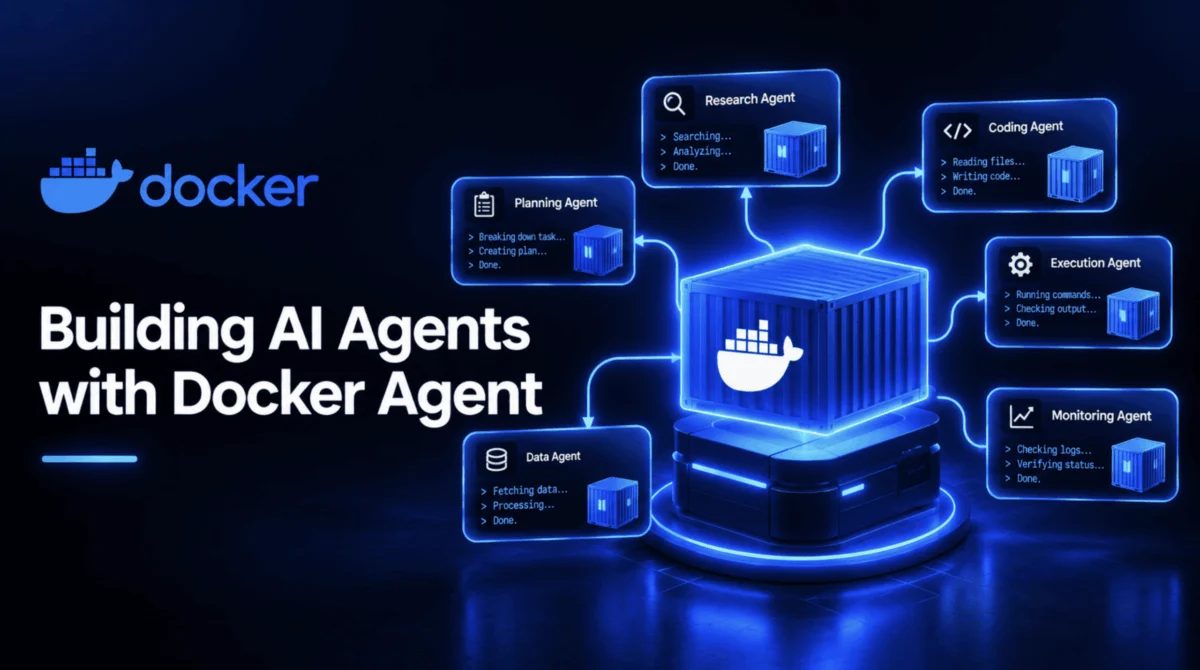
An "agent" in this context is a software system equipped with the ability to perceive its environment, reason through a series of logical steps, and utilize tools—such as ERP databases, spreadsheets, and forecasting models—to achieve a predefined objective. In corporate planning, this might look like an AI agent tasked with "optimizing the supply chain budget for Q3," which autonomously pulls current inventory data, analyzes historical volatility, adjusts for projected raw material cost increases, and presents a finalized budget draft for human review.
Why Corporate Planning?
Planning is inherently repetitive, data-heavy, and prone to human bias. By integrating agentic workflows, organizations can reduce the "cycle time" of planning from weeks to hours, allowing financial planning and analysis (FP&A) teams to shift their focus from data entry and reconciliation to high-level strategic decision-making.
Chronology of Development: The Path to Autonomy
The evolution toward Agentic AI has been incremental, moving through distinct phases of technological maturity:

- 2020–2022: The Era of Descriptive Analytics. Companies focused on visualizing historical data. Planning was manual, and "intelligence" was limited to static reporting.
- 2023: The Generative AI Explosion. LLMs (Large Language Models) became the standard for querying data. Users could ask, "What were our sales in APAC last quarter?" and receive a natural language response.
- 2024: The Rise of Specialized Copilots. Software vendors integrated AI assistants into planning tools to help write formulas or summarize financial performance.
- 2025–2026: The Agentic Shift. The current era is defined by systems that don’t just "assist" but "perform." We are currently seeing the deployment of "Actionable Agents"—systems that can bridge the gap between analysis and execution.
Supporting Data: The Value of Adoption
Recent industry monitoring by BARC (Business Application Research Center) underscores the necessity of these tools. The Data, BI, and Analytics Trend Monitor 2026 highlights that the primary pain point for modern enterprises is no longer a lack of data, but the "latency of insight."
- Efficiency Gains: Early adopters of agentic workflows report a 30% to 40% reduction in time spent on manual reconciliation processes.
- Accuracy: By removing the "human-in-the-loop" for mundane data aggregation, firms report a marked decrease in errors caused by manual copy-pasting or spreadsheet versioning issues.
- Scalability: Agentic systems allow organizations to run multiple planning scenarios (e.g., "What if inflation hits 5%?" or "What if a key supplier goes bankrupt?") simultaneously, a task that would take weeks for a human team to model manually.
Implications for Corporate Strategy
The integration of agentic systems into the boardroom is not merely a technical upgrade; it is a fundamental shift in corporate governance.
1. Democratization of Expert-Level Planning
In many organizations, the ability to build a complex financial model is restricted to a small circle of senior analysts. Agentic AI lowers this barrier. A department head in a remote location can now initiate a complex planning exercise by interacting with an agent that understands the company’s internal logic, financial policies, and compliance requirements.

2. The Shift from "Reactive" to "Proactive" Planning
Traditional planning is often a "rolling" process, where historical results are extrapolated into the future. Agentic AI enables "event-driven" planning. If a geopolitical event disrupts a shipping route, an autonomous agent can instantly re-calculate the impact on COGS (Cost of Goods Sold) and recommend an immediate adjustment to the inventory procurement strategy.
3. Risk and Governance
The primary concern, as identified by current research, is the "Black Box" problem. If an agent autonomously alters a budget, how does the CFO audit that decision? The future of corporate planning will depend on "Explainable AI" (XAI). Organizations must implement a "Governance Layer" that sits atop these agents, ensuring that every autonomous action is logged, transparent, and reversible.
Official Perspectives: The Industry Consensus
Industry experts and software architects are largely aligned on the trajectory of this technology. According to leading research reports, the successful implementation of Agentic AI is predicated on three pillars:

- Data Quality: An agent is only as good as the data it accesses. If the underlying data is siloed or inconsistent, the agent will propagate those errors at scale.
- Platform Integration: Organizations must move away from disparate spreadsheets. Agentic AI requires a unified "Data Fabric" that allows agents to interact with various business units seamlessly.
- The Human-in-the-Loop (HITL) Framework: While agents handle the "how," humans must retain control of the "why." Strategic oversight remains the domain of the C-suite, while tactical execution is delegated to the agent.
Challenges to Implementation
Despite the promise, adoption is not without friction.
- Technical Debt: Legacy ERP systems often lack the APIs required for agents to interact with them effectively.
- Cultural Resistance: There is a natural fear of job displacement. Organizations that succeed are those that frame AI as a "force multiplier" for their workforce rather than a replacement.
- Complexity of Orchestration: Managing a fleet of agents—where one agent handles sales forecasting and another manages HR headcount planning—requires a high level of orchestration to prevent conflicting outputs.
Conclusion: The Road Ahead
As we look toward the remainder of 2026 and beyond, the role of the AI agent in corporate planning will likely evolve from a novel experiment to a core operational necessity. The firms that will lead the next decade are those currently investing in the data architecture and cultural mindset required to support autonomous planning.
The dawn of this new era is not about replacing the human element in planning; it is about liberating human intelligence from the drudgery of routine calculation. By delegating the heavy lifting to agentic systems, leaders can reclaim their time to do what machines cannot: interpret, innovate, and make the high-stakes decisions that define the future of their organizations.

Further Reading and Resources
For those interested in diving deeper into the technologies shaping this shift, we recommend exploring the following topics available through our research portal:
- The Business Case for Planning Software: How to calculate the ROI of shifting from manual to automated systems.
- Data Quality Metrics: Establishing the foundations required for AI success.
- Data Fabric & AI Governance: Ensuring that your data ecosystem is flexible enough to support the next generation of autonomous agents.
For more information on the latest trends in Data, BI, and Analytics, we invite you to subscribe to our newsletter, joining over 25,000 professionals who stay ahead of the curve in this rapidly changing industry.
Last edited: September 30, 2026