As the Federal Motor Carrier Safety Administration (FMCSA) nears a pivotal decision on the enforcement of English Language Proficiency (ELP) standards for commercial motor vehicle drivers, the trucking industry finds itself caught in a tense tug-of-war. At the heart of the debate is a proposed rule that would codify the removal of drivers from service for failing to demonstrate sufficient English language skills—a move that has drawn sharp lines between safety advocates, industry trade groups, and civil rights organizations.
The Regulatory Landscape and the Proposed Rule
The FMCSA’s Notice of Proposed Rulemaking (NPRM) seeks to clarify and update existing regulations to explicitly state that noncompliance with federal ELP requirements will result in a driver being placed “out of service” (OOS). Currently, while federal law requires drivers to be able to read and speak English well enough to converse with the public, understand highway signs, and complete official reports, the mechanism for enforcement has been inconsistent.
The proposed rule aims to solidify the consequences of failing these assessments, with a narrow exception for truck traffic localized to the U.S.-Mexico border that does not transit further inland. The public comment period for this proposal concluded last Friday, leaving the agency to sift through a polarized array of feedback that pits the urgent demand for highway safety against the potential for systemic discrimination.
Chronology of a Regulatory Shift
To understand the current tension, one must look at the recent evolution of ELP enforcement. For roughly a decade following a 2015-2016 decision by the Commercial Vehicle Safety Alliance (CVSA) to de-emphasize ELP-related OOS orders—largely due to concerns over the lack of verifiable safety impact—enforcement became sporadic.
Data provided by the Owner-Operator Independent Drivers Association (OOIDA) highlights the magnitude of this shift: in 2014, there were over 100,000 recorded ELP violations. By 2024, that figure had plummeted to just 9,700. During this period, the rise of "non-domiciled" commercial driver’s licenses (CDLs) issued to foreign drivers has further complicated the landscape.
However, the tide turned sharply during the 2024 Roadcheck Week. ELP violations suddenly surged to become a top-five reason for inspectors to issue an OOS order, accounting for 9.1% of all such orders. This sudden spike suggests that enforcement agencies have already begun to aggressively test the boundaries of their authority, setting the stage for the current legislative and regulatory firestorm.
The Push for "Dalilah’s Law"
Public sentiment regarding the rule has been heavily influenced by a grassroots campaign centered on the tragic story of Dalilah Coleman. Coleman, a five-year-old child, was severely injured in a 2024 California crash involving a driver who was in the United States illegally.
The incident became the catalyst for "Dalilah’s Law," a piece of legislation introduced in both the House and Senate that seeks to tighten CDL issuance requirements and mandate stricter ELP compliance. While the House Committee on Transportation & Infrastructure advanced the bill, it failed to reach the floor of the full House, and its Senate companion stalled in committee. With the current legislative calendar drawing to a close, the bill is unlikely to become law this year, forcing proponents to pin their hopes on the FMCSA’s rulemaking process instead.
Lobbying efforts supporting the bill have been robust, evidenced by a flood of identical email submissions to the FMCSA. These comments, often citing the Coleman tragedy, argue that the current regulatory gaps permit unqualified drivers to operate heavy machinery, endangering the public.
The Sikh Coalition’s Case Against Profiling
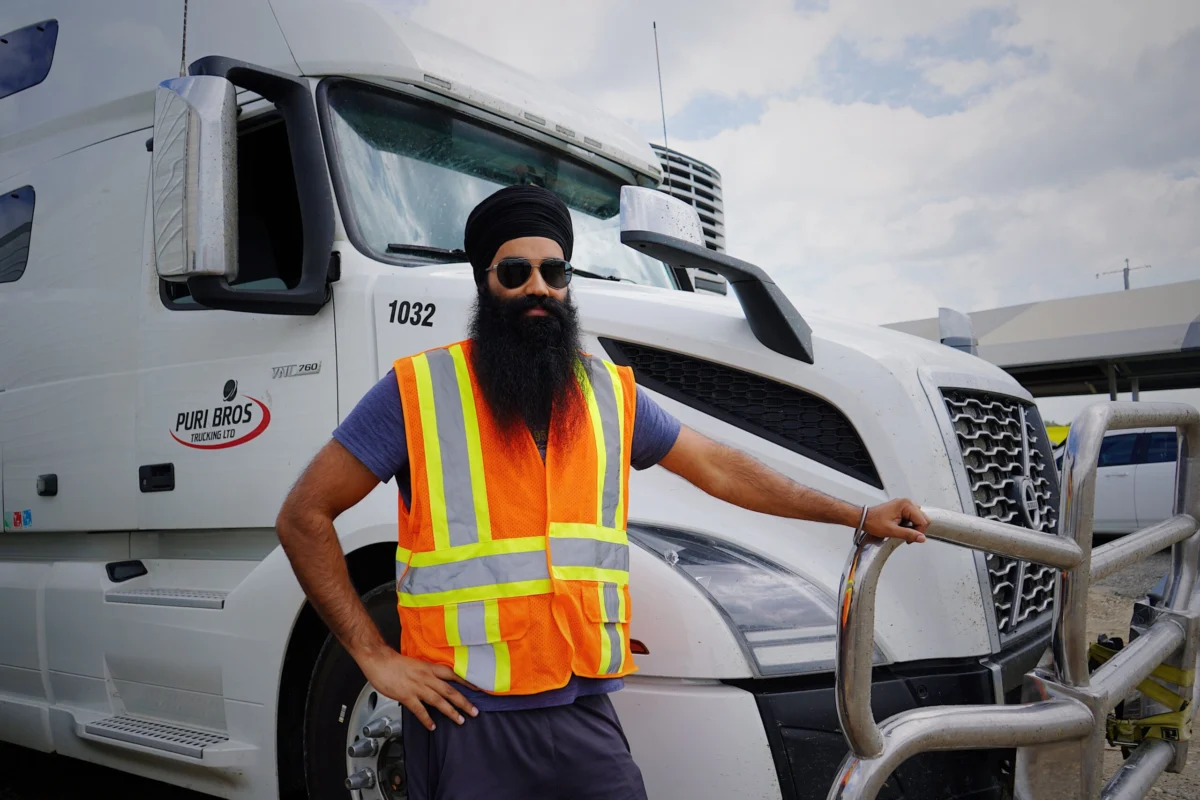
While trucking-specific organizations focus on operations, the Sikh Coalition has emerged as the most vocal opponent of the current iteration of the rule. Representing a large demographic of Sikh Americans—a community with a long and storied history in the U.S. trucking industry—the Coalition has argued that the rule, as written, is a recipe for racial and religious profiling.
Concerns Over Subjectivity
The Coalition’s primary concern is that the FMCSA has failed to establish objective, measurable criteria for what constitutes a "failure" of ELP. In their official comments, the organization noted that the lack of clear guidelines leaves roadside inspectors with broad, subjective discretion.
"Our goal is to reduce the risk of any discrimination against truck drivers who could be profiled for their appearance and subject to disproportionate or discriminatory additional scrutiny," the Coalition stated. They point to a significant discrepancy in their own data: an analysis of roadside inspections between 2021 and 2025 showed that only 0.19% of inspections involved a driver’s inability to communicate in English. The recent spike in OOS orders, they argue, is less about a sudden decline in driver capability and more about a change in enforcement priority that targets specific immigrant communities.
The DHS Backlash
The Coalition’s fears were further ignited by a recent social media post from the Department of Homeland Security (DHS). The post, which was later removed following widespread outcry, specifically referenced a Sikh driver and used inflammatory language: "Get off our roads, you don’t know how to drive, Mr. Singh."
For the Sikh Coalition, this incident serves as a "smoking gun" for the underlying bias they believe permeates the current enforcement culture. Their conclusion is stark: they are urging the FMCSA to withdraw the NPRM entirely and invest in evidence-based safety measures that do not rely on the subjective judgment of individual inspectors.
Industry Perspective: ATA and OOIDA
The nation’s two largest trucking advocacy groups occupy distinct spaces in this debate.
The American Trucking Associations (ATA)
The ATA, representing a broad swath of the industry, occupies a middle ground. While they support the safety goals of the ELP rule, they echoed the Sikh Coalition’s concerns regarding subjectivity. The ATA warned that without standardized scoring metrics, the enforcement of ELP will vary wildly from one state or inspector to the next, creating a chaotic operating environment for fleets.
The ATA’s proposed solution is to move the goalposts: rather than relying on "gotcha" enforcement at the side of the road, the FMCSA should work with states to standardize ELP testing during the CDL issuance and renewal process. By catching deficiencies at the "front door," the ATA argues, the industry can ensure safety without subjecting drivers to arbitrary, discriminatory roadside assessments.
OOIDA’s Stance
The Owner-Operator Independent Drivers Association has taken a more aggressive stance in favor of the rule. They argue that the decade-long lack of enforcement has directly contributed to an influx of unqualified drivers, leading to fatal crashes. For OOIDA, the current crisis is a result of regulatory negligence, and they view the FMCSA’s move to tighten ELP enforcement as a long-overdue return to baseline safety standards.
The Path Forward: Implications for the Industry
The implications of the FMCSA’s final decision are far-reaching. If the agency proceeds with the rule without implementing the standardized, objective metrics demanded by both civil rights groups and the ATA, the industry could face a significant increase in legal challenges and allegations of discrimination.
Moreover, the trucking industry is currently grappling with a chronic driver shortage. The implementation of an opaque, subjectively enforced ELP policy could inadvertently exacerbate this shortage by discouraging foreign-born drivers or those for whom English is a second language from entering or remaining in the industry, even if they possess the technical skill to operate safely.
As the FMCSA reviews the thousands of comments received, the agency is faced with a classic regulatory paradox: how to satisfy the public’s demand for safety in an era of heightened political sensitivity without infringing upon the civil liberties of the workforce that keeps the nation’s supply chain moving. The outcome will likely define the standards for commercial driving for the next decade, setting a precedent that will either integrate rigorous safety standards or deepen the social and ethnic divides within the American trucking community.