As the global economy continues its relentless expansion, the fundamental relationship between economic prosperity and energy consumption is undergoing a profound transformation. Historically, industrial growth was tethered to a direct increase in energy use; as nations grew, they burned more coal, oil, and gas. Today, however, the United States is proving that economic output can flourish while energy intensity—the amount of energy required to produce a unit of Gross Domestic Product (GDP)—simultaneously declines.
The Main Facts: A New Economic Paradigm
The transition toward an energy-efficient economy is not merely a matter of environmental policy; it is a structural shift in how the nation generates wealth. According to data from the U.S. Energy Information Administration (EIA), the amount of energy consumed relative to the nation’s GDP has plummeted by 58% since 1950.
This decoupling is driven by several converging factors:
- The Service Sector Shift: The U.S. has transitioned from an economy dominated by energy-intensive heavy manufacturing to one led by technology, services, and information, which require significantly lower energy inputs.
- Technological Advancement: Modern appliances, smart-grid infrastructure, and advanced building materials have fundamentally altered the baseline energy requirements for both residential and commercial sectors.
- Decarbonization of the Grid: A shift away from inefficient legacy fuel sources, such as coal, toward cleaner, more efficient natural gas and renewable energy sources like wind and solar, has increased the output efficiency of the entire utility sector.
Chronology: The Evolution of U.S. Energy Consumption
To understand the current landscape, one must look at the historical trajectory of energy use in the United States.
1950–1980: The Era of Direct Correlation
During the mid-20th century, the expansion of the U.S. economy was almost perfectly synchronized with its energy appetite. As the population grew, so did the demand for electricity and liquid fuels to power a post-war manufacturing boom.
1980–2005: The Divergence Begins
The energy crises of the 1970s served as a catalyst for efficiency. Throughout the 1980s and 1990s, the adoption of new, more efficient industrial processes and the implementation of early appliance efficiency standards began to break the lockstep between population growth and energy consumption.
2005–Present: The Era of Decoupling
A pivotal shift occurred in the mid-2000s. For the first time in modern history, U.S. energy consumption began a steady decline even as the GDP continued to rise and the population expanded. This marks a historic "decoupling" of economic health from carbon-heavy resource extraction.
Supporting Data: Why Efficiency Matters
Energy efficiency is the "invisible fuel" of the modern economy. Its benefits are multi-faceted, affecting everyone from the individual consumer to the national grid operator.
Economic Advantages
When utilities generate energy more efficiently, the cost of production and infrastructure maintenance drops. Lower overhead for energy providers translates into reduced costs for businesses and households. By lowering the total demand on the grid, utilities can defer expensive investments in new power plants and transmission lines, further stabilizing consumer prices.
Environmental Imperatives
Efficiency is the most cost-effective method of reducing greenhouse gas emissions. By requiring less energy to achieve the same economic output, the economy inherently produces lower levels of carbon dioxide, sulfur dioxide, and nitrogen oxides. Furthermore, thermal power generation is water-intensive; by reducing the need for electricity, the nation also preserves critical water resources.
The Statistical Shift
Current data highlights a remarkable trend: since the mid-2000s, U.S. energy consumption has trended downward, even as the nation’s GDP has reached record heights. This indicates that the U.S. is becoming more productive per unit of energy consumed than at any point in its history.
Official Responses and Policy Frameworks
Governmental and regulatory bodies have played a critical role in accelerating these efficiency gains. Policies at the federal, state, and local levels have created a framework that rewards conservation and innovation.
Energy Efficiency Resource Standards (EERS)
Many states have adopted EERS, which require utilities to meet specific, long-term energy savings targets. These standards have effectively forced the modernization of grid infrastructure and the incentivization of demand-side management.
Building Codes and Certification
The evolution of building codes has been a significant driver of efficiency. Programs such as the LEED (Leadership in Energy and Environmental Design) certification and the federal ENERGY STAR program have set high benchmarks for both commercial real estate and household appliances. These programs have successfully shifted consumer and developer demand toward products and designs that prioritize long-term energy savings over short-term capital costs.
State-by-State Leaders: The Vanguard of Efficiency
Not all states are progressing at the same speed. The most efficient states share a common profile: they possess robust regulatory standards, a high density of urban development, and a heavy concentration of high-tech and service-based industries.
The Top 15 Most Energy-Efficient Economies
Researchers at Commodity.com have analyzed data from the EIA and the Bureau of Economic Analysis to rank states by their energy consumption per unit of GDP:
- New York: A leader in dense urban efficiency and aggressive state-level climate policy.
- Massachusetts: Known for its rigorous energy-efficiency building codes and a service-heavy economy.
- Connecticut: High levels of corporate investment in green energy technology.
- California: A global leader in renewable integration and strict appliance efficiency standards.
- Rhode Island: Small, dense, and heavily focused on energy-efficient urban planning.
- Maryland: Strong state-led initiatives focusing on industrial efficiency.
- New Jersey: Rapid adoption of renewable energy and modern transmission technology.
- Hawaii: Driven by the unique necessity to reduce reliance on imported fossil fuels.
- Washington: High reliance on low-carbon, efficient hydroelectric power.
- New Hampshire: Successful implementation of regional energy efficiency programs.
- Delaware: Strong focus on commercial energy efficiency in the corporate sector.
- Florida: High population density and a climate that necessitates, but also incentivizes, efficient cooling technologies.
- Vermont: A pioneer in community-based renewable projects and energy conservation.
- Colorado: Aggressive state goals for transitioning to wind and solar energy.
- Oregon: A leader in integrating sustainable energy sources into its regional grid.
Implications: The Path Forward
The transition to an energy-efficient economy is not merely a policy choice; it is an economic necessity. As global demand for energy rises, the nations that lead in efficiency will enjoy a competitive advantage in the global marketplace.
The Future of Energy Production
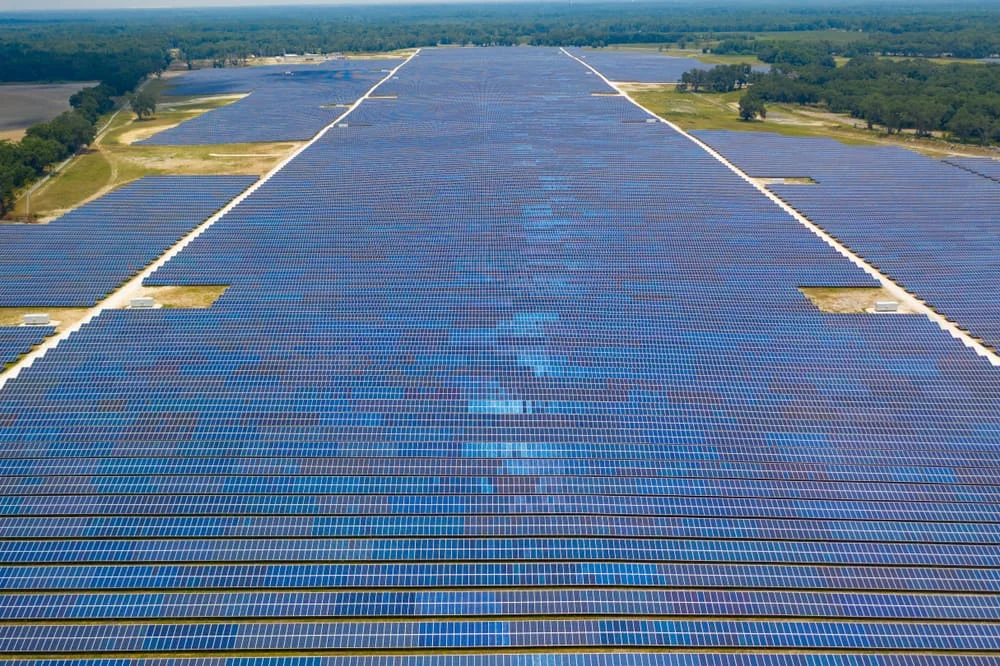
While fossil fuels—specifically natural gas—still account for a significant portion of U.S. energy production, the trend is moving away from coal and toward cleaner, more efficient alternatives. The integration of wind, solar, and battery storage is no longer a peripheral activity; it is becoming the core of the U.S. power strategy.
Challenges and Opportunities
Despite the progress, challenges remain. Aging infrastructure, particularly in older urban centers, requires massive investment to realize the potential of modern energy-saving technology. Furthermore, the rapid growth of data centers and the electrification of the automotive sector will place new, unprecedented demands on the electrical grid.
The ability to meet these challenges will depend on whether the U.S. can continue to incentivize innovation in energy storage and grid management. The data from the last several decades provides a clear roadmap: the most successful economies of the future will be those that learn to do more with less. By prioritizing efficiency, the United States is not only reducing its environmental footprint but also ensuring the long-term sustainability and competitiveness of its economy in a resource-constrained world.
As we look toward the mid-21st century, the goal is clear: to continue the trend of decoupling GDP growth from energy consumption, turning the American economy into a model of technological and environmental efficiency.