
In an era where content saturation is at an all-time high, creators and business owners are facing a daunting paradox: the pressure to be everywhere at once while maintaining a voice that doesn’t sound like a machine. For many, the answer isn’t hiring a massive agency or burning out on manual production. According to AI strategist Nicky Saunders, the solution lies in building an "AI Creative Director"—a sophisticated, automated system that acts as a digital extension of the creator’s own brain.
By integrating Claude as a central processing hub, creators can transform raw, unstructured voice journals into a multi-channel content engine. This shift marks a transition from viewing AI as a "content generator" to treating it as a persistent, reliable creative partner.
The Philosophy: AI as a Creative Partner, Not a Replacement
The prevailing discourse around artificial intelligence often polarizes creators into two camps: those who reject the technology as a soulless shortcut and those who outsource their entire creative process to an algorithm. Saunders, co-creator of this methodology alongside Michael Stelzner, argues that the most effective strategy lies in the middle.
"AI works best as an integration layer within existing creative workflows," Saunders explains. History has shown that every major technological shift—from the printing press to the internet—has rewarded those who weave new tools into their existing expertise rather than choosing between tradition and innovation.
Saunders characterizes this AI system as a "twenty-four-seven brain-warming buddy." Whether it is 2 a.m. and a colleague is unavailable, or a creator simply needs to validate a nascent idea, the AI acts as a sounding board. Because advanced models like Claude retain memory across long-term conversations, the system prevents ideas from vanishing into the ether. It provides early validation, helping creators move from the "hesitation phase" to execution by identifying which ideas have "legs" and suggesting multiple directions for development.
Establishing the Foundation: Vision and Style
Before any automation is triggered, two non-negotiable elements must be established: Vision and Style. Without these, AI output often degrades into "AI slop"—the generic, uninspired content that has become easily identifiable and widely ignored on social media.
Defining Vision
Vision is not about having a perfectly detailed roadmap; it is about knowing the emotional objective of the content. A clear vision dictates the audience’s intended takeaway—whether that is a product purchase, a sign-up, or deeper engagement. If a creator is struggling to define this, Saunders suggests using the AI as an interviewer. By prompting the model with, "I know I need to create this, but I’m not sure what the goal is," creators can engage in a dialogue that clarifies their intent before a single sentence is written.
Defining Style through Visuals
Style is best communicated through examples, not abstract descriptions. Saunders recommends building a "Style Library" in a Claude project. By uploading Pinterest boards, screenshots of past successful posts, magazine layouts, or even photographs of design elements that catch the eye, the AI can decode the technical components of a creator’s aesthetic.
When a user uploads an image and notes, "I like this blue and green aesthetic," Claude can identify saturation levels, color palettes, and composition styles. This exchange not only trains the AI but also helps the creator develop a more professional vocabulary for their own design choices.
Building Core Skills: Brand Voice and Platform Nuance
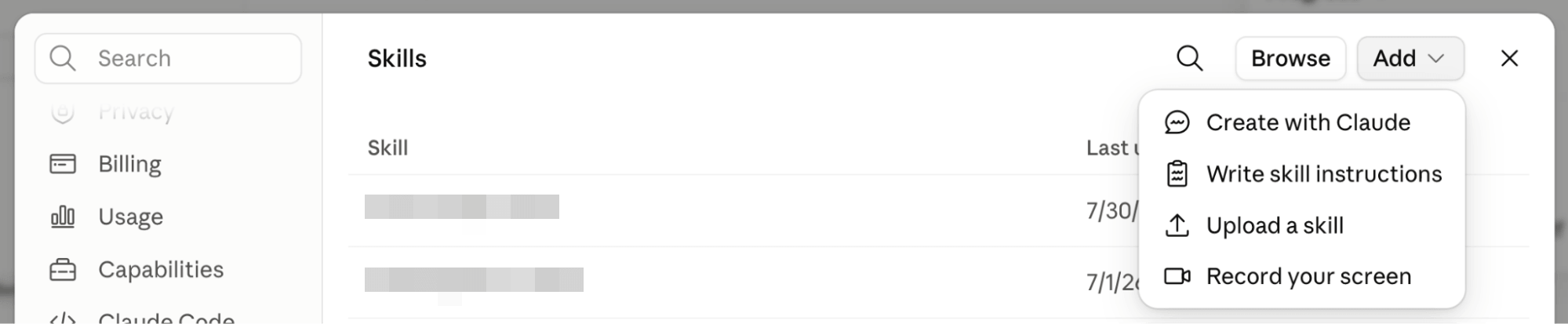
Once the foundation is set, the creator must build "Claude Skills." A skill is a reusable, persistent set of instructions that the AI references automatically. This eliminates the need for redundant prompting.
The Brand Voice Skill
This skill acts as the AI’s "personality profile." To build it, creators should feed the model a diverse array of source material: video transcripts, Zoom meeting logs, email threads, and past social media posts. The AI analyzes these to map out recurring keywords, specific phrasing, and the cadence of the creator’s natural speech.
Once trained, the Brand Voice skill typically achieves 80–85% alignment with the creator’s natural tone. The remaining 15–20% is where human judgment serves as the final polish.
Platform-Specific Style
A tweet requires a different syntax than a Substack essay or a YouTube script. By training a second skill dedicated to platform-specific conventions, the AI learns to adapt the same core message for different environments. Using tools like Apify, creators can scrape their own public engagement data and competitors’ successful content to further refine these skills, ensuring the output aligns with what the market has already proven to work.
The "DraftLoop" Workflow: From Journal to Publication
The heart of this system is what Saunders calls the "DraftLoop"—a daily, automated pipeline that turns raw spoken thoughts into a content calendar.
The Daily Journal
Each morning, the creator records a voice journal. This is not a structured script but an unfiltered "brain dump." Based on the "morning pages" concept from The Artist’s Way, this journal captures real emotions, business challenges, and spontaneous observations. By asking "Why?" three times in response to any thought, the creator can drill down into genuine business insights that resonate far more than planned, corporate-sounding content.
Automated Processing
Using Claude Cowork, the system is scheduled to monitor the journal entries. At a designated time, Claude parses the recording and generates a suite of assets:

- Tweet threads reflecting the core insight.
- Newsletter drafts based on the day’s reflections.
- Carousel outlines for LinkedIn or Instagram.
- Video script skeletons.
The Human-in-the-Loop
Crucially, nothing is published automatically. The AI acts as a drafter, and the creator acts as the editor-in-chief. At a set time each day, the creator reviews the AI’s output, selects the most promising concepts, and instructs the system on how to finalize them.
For visual elements, the system integrates with tools like Higgsfield to generate storyboards or character-based imagery. For video scripts, tools like HeyGen can create an AI avatar version of the creator to read the script, allowing the human to "hear" the flow before they commit to filming the actual video.
Implications and Ethical Boundaries
A critical component of the AI Creative Director system is the strict boundary between "ideation" and "distribution." Saunders emphasizes that AI should never be given autonomous access to social media publishing tools.
Security and Authenticity
Manual publishing ensures that the creator retains final editorial control, preventing accidental brand damage or policy violations. Furthermore, because the source material is always rooted in the creator’s own lived experience, the content remains inherently human. The AI is merely the labor-saving mechanism that handles the reformatting and distribution.

The Data-Driven Counterbalance
One of the most profound implications of this system is its ability to act as a data-driven check against "creative boredom." Creators often abandon successful topics because they grow tired of them. However, when the AI identifies that a specific topic consistently drives high engagement, it can nudge the creator to revisit those themes, ensuring the content strategy remains aligned with audience interest rather than just the creator’s shifting mood.
Conclusion: The Future of Creative Strategy
As demonstrated by the use of specialized models like Claude’s "Fable 5"—which excels at tight, high-impact short-form copy—the era of the one-size-fits-all AI prompt is ending. The future belongs to creators who build modular, persistent systems that integrate their unique voice with the analytical power of large language models.
By building an AI Creative Director, creators do more than just save time; they build a scalable, consistent presence that remains authentically their own. In a world of noise, the ability to turn a simple morning reflection into a week’s worth of high-quality, on-brand content is perhaps the most significant competitive advantage a modern business owner can possess.